
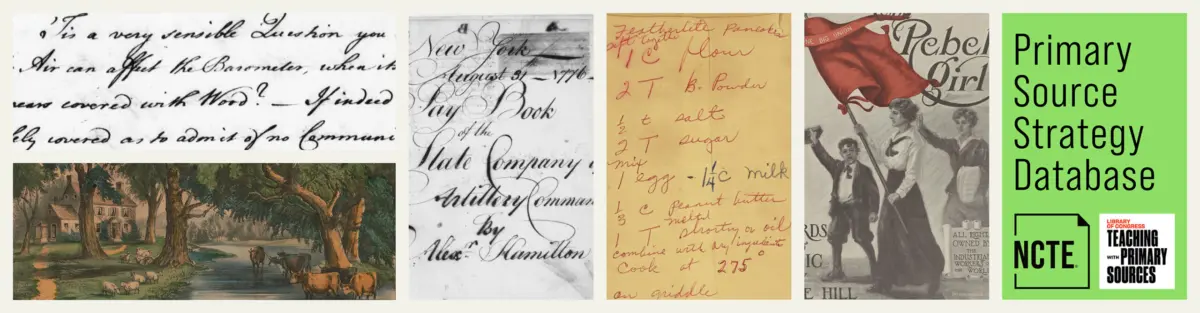
WASHINGTON, D.C. — In an era defined by an overwhelming tide of digital information, synthetic media, and rapidly shifting educational landscapes, educators face a monumental challenge: how to teach students not just what to think, but how to critically analyze the world around them. Addressing this urgent pedagogical need, the National Council of Teachers of English (NCTE) has deepened its collaborative partnership with the Library of Congress. Operating under the umbrella of the prestigious Teaching with Primary Sources (TPS) Consortium, this nationwide initiative is fundamentally reshaping how literacy teachers and students integrate digitized historical artifacts into daily classroom instruction.
At the heart of this collaborative push is an innovative, highly searchable digital database designed by more than two dozen expert educators and English language arts (ELA) leaders. This repository houses instructional strategies and curricular frameworks for more than 150 specific items drawn directly from the Library of Congress’s vast, digitized primary source archives.
Far from being a static repository of dusty historical artifacts, the database is a dynamic, searchable toolkit. Educators can filter content using tags such as picturebook, argument, history, and advertising, instantly matching primary source material to specific state standards, themes, and cross-curricular units. By bringing authentic historical documents, videos, and photographs into the English language arts and social studies classrooms, the initiative bridges the gap between historical inquiry and modern literacy development.
Executive Overview: Bridging History and Modern Literacy
The integration of primary sources into literacy instruction represents a paradigm shift in modern education. For decades, English language arts classrooms relied heavily on traditional anthologies and secondary literature. While these texts remain foundational, they often isolate language from its historical, cultural, and economic contexts.
The NCTE and Library of Congress partnership seeks to dismantle these artificial boundaries. By treating historical films, advertisements, oral histories, and photographs as complex "texts," educators are equipping students with the advanced media literacy skills required in the 21st century. Students learn to interrogate a source not merely for factual content, but for subtext, bias, tone, and rhetorical intent.
The scope of the initiative is vast. The curated database provides rigorous instructional roadmaps for over 150 distinct primary sources. Each entry is meticulously broken down to include:
- Complete bibliographic citations and links to the Library of Congress archives.
- Detailed instructional values, articulating the exact curriculum and classroom utility of the source.
- Comprehensive historical summaries and contextual backgrounds to assist teachers in framing the material.
- Direct alignment with state academic standards (such as Louisiana’s K-12 ELA standards).
- Interdisciplinary cross-curricular connections, blending history, economics, media studies, and sociology.
Among the standout entries in this extensive database is a 1957 promotional video produced by Redbook Magazine entitled In the Suburbs. Serving as a micro-cosm for the broader goals of the NCTE-Library of Congress partnership, this artifact offers a compelling window into the economic optimism, social pressures, and cultural mythologies of post–World War II America.
Detailed Chronology: In the Suburbs (1957) and the Post-War American Landscape
To fully understand the instructional weight of the primary sources featured in the NCTE database, one must examine the specific historical timeline and cultural milestones surrounding their creation. The 1957 promotional film In the Suburbs—created by Carlo Arcamone, Tracy Ward, Bert Spielvogel, On Film, Inc., and distributed by Redbook Magazine—captures a defining moment in mid-century American history.
The Post-War Boom and the Great Migration to Suburbia
- 1945–1950s: Following the conclusion of World War II, the United States experienced an unprecedented economic expansion, accompanied by the "Baby Boom." Millions of returning soldiers sought affordable housing, leading to the explosive growth of master-planned suburban communities like Levittown, New York.
- The Rise of Consumer Culture: Backed by federal programs such as the G.I. Bill, homeownership skyrocketed. Suburbia quickly became synonymous with the burgeoning American middle class, characterized by lawn care, consumer appliances, automobile dependency, and the nuclear family model.
- 1957: Amidst this sociological shift, Redbook Magazine—a publication targeted squarely at young, married women and families—commissioned In the Suburbs. The film was designed to market the suburban lifestyle not just as a housing trend, but as an aspirational cultural standard. It celebrated the economic optimism of the Eisenhower administration while subtly reinforcing the societal expectations placed upon the post-war American household.
Analyzing the Artifact in the Modern Classroom
Within the NCTE database framework, In the Suburbs serves as a multi-layered text. Rather than viewing the film as a nostalgic time capsule, students are guided through a rigorous analytical process:
- Deconstructing Media and Advertising: Students analyze how media outlets like Redbook constructed idealized versions of domestic life to drive consumer spending. They evaluate how artistic choices, narration, and visual framing manipulate the viewer’s perception of "the good life."
- Sociological and Gender Role Examination: The film provides a clear, albeit heavily curated, look at mid-century gender roles. Educators use the video to prompt discussions on the division of labor within the household, the societal pressures on women to conform to domestic ideals, and the concurrent civil rights and socio-economic realities that were often whitewashed in mainstream media representations of suburbia.
- Economic Cross-Curricular Inquiry: The video functions as a foundational text for economics units focusing on homeownership. Students tackle focus questions regarding the cultural definition of a home versus a house, exploring the psychological and financial tether linking homeownership to the American Dream. By pairing In the Suburbs with secondary instructional materials such as The Rise of Suburban Areas During the 1950s, learners synthesize how macroeconomic policy directly shaped personal domestic ambitions.
Supporting Context & Metrics: Standards Alignment and Pedagogical Impact
The effectiveness of the NCTE and Library of Congress partnership lies in its rigorous adherence to state educational standards and evidence-based teaching strategies. The database is not merely a collection of interesting historical curiosities; it is a standards-driven instructional tool.
State Standards Integration: A Case Study in Rigor
Taking Louisiana’s K-12 English Language Arts standards as an exemplar, the database demonstrates how primary sources can be leveraged to meet complex reading and informational text benchmarks:
- RI.11-12.4 (Reading Informational Text): Determine the meaning of words and phrases as they are used in a text, including figurative, connotative, and technical meanings; analyze how an author uses and refines the meaning of a key term or terms over the course of a text.
- Application: When analyzing historical advertisements and promotional films like In the Suburbs, students track how terms such as "success," "family," "community," and "the American Dream" are redefined and weaponized by mid-century advertisers to promote mass consumerism.
- RL.11-12.4 (Reading Literature): Determine the meaning of words and phrases as they are used in the text, including figurative and connotative meanings; analyze the impact of specific word choices on meaning and tone, including words with multiple meanings or language that is particularly fresh, engaging, or beautiful.
- Application: Students examine the script, voiceover narration, and visual motifs of mid-century visual texts, evaluating how specific lexical choices establish a persuasive, optimistic, yet coercive tone.
Quantitative and Qualitative Reach
While individual lesson plans target specific grade bands, the broader collaborative initiative boasts impressive metrics across the educational sector:
- Over 150 Curated Artifacts: The database spans a wide array of historical periods, touching upon critical moments in American history, literature, journalism, and the arts.
- Two Dozen ELA Leaders: The instructional strategies are authored by practicing classroom teachers, instructional coaches, and university-level ELA leaders, ensuring absolute classroom feasibility.
- Interdisciplinary Flexibility: Tags such as argument, picturebook, oral histories, and photographs allow teachers across multiple disciplines—including history, economics, media arts, and language arts—to seamlessly integrate primary sources into existing curricula without disrupting pacing guides.
Official Statements and Educational Philosophy
The collaboration between the National Council of Teachers of English and the Library of Congress underscores a shared philosophical belief: that historical literacy and critical language study are inseparable.
Educational leaders involved in the TPS Consortium emphasize that primary sources force students out of passive learning roles. When a student interacts with a 1957 promotional film, a Civil War-era photograph, or a handwritten literary manuscript, they are thrust into the role of the historian and the literary critic. They must weigh evidence, recognize perspective, acknowledge historical silences, and construct evidence-based arguments.
"Primary sources cut through the sterile veneer of traditional textbooks," notes an educational consultant affiliated with the NCTE initiative. "When students watch In the Suburbs, they aren’t just reading about the 1950s; they are looking directly into the marketing mirror that mid-century America held up to itself. That breeds a level of critical inquiry that multiple-choice tests can never measure."
Furthermore, the Library of Congress has consistently championed its Teaching with Primary Sources program as a means to democratize access to the nation’s cultural heritage. By partnering with organizations like NCTE, the Library ensures that its unparalleled digital collections—ranging from rare maps and broadsides to early motion pictures and sound recordings—are translated into practical, high-impact instructional materials that educators can implement immediately.
Future Outlook: The Evolution of Literacy in the Digital Age
As educational institutions navigate the complexities of the 21st century—marked by rapid technological advancements, the proliferation of artificial intelligence, and evolving media ecosystems—initiatives like the NCTE-Library of Congress partnership point the way forward.
The future of literacy education is inherently multi-modal. Reading is no longer confined to printed text on a paper page; it encompasses visual media, digital archives, audio recordings, and interactive data sets. The NCTE searchable database anticipates this evolution by continuously expanding its catalog of strategies, ensuring that teachers are equipped to guide students through the analysis of diverse textual mediums.
Upcoming Developments and Expansion
- Broadening the Archive: Future updates to the searchable database will incorporate an even wider array of underrepresented voices, oral histories, and marginalized perspectives from the Library of Congress collections, ensuring that students encounter a pluralistic view of American history.
- Enhanced Professional Development: NCTE plans to roll out specialized webinars, virtual workshops, and collaborative professional learning communities (PLCs) focused on training educators in primary source pedagogical frameworks.
- Cross-Curricular Expansion: Strengthening the ties between English language arts, social studies, and STEM curricula through targeted primary source inquiries, demonstrating that critical literacy skills are paramount across all fields of study.
Conclusion
In an educational landscape often fractured by standardized testing pressures and superficial media consumption, the alliance between the National Council of Teachers of English and the Library of Congress offers a beacon of rigorous, engaging pedagogy. By transforming historical artifacts like In the Suburbs into vibrant launchpads for critical thought, debate, and writing, this initiative is empowering a new generation of students to read not only the words on a page, but the complex cultural architecture of the world around them.
Educators interested in exploring the searchable database, accessing instructional strategies for more than 150 primary sources, and aligning these materials with state standards can visit the official NCTE Teaching with Primary Sources resource portal.

