
Executive Overview
In the high-stakes environment of modern education, instructional coaching and school leadership are frequently positioned as catalysts for systemic improvement. Yet, whenever a coach or administrator asks an educator to modify their instructional practice, they are invariably asking them to embrace change. This process is rarely seamless. Teachers frequently push back against new directives, curricular mandates, or pedagogical adjustments.
Historically, institutional responses to this pushback have suffered from a fundamental attribution error: assuming that the resistance originates solely within the defiant teacher. Labels such as "inflexible," "resistant to change," or "set in their ways" are often deployed to explain friction.
However, a paradigm shift is underway. In her ninth and latest publication, How to Coach Resistance: Turning Pushback Into Possibility, veteran instructional coach and educational author Elena Aguilar challenges this traditional narrative. Aguilar posits that resistance is not an isolated behavioral defect belonging to the teacher, but rather a dynamic, co-created interaction between two people. By recognizing that coaches, professional development (PD) providers, and team leaders actively contribute to the pushback dynamic, the educational community can unlock a powerful new reality: resistance is malleable. When instructional leaders alter their approach, drop their internal defenses, and embrace deep curiosity, they can successfully transform toxic friction into fertile ground for genuine professional growth.
Detailed Chronology: The Evolution of Coaching Dynamics and the Shift Toward Relational Equity
To understand the current crisis of teacher pushback, one must examine how the paradigms of instructional coaching have evolved over the last two decades.
Phase One: The Compliance Era (Late 1990s – Early 2010s)
During the early wave of systematic instructional coaching, the prevailing model was deeply clinical, hierarchical, and compliance-driven. Coaches were often viewed as troubleshooters or evaluators whose primary job was to ensure fidelity to newly adopted district curricula. In this era, resistance was viewed as an insubordination issue or a lack of professionalism. If a teacher objected to a framework, the standard remedy involved increased supervision, top-down directives, and punitive oversight. This approach routinely exacerbated educator burnout and deepened adversarial divides.
Phase Two: The Empathy Turn (Mid 2010s – 2020)
As educational research began to heavily emphasize social-emotional learning (SEL) and trauma-informed practices for students, thought leaders slowly turned their gaze toward the emotional realities of adult educators. Coaches began to realize that dictating practice to stressed teachers was ineffective. Professional development organizations started publishing toolkits on active listening and empathetic leadership. However, while empathy increased, coaching models still largely treated the "resistance" as something belonging entirely to the teacher—an emotional hurdle the coach needed to gently coax the teacher over.
Phase Three: The Co-Created Dynamic Paradigm (Present Day)
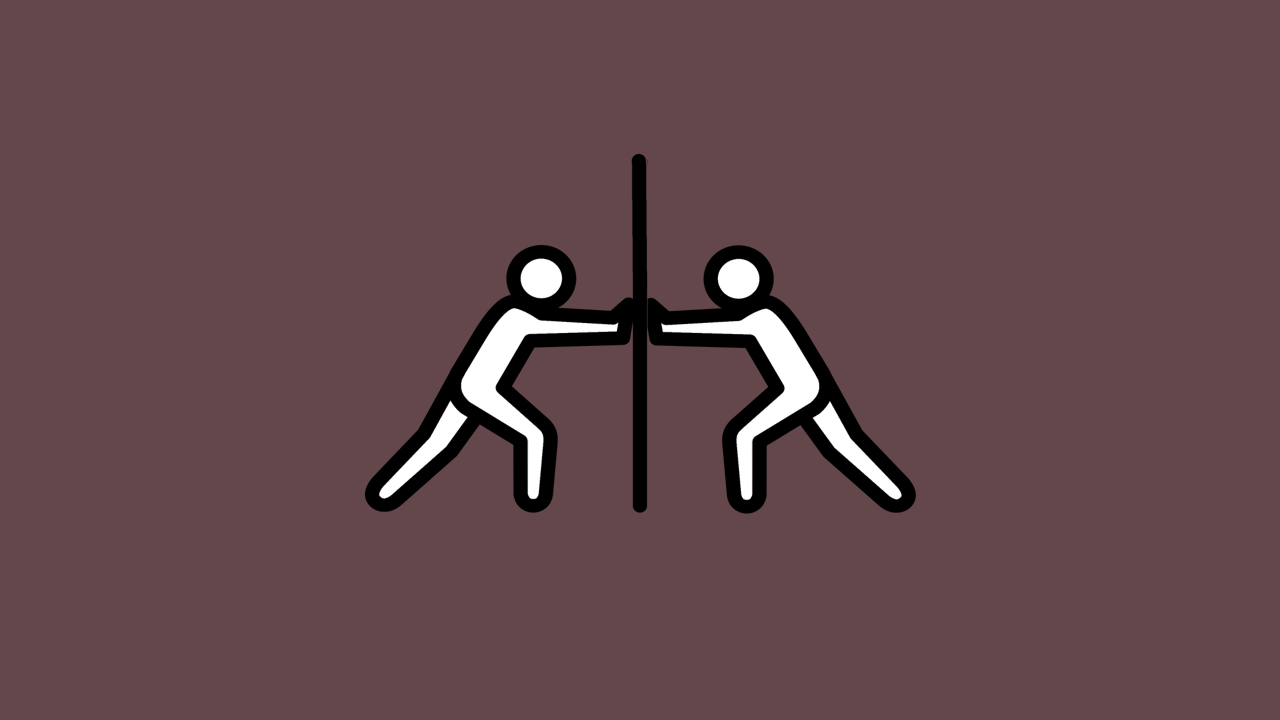
Aguilar’s How to Coach Resistance marks a critical evolution in this timeline. By framing resistance as a bidirectional physical and psychological force—akin to two hands pushing against one another with equal pressure—the current era redefines the accountability of the coaching session. The breakthrough in this timeline is the realization that the coach holds equal power to de-escalate the conflict instantly simply by "dropping their hand." This shifts the baseline of educational coaching from correction to collaboration, urging leadership to audit their own emotional triggers before diagnosing the classroom teacher.
Supporting Context & Metrics: Unpacking the Frameworks of Transformation
Navigating adult learning requires structured, repeatable frameworks rather than intuitive guesses. Aguilar’s work introduces several diagnostic instruments designed to help instructional leaders dissect the true roots of pushback: the ACE Framework, the Gaps Framework, and the Core Emotions Inventory.
1. De-escalating the Physics of Conflict
When a teacher pushes back, a visceral physiological response often occurs on both sides. The educator worries about the viability of the change or their own competence, while the coach worries about failing their administrative metrics or losing control of the coaching cycle. This mutual anxiety fuels a cycle of defensiveness. Aguilar’s physical metaphor—two hands pressing against each other—illustrates that stopping the escalation requires only one party to cease applying force.
Transitioning to curiosity means substituting declarative statements with exploratory questions. For instance, instead of arguing for the merits of a standardized reading curriculum, a coach might ask: "What specific challenges do you foresee your third-period students encountering with this text?" This single shift alters the psychological contract of the room, moving the participants from opponents to collaborative partners.
2. The ACE Framework: Acknowledge, Cultivate, Expand
When coaches successfully drop their defensive posture, they frequently uncover deep emotional landscapes beneath the surface of professional pushback. The ACE framework provides an operational roadmap for handling these moments:
- Acknowledge Emotions: Eschewing the need for formal clinical therapy, coaches can simply validate the psychological reality of the educator. By utilizing tools like Aguilar’s Core Emotions inventory, leaders help teachers accurately pinpoint underlying states—such as shame, fatigue, or acute fear—rather than letting those emotions manifest as generalized anger or stubborn non-compliance.
- Cultivate Compassion: Burnout leaves teachers vulnerable to harsh self-judgment. Aguilar suggests prompting educators to evaluate their situation through the lens of friendship: "What advice would you give a trusted colleague experiencing this exact classroom bottleneck?" Crucially, Aguilar notes that this step fails if the coach has not cultivated self-compassion for their own high-stress leadership roles.
- Expand the Story: Human beings naturally construct narratives to make sense of failure or difficulty (e.g., "My students are simply incapable of independent inquiry"). Expanding the story involves gently unpacking these rigid cognitive models, evaluating alternative hypotheses, and opening pathways back to effective instructional design.
3. The Gaps Framework: Diagnosing the True Barrier to Change
Labels such as "resistant" often mask unaddressed structural or developmental hurdles. Aguilar’s Gaps Framework categorizes these barriers into six distinct domains:
- Skill: The physical mechanics of executing a pedagogical strategy.
- Knowledge: The cognitive understanding of why and how a strategy works.
- Capacity: The physical and temporal resources (time, energy, class size, staffing) required to execute the work.
- Will: The internal motivation and belief systems driving the educator.
- Emotional Intelligence: The ability to regulate one’s emotions and navigate interpersonal dynamics.
- Cultural Competence: The awareness of cultural bias and systemic equity issues within the learning environment.
Too frequently, systemic leaders misattribute structural gaps (such as a lack of capacity or knowledge) to a fundamental deficit in will. For example, a secondary math teacher objecting to an inquiry-based reading protocol may initially appear obstinate (a will gap). However, probing further might reveal they were never trained in secondary literacy strategies (a knowledge and skill gap). Identifying the precise gap ensures that interventions target real needs rather than imposing irrelevant mandates.
Official Statements and Expert Insights
Reflecting on the philosophy underpinning her latest work, Elena Aguilar emphasizes that the ultimate goal of coaching is not compliance, but shared agency.
"What we experience as resistance is actually the dynamic between two people," Aguilar explains during her extensive discussions on the topic. "If you don’t want to experience resistance, drop your hand. Stop exerting your own pressure against their pressure. This is not to blame you; it is the most hopeful thing I can tell you, because it means resistance is not fixed. It is determined at least in part by what you bring into the room, and what you bring is something you can change."
Furthermore, Aguilar addresses the uncomfortable truth that not all pushback is rooted in internal teacher anxiety or skill deficits. Sometimes, educators resist institutional directives because those directives are pedagogically or ethically flawed.
"There are times when resistance is righteous, and there needs to be resistance," Aguilar asserts. "Resistance in and of itself is not a bad thing."
She points to extreme, yet entirely plausible, scenarios—such as forcing kindergarten students to sit passively through inappropriate blocks of didactic instruction—where a teacher’s pushback is an expression of professional ethics and child advocacy. In these moments, elite instructional coaches must validate the pushback, help the educator analyze their operational boundaries (such as identifying institutional channels to challenge the mandate), and model professional courage.

Future Outlook: Implications for School Leadership and Professional Learning Communities
As the education sector continues to grapple with historic teacher shortages, intense emotional burnout, and evolving academic standards, the traditional models of top-down educational reform are rapidly becoming obsolete. The insights synthesized in Aguilar’s framework signal a profound transformation in how schools must approach professional learning over the next decade.
1. Re-training School Administrators and Instructional Coaches
District leadership programs must pivot away from clinical accountability models and invest heavily in relational literacy. Coaches must be trained not only in data analytics and curriculum mapping, but also in adult developmental psychology, conflict resolution, and self-awareness. A coach who cannot regulate their own nervous system during a tense post-observation conference will inadvertently trigger defensive flight-or-fight responses in the teachers they are meant to support.
2. Cultivating Cultures of Psychological Safety
Schools that wish to innovate must move past the fear of dissent. When resistance is reframed as "possibility," pushback ceases to be a liability and becomes an invaluable diagnostic tool. Teachers who feel safe enough to voice valid operational concerns, highlight resource gaps, and express emotional vulnerability will build deeper trust with administration. This psychological safety directly correlates with teacher retention and, ultimately, improved student achievement outcomes.
3. Moving Toward True Partnership
Ultimately, the future of instructional leadership relies on abandoning the binary of the "expert coach" and the "novice teacher." By embracing a posture of radical curiosity—signaled by the simple message: "I’m not here to judge you; I’m here to partner with you"—leaders can unlock the intrinsic motivation of educators. When teachers realize their voices are respected, their emotional labor is validated, and their structural barriers are genuinely acknowledged, the friction of pushback gives way to sustainable, collaborative innovation.

