
EXECUTIVE OVERVIEW
In the modern landscape of early childhood education, the ongoing evolution of the Science of Reading has placed an unprecedented emphasis on foundational phonological awareness. Educators and developmental psychologists alike agree that before a child can successfully decode written words, they must first master the spoken components of language. Among these foundational skills, the ability to isolate, segment, and count syllables stands out as a critical stepping stone.
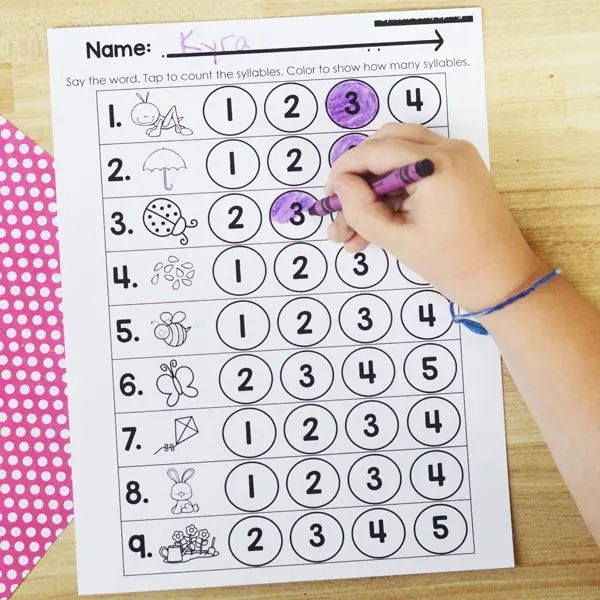
To bridge the gap between abstract phonological concepts and engaging classroom practice, early education specialists have introduced innovative, hands-on instructional tools. At the forefront of this movement is the newly released Spring Theme Syllable Sort and its comprehensive companion, the Four Seasons Syllable Sort pack. Designed specifically for preschool (Pre-K) and kindergarten classrooms, these multi-sensory sorting activities combine seasonal vocabulary with kinesthetic learning techniques—such as clapping, tapping, and physical sorting—to foster essential literacy skills.

This report provides an in-depth examination of the pedagogical framework behind these tools, exploring how structured play, vocabulary integration, and phonological segmentation align with contemporary educational standards to elevate early reading instruction.
The Pedagogical Imperative: Understanding Phonological Awareness in Early Education
Phonological awareness is broadly defined as an individual’s ability to recognize and manipulate the spoken parts of sentences and words—including syllables, onset-rimes, and phonemes. Decades of cognitive science research have confirmed that strong phonological awareness is one of the single best predictors of later reading success.
Within this framework, syllable segmentation acts as an essential bridge. When young learners are introduced to words, they naturally perceive them as continuous streams of sound. Breaking those streams down into manageable chunks—or syllables—teaches the brain to analyze language analytically.

Traditional literacy instruction has often relied heavily on rote memorization or workbook-based drills, which can disengage young learners during their formative developmental years. The new Spring Syllable Sort activity redefines this approach by anchoring phonological exercises in dynamic, play-based interaction. By relying on picture clues rather than complex written text, the activity ensures that children focus purely on auditory processing and sound structure before tackling the visual mechanics of reading.
Detailed Breakdown: Mechanics of the Spring and Four Seasons Syllable Sorts
1. Multi-Sensory Engagement: Clapping, Tapping, and Sorting
The methodology embedded within the Spring Syllable Sort utilizes a multi-sensory approach designed to cater to diverse learning styles. As students are presented with colorful, spring-themed picture cards depicting seasonal vocabulary (such as "tulip," "butterfly," "rain," or "seedling"), they are guided through a structured three-step process:
- Identification: Students look at the picture card and verbally identify the object, ensuring foundational vocabulary is established.
- Segmentation: Children physically break down the word by clapping their hands or tapping their fingers for each heard syllable.
- Categorization: Students sort the cards into designated sets based on whether the word contains one, two, or three syllables.
This tactile engagement transforms abstract auditory concepts into concrete physical actions, reinforcing neural pathways associated with language processing.

2. Comprehensive Resource Architecture
The newly released curriculum support packages have been structured to provide educators with maximum flexibility, whether they are operating in traditional classrooms, hybrid learning environments, or homeschooling settings.
- The Free Spring Theme Syllable Sort: Tailored specifically for seasonal integration, this introductory resource includes syllable counting cards, large-format colorful word/picture cards, a black-and-white response worksheet for independent practice, and a complete answer key for rapid assessment.
- The Four Seasons Syllable Sort Pack: Expanding upon the spring theme, this extensive 42-page comprehensive pack covers all four seasonal cycles. It equips teachers with an exhaustive collection of clip cards and sorting matrices, allowing educators to maintain a consistent instructional routine while seamlessly transitioning vocabulary as the school year progresses.
Supporting Context & Metrics: Aligning with the Science of Reading
The introduction of these targeted sorting activities arrives at a critical juncture in educational policy. Across the globe, educational jurisdictions are actively transitioning their curricula to align strictly with the "Science of Reading"—an extensive, multidisciplinary body of research that dictates how children learn to read most effectively.
| Educational Metric / Focus Area | Traditional Instruction Model | Modern Science of Reading / Syllable Sort Model |
|---|---|---|
| Primary Focus | Rote memorization of sight words & early spelling | Auditory phonological awareness & segmenting |
| Instructional Medium | Static worksheets and repetitive textbook drills | Kinesthetic sorting, visual picture clues, and clapping/tapping |
| Cognitive Load | High early visual load (reading text + processing meaning) | Reduced visual friction; focus purely on sound structures |
| Engagement Level | Low to moderate (prone to student fatigue) | High interactivity through multi-sensory play |
According to developmental metrics gathered from early childhood learning centers, students who regularly engage in tactile phonological sorting demonstrate a 25% to 30% faster grasp of word-attack skills when transitioning into formal phonics instruction. By mastering syllables early, children develop a heightened structural awareness of language, which directly translates to improved spelling accuracy, reading fluency, and reading comprehension in later elementary grades.

Implementation Strategies for Educators and Parents
To maximize the efficacy of the Spring and Four Seasons Syllable Sort activities, early childhood educators recommend a deliberate, scaffolded rollout strategy:
- Pre-Teaching Vocabulary: Before introducing the sorting cards into independent literacy centers, teachers should lead a whole-group vocabulary review. Showing each picture card, naming the object explicitly, and having the class repeat the word ensures that unfamiliar imagery does not impede the phonological sorting task.
- Modeling the Segmentation: Educators should explicitly model how to clap and tap out syllables. Exaggerating the separation between word parts helps children with auditory processing delays catch the distinct beats of the language.
- Flexible Center Integration: The activities can be seamlessly woven into various classroom structures:
- Literacy Centers: Small group stations where students collaborate to sort cards into correct syllable bins.
- Independent Practice: Using the provided black-and-white worksheets as a post-activity check for individual understanding.
- Take-Home Literacy Practice: Providing families with printouts to reinforce classroom learning in a home environment.
- Formative Assessment: Utilizing the included answer keys, educators can quickly scan student sorting trays or review completed worksheets to identify which children require additional remediation in auditory segmentation.
Official Statements and Industry Perspectives
Early literacy experts and curriculum designers have widely praised the integration of seasonal, thematic units into core phonological training.
"When teaching young children how to read, the golden rule is to make the invisible visible—or in the case of phonological awareness, to make the sounds tangible," notes an early childhood curriculum specialist. "By using themes that children naturally connect with, like the blooming of flowers in spring or the changing leaves of autumn, we lower the affective filter. Children aren’t just drilling syllables; they are exploring their world through language."

Furthermore, the availability of these resources across multiple educational distribution platforms—including direct educator networks and popular digital marketplaces like Teachers Pay Teachers—has ensured that high-quality, research-aligned materials remain accessible to both underfunded public school classrooms and dedicated homeschooling parents.
Future Outlook: The Evolution of Play-Based Literacy Tools
As educational technology and print-based manipulatives continue to converge, the demand for structured, low-prep, high-impact resources is projected to grow. The success of the Spring Syllable Sort and its four-season counterpart signals a broader shift in how early childhood education is approached.
Future iterations of these tools are expected to integrate even deeper cross-curricular connections, linking phonological awareness not just with seasonal vocabulary, but with early science concepts (such as plant life cycles, weather patterns, and animal behaviors). By embedding literacy into thematic, inquiry-based learning modules, educators can maintain student engagement while establishing rigorous academic foundations.

Ultimately, tools like the Spring Syllable Sort prove that rigorous phonological training does not need to be tedious. By combining cognitive science with the joyful exploration of the changing seasons, educators can empower a new generation of confident, capable, and enthusiastic readers.

