
EXECUTIVE OVERVIEW
In an era defined by rapid technological advancements and complex global supply chains, consumer expectations have shifted dramatically. While macro-innovations—such as artificial intelligence integration, electric vehicles, and smart-home automation—dominate headlines, a parallel revolution is quietly reshaping the domestic landscape. This movement is anchored not in high-cost luxury, but in low-cost, high-utility micro-inventions designed to eliminate friction in daily routines.
Market analysts and consumer behaviorists have identified a surging demand for hyper-functional, budget-friendly problem solvers. These products range from kitchen tools engineered to cut potato cooking times to mere minutes, to clever lifestyle accessories like claw clips specifically designed to accommodate baseball caps without discomfort. Far from being mere novelty items, these products represent a sophisticated response to contemporary lifestyle demands: time scarcity, spatial constraints, and the universal desire for ergonomic efficiency.
This investigative report examines the driving forces behind the micro-innovation boom, detailing the engineering rationale of these everyday marvels, the economic factors sustaining their popularity, and the broader implications for the future of consumer goods.
1. The Anatomy of Everyday Friction: Understanding the Consumer Need
To understand the proliferation of these genius gadgets, one must first examine the nature of modern domestic friction. Whether preparing a meal, managing a vehicle interior, organizing digital workspaces, or traveling, individuals encounter dozens of micro-annoyances daily. Traditional manufacturing often overlooks these granular pain points, prioritizing high-margin, complex systems over simple, elegant adjustments.
Eliminating Domestic Inefficiencies
Consider the universal annoyance of cleaning ceiling fans. Historically, this chore required precarious balancing acts on ladders, awkward wiping techniques, and significant physical exertion. The introduction of the extendable microfiber ceiling fan duster—featuring blades that wrap around individual fan slats and extend to nearly 50 inches—exemplifies how targeted engineering solves a persistent hazard. By removing the need for elevation while ensuring a 360-degree clean, the device transforms a dreaded chore into a manageable task.
Similarly, kitchen tasks traditionally fraught with delays have undergone radical optimization. The development of specialized microwavable potato and ramen cookers drastically reduces preparation windows. By utilizing steam circulation and efficient heat distribution, these simple textile and polymer designs slash cooking times from upwards of an hour to mere minutes, circumventing the need for excessive cookware and simplifying cleanup.
2. Spatial Maximization and Ergonomic Engineering
As urban density increases and average living spaces stabilize or shrink, spatial optimization has become paramount. Consumers are forced to do more with less physical footprint, driving demand for multi-functional and vertically integrated products.
Mobile and Domestic Optimization
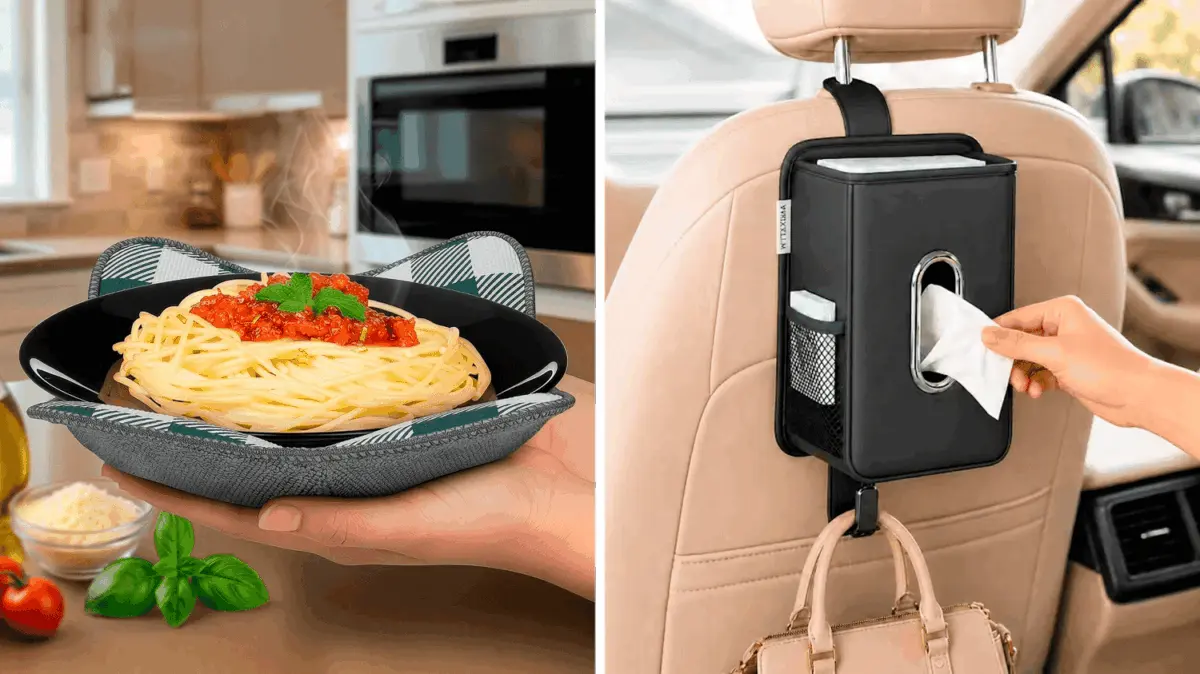
The automotive interior serves as a prime battleground for spatial efficiency. Modern commuters spend significant hours in transit, transforming vehicles into mobile offices, dining rooms, and storage units. Smart car organizers—featuring integrated tissue holders, hanging utility hooks for bags, compact trash receptacles, and mesh catch-alls—demonstrate how vertical space on seatbacks can be leveraged to maintain order without sacrificing passenger comfort.
In the realm of personal accessories and office productivity, compact multi-functionality reigns supreme. The ubiquitous nine-function pen, which integrates an LED light, precision ruler, bubble level, bottle opener, stylus, and dual-head screwdriver into a standard writing instrument, underscores the minimalist ethos. By collapsing multiple toolsets into a single, pocket-sized profile, manufacturers appeal to a consumer base that values preparedness without the burden of heavy EDC (Everyday Carry) gear.
Moreover, office ergonomics has transcended traditional furniture to include modular accessories. High-density foam footrests with adjustable layers, laptop-mounted Word and Excel shortcut cheat-sheet stickers, and cube timers with progressive visual LED rings address the cognitive and physical strains of desk-bound labor.
3. Culinary Ingenuity: From Food Preservation to Kitchen Efficiency
The kitchen remains the epicenter of consumer product innovation. Here, the intersection of material science and culinary physics yields remarkable efficiency gains.
Maintaining Freshness and Flavor
Food waste and spoilage represent significant economic and environmental drains on households. Ingenious products targeting preservation have transformed pantry management:
- Airtight Glass Honey Jars: Equipped with built-in wooden dippers, these containers ensure exact portion control while maintaining a hermetic seal against crystallization and airborne contaminants.
- Terracotta Brown Sugar Spoons: By slowly releasing moisture into storage containers, these porous ceramic tools prevent brown sugar from hardening into unusable blocks, extending pantry shelf-life.
- Silicone Mason Jar Lids: Expanding the versatility of standard glassware, these reusable, temperature-resilient lids create a leakproof seal capable of withstanding freezer, oven, and microwave environments.
Precision and Safety in Food Preparation
Beyond preservation, precision tools have redefined home cooking safety. Microwave bowl holders crafted from multi-layered padded fabric insulate users against thermal burns when handling hot soups and liquids. Concurrently, stainless steel "soap" bars utilize chemical reactions with sulfur molecules to effortlessly neutralize pungent odors like garlic, onion, and fish from human skin without harsh detergents.
For bakers, innovations such as double-sided silicone spatulas (combining curved scraping edges with spoon bowls), food scrapers imprinted with measurement conversions, and magnetic conversion charts affixed to refrigerators eliminate guesswork, ensuring consistent culinary results.
4. Travel, Mobility, and Personal Organization
As global mobility rebounds and remote work fosters nomadic lifestyles, travel accessories have undergone a radical redesign focused on security, weight reduction, and spatial compression.
Streamlining the Journey
Packing efficiency has been revolutionized by compression packing cubes constructed from water-resistant polyester and breathable mesh panels. These systems allow travelers to compartmentalize and compress garments, shoes, and toiletries, drastically reducing luggage footprints.
Security and traceability have also evolved. Faux leather passport holders now integrate dedicated AirTag slots alongside RFID-blocking materials and water-resistant constructions, offering peace of mind against loss and digital theft.
For daily commutes, portable solutions such as table-mounted bag hooks (supporting up to 11 pounds) prevent purses and backpacks from contacting unhygienic restaurant and public venue floors, while silicone lip balm holders with wrist lanyards ensure essential personal care items remain instantly accessible.
5. Economic Resilience and the Psychology of the "Micro-Splurge"
The proliferation of these functional innovations cannot be divorced from macroeconomic realities. In economic climates characterized by inflationary pressures and financial caution, consumers frequently curtail major capital expenditures—such as home renovations or new vehicle purchases. However, the desire for self-improvement and lifestyle enhancement remains robust.
The Rise of High-Utility, Low-Cost Goods
This dynamic fuels the "micro-splurge" economy. Consumers readily invest nominal sums (often under $10 to $20) to secure immediate, tangible improvements in their daily quality of life. An outlet cover extension cord that reorganizes a tangled power strip, a set of no-tie elastic shoelaces that convert sneakers into slip-ons, or a stick-on external hard drive sleeve represent low-risk financial commitments that yield high psychological and operational dividends.
Furthermore, consumer review ecosystems act as powerful validation engines for these products. Real-time feedback loops on e-commerce platforms highlight authentic utility, transforming niche inventions into viral sensations. When a reviewer confirms that a specialized baseball-hat claw clip features a precise central gap eliminating pressure points, or that a 5-in-1 stainless steel kitchen spoon efficiently mashes, grates, and strains, consumer trust is instantly solidified.
6. Official Statements and Industry Insights
Industry analysts tracking the consumer packaged goods (CPG) sector emphasize that the success of these micro-innovations signals a permanent shift in product development methodologies.
"We are witnessing a transition from aesthetic-first design to utility-first engineering," notes Dr. Elena Vance, Senior Consumer Behavior Researcher at the Global Retail Institute. "Consumers are no longer impressed by form alone. In a hyper-connected, fast-paced society, the ultimate luxury is time saved and friction removed. Products that successfully target a singular, nagging annoyance—no matter how small—achieve remarkable market resonance because they offer an immediate, quantifiable return on investment."
Design engineers echo this sentiment, pointing out that modern manufacturing technologies, such as rapid prototyping and direct-to-consumer digital marketing, allow innovative problem-solvers to bypass traditional retail gatekeepers and connect directly with audiences seeking specific solutions.
7. Future Outlook: The Next Wave of Domestic and Personal Innovation
As artificial intelligence, smart materials, and advanced polymers continue to evolve, the trajectory of everyday problem-solving tools points toward even greater integration and personalization.
Anticipated Trends
- Smart Materials Integration: Future micro-tools will increasingly utilize phase-change materials and advanced thermochromics, moving beyond passive efficiency to active environmental response (e.g., self-regulating temperature mugs and color-changing indicators for food safety).
- Modular Ecosystems: Products designed to interface seamlessly with existing infrastructure—such as Stanley tumbler snack bowls, MagSafe-compatible auxiliary lighting, and modular vehicle charging stations—will dominate, emphasizing interoperability over standalone design.
- Sustainable Circularity: With environmental consciousness at an all-time high, the future of low-cost utility items will depend heavily on biodegradable polymers, recycled stainless steel, and easily upcycled components, ensuring that convenience does not come at the expense of ecological health.
Conclusion
The micro-innovation phenomenon demonstrates that monumental improvements in human comfort and efficiency do not always require disruptive, high-tech overhauls. Often, they begin with a simple question: How can this everyday annoyance be made just a little bit easier? As designers, engineers, and manufacturers continue to listen to the granular needs of the modern consumer, the future of everyday life promises to be significantly more streamlined, organized, and ingenious.

