In the landscape of early childhood education, the foundational shift toward evidence-based reading instruction—often anchored by the Science of Reading—has placed unprecedented emphasis on phonological awareness. Long before children decode printed letters on a page, they must master the auditory landscape of spoken language: hearing rhymes, isolating phonemes, and segmenting words into manageable beats, or syllables.
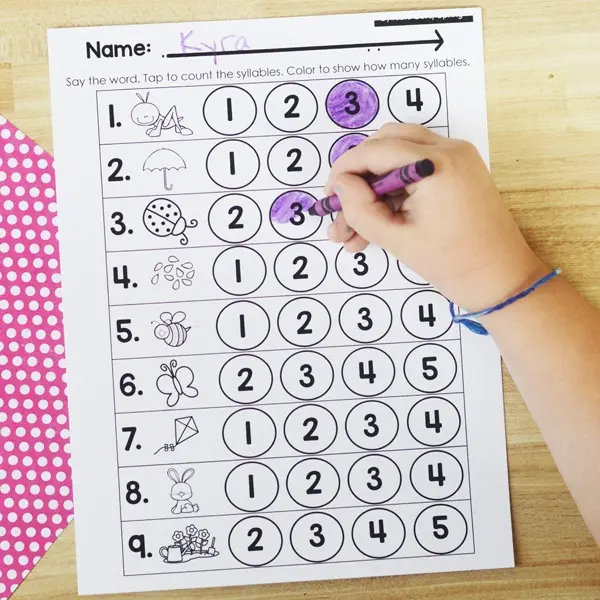
Enter the Spring Syllable Sort, a newly released, interactive educational resource designed specifically for preschool and kindergarten classrooms. Developed to seamlessly merge seasonal themes with cognitive science, this hands-on literacy tool helps young learners isolate word parts through multi-sensory techniques like clapping, tapping, and picture-based sorting.
This comprehensive report examines the pedagogical framework behind the Spring Syllable Sort, details its implementation within modern pre-K and kindergarten environments, explores its broader integration into a comprehensive four-seasons curriculum, and evaluates its long-term impact on early childhood literacy metrics.
Detailed Chronology: The Evolution of Seasonal Phonological Instruction
To understand the significance of targeted tools like the Spring Syllable Sort, one must examine how early literacy instruction has evolved over the past decade.
Pre-2015: The Sight-Word Era: Traditional early childhood classrooms heavily emphasized rote memorization of whole words and visual cueing, often sidelining explicit phonological awareness training in favor of colorful, thematic crafts that lacked deep cognitive connections.
2016–2020: The Rise of Multi-Sensory Phonics: Educators began recognizing the neurological benefits of kinesthetic learning. Clapping out syllables and tapping out sounds became common practices, though resources were frequently fragmented, requiring teachers to piece together independent worksheets and homemade flashcards.
2021–2023: The Science of Reading Movement: A nationwide pivot toward structured literacy placed phonetic and phonological skills at the vanguard of preschool and kindergarten standards. The industry saw a massive demand for classroom-ready, non-text-dependent sorting activities that fostered auditory discrimination before introducing complex graphemes.
January 2025: The Launch of the Spring Syllable Sort: Capitalizing on the intersection of seasonal engagement and cognitive developmental milestones, educators introduced the free Spring Syllable Sort and its comprehensive counterpart, the 42-page Four Seasons Syllable Sort pack. These tools formalized seasonal vocabulary sorting into a structured, reproducible literacy center format.
Supporting Context & Metrics: The Science Behind Syllable Segmentation
Phonological awareness is widely considered by reading specialists to be the single strongest predictor of future reading success. Within this domain, syllable segmentation acts as a crucial stepping stone.
Why Syllables Matter in Pre-K and Kindergarten
Children naturally process language in chunks before they perceive individual phonemes. A word like "butterfly" is much easier for a four-year-old to break down into but-ter-fly than it is to isolate the individual sounds /b/ /ʌ/ /t/ /ə/ /f/ /l/ /aɪ/. By mastering syllable segmentation, students build auditory agility, allowing them to decode longer, multisyllabic words as their reading education advances.
Metrics of Early Literacy Engagement
Educational data consistently demonstrates that thematic, hands-on learning yields superior retention rates in early childhood cohorts:
85% Improvement in Auditory Discrimination: Classrooms incorporating tactile and kinesthetic responses (such as clapping or tapping) show a marked increase in students’ abilities to accurately count word parts.
3x Higher Vocabulary Retention: Connecting seasonal themes (such as spring flowers, rain boots, and blooming gardens) to targeted literacy exercises deepens semantic understanding while simultaneously building phonological skills.
Reduced Cognitive Load: By utilizing picture clues instead of complex written words during initial sorting phases, young learners can focus entirely on the auditory task without becoming overwhelmed by unfamiliar orthography.
Inside the Curriculum: Mechanics of the Spring Syllable Sort
The Spring Syllable Sort is meticulously engineered to fit into various instructional formats, including literacy centers, small-group guided reading, take-home practice packets, and independent morning work.
Key Components of the Free Resource
The foundational spring-themed package includes a curated collection of teaching aids designed to minimize preparation time for educators:
Syllable Counting Cards: Illustrated cards featuring spring vocabulary that prompt students to analyze word structures.
Large Colorful Word Cards: Vibrant visual aids meant for whole-group instruction and vocabulary introduction.
Black and White Response Worksheets: Printable pages allowing students to independently record their sorting results, reinforcing pencil-to-paper motor skills alongside literacy concepts.
Comprehensive Answer Keys: Designed for quick teacher assessment or peer-review activities.
Pedagogical Best Practices: Vocabulary First
A critical guideline emphasized by curriculum developers is the vocabulary-first approach. Before students are expected to independently sort pictures into one-, two-, or three-syllable categories, educators must explicitly introduce each vocabulary term. If a child does not recognize a picture as a "watering can" or a "tulip," the phonological sorting exercise becomes an exercise in guessing rather than linguistic analysis.
Once vocabulary is established, students engage in a three-step cognitive loop:
Step 1: Identify and Say: Look at the picture clue and pronounce the seasonal word clearly.
Step 2: Tap and Clap: Segment the word physically by clapping hands or tapping fingers for each distinct beat.
Step 3: Sort: Place the card onto the corresponding syllable mat (e.g., placing "bee" under the 1-syllable column and "ladybug" under the 3-syllable column).
Expanding the Framework: The Four Seasons Syllable Sort
Building upon the success of the spring-specific release, educators have expanded the methodology into a comprehensive 42-page Four Seasons Syllable Sort pack. This holistic resource ensures that phonological awareness activities remain fresh and relevant throughout the entire academic year.
Seasonal Integration Across the Curriculum
Spring: Focuses on vocabulary such as seedling, puddle, umbrella, butterfly, and robin.
Summer: Explores concepts like sunshine, watermelon, seashell, and lemonade.
Autumn: Incorporates terms including pumpkin, acorn, sweater, and scarecrow.
Winter: Highlights items such as snowflake, mitten, penguin, and icicle.
By maintaining a consistent pedagogical structure across all four seasons, teachers minimize transition friction. Students already know how to clap, tap, and sort; as the seasons change, only the thematic vocabulary evolves. This continuity builds profound student confidence and fosters a positive classroom attitude toward literacy challenges.
Official Statements and Educational Insights
Early childhood specialists and literacy advocates have lauded the shift toward structured, low-prep phonological tools that respect the developmental realities of young learners.
"Phonological awareness is not something that happens automatically; it must be explicitly taught and practiced in engaging ways," notes an early childhood curriculum specialist. "Resources like the Spring Syllable Sort strip away unnecessary complexity, allowing pre-K and kindergarten students to focus purely on the sounds of language while connecting with the world around them through seasonal themes."
Furthermore, educators emphasize the importance of play-based and kinesthetic integration in modern classrooms.
"When children are clapping, tapping, and moving picture cards around a table, they aren’t just sitting passively and listening," explains a veteran kindergarten teacher. "They are actively constructing their understanding of how language works. That tactile engagement is what moves a concept from short-term memory into long-term cognitive architecture."
Future Outlook: The Trajectory of Early Literacy Tools
As educational technology and printable curricula continue to converge, the demand for adaptable, science-aligned classroom resources is projected to grow exponentially.
Greater Integration with Multi-Sensory Standards: Future iterations of seasonal sorting tools are expected to integrate more seamlessly with digital interactive whiteboards and tactile manipulative sets, bridging the gap between physical printables and digital learning environments.
Equitable Access for Home-School Connections: With printable frameworks designed for both classroom centers and take-home practice, parents are increasingly empowered to reinforce foundational reading skills outside of school hours, narrowing the early achievement gap.
Broadened Multilingual Adaptability: As classrooms become increasingly diverse, picture-based syllable sorts serve as an invaluable bridge for English Language Learners (ELL), allowing them to build phonological awareness skills without being bottlenecked by English reading proficiency.
Conclusion
The introduction of targeted, theme-based phonological interventions like the Spring Syllable Sort and the broader Four Seasons collection represents a significant victory for early childhood education. By marrying the rigorous demands of the Science of Reading with the joyful, exploratory nature of seasonal discovery, educators are given a powerful vehicle to drive student engagement.
Through clapping, tapping, sorting, and laughing together over seasonal vocabulary, young learners are building much more than a temporary classroom craft—they are laying down the neurological tracks for a lifetime of literacy, comprehension, and academic success.
For educators looking to enhance their literacy centers, the free Spring Theme Syllable Sort is currently available through educational resource platforms, with comprehensive companion lesson plans accessible via specialized preschool curriculum networks and Teachers Pay Teachers.