
Executive Overview
In the landscape of modern early childhood education, bridging the gap between foundational play and rigorous cognitive science remains a central mission for educators and curriculum developers. Phonological awareness—the ability to recognize and manipulate the spoken parts of sentences and words, such as syllables, onset-rims, and phonemes—stands as a critical predictor of future reading success. Aligning with the rigorous benchmarks of the Science of Reading, early childhood specialists are continually seeking dynamic methodologies to make abstract linguistic concepts accessible, engaging, and developmentally appropriate for pre-kindergarten (Pre-K) and kindergarten students.
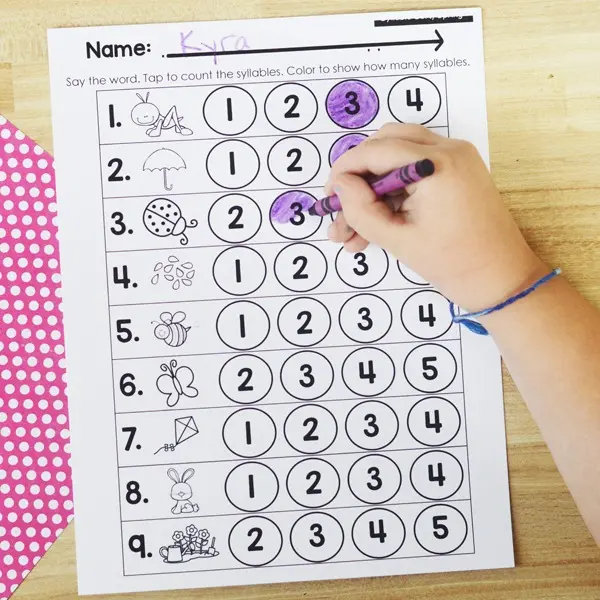
Enter the Spring Syllable Sort and its comprehensive counterpart, the Four Seasons Syllable Sort. Developed as interactive, multi-sensory literacy tools, these resources transform traditional, dry phonics instruction into vibrant, thematic classroom experiences. By integrating physical movement—such as clapping and tapping—with visual picture clues and structured sorting frameworks, these activities address the diverse learning styles of young children. This report provides an authoritative, in-depth examination of these educational tools, exploring their pedagogical foundations, structural components, classroom integration strategies, and the broader implications of play-based phonological interventions in early education.
Detailed Chronology and Pedagogical Evolution
The Shift Toward Multi-Sensory Literacy
For decades, early childhood education transitioned between pure play-based models and heavily formalized, desk-bound phonics drills. However, contemporary educational research—commonly synthesized under the "Science of Reading"—highlights the necessity of explicit, systematic, and engaging phonological awareness training before children are introduced to complex decoding and reading comprehension tasks.

Historically, teaching children to segment words into syllables relied heavily on auditorily driven exercises or rote textbook drills. Educators quickly recognized the limitations of these methods for very young learners, who thrive on tactile, visual, and kinesthetic inputs. The conceptualization of the Spring Syllable Sort marks a deliberate evolution in this timeline:
- Phase 1: Conceptualization & Thematic Alignment. Educators identified a gap in seasonal preschool curricula. While arts, crafts, and math units frequently incorporated seasonal themes (such as spring flowers, summer sun, autumn leaves, and winter snow), literacy centers often relied on generic, decontextualized flashcards.
- Phase 2: Integration of Kinesthetic Learning. Developers integrated physical cues—clapping and tapping—into the sorting methodology. This ensured that children engaged multiple neurological pathways simultaneously, solidifying their understanding of word boundaries.
- Phase 3: Expansion into Year-Round Application. Following the positive reception of the spring-themed printables, the framework was expanded into a comprehensive 42-page "Four Seasons Syllable Sort" pack, offering continuous, scaffolded phonological practice across the entire academic calendar year.
Supporting Context & Metrics: The Science of Phonological Awareness
Why Syllable Segmentation Matters
Phonological awareness is not a single skill, but a broad category that encompasses a continuum of increasing difficulty. Syllable segmentation—the ability to break spoken words into manageable parts or beats—is one of the foundational building blocks. According to developmental literacy experts, children who master syllable counting at an early age transition more smoothly into phonemic awareness (manipulating individual sounds), which is directly correlated with reading fluency and spelling proficiency in later grades.
| Skill Level | Developmental Focus | Classroom Activity Integration |
|---|---|---|
| Word Level | Recognizing individual words in a spoken sentence | Sentence strips, jumping for each word |
| Syllable Level | Segmenting multi-syllable words into beats | Spring Syllable Sort (Clapping, tapping, sorting) |
| Onset-Rime Level | Blending and isolating initial sounds and word families | Rhyming games, word family sorts |
| Phoneme Level | Isolating, blending, and segmenting individual sounds | Elkonin boxes, letter-sound correspondence |
Core Components of the Spring Syllable Sort Package
The free Spring Syllable Sort and its comprehensive seasonal extensions are meticulously designed to minimize teacher preparation time while maximizing student engagement. Key components include:

- Syllable Counting Cards: Illustrated cards featuring spring-themed vocabulary (e.g., tulip, raincoat, butterfly, sun) that prompt students to analyze image cues rather than struggling with premature decoding.
- Large Colorful Word Cards: Designed for group instruction, pocket charts, or guided reading tables.
- Black and White Response Worksheets: Optional independent practice sheets that allow students to record their findings, providing educators with concrete assessment data.
- Comprehensive Answer Keys: Ensuring seamless self-correction during center rotations or independent work blocks.
Official Statements and Educational Insights
Educators and curriculum designers emphasize that the success of tools like the Spring Syllable Sort lies in their intentional separation of auditory-phonological processing from visual orthography.
"When young children are first learning to hear syllables, introducing written letters can sometimes overload their cognitive load," notes a prominent early childhood literacy specialist. "By focusing entirely on pictures, spoken sounds, physical clapping, and tactile sorting, children can concentrate purely on the phonological structure of the language. Once that foundation is secure, connecting those sounds to print becomes a natural, seamless next step."
Furthermore, experts highlight the importance of vocabulary introduction prior to independent center work. Because the activity relies heavily on identifying specific seasonal objects, teachers are advised to explicitly introduce terms like caterpillar, umbrella, or daffodil during morning meetings. This ensures that a child’s inability to sort a card stems from a phonological misunderstanding rather than a simple lack of vocabulary comprehension.

Practical Classroom Integration Strategies
Implementing the Spring Syllable Sort effectively requires careful planning within the daily classroom schedule. Educators utilize these materials across several distinct instructional settings:
1. Literacy Centers and Independent Stations
During small-group rotation times, the syllable sorting mats and picture cards can be placed in a dedicated literacy center. Students work in pairs or independently to say a word aloud, clap or tap out the beats, and place the card under the appropriate number column (1, 2, or 3+ syllables).
2. Take-Home Literacy Practice
To foster strong home-school connections, teachers frequently send home black-and-white versions of the sorting worksheets and cut-and-paste cards. This empowers families to engage directly in their child’s early literacy development without requiring specialized educational equipment.

3. Whole-Group Morning Meetings
Using the large colorful word cards, teachers can lead interactive whole-group games. The entire class chants a spring vocabulary word together, claps out the syllables in unison, and invites a student volunteer to place the card on the whiteboard under the correct numerical heading.
Future Outlook: The Evolution of Seasonal Literacy Curricula
As educational standards continue to evolve toward evidence-based practices rooted in the Science of Reading, the demand for high-quality, play-based instructional materials is projected to grow. The success of the Spring Syllable Sort and the broader Four Seasons collection points toward a future where early childhood curricula seamlessly blend structured phonological training with engaging, thematic play.
Future iterations of these tools are expected to integrate digital interactive components—such as tablet-based sorting games and augmented reality picture cards—while maintaining the vital kinesthetic elements of clapping, tapping, and physical manipulation. By keeping student engagement high and pedagogical standards rigorous, educators can ensure that foundational literacy skills are not merely taught, but deeply internalized, setting the stage for a lifetime of confident reading and learning.

