
Executive Overview
In the landscape of modern educational technology, gamification has long been heralded as a powerful catalyst for student engagement. Tools like Kahoot! transformed traditional quizzes into high-energy, fast-paced competitions, leveraging digital leaderboards to motivate students. However, educators have increasingly noted a recurring friction point in these environments: the relentless pursuit of speed. When digital quizzes prioritize who can click the fastest, anxious hesitation can paralyze learners, widening the gap between rapid responders and those who prefer to process information methodically.
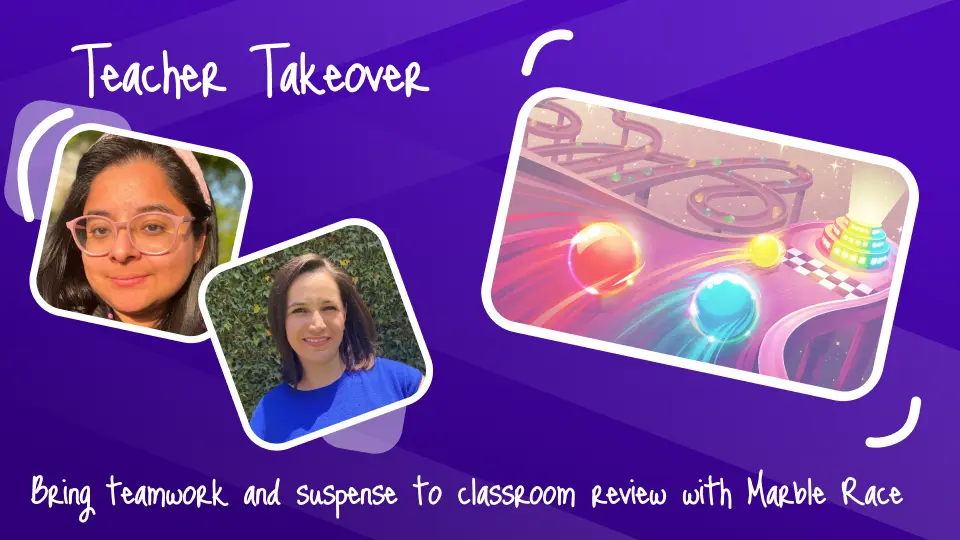
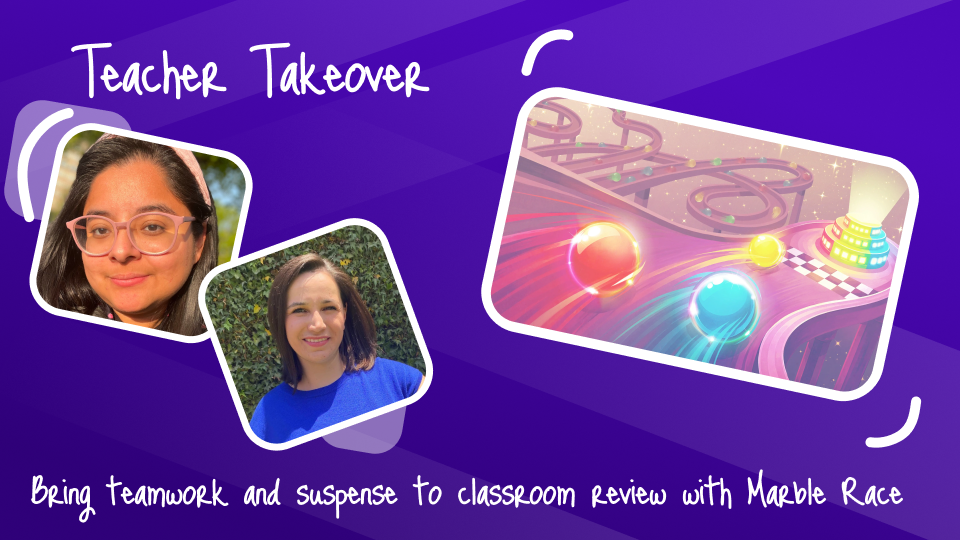
Enter Marble Race, a pioneering game mode designed to fundamentally alter classroom dynamics. By decoupling academic accuracy from the tyranny of the clock, Marble Race replaces the static leaderboard with a dynamic, pinball-inspired visual narrative. Students earn marbles for their randomized teams by answering questions correctly. Between question rounds, the entire classroom pauses to watch those marbles tumble through an unpredictable, physics-driven obstacle course.
The pedagogical implications are profound. Early deployments and teacher testimonials from around the globe indicate that Marble Race shifts the classroom focus away from individual point-hoarding and toward collaborative accuracy, conceptual understanding, and inclusive participation. Because the game mode integrates seamlessly with educators’ pre-existing digital libraries without requiring additional preparation time, it represents a friction-free upgrade to instructional delivery. This report provides an in-depth examination of the mechanics, psychological impacts, global reception, and future trajectory of Marble Race in contemporary education.
Detailed Chronology and Development of the Feature
The conceptualization of Marble Race did not happen in a vacuum; it was born out of years of iterative feedback from the global educational community regarding the emotional landscape of competitive learning.
The Evolution of Classroom Gamification
Since its inception, educational gaming has wrestled with a classic design paradox: how to foster healthy competition without alienating students who process information more slowly. Traditional podium structures naturally isolate the top three performers, leaving the remaining students feeling detached once the mathematical reality of the leaderboard makes a comeback impossible.
Kahoot!’s product development teams sought to address this psychological fatigue. The goal was to engineer a format that preserved the electrifying energy of a live game show while dismantling the demoralizing aspects of static point hierarchies. Inspired by the universal appeal of kinetic, physics-based simulations—reminiscent of marble runs and pinball machines—designers conceptualized a system where knowledge accumulation translates directly into physical momentum, but where the final outcome remains delightfully volatile.
The Pilot Phase and Global Rollout
Following internal stress-testing, the feature was quietly introduced to select educators within the Kahoot! Ambassador network spanning North America, Latin America, Asia, and Europe. This closed beta phase allowed developers to observe classroom interactions in real time.
Feedback from the pilot phase was overwhelmingly positive, noting that students who typically disengaged midway through a standard quiz remained anchored to the lesson. Following minor refinements to course physics, predictability metrics, and team-balancing algorithms, Marble Race was officially rolled out as a core game mode, immediately compatible with any existing content housed within user libraries.
Supporting Context and Mechanics: How Marble Race Works
To understand the transformative impact of Marble Race, one must examine the specific mechanics that govern gameplay and how they intersect with cognitive load theory and social-emotional learning (SEL).
[Student Answers Question Accurately]
                │
                ▼
  [Earns Marbles for Randomized Team]
                │
                ▼
[Classroom Pauses for Kinetic Race Phase]
                │
                ▼
[Unpredictable Pinball Obstacle Course]
                │
                ▼
    [Shared Class Celebration]
1. Accuracy Over Velocity
In standard quiz formats, points are frequently calculated using a sliding scale that heavily rewards rapid responses. While this encourages quick recall, it penalizes thoughtful reflection. Marble Race adjusts this paradigm. While answering correctly is still mandatory to acquire assets (marbles), the speed at which the correct answer is logged no longer dictates a disproportionate point advantage. This subtle yet powerful adjustment reduces test anxiety, allowing students to focus on critical thinking rather than frantic button-mashing.
2. Randomized Team Dynamics
Marble Race automatically assigns students to randomized teams. This architectural choice is intentional. By removing the social friction of self-selected groups—which can often lead to exclusion or hierarchical friction—randomized teams foster a sense of collective destiny. Every correct answer contributes to a shared goal, compelling peers to support one another regardless of their traditional academic standing.
3. Kinetic Suspense and Visual Storytelling
The core psychological hook of Marble Race occurs during the intermission between question rounds. Abstract scores are translated into a dynamic visual narrative: glowing marbles dropping through pegs, chutes, and dynamic barriers. Because the physical course introduces randomized variables, the team in the lead during the quiz phase is not guaranteed victory. This sustained suspense keeps the entire classroom leaning forward in their seats until the very last marble crosses the finish line.
4. Zero-Friction Implementation for Educators
One of the primary barriers to technology adoption in schools is preparation fatigue. Teachers are perpetually overburdened with lesson planning, administrative duties, and curriculum alignment. Marble Race was engineered to eliminate this barrier entirely. Educators do not need to build new kahoots, redesign slide decks, or learn complex software interfaces. By simply selecting "Marble Race" from the format dropdown menu upon launching any existing quiz from their personal library, teachers can instantly modernize their instructional delivery.
Official Statements and Global Perspectives
The reception of Marble Race by international educators highlights its universal applicability across diverse cultural and pedagogical environments.
Bridging the Playing Field in Indonesia
Ika M., a middle school educator and Kahoot! Ambassador based in Indonesia, highlighted how the game mode restructures classroom equity:
"The best part is that it levels the playing field. It successfully captures the excitement of a live game while shifting the focus from ‘who is the fastest clicker’ to ‘who actually understands the material.’ It creates a healthy, high-energy competition where everyone feels they still have a chance to catch up."
Ika further emphasized the narrative power of the visual interface:
"Teachers will love it because it transforms abstract scores into a dynamic visual narrative. Instead of students just staring at shifting numbers on a leaderboard, they see a live race driven by their knowledge. It naturally promotes healthy competition, turns repetitive review sessions into an exciting classroom event, and requires zero extra prep time from the teacher since it applies to any existing quiz."
Sustaining Engagement in New York City STEM Classrooms
In high-demand urban environments like New York City, maintaining student attention throughout rigorous STEM curricula is a constant challenge. Elisabeth Lainez, a STEM educator, observed a marked shift in student focus:
"The most beneficial aspect of Marble Race was its ability to motivate students to participate and stay focused on answering questions. Students were excited by the marble racing theme and were eager to see how their performance would influence the outcome of the race."
Lainez advocates for deploying Marble Race across multiple instructional touchpoints, including pre-assessment reviews, concept reinforcement, formative checks for understanding, and interactive skill practice.
Redefining Mexican Educational Innovation
Carla C., a Director of Innovation based in Mexico City, pointed out the emotional restructuring that occurs when traditional podiums are removed:
"It changes the traditional concept of the leaderboard and podium… it shifts students’ attention away from points and winning while they are answering the questions, allowing them to focus more on participation and accuracy."
International Delight and Unpredictability
Primary educators have noted the visceral joy the game brings to younger cohorts. Jisun Lee, an Ambassador in South Korea, noted:
"The fun part is that it’s hard to predict the outcome because the rankings change depending on where the beads land."
Echoing this sentiment, Alex L. from New York simply stated:
"They have so much fun at the end when the marbles fall."
Future Outlook: The Trajectory of Gamified Instruction
As educational institutions continue to navigate the post-pandemic landscape of student engagement, attention deficit, and learning recovery, the demand for emotionally safe yet intellectually rigorous tools has never been higher.
The success of Marble Race signals a broader evolution in educational technology design: moving away from hyper-individualistic, high-stress metrics toward collaborative, narrative-driven experiences. Future iterations of classroom gamification are expected to lean heavily into physics-based simulations, adaptive mechanics that respond to collective classroom performance, and deeper integrations with social-emotional learning frameworks.
By proving that rigorous academic assessment can coexist with lighthearted, unpredictable fun, Marble Race establishes a new benchmark for EdTech developers. For teachers worldwide, it offers a reliable mechanism to turn routine review sessions into communal celebrations of learning—ensuring that the most memorable part of the school day is not who finished first, but how the entire classroom crossed the finish line together.

