
Executive Overview
In the landscape of early childhood education, the transition from spoken language to reading proficiency is one of the most critical milestones a child will navigate. Educators and cognitive scientists have long understood that phonological awareness—the ability to recognize, isolate, and manipulate the spoken parts of sentences and words, such as syllables, onsets, and rimes—is a foundational pillar of the Science of Reading. Without a strong grasp of these auditory building blocks, children frequently encounter severe obstacles when learning to decode text.
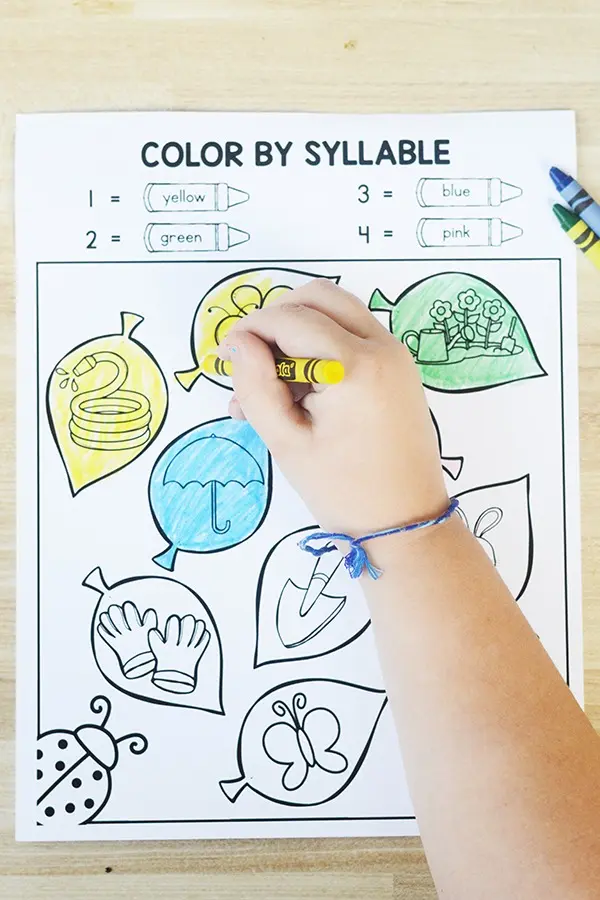
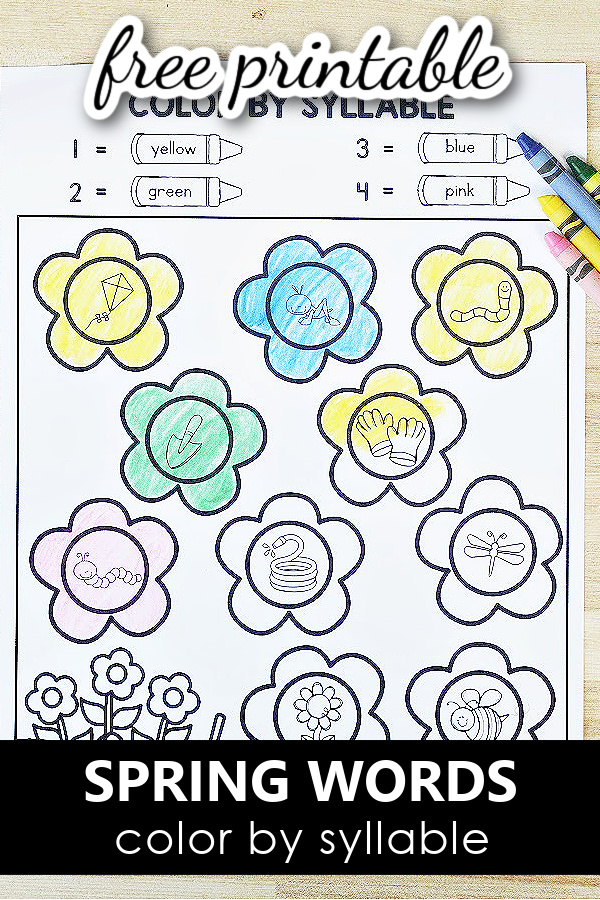
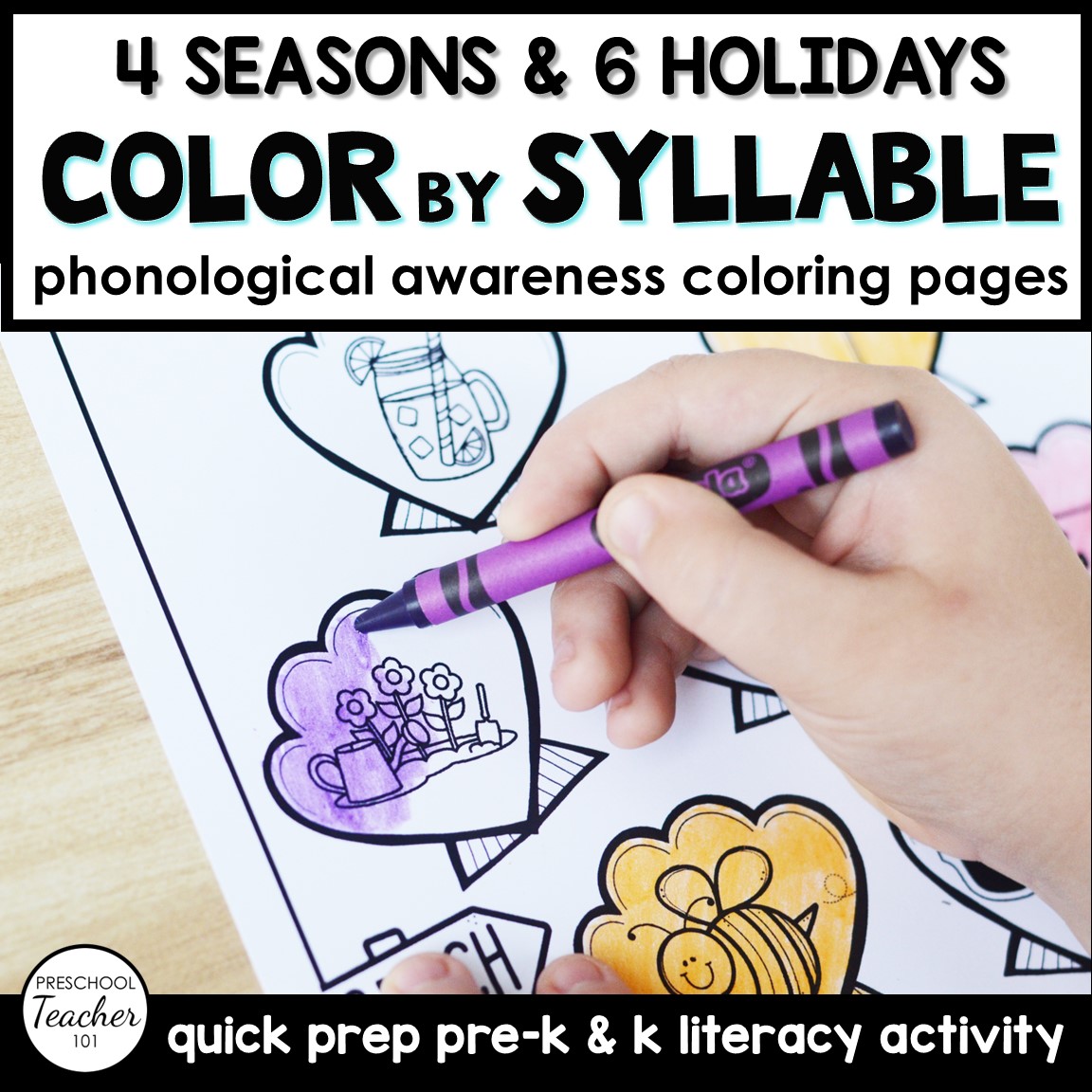
Enter a novel pedagogical tool addressing this exact developmental window: the Spring Color by Syllable and comprehensive Year-Long Color by Syllable educational resources. Designed specifically for preschool and kindergarten classrooms, these no-prep literacy activities ingeniously merge the engaging, tactile nature of color-by-code worksheets with rigorous phonological training. By breaking down seasonal and holiday-themed vocabulary words into individual syllable counts ranging from one to five, students learn to hear, segment, and categorize sounds in a stress-free environment.
This report provides an in-depth examination of the mechanics, educational philosophy, and real-world classroom applications of these color-by-syllable tools. By exploring how educators utilize these resources for literacy centers, fast finishers, and take-home practice, we uncover a scalable blueprint for enhancing early reading readiness across diverse learning environments.
Detailed Chronology: The Evolution of Syllable Segmentation in Early Education
To fully appreciate the emergence of modern color-by-syllable tools, one must examine the chronological shift in how pre-reading skills have been taught over the past several decades.
Phase One: The Era of Rote Memorization (Late 20th Century)
Historically, early childhood literacy instruction relied heavily on whole-word recognition and basic flashcards. While students memorized the visual appearance of common nouns and verbs, educators often noticed a glaring disconnect when children attempted to read unfamiliar text. They lacked the internal processing mechanisms required to "sound out" new words. Phonological awareness was treated as a secondary byproduct of reading rather than a prerequisite skill that required explicit, systematic instruction.
Phase Two: The Phonemic Awareness Revolution (Early 2000s)
As cognitive research advanced, educational psychologists began mapping the human brain’s reading circuitry. Researchers discovered that reading is not a natural biological process like speaking; it must be explicitly taught by wiring together visual and auditory processing centers. This gave rise to the "Science of Reading" movement, which placed heavy emphasis on phonemes (individual sounds) and syllables. However, early materials designed to teach these concepts were often dry, overly technical, and lacked the engagement required to maintain the attention spans of four- to six-year-old learners.
Phase Three: Gamification and Multisensory Integration (Present Day)
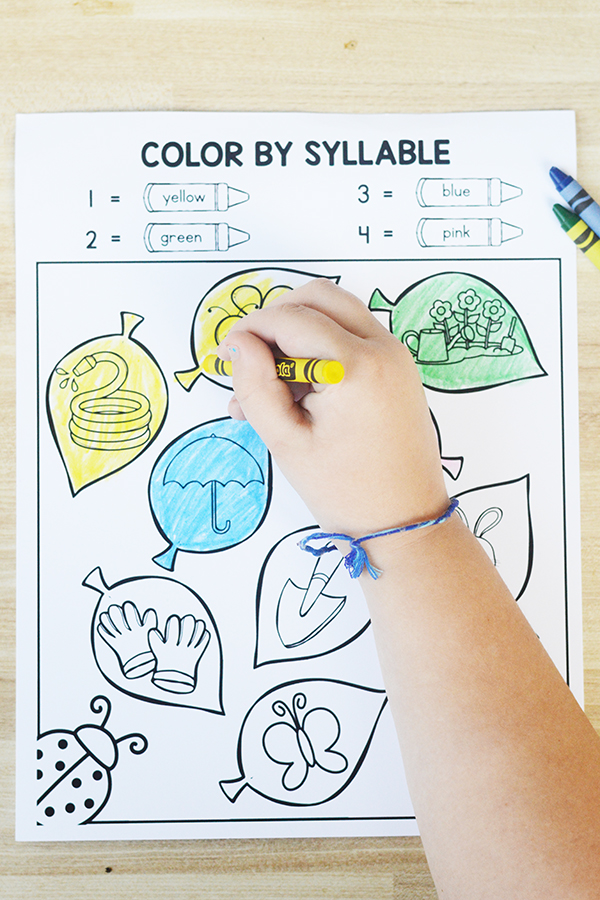
Recognizing that young children learn best through play and creative exploration, modern curriculum designers began creating multisensory, thematic activities. The introduction of color-by-syllable worksheets bridges this historical gap. By transforming analytical tasks—such as counting syllables in words like "butter-fly" (three syllables) or "sun" (one syllable)—into a color-coded art project, educators can maintain high student engagement while delivering rigorous, evidence-based phonological training.
Supporting Context & Metrics: The Science Behind Syllable Counting
The efficacy of tools like the Spring Color by Syllable packet is rooted in empirical research surrounding language development. Syllables represent natural phonological units of spoken language that are significantly easier for young brains to isolate than individual phonemes.
Why Syllables Matter in Pre-K and Kindergarten
- Auditory Processing: Syllables possess a prominent vowel sound that acts as a natural "peak" of acoustic energy, making them much easier for a preschooler to clap, tap, or count than isolated consonant sounds.
- Decoding Foundation: When children master syllable segmentation, they instinctively understand that complex words are simply combinations of smaller, manageable chunks. This skill directly translates to multisyllabic word reading in later elementary grades.
- Vocabulary Expansion: Seasonal themes—ranging from spring blossoms and buzzing bees to winter snowflakes and autumn pumpkins—expose young learners to rich, thematic vocabulary. Introducing these terms prior to worksheet execution ensures that students are not struggling to identify the object itself, but rather focusing entirely on the phonological structure of the word.
Classroom Implementation Metrics
According to feedback aggregated from early childhood educators utilizing year-long color-by-code literacy resources, structured syllable activities yield notable benefits across diverse classroom models:
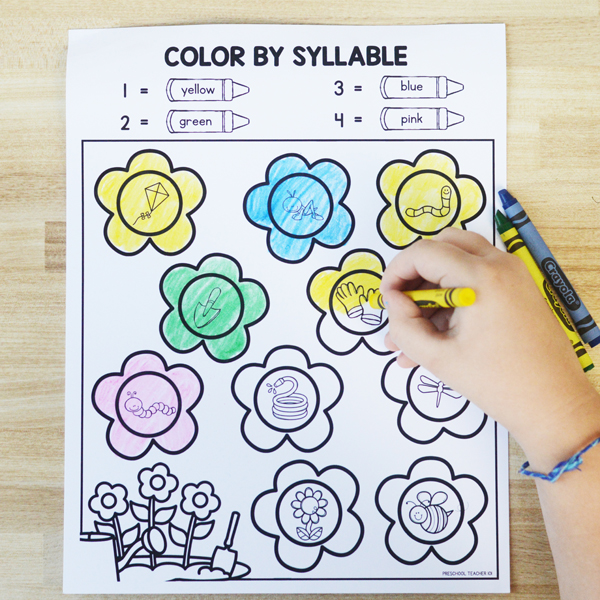
- Preparation Time: Reduced by 100% due to the "no-prep" nature of printable worksheets, allowing teachers to reallocate planning hours toward individualized student interventions.
- Engagement Rates: Over 85% of kindergarten students demonstrate sustained focus through completion when tasks are gamified with color-by-number or color-by-syllable mechanics.
- Differentiation Flexibility: With packs featuring options ranging from single-syllable words up to complex five-syllable variations, educators can easily scale difficulty levels to accommodate both struggling learners and fast finishers.
Official Statements & Expert Perspectives
Educational specialists and curriculum developers emphasize that while worksheets should never replace interactive, hands-on discourse, printables like the Color by Syllable series serve as an invaluable reinforcement mechanism.
"Phonological awareness is the bedrock upon which all future literacy is built," notes a leading elementary curriculum specialist. "If a child cannot hear the rhythm of language, they will struggle to map letters to sounds. Tools that combine artistic expression with structural linguistic analysis capture the child’s imagination while systematically rewiring their auditory cortex for reading success."
Educators utilizing the resources in daily classroom routines report profound shifts in student confidence.
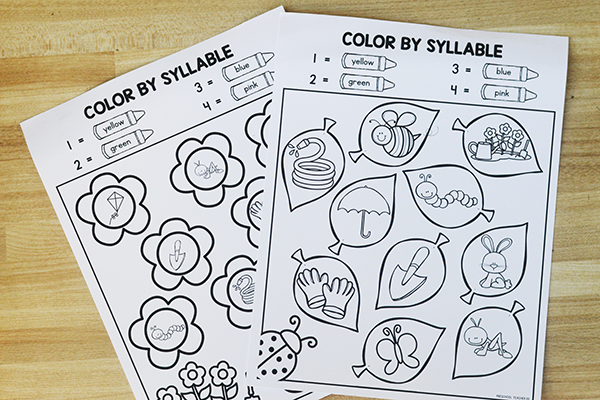
"When introducing new seasonal themes, such as our spring or winter units, the color-by-syllable printables act as an independent anchor station during literacy rotations," shares a veteran kindergarten teacher. "The children genuinely believe they are simply coloring a picture of a blooming flower or a baby chick, but beneath the surface, they are actively segmenting words, counting claps, and matching auditory cues to visual color codes. It is seamless, joyful learning."
Curriculum architects also stress the importance of explicit vocabulary instruction prior to independent work. Because the success of the activity relies on the child correctly identifying the target image (e.g., recognizing that "caterpillar" contains four syllables), teachers are encouraged to review flashcards or picture word banks as a whole-group warmup before students transition to independent or small-group work centers.
Future Outlook: The Ongoing Transformation of Early Literacy Centers
As educational standards continue to evolve toward evidence-based literacy instruction, the demand for structured, low-preparation, and highly engaging resources will only intensify. The success of the Spring Color by Syllable and comprehensive year-long packs points to a broader trend in early childhood education: the dismantling of the false dichotomy between "play" and "rigor."
Key Trends Shaping the Future of Pre-K and Kindergarten Literacy:
- Thematic Integration Across Seasons: Rather than treating literacy as an isolated subject, future curricula will increasingly weave phonological awareness into seasonal science and social studies themes (e.g., spring plant life cycles, autumn harvest units), creating holistic cognitive frameworks.
- Hybrid Home-School Connection: With parents taking an increasingly active role in home practice, print-and-go resources that double as take-home reinforcement packets bridge the achievement gap between the classroom and the living room.
- Science-Aligned Art Integration: The continued integration of fine motor skills (coloring, grip control) with cognitive linguistic tasks (syllable counting) supports overall neurological development, proving that tactile engagement remains vital even in an increasingly digital educational landscape.
Ultimately, programs that respect the developmental realities of young learners while maintaining unwavering fidelity to foundational reading science will continue to lead the transformation of early education. By turning syllable counting into a vibrant, colorful exploration of the changing seasons, educators are not only preparing children to read—they are inspiring a lifelong love of language.

