
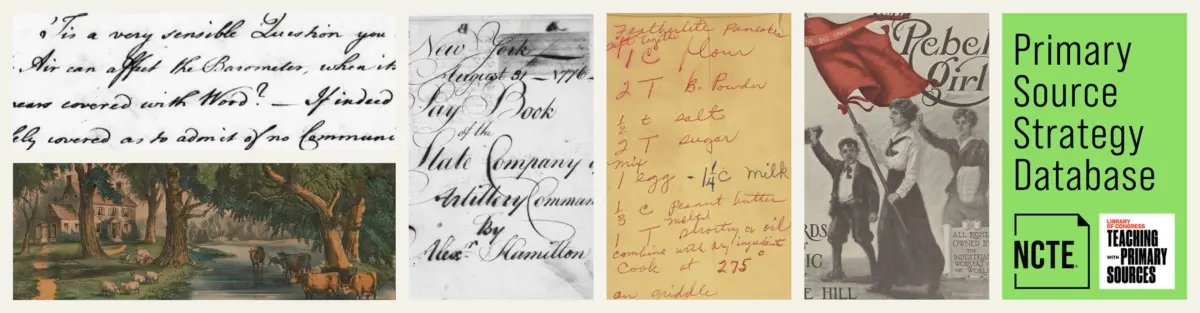
In an era defined by a fierce pedagogical reckoning regarding whose stories are told in the classroom, a groundbreaking educational initiative is bridging the gap between historical erasure and modern literacy instruction. The National Council of Teachers of English (NCTE), operating in close collaboration with the Library of Congress as an esteemed member of the Teaching with Primary Sources (TPS) Consortium, has unveiled a comprehensive, searchable database designed to revolutionize how educators integrate digitized historical artifacts into English language arts (ELA) and social studies curricula.
At the heart of this resource is a curated collection of pedagogical strategies anchored to more than 150 specific items from the Library of Congress’s vast digitized archives. Developed by over two dozen visionary educators and ELA leaders, the database provides targeted instructional roadmaps that connect primary sources to state academic standards, specific literacy merits, overarching themes, and multidisciplinary units. Among these meticulously cataloged items is a fascinating historical artifact: a late-19th-century article from The Salt Lake Tribune detailing the lives of individuals who lived as men, challenging educators and students alike to re-examine gender constructs, historical omissions, and the relentless pursuit of equality.
This initiative is far more than a digital repository; it is an urgent invitation for students to interrogate the margins of history. By deploying granular search tags such as "picture book" and "argument," teachers can easily locate materials that foster media literacy, critical reading fluency, and historical empathy. As educational institutions grapple with how to present complex, multifaceted human experiences, the NCTE-Library of Congress partnership offers a vital framework for building a more nuanced, inclusive educational landscape.
Detailed Chronology: Unearthing Hidden Histories
To understand the profound impact of the NCTE’s new pedagogical framework, one must examine the specific primary sources it champions and the historical contexts they illuminate. One standout resource integrated into the database is a remarkable historical dispatch originally published in The Salt Lake Tribune. Authored by London-based correspondent Rupert Neville and designated as a "Special Cable to The Tribune," the piece serves as an extraordinary window into the lives of women who, for various personal, financial, or survival-driven reasons, lived portions of or their entire lives as men.
The Figures of the Past: Defying the 19th-Century Paradigm
Neville’s dispatches and contemporary historical accounts pull back the curtain on figures whose narratives have long been marginalized, omitted, or entirely expunged from mainstream historical canons. The article highlights several notable women:
- Marie LeRoy: A figure whose journey highlights the extraordinary measures women took to navigate restrictive societal landscapes.
- Madame Velasquez: Often recognized in historical lore through the complex lens of civil-era narratives, whose experiences underscore the fluidity and danger of performing gender roles during periods of immense social upheaval.
- Hannah Snell: A legendary 18th-century British soldier who enlisted in the military as a man to search for an absent husband, subsequently fighting in combat and surviving multiple wounds before revealing her identity.
- Mary Ann Talbot: Another remarkable British woman who served as a soldier and sailor disguised as a man during the French Revolutionary Wars, showcasing deep resilience amid institutional barriers.
- Catherine Coome and Marion Edwards: Lesser-known names whose inclusion in Neville’s reporting provides modern students with a rare comparative dataset on how gender non-conformity was documented, sensationalized, or suppressed across different social strata.
From Archive to Classroom: The Pedagogical Integration
For decades, these accounts remained locked away in fragile newspaper archives and specialized historical collections. The integration of Neville’s article into the NCTE-Library of Congress database transforms these historical curiosities into rigorous academic tools.
When educators introduce this text using the database’s structured strategies, students are immediately prompted to look beyond the sensationalized journalistic tone of late-19th-century reporting. They are guided to analyze how history is recorded, who holds the pen, and what biases shaped the dissemination of news in the Victorian era and beyond. Through structured close-reading exercises, learners trace the limitations placed upon women during these eras, contrasting the reality of institutionalized sexism with the agency demonstrated by these historical actors.
Supporting Context & Metrics: The Mechanics of the TPS Consortium
The collaboration between the NCTE and the Library of Congress does not happen in a vacuum; it is part of a national, long-term strategic effort to embed primary source literacy into the DNA of American education. The Teaching with Primary Sources (TPS) Consortium unites universities, school districts, libraries, and national educational organizations to build a broader appreciation and utilization of the Library’s unparalleled digital holdings.
Scope and Architecture of the Database
The newly expanded searchable database represents hundreds of hours of curriculum design by veteran educators. Key metrics and structural features of the platform include:
- 150+ Curated Items: Each item is selected not only for its historical significance but for its specific capacity to advance literacy competencies—ranging from argumentative writing to rhetorical analysis.
- Two Dozen ELA Leaders: The instructional strategies are practitioner-designed, ensuring that the resources are immediately viable, highly engaging, and pedagogically sound in real-world classrooms.
- Multidimensional Search Tags: Content is indexed using robust metadata tags such as picture book, argument, vocabulary, media literacy, writing process, reading fluency, listening, minilesson, and collaboration.
- Standard-Aligned Frameworks: The database seamlessly maps primary source analysis to rigorous state-level content standards, such as the New Mexico Content Standards for Reading and Literacy in History/Social Studies.
The Standards Connection in Action
To maximize classroom adoption, the database explicitly links historical inquiry with established academic benchmarks. For instance, activities surrounding the Salt Lake Tribune article align directly with high school ELA standards:
- RI.9-10.1: Requires students to cite strong and thorough textual evidence to support explicit analysis of historical texts as well as logical inferences drawn from them. Students reading Rupert Neville’s cable must pinpoint specific textual details regarding societal expectations to back up their claims about gender restrictions.
- RI.9-10.8: Challenges learners to delineate and evaluate the arguments and specific claims within a text, assessing whether the author’s reasoning is valid and the evidence relevant. This encourages students to analyze the journalistic framing of female non-conformity in the 19th century.
- RH.11-12.2: Focuses on determining central ideas in primary sources and providing accurate summaries that map relationships among key details. This ensures that upper-level students can synthesize complex historical narratives without losing structural nuance.
Official Statements and Educational Philosophy
The rollout of these resources underscores a fundamental shift in how educational leaders view the purpose of English language arts and history instruction. Rather than treating literacy and historical content as separate silos, the NCTE-Library of Congress initiative champions an interdisciplinary approach where reading, writing, and historical inquiry reinforce one another.
Championing Empathy and Critical Thinking
Educational leaders involved in the project emphasize that studying figures who defied historical norms is not merely an exercise in historical trivia—it is a vital engine for socio-emotional development and civic readiness.
"When we bring marginalized figures and hidden histories into the classroom, we are giving students a more complete, nuanced understanding of the human story," notes curriculum frameworks developed within the TPS Consortium. "The women detailed in these archival reports defied the rigid boundaries of their eras. Discussing them encourages our youth to critically question traditional gender roles, analyze the enduring impact of societal expectations, and build profound empathy for those who fight for self-determination and human rights."
Furthermore, pedagogical experts highlight the urgency of media literacy in navigating contemporary information ecosystems. By dissecting historical journalism—such as the foreign dispatches published in The Salt Lake Tribune—students learn to recognize loaded language, sensationalism, and authorial bias. These analytical skills directly translate to how modern learners consume news, evaluate digital media, and construct their own evidence-based arguments.
Future Outlook: The Next Frontier in Literacy Instruction
As the Teaching with Primary Sources Consortium continues to expand its reach, the horizon for English language arts education points toward increasingly integrated, inquiry-driven digital environments. The success of the NCTE database signals a growing demand for curricula that honor complexity, invite diverse perspectives, and leverage authentic historical artifacts over sanitized textbook summaries.
Scaling Access and Expanding Professional Development
Looking ahead, the partnership aims to broaden the professional development pathways available to educators. Plans include virtual workshops, collaborative nationwide professional learning communities (PLCs), and expanded digital toolkits that empower teachers in rural, suburban, and urban districts alike to utilize the Library of Congress’s millions of digitized treasures.
By continuing to publish teacher-tested strategies for items ranging from rare 19th-century newspaper cables to pivotal political broadsides, the NCTE and the Library of Congress are ensuring that primary sources remain accessible, manageable, and transformative for the next generation of thinkers, writers, and citizens. In doing so, they are not only preserving the forgotten voices of the past but equipping modern students with the critical literacy tools needed to shape an equitable future.

