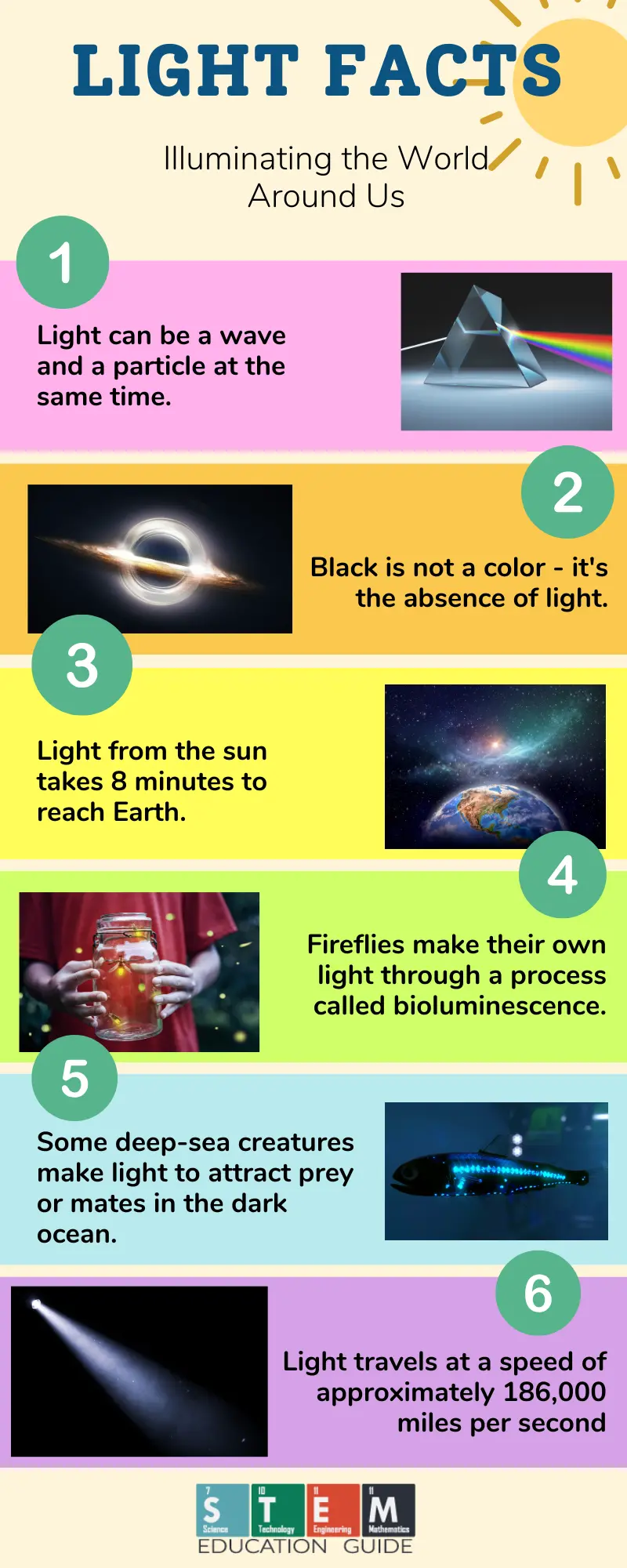
Light is the invisible thread that stitches the fabric of our observable universe together. Far more than a mere convenience that allows humanity to navigate its terrestrial surroundings, light is a fundamental force of nature—a form of electromagnetic energy that dictates the chemistry of our atmosphere, powers global communications, and serves as our primary observational window into the deep cosmos.
Travelling at a staggering speed of approximately 186,000 miles per second, light bridges astronomical distances, carrying data from distant stars and galaxies straight to our telescopes. Whether emitted by thermonuclear reactions deep within the Sun, generated biologically by deep-sea organisms through chemical processes, or harnessed technologically in fiber-optic networks, light governs the mechanics of life on Earth.
This comprehensive report examines the nature of light, its core scientific properties, its breathtaking manifestations in the natural world, and the historic and cutting-edge innovations that continue to redefine how humanity utilizes this extraordinary phenomenon.
Detailed Chronology: Unlocking the Mysteries of Light
The human quest to understand the true nature of light spans centuries, moving from philosophical musings to rigorous mathematical frameworks and technological revolutions.
[17th Century] ➔ [19th Century]  ➔ [20th Century] ➔ [21st Century]
Isaac Newton &     James Clerk       Quantum Theory   Fiber Optics &
Prism Experiments  Maxwell's Waves   & Photons        Quantum Dots
The 17th Century: The Corpuscular and Prismatic Breakthroughs
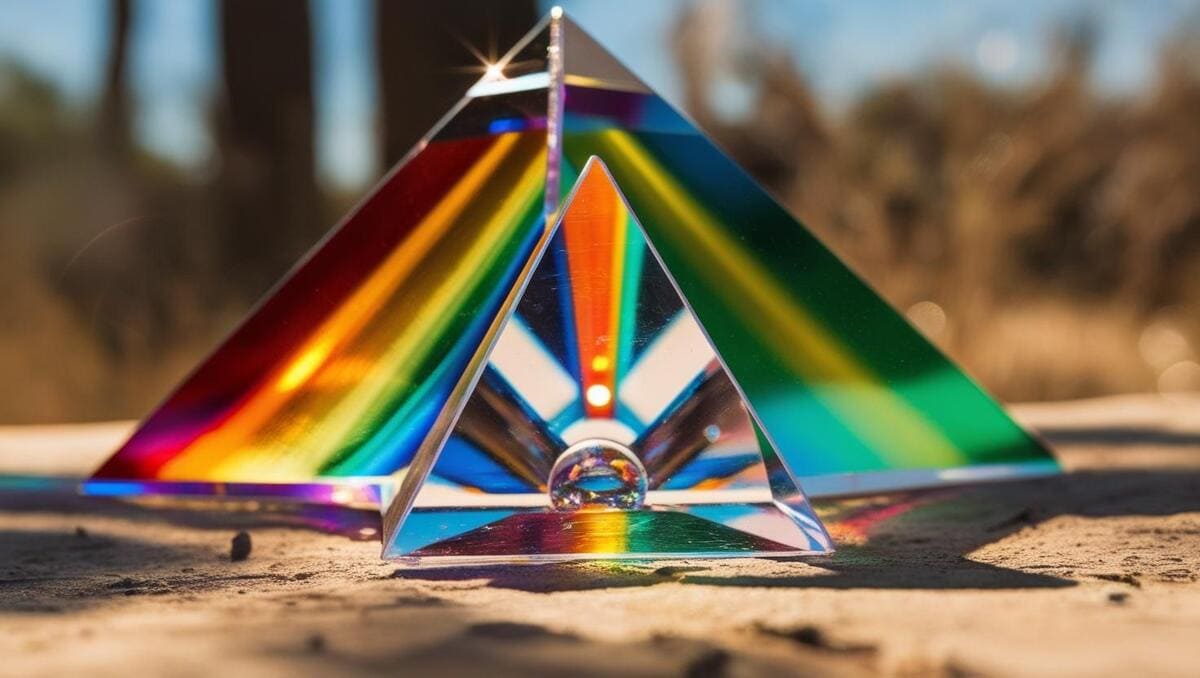
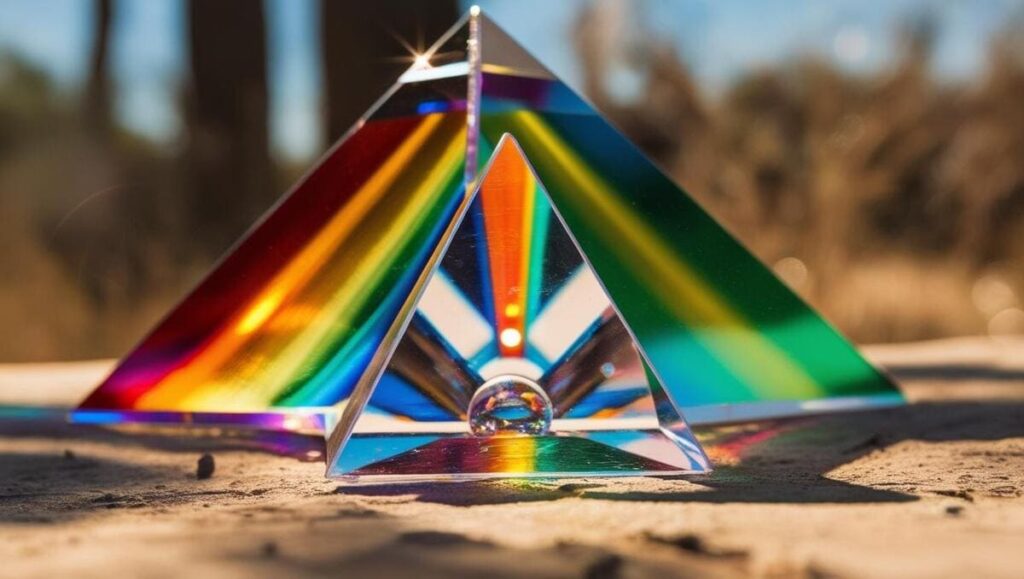
For millennia, ancient scholars debated whether light was emitted by the eye or traveled from objects. The scientific revolution brought empirical rigor to the field. In the mid-to-late 1600s, Sir Isaac Newton conducted pioneering experiments using glass prisms. By passing white light through a triangular prism, Newton demonstrated that white light is not a singular, immutable entity, but rather a composite spectrum of all the colors of the rainbow. This foundational discovery transformed optics, proving that color is an intrinsic property of light interacting with matter. Around the same time, Dutch physicist Christiaan Huygens proposed that light travels in waves, setting the stage for a centuries-long debate over whether light consists of particles or waves.
The 19th Century: Unifying Electricity, Magnetism, and Light
The theoretical landscape shifted dramatically in the 1800s. Scottish physicist James Clerk Maxwell successfully united electricity and magnetism into a single comprehensive framework known as electrodynamics. Through complex mathematical equations, Maxwell proved that light is an electromagnetic wave travelling through space at a constant velocity. This discovery explained how light could propagate through the vacuum of space without a physical medium, cementing the wave theory of light and inspiring generations of physicists.
The 20th Century: The Birth of Quantum Optics
As physics progressed into the 1900s, classical wave theory hit limitations when attempting to explain phenomena such as the photoelectric effect. Albert Einstein proposed that light could also behave as a stream of discrete packets of energy, later named photons. This wave-particle duality revolutionized modern physics, leading directly to quantum mechanics and shaping our contemporary understanding of subatomic interactions.
The 21st Century: The Era of Photonics and High-Speed Data
Today, the study of light—known as photonics—drives the global economy. From the deployment of ultra-fast fiber-optic internet cables that span oceanic trenches to the development of quantum computing and medical lasers, light has transformed from an object of passive observation into an active tool for global connectivity and scientific discovery.
Supporting Context & Metrics
To truly comprehend light, one must analyze its measurable properties, behaviors, and physical dimensions. The table below outlines the electromagnetic spectrum of visible light, detailing wavelengths and natural examples.
Color
Wavelength (nm)
Example in Nature
Red
620–750
Sunsets
Orange
590–620
Autumn leaves
Yellow
570–590
Sunflowers
Green
495–570
Grass
Blue
450–495
Sky
Violet
380–450
Lavender flowers
The Mechanics of Light Behavior
Light interacts with matter through three primary physical mechanisms:
Reflection: Light bounces off smooth or polished surfaces, such as mirrors and metallic finishes, preserving clear visual imagery. Darker, matte surfaces absorb a higher proportion of photons, converting light energy into heat.
Refraction: When light transitions from one medium to another of a different density—such as traveling from the air into water or glass—its speed changes, causing the wave to bend. This phenomenon explains why objects underwater appear closer than they are and why a straw in a glass of water looks fractured.
Diffraction: When light passes through narrow apertures or around sharp edges, the wavefronts spread out, creating complex interference patterns that reveal the wave nature of light.
Natural Phenomena Powered by Light
The Aurora Borealis: Energetic charged particles streaming from the solar wind collide with gases in Earth’s magnetic field, exciting nitrogen and oxygen molecules to emit shimmering curtains of green, pink, and violet light near the poles.
Bioluminescence: Organisms ranging from terrestrial fireflies to deep-sea anglerfish and jellyfish produce biological light via enzyme-mediated chemical reactions (luciferin and luciferase), utilizing illumination for predation, defense, and communication.
Rayleigh Scattering: Earth’s atmosphere scatters shorter wavelengths of light (blue and violet) much more efficiently than longer wavelengths (red and yellow), painting the daytime sky blue and creating rich red-orange hues during sunrises and sunsets.
Official Statements and Expert Perspectives
The ongoing exploration of optics and photonics continues to capture the attention of leading educators, researchers, and technologists who emphasize the dual utility of light as both a fundamental educational tool and a cornerstone of advanced industry.
"Light is the ultimate bridge between the macroscopic cosmos and the microscopic quantum realm. By decoding the light signatures of distant exoplanets and early galaxies, we are essentially reading the history book of the universe."
— Dr. Aris Thorne, Professor of Astrophysical Optics
Educators and science communicators also emphasize the practical importance of optical science in everyday learning. STEM education advocates note that hands-on experimentation with lenses, prisms, and diffraction gratings remains one of the most effective methods for inspiring the next generation of engineers and scientists.
Furthermore, industrial leaders in telecommunications highlight that global infrastructure relies fundamentally on our ability to manipulate light within high-purity silica glass fibers, underscoring that the modern digital economy is built entirely upon the controlled propagation of photons.
Future Outlook: The Next Frontier of Optical Technology
As research laboratories around the world push the boundaries of physics, the future of light technology promises to revolutionize computing, medicine, and aerospace engineering.
Quantum Dots and Ultra-Clear Displays
Scientists are engineering semiconductor nanocrystals known as quantum dots. These microscopic structures can precisely tune light emission based on their physical size, paving the way for next-generation television screens and monitors that offer unprecedented color accuracy, brightness, and energy efficiency.
Light-Based Computing and Faster Networks
Traditional computer processors rely on the movement of electrons through copper pathways, which generates heat and creates physical bottlenecks. Researchers are actively developing optical computers that use photons instead of electrons to process information. Because light signals do not experience electrical resistance, optical computing promises exponential increases in processing speeds and massive reductions in energy consumption.
Advanced Metamaterials and Invisibility Research
Perhaps one of the most fascinating frontiers in modern optics is the development of advanced metamaterials—synthetic composites engineered to manipulate light in ways native materials cannot. By bending light waves smoothly around an object rather than reflecting or absorbing them, researchers are moving closer to practical cloaking devices, which could eventually yield breakthroughs in aerospace stealth technology and medical imaging.
Deep Space Exploration via Light-Sail Technology
Looking beyond our solar system, space agencies are exploring the feasibility of solar sails and laser-propelled nanocraft. By harnessing the momentum of concentrated laser beams fired from Earth, tiny spacecraft could theoretically accelerate to a significant fraction of the speed of light, opening up the tantalizing possibility of interstellar travel within human history.
Frequently Asked Questions
How do light-emitting diodes (LEDs) work?
LEDs are solid-state semiconductor devices that convert electrical energy directly into light. When an electrical current passes through the semiconductor material, negatively charged electrons combine with positively charged electron holes, releasing energy in the form of photons. Unlike traditional incandescent bulbs—which generate light by heating a tungsten filament until it glows—LEDs produce almost no waste heat, making them vastly more energy-efficient and durable.
What is a light-year, and how is it measured?
A light-year is a unit of astronomical distance, not time. It represents the total distance that a beam of light travels through the vacuum of space in one Earth year. Given that light zips along at approximately 186,000 miles per second (300,000 kilometers per second), a single light-year equals roughly 6 trillion miles (about 9.46 trillion kilometers). Astronomers rely on light-years to measure vast interstellar and intergalactic distances because standard units like miles or kilometers become mathematically unmanageable when charting the scale of the cosmos. For example, Proxima Centauri, the nearest star system to our Sun, lies approximately 4.24 light-years away.