
Executive Overview
For decades, international educational comparisons have served as both a mirror and a thorn for the American schooling system. Time and again, metrics tracking student achievement, teacher retention, and overall well-being position the United States unfavorably against other developed nations. Yet, conversations surrounding these disparities often devolve into a familiar, discouraging refrain: “It must be nice, but we could never do that here.”
A new dialogue, however, is challenging that resignation. In a recent interview on the Cult of Pedagogy podcast, educator, author, and speaker Pernille Ripp sat down to compare her experiences teaching in the United States with her current reality teaching in her native Denmark. Having spent over a decade writing about literacy and the humanization of schools, Ripp relocated back to Denmark several years ago, offering her a unique, dual-lens perspective on transatlantic education.
Rather than focusing purely on systemic funding or massive policy overhauls, Ripp’s insights center on a radical premise: the secret to a thriving educational system is not adding more programs, metrics, or interventions, but rather doing less. By stripping away excessive bureaucracy, trusting educator expertise, fostering student autonomy, and prioritizing well-being over hyper-accountability, Danish schools have created an environment where both teachers and students can flourish.
This article explores these systemic differences, examining how structural trust, professional autonomy, and developmental pacing transform the educational experience in Denmark—and, crucially, how U.S. educators can selectively adopt these philosophies within their own classrooms today.
Detailed Chronology: From U.S. Pressure to Danish Professionalism
To understand the profound divergence between the two educational cultures, one must trace the arc of an educator operating within both systems.
Phase One: The U.S. Paradigm of Control
For years, Pernille Ripp navigated the American public school system. Like hundreds of thousands of her U.S. peers, her daily professional life was heavily mediated by external structures:
- Scripted Curricula and Pacing Guides: Educators are frequently handed rigid guidelines dictating what must be taught down to the exact day, stripping away responsive teaching.
- Administrative Surveillance: Policies regarding field trips, movement within the building, and bathroom breaks often communicate a fundamental lack of institutional trust in a teacher’s professional judgment.
- The Continuous Grind: A typical American teacher’s day is defined by fragmented preparation periods, unending compliance tasks, and the looming pressure of high-stakes standardized testing. Sub-plan creation often demands more energy from a sick teacher than staying home to recover.
Phase Two: Relocation and Cultural Shock
Upon returning to Denmark, Ripp experienced a total paradigm shift. Rather than being treated as an operational component in a top-down bureaucratic machine, she was welcomed as a trusted professional. The structural changes were immediate: her workload was capped at a sustainable 40 hours per week (with only 20 hours spent in direct student contact), administrative oversight was replaced by institutional trust, and the frantic pace of the school day gave way to deliberate pacing, student-led community building, and an absolute emphasis on well-being.
Supporting Context & Metrics: Trust Over Control
The fundamental divergence between American and Danish schools boils down to a single philosophical divide: control versus trust.
1. Systemic Trust in Teacher Competence
In the United States, educational policy often operates on a deficit model regarding teachers—imposing scripts and pacing guides out of a fear that educators will fail to cover necessary material.
Conversely, the Danish educational ecosystem assumes competence. The national government recently streamlined its massive list of educational goals down to approximately ten broad, age-based competencies. There are no mandatory pacing checkboxes. Teachers collaborate at the school level to design curricula tailored specifically to their students’ needs.
- The Professional Impact: As Ripp notes, the system "assumes that I know what I’m talking about and that the experience that I have with my students is one that is valid and also valuable."
- U.S. Application: While an individual teacher cannot rewrite district policy overnight, administrators can transform baseline curricula into a starting point rather than a rigid script. Educators can pilot adaptations, review outcomes collaboratively every six weeks, and reclaim elements of professional autonomy without needing a budgetary increase.
2. Professional Work Conditions and Sustainable Labor
Burnout is a primary driver of the U.S. teacher shortage. The structural conditions in Denmark actively counteract this phenomenon.
- Protected Preparation: Danish teachers utilize dedicated, secure workspaces after students have departed. Noise-canceling headphones are a universally respected boundary, and intercom announcements do not shatter concentration.
- The Absence of Sub-Plan Culture: When a Danish teacher falls ill, they simply call in before 7:00 AM. Buildings utilize permanent, integrated substitute teachers who know the students and manage activities independently, allowing genuinely sick educators to remain home and recover.
- Proactive Administration: When Ripp experienced an overload of committee responsibilities, her principal’s reaction was not to demand greater efficiency, but to ask: "What can we remove from your plate?"
Official Statements and Pedagogical Philosophy
The structural differences extend far beyond the faculty lounge, fundamentally altering how children experience learning, socialization, and development.
Autonomy as a Developmental Right
In many American schools, student autonomy is treated as a privilege to be earned through compliance—marked by silent hallways, single-file lines, and hyper-controlled environments. In Denmark, autonomy is viewed as a fundamental developmental necessity.
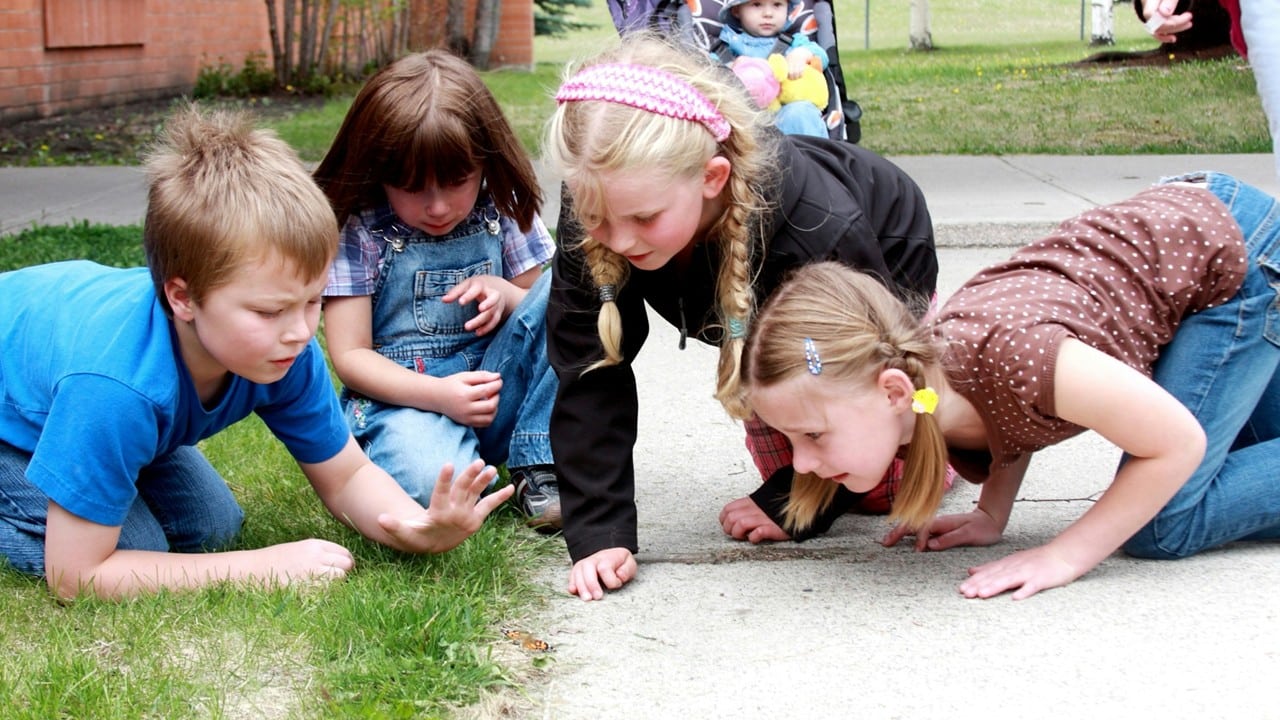
Danish children are trusted with responsibilities early. They pack their own bags, manage their materials, and navigate social spaces with minimal adult micromanagement. When mistakes occur, they are treated as teachable moments rather than infractions requiring disciplinary action.

Movement, Play, and Regulation
Danish school design prioritizes nervous system regulation over institutional control:
- Mandatory Outdoor Time: Students go outside daily, regardless of weather conditions. Risky play—such as snowball fights in designated zones or playground wrestling—is monitored for safety rather than banned outright.
- Unapologetic Play: Extracurricular activities, such as field trips involving trampolines or shared meals, require no exhaustive "learning objective" justifications; they are valued simply because they build community and joy.
Pacing and Rigor Without Panic
Academic expectations in Denmark are high, but they are detached from toxic urgency:
- Delayed Formal Academics: Formal reading instruction does not begin until age seven (equivalent to first grade in the U.S.), and entering kindergarten without alphabet recognition is completely normal.
- The Power of Slowing Down: Educators possess the flexibility to linger on engaging units, even if it throws off standard calendar projections by weeks. There is no collective panic over falling "behind," because the overarching goal is depth over breadth.
Future Outlook: Reimagining the U.S. Classroom
Transforming the American educational system on a national scale is a monumental challenge. However, systemic change invariably begins at the micro-level—within individual classrooms, grade-level teams, and school buildings.
Ripp’s cross-cultural analysis offers a clear, actionable roadmap for U.S. educators and administrators seeking to infuse humanity back into their schools:
- Embrace "Good Enough" and Cut the Darlings: Teachers must learn to forgive themselves for doing less. By critically evaluating curricula, identifying redundancies, and intentionally slowing down, educators can protect their mental health and model sustainable work habits.
- Prioritize Subtraction Over Addition: Before adopting a new school-wide initiative, leadership should ask: What can we stop doing? Eliminating redundant paperwork, loosening rigid sign-out restrictions, and streamlining permission processes instantly frees up vital human energy.
- Reclaim Student-Centric Spaces: Carve out time for unstructured community building—such as class meetings focused on conflict resolution and collective well-being—treating these interactions as foundational curriculum rather than a distraction from academics.
- Cultivate Institutional Grace: Administrators must actively communicate trust to their staff, moving away from surveillance-based cultures and toward professional empowerment.
As Pernille Ripp’s experiences demonstrate, a humane, enriching school environment is entirely possible. It does not require infinite funding or impossible mandates; it requires the courage to trust educators, respect children, and embrace the profound power of doing less, better.
To explore these insights further, listen to the full interview on the Cult of Pedagogy podcast (Episode 274), read the official transcript, or dive deeper into Pernille Ripp’s work through her book, Passionate Learners, and her ongoing writing on education and literacy.

