
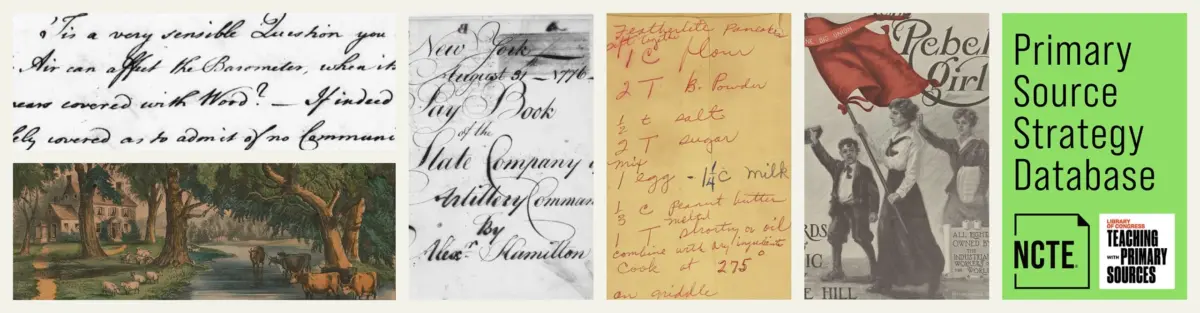
Executive Overview
In an era defined by an unprecedented volume of digital information, the ability to critically analyze source material has never been more crucial to civic participation and academic success. At the forefront of this educational evolution is a landmark collaboration between the National Council of Teachers of English (NCTE) and the Library of Congress. Operating as an active participant in the prestigious Teaching with Primary Sources (TPS) Consortium, the NCTE is spearheading a transformative initiative to integrate historical artifacts directly into the daily habits of literacy teachers and students nationwide.
At the heart of this partnership lies an expansive, fully searchable digital database designed to bridge the gap between archival history and modern English language arts (ELA) instruction. Featuring curriculum-aligned teaching strategies for more than 150 specific items from the Library of Congress’s vast digitized collections, the platform empowers educators to move beyond traditional textbook learning. Developed collaboratively by more than two dozen distinguished teachers and leaders in ELA education, these pedagogical resources articulate the specific literacy merits of historical artifacts—complete with suggested thematic units, cross-curricular connections, and alignments to state educational standards.
This initiative is far more than a repository of lesson plans; it is a pedagogical movement aimed at reclaiming marginalized narratives, fostering media literacy, and equipping students with the critical-thinking tools necessary to evaluate historical claims and contemporary media alike. By utilizing intuitive search tags such as picturebook, argument, vocabulary, and media literacy, educators can seamlessly weave primary sources into writing workshops, reading fluency exercises, and collaborative classroom minilessons.
Detailed Chronology: The Evolution of the NCTE-Library of Congress Partnership
To understand the scope and ambition of the current literacy initiative, it is essential to trace the historical trajectory of the partnership between the nation’s premier English teachers’ organization and its preeminent cultural institution.
Phase I: Establishing the Foundation
- The Genesis of TPS: The Library of Congress established the Teaching with Primary Sources program to make its unparalleled archives accessible to the nation’s classrooms. Recognizing the natural synergy between historical inquiry and textual analysis, the program sought out educational partners capable of translating raw archival data into rigorous instructional frameworks.
- NCTE’s Integration: The NCTE joined the TPS Consortium, bringing decades of expertise in literacy instruction, curriculum development, and pedagogical research to the collaboration. This alliance ensured that primary sources would not be treated merely as social studies artifacts, but as rich, multimodal texts capable of driving advanced literacy instruction.
Phase II: Collaborative Curriculum Development
- Mobilizing Educators: More than two dozen leading educators and ELA specialists were brought together to examine items within the Library of Congress’s digitized archives. Their mandate was twofold: identify the intrinsic literary and rhetorical value of each artifact, and construct adaptable teaching strategies for diverse classroom environments.
- Building the Searchable Database: The team categorized over 150 specific historical items, designing a robust metadata tagging system. Content was organized not only by historical era, but by literacy skills—such as argument, vocabulary development, and reading fluency—making the database instantly actionable for secondary and primary educators alike.
Phase III: Expanding Reach and Refining Pedagogies
- Current Operations: Today, the partnership continues to evolve through ongoing professional development, webinars, and the continuous expansion of online resources available via NCTE’s dedicated portal.
- Focus on Hidden Narratives: Recent curriculum additions emphasize deep historical dives into marginalized figures, challenging traditional canons and providing students with nuanced lenses through which to examine gender roles, societal expectations, and the ongoing struggle for civil rights.
Supporting Context & Metrics: Archival Artifacts in the Modern Classroom
The integration of primary sources into ELA classrooms addresses a critical educational need: moving students from passive consumers of secondary narratives to active investigators of historical truth.
The Pedagogical Power of Unconventional Texts
A prime example of the database’s utility is its treatment of historical journalism—specifically, archival newspaper reports that challenge conventional historiography. One standout resource featured in the collection is an illuminating article originally published in The Salt Lake Tribune. Authored by London-based correspondent Rupert Neville and designated as a "Special Cable to The Tribune," the piece profiles a series of extraordinary women who lived their lives, or significant portions of them, as men: Marie LeRoy, Madame Velasquez, Hannah Snell, Mary Ann Talbot, Catherine Coome, and Marion Edwards.
From a literacy and historical perspective, the instructional value of such a primary source is immense:
- Challenging Social Norms: The subjects in Neville’s report openly defied the rigid social conventions and gender expectations of their eras. Their life trajectories vividly illustrate the severe legal and social limitations placed upon women during their respective centuries.
- Uncovering Erased Histories: While contemporary students may have passing familiarity with a small handful of historical figures who crossed gender boundaries, Neville’s report uncovers lesser-known individuals whose stories have been systematically marginalized, hidden, or erased from mainstream historical canons.
- Fostering Empathy and Critical Analysis: Analyzing these texts encourages students to question traditional gender roles, assess the systemic impact of societal expectations on individual agency, and build deep empathy for those who defy oppressive norms in the pursuit of autonomy and rights.
Alignment with Rigorous Academic Standards
To ensure that teachers can justify the use of such complex historical texts within strict curriculum frameworks, the NCTE-Library of Congress resources are mapped directly to state academic standards. For instance, implementation models aligned with the New Mexico Adopted Content Standards demonstrate how a single primary source can fulfill multiple rigorous benchmarks across grade levels:
- RI.9-10.1 (Reading: Informational Text): Requires students to cite strong and thorough textual evidence to support analysis of what a text says explicitly, as well as inferences drawn from the text. Primary source journalism provides an ideal testing ground for sourcing and evidence extraction.
- RI.9-10.8: Challenges students to delineate and evaluate arguments and specific claims within a text, assessing whether reasoning is valid and evidence is relevant and sufficient while identifying potential biases or fallacious reasoning.
- RH.11-12.2 (Literacy in History/Social Studies): Mandates that students determine the central ideas or information of a primary or secondary source, providing an accurate summary that delineates the complex relationships among key details and ideas.
Official Statements & Pedagogical Frameworks
Educational leaders behind the TPS Consortium and the NCTE initiative have consistently emphasized that primary sources are vital tools for cultivating democratic citizenship and advanced critical literacy.
"When students interact directly with historical primary sources—whether an 18th-century newspaper cable, a handwritten manuscript, or a digitized photograph—they are not merely reading about history; they are doing the work of historians and critical thinkers. They learn to weigh evidence, question authorial intent, and recognize that historical narratives are constructed through human choices."
— Excerpts from NCTE Curriculum Development Guidelines
Educators utilizing the database are provided with multifaceted teaching approaches that move far beyond traditional lecture formats. The strategies embedded within the platform encourage:
- Collaborative Inquiry: Small-group examinations of archival texts to debate interpretations and share insights.
- Minilessons in Media Literacy: Using historical journalism to analyze how information was gathered, transmitted, and framed across different centuries—paralleling modern discussions around media bias and digital verification.
- Writing Process Integration: Employing primary sources as foundational springboards for argumentative, narrative, and analytical student writing.
Future Outlook: The Next Frontier in Literacy Education
As educational landscapes shift toward digital-first environments, the imperative for sophisticated media and historical literacy grows ever more acute. The ongoing collaboration between the NCTE and the Library of Congress offers a scalable, sustainable model for how national organizations can equip teachers to meet these challenges.
Looking ahead, the partnership aims to expand its digital catalog well beyond the current milestone of 150 annotated primary sources, incorporating broader thematic units that address intersectionality, technological history, and global cultural exchanges. Furthermore, professional development modules are being refined to help educators navigate potential classroom challenges associated with sensitive historical topics, ensuring that teachers possess the pedagogical confidence to foster open, respectful, and intellectually rigorous discussions.
By bridging the vast archival wealth of the Library of Congress with the pedagogical expertise of the NCTE, this initiative ensures that generations of students will develop not only superior reading and writing skills, but also the discerning, questioning minds required to navigate an increasingly complex world.

