
EXECUTIVE OVERVIEW
As educators and curriculum developers continually search for innovative, engaging methodologies to bridge the gap between play and foundational learning, phonological awareness has emerged as the linchpin of early childhood literacy. Central to this pedagogical shift is the mastery of syllable segmentation—the ability of a young learner to hear, identify, and break down words into individual sound beats. Entering this landscape with both immediate classroom utility and long-term educational strategy is the newly released Winter Color by Syllable activity series, alongside its comprehensive 33-page year-round counterpart.
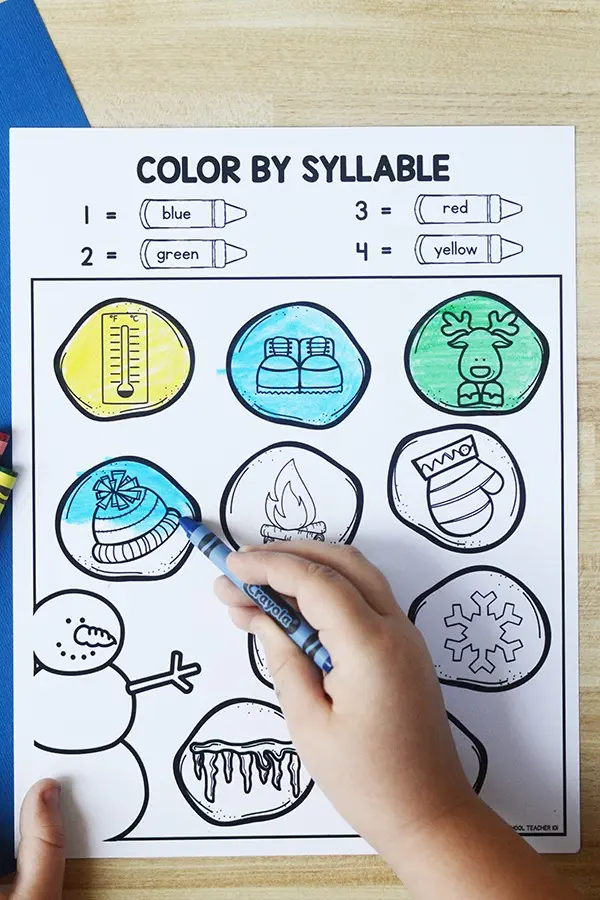
Designed specifically for preschool and kindergarten environments, these no-prep resources merge the classic, universally adored mechanic of "color-by-code" worksheets with evidence-based phonological awareness training. Far from mere recreational coloring sheets, these resources function as strategic literacy interventions. They provide educators with an accessible tool to navigate the bustling winter months—a period often marked by fragmented attention spans—while embedding rigorous pre-reading mechanics into daily routines. This report provides an authoritative examination of the mechanics, educational rationale, curriculum integration strategies, and broader implications of utilizing color-by-syllable initiatives within modern early childhood education.

THE PEDAGOGICAL FOUNDATION: WHY SYLLABLES MATTER IN EARLY LITERACY
To understand the value of the Winter Color by Syllable initiative, one must first examine the cognitive milestones required for reading acquisition. Phonological awareness is a broad umbrella term that encompasses specific skills, including word awareness, rhyme recognition, alliteration, and syllable segmentation. Among these, the ability to segment words into syllables serves as a crucial cognitive stepping stone.
Before a child can map graphemes (letters) to phonemes (individual sounds), they must first master the broader auditory chunks of language: syllables.
- The Cognitive Bridge: Syllables are naturally easier for young children to isolate because they typically contain a vowel sound acting as the "peak" or beat of the word.
- The Mechanics of Segmentation: When a child claps, taps, or counts the beats in a winter-themed vocabulary word—such as "mit-tens" (two syllables) or "snwo-flake" (two syllables)—they are actively training their auditory cortex to parse continuous speech into discrete units.
- Mitigating Classroom Friction: During high-distraction periods, such as the winter months, maintaining academic rigor without sacrificing student engagement is a persistent challenge for educators. Color-by-code mechanisms naturally capture children’s focus, leveraging fine-motor engagement to anchor auditory learning.
By transforming a listening or speaking exercise into a visual, tactile art project, these no-prep worksheets eliminate the friction often associated with early literacy drills. Children are not merely coloring an image of a snowman or a winter coat; they are decoding linguistic data to determine which color corresponds to a one-, two-, or three-syllable word.

DETAILED CHRONOLOGY & CURRICULUM INTEGRATION: FROM CONCEPT TO CLASSROOM
The development and deployment of the Winter Color by Syllable packets—alongside the expansive year-round curriculum extension—represent a systematic approach to addressing early childhood learning deficits. The rollout of these resources reflects a meticulous instructional timeline aimed at maximizing educator efficiency and student retention.
Phase 1: Conceptualization and Design (Pre-Implementation)
Recognizing that preschool and kindergarten teachers face monumental preparation burdens, curriculum designers prioritized a "no-prep" framework. Traditional phonological awareness activities often require extensive cutting, laminating, manipulatives, or small-group teacher supervision. The Winter Color by Syllable framework shifts the paradigm by allowing independent or semi-independent execution.
Phase 2: Pilot Testing and Differentiation
Recognizing the vast developmental span between a younger three-year-old preschooler and an advancing kindergarten student, developers built tiered options into the core architecture of the printable series.

- Scaffolded Complexity: The activities progress systematically from identifying simpler, single-syllable or two-syllable seasonal words up to more complex multi-syllable constructs (ranging from 1 to 5 syllables in the comprehensive year-long pack).
- Targeted Student Needs: Educators can selectively deploy specific sheets based on formative assessments. A student struggling with basic auditory discrimination can be assigned a foundational page, while fast finishers or advanced learners tackle higher-syllable counts.
Phase 3: Seasonal Rollout and Take-Home Synergy
The winter iteration of the series is strategically timed for the mid-school-year stretch. By utilizing winter-themed vocabulary—spanning nature, clothing, and weather phenomena—the materials maintain topical relevance. Furthermore, the printables are optimized not just for classroom literacy centers, but for take-home practice packs, ensuring that parents can reinforce school-taught phonological concepts in a home environment without needing specialized training.
SUPPORTING CONTEXT & METRICS: THE SCOPE OF THE 33-PAGE YEARLONG FRAMEWORK
While seasonal resources provide targeted interventions during specific calendar windows, true phonological mastery requires longitudinal consistency. To address this, the comprehensive 33-page Color by Syllable system provides a year-round continuity model.
Quantitative Breakdown of the Comprehensive Pack
- Scope: 33 distinct pages covering a wide array of seasons, holidays, and thematic units.
- Syllable Range: Graduated instruction moving from 1 syllable up to 5 syllables per target word.
- Accessibility: Available via direct digital download ecosystems, including specialized teacher platforms like Teachers Pay Teachers and dedicated preschool resource portals.
The Pedagogy of "Color by Code"
The integration of coloring into academic practice is supported by cognitive research indicating that multi-sensory engagement enhances memory consolidation. When a child executes a color-by-syllable worksheet, multiple cognitive pathways fire simultaneously:

- Auditory Processing: Hearing or mentally pronouncing the target word.
- Linguistic Analysis: Clapping or tapping to segment the word into distinct syllable beats.
- Visual Matching: Linking the numerical syllable count to the designated color code on the worksheet grid.
- Fine Motor Control: Selecting the correct crayon or marker and coloring the designated space, reinforcing hand-eye coordination.
OFFICIAL STATEMENTS & EDUCATIONAL PERSPECTIVES
Early childhood literacy experts and classroom educators have increasingly emphasized the necessity of explicit phonological awareness training in pre-K and kindergarten settings. While balanced literacy models historically emphasized sight words and whole-language exposure, contemporary reading science (often referred to as the "Science of Reading") underscores the critical importance of foundational sound structures.
"Phonological awareness is auditory and does not inherently require print, but connecting these auditory skills to visual representations—such as our color-by-syllable formats—provides a powerful scaffold for young learners. It bridges the gap between what they hear and how they analyze language structures."
— Early Literacy Curriculum Developer
Educators utilizing the no-prep winter packets report significant qualitative improvements in student independence during literacy center rotations. Because the mechanics of color-by-code are widely understood by young children even before formal reading instruction takes hold, students can direct their own cognitive processes, freeing up teachers to conduct small-group guided interventions.

Furthermore, developmental specialists note that seasonal framing significantly reduces cognitive fatigue. During the winter months—when weather disruptions, indoor confinement, and holiday shifts can destabilize classroom routines—predictable, engaging, and structurally sound worksheets provide a comforting anchor for young learners.
FUTURE OUTLOOK: THE EVOLUTION OF NO-PREP LITERACY INTERVENTIONS
As educational technology and printable resources continue to converge, the trajectory of early childhood literacy points toward hyper-accessible, high-impact materials that minimize teacher prep time while maximizing pedagogical value.
Key Trends Shaping the Future of Phonological Resources:
- Seamless Home-School Connections: As evidenced by the dual-purpose design of the winter syllable printables, future curricula will increasingly prioritize materials that transition effortlessly from the classroom desk to the kitchen table, fostering collaborative literacy reinforcement between parents and educators.
- Data-Driven Differentiation: Future iterations of color-by-code literacy tools are expected to integrate more explicit diagnostic markers, enabling teachers to quickly audit a completed worksheet to pinpoint precisely which syllable-count tiers (e.g., distinguishing between 2-syllable and 3-syllable words) require further small-group instruction.
- Expansion of Multisensory Printables: The fusion of art therapy concepts with rigorous phonetics—such as matching auditory beats to chromatic fields—will likely expand into other domains of phonological awareness, including onset-rime manipulation and phoneme deletion.
Conclusion
The release of the Winter Color by Syllable printables and the broader year-round curriculum set represents a masterclass in pragmatic educational design. By respecting the cognitive realities of early childhood development—where play, color, and structure intersect—these resources remove the administrative burden from teachers while delivering essential, evidence-based phonological awareness training to students. As schools nationwide continue to align their classrooms with modern reading science, tools that make literacy acquisition both rigorous and joyful will remain invaluable cornerstones of early education.

