

Executive Overview
In the high-stakes, fast-paced environment of modern education, instructional planning often resembles improvisation rather than architecture. Teachers—both veteran instructors and pre-service educators alike—frequently find themselves designing daily lessons the night before delivery, scrambling to align activities with tests, and wondering why student mastery falls short of expectations. To combat this systemic challenge, a foundational return to instructional design basics is gaining traction among top-tier educators.
Rooted in the principles of backward design, instructional planning is undergoing a pedagogical renaissance. By conceptualizing instruction through a macro-to-micro lens—starting with broad educational standards, moving to targeted unit objectives, establishing definitive assessments, and finally crafting daily lesson plans—teachers can fundamentally transform student outcomes. This comprehensive approach shifts the paradigm from haphazardly covering content to engineering genuine, lasting comprehension.
This article explores a battle-tested, three-step framework for building robust instructional units from scratch. Whether you are overhauling a legacy curriculum that has chronically underperformed or stepping into your very first classroom, mastering this blueprint guarantees intentionality, alignment, and confidence in every classroom interaction.
Detailed Chronology: The Evolution of Instructional Design
Understanding how effective units are constructed requires tracing the methodology of instructional planning back to its academic roots. The journey of modern unit design is marked by a deliberate evolution away from reactive teaching toward proactive, goal-oriented architecture.
Phase 1: Conceptualizing the Big Picture
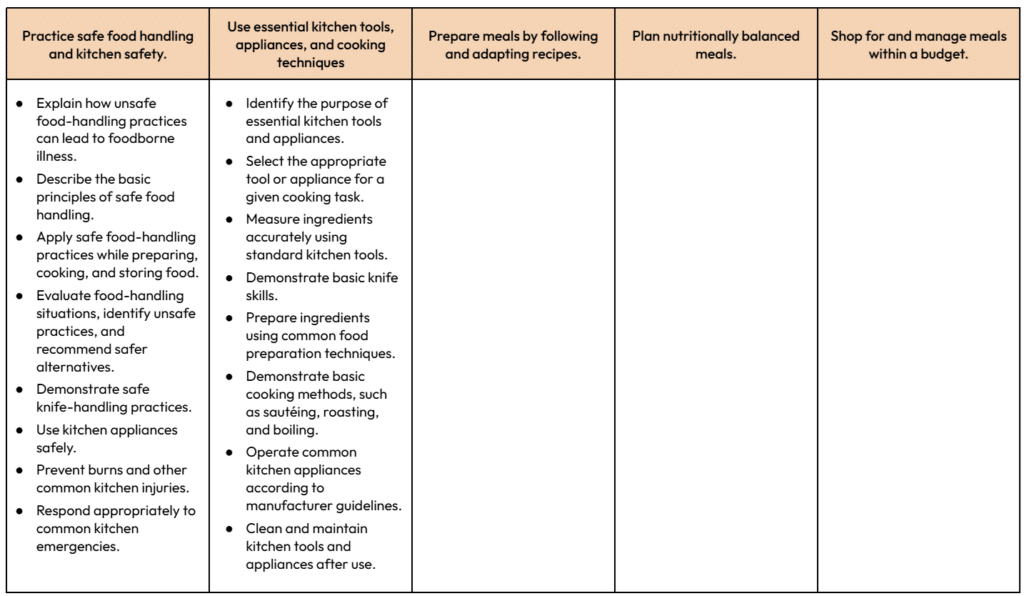
The process of building an effective instructional unit always begins at the macro level. Decades of educational research demonstrate that educators cannot successfully plan individual lessons without first grasping the entire landscape of the course. For example, consider an eight-week adult community education course titled Cooking Fundamentals. To design this course effectively, an instructor must first establish overarching goals. These broad objectives act as the north star for all subsequent instructional choices.
In a traditional school system, these broad goals are dictated by state or local standards. Each broad standard contains an intricate web of sub-topics, necessary skills, and underlying knowledge. Without a structured roadmap, teachers easily drown in this sea of information, leading to fragmented learning experiences where students memorize isolated facts rather than acquiring cohesive mental models.

Phase 2: Defining Standards, Curriculum, and Units
To navigate this complexity, educators must clearly distinguish between three core terms:
- Standards: The broad goals or benchmark competencies students are expected to achieve by the end of a learning period.
- Curriculum: The overarching roadmap that organizes and sequences these standards into logical clusters known as units.
- Units: Cohesive collections of individual lessons—lasting anywhere from a few days to several weeks—focused on a specific subset of knowledge and skills.
While some school districts provide rigid, pre-scripted curricula complete with textbooks and daily pacing guides, many educators retain the autonomy to cluster and sequence topics. Organizing these topics into logical conceptual themes—such as food safety, kitchen tools, cooking techniques, and meal preparation—creates a logical hierarchy that prevents cognitive overload for students.
Phase 3: Embracing Backward Design
The critical turning point in instructional design history occurred in 1991 with the publication of Grant Wiggins and Jay McTighe’s seminal work, Understanding by Design. They popularized backward design, a methodology that radically upended traditional planning habits.
Historically, teachers practiced "forward design": planning daily lessons first, teaching them, and then inventing a test at the end based loosely on what happened in class. Backward design reverses this sequence entirely. Instructors begin by identifying desired results, determining acceptable evidence of learning (the assessment), and then designing the learning experiences and instruction. By engineering student success toward a well-crafted final assessment, educators ensure absolute alignment between daily activities and ultimate learning objectives.
Supporting Context & Metrics: The Three-Step Unit Design Framework
To operationalize backward design, educators can deploy a concrete, three-step framework. Using a hypothetical "Safe Food Handling" unit from our Cooking Fundamentals course, we can examine how this framework operates in practice.
[ STEP 1: Set Objectives ] ──> [ STEP 2: Design Assessment ] ──> [ STEP 3: Plan Lessons ]
(Identify Measurable Goals)     (Create Summative Evaluation)    (Build Daily Activities)
Step 1: Set Objectives and Frame the Unit
Once the standards for a unit are identified, the instructor must write a set of measurable learning objectives. A common pitfall in objective writing is the use of internal, unobservable cognitive verbs like "understand," "learn," or "appreciate." Because mental processes cannot be directly observed, objectives must require students to do something observable.
For our hypothetical three-to-four-day food handling unit, the instructor establishes four precise, observable objectives:
- Identify common sources of foodborne pathogens.
- Demonstrate proper handwashing and personal hygiene protocols in a kitchen environment.
- Apply correct temperature danger-zone rules to food storage and cooling.
- Prevent cross-contamination through proper sanitization and cutting-board management.
To elevate these technical objectives beyond mere rote memorization, effective educators incorporate a compelling unit title—such as Safe Food Handling—and an open-ended essential question: "How do your choices in the kitchen affect the safety of the food you prepare?" This anchors the unit in deep, real-world relevance.
Step 2: Design the Summative Assessment
With clear objectives established, the educator’s next priority is determining the evidence of mastery. Asking questions like "If students have truly mastered this knowledge, how would I know?" prevents educators from defaulting to uninspired, recall-heavy multiple-choice tests.
Because the food safety unit is short, the instructor designs a targeted open-response assessment. Instead of asking students to list definitions, the assessment presents realistic cooking scenarios where individuals make subtle food safety errors. Students must:
- Identify the specific mistakes.
- Explain the microbiological or safety rationale behind why the action is hazardous.
- Describe the corrective protocol required to resolve the issue.
This authentic assessment proves whether students can transfer declarative knowledge into applied, real-world decision-making.
Step 3: Plan the Daily Lessons
Only after the objectives are locked in and the assessment is engineered does the instructor begin building daily lessons. Every instructional activity, direct-instruction lecture, guided practice session, and collaborative lab is meticulously mapped to bridge the gap between where students start and the competencies required by the final assessment. This eliminates fluff, maximizes instructional time, and ensures that every minute in the classroom serves a strategic purpose.
Official Statements and Pedagogical Expert Insights
The movement toward structured, backward-designed unit planning is backed by widespread consensus among instructional coaches, curriculum designers, and veteran educators.
"When we plan backwards from a well-crafted assessment, we stop teaching to an arbitrary test and start engineering deliberate opportunities for student success," notes leading pedagogical researchers. "It shifts the classroom dynamic from passive compliance to active intellectual engagement."
Furthermore, educational experts emphasize that this methodology is equally transformative for seasoned teachers as it is for novices. While pre-service teachers rely on frameworks like backward design to survive their first years in the classroom, experienced educators utilize the same principles to audit existing curricula, eliminate redundant topics, and breathe new life into stale instructional materials. By regularly interrogating the alignment between standards, assessments, and daily lessons, master teachers prevent instructional drift and maintain rigorous academic standards year after year.
Future Outlook: The Next Frontier in Instructional Planning
As education systems continue to evolve in response to technological advancements, shifting demographic needs, and emerging cognitive science, the demand for intentional instructional planning will only intensify. The future of unit design lies in the seamless integration of backward design principles with modern adaptive learning tools, data-driven analytics, and competency-based pathways.
Programs designed to mentor educators in these foundational skills—such as comprehensive professional development courses focused on mastering lesson plans and instructional architecture—are becoming vital assets for school districts aiming to close achievement gaps. By treating lesson planning not as a burdensome administrative chore, but as a creative and scientific design process, educators can reclaim their instructional autonomy.
Ultimately, when teachers master the art of unit planning through backward design, the ripple effects are profound. Classrooms become more purposeful, student engagement deepens, and educators cultivate the professional confidence necessary to drive meaningful, measurable student growth across every discipline.

