
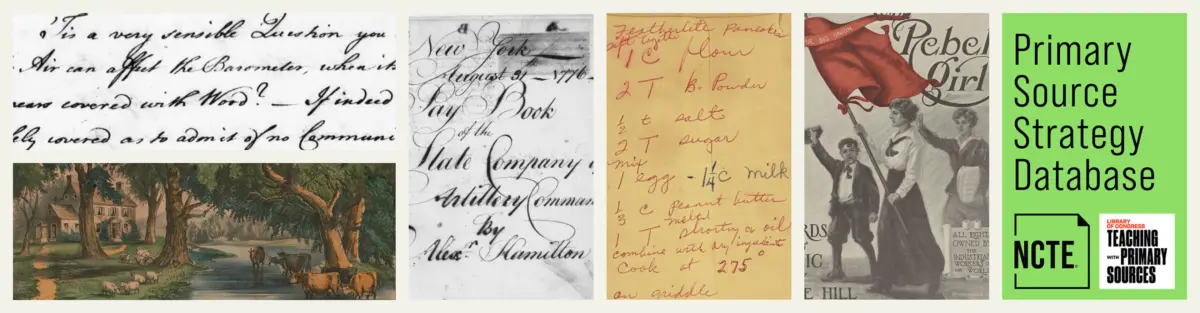
Executive Overview
In an era defined by an unprecedented deluge of information, the ability to critically analyze media, historical artifacts, and primary sources is more crucial than ever for students and educators alike. Recognizing this imperative, the National Council of Teachers of English (NCTE) has embarked on a transformative collaboration with the Library of Congress as an active participant in the prestigious Teaching with Primary Sources (TPS) Consortium.
This nationwide initiative aims to fundamentally reshape how literacy teachers and students integrate primary sources into their daily educational habits. At the heart of this partnership is an expanding, highly searchable digital database featuring pedagogical strategies for more than 150 specific, digitized historical artifacts drawn directly from the vast archives of the Library of Congress.
Developed by over two dozen distinguished educators and leaders in English language arts (ELA) education, these instructional modules do more than simply provide historical context. They articulate specific literacy merits for curriculum and classroom integration, complete with suggested themes, curricular units, and alignments with state educational standards. Educators can easily navigate the repository using intuitive tags such as picturebook, argument, comprehension, grammar, and spelling.
Beyond traditional literacy skills, these resources actively encourage students to confront complex societal structures. By examining artifacts that intersect with history, arts and culture, and advertising, students learn to question social norms, identify institutional biases, and critically evaluate how historical power dynamics continue to reverberate in contemporary society. This comprehensive report explores the architecture of this partnership, examines specific classroom case studies—such as the historical policing of Black hair through early 20th-century advertisements—and outlines the broader pedagogical, administrative, and future implications of embedding primary sources into modern ELA curricula.
Detailed Chronology: The Evolution of the NCTE-Library of Congress Partnership
The integration of Library of Congress archives into K-12 classrooms did not happen overnight; it represents a systematic evolution in digital pedagogy, historical inquiry, and ELA standards alignment.
Phase 1: Archival Digitization and the Birth of the TPS Consortium
For decades, the Library of Congress maintained the world’s largest repository of Americana, manuscripts, photographs, and historical prints. However, these treasures remained largely inaccessible to the average K-12 classroom, restricted by physical geography and traditional academic silos.
Recognizing the untapped educational potential of these materials, the Library of Congress established the Teaching with Primary Sources (TPS) program. The subsequent creation of the TPS Consortium invited educational organizations—most notably the NCTE—to bridge the gap between archival research and K-12 pedagogical practice.
Phase 2: Collaborative Curriculum Design by ELA Leaders
To make raw historical documents digestible and pedagogically rigorous for English language arts classrooms, the NCTE mobilized more than two dozen expert teachers, curriculum directors, and literacy researchers. These leaders were tasked with reviewing hundreds of digitized items from the Library of Congress collection and developing structured instructional frameworks for them.
Rather than treating historical artifacts solely as social studies content, the ELA leaders evaluated each item through a literacy lens. They asked critical questions: How does this text construct an argument? What rhetorical devices are deployed? How does this document reflect the linguistic and cultural realities of its time? This phase resulted in the creation of targeted teaching strategies mapped to national and state-specific educational standards, such as the New Mexico Adopted Content Standards for Speaking & Listening and Literacy in History/Social Studies.
Phase 3: Launch of the Searchable Digital Repository
The culmination of this collaborative effort is the current searchable database hosted via the NCTE platform. By designing a system searchable through tags like argument, picturebook, and comprehension, the creators ensured that busy educators could seamlessly integrate primary sources into existing lesson plans without overhauling their entire curriculum.
Today, the database serves as a living, breathing archive where teachers can access strategies for over 150 specific items, ranging from early American newspapers and political cartoons to marginalized trade advertisements and community broadsides.
Supporting Context & Metrics: Analyzing Primary Sources in the Modern ELA Classroom
To understand the practical application of this initiative, one must examine how specific primary sources are utilized within the database. A prime example within the repository involves the historical analysis of an advertisement for PORO Hair Grower published in Franklin’s The Statesman, shedding light on the intricate relationship between commercial media, beauty standards, and systemic racism.
Case Study: Interrogating PORO Hair Grower Advertisements
The artifact in question is a historical advertisement featuring founder Annie Malone Pope-Turnbo and a woman identified as L. L. Roberts, both showcasing long, straight hair. Captions accompanying the photographs detail personal transformations: Pope-Turnbo’s reads, "4 years ago my hair was only a finger-length, and my temples were bald halfway up my head," while Roberts’ states, "4 years ago my hair just covered my shoulders." The ad also warns consumers to beware of counterfeit hair growth products and to verify official PORO merchandise.
While an advertisement of this nature might traditionally be viewed as a simple historical artifact of early 20th-century commerce, ELA educators utilizing the NCTE-Library of Congress framework analyze its deeper systemic implications:
- Unpacking Power Structures: Systemic racism in the United States often operates through micro-level societal pressures, including standards of professional and personal appearance. By examining how products like PORO marketed Eurocentric beauty ideals, students explore how seemingly trivial aspects of appearance are deeply intertwined with power dynamics and cultural conformity.
- Cultural Identity and Resistance: Discussions surrounding Black hair highlight historical attempts by dominant power structures to erase cultural identity. Analyzing these texts helps students understand the psychological and emotional tolls of hair discrimination, fostering empathy, compassion, and a deeper appreciation for cultural heritage.
- Challenging Bias and Oppression: The resource equips students with the critical tools needed to analyze and question social norms, identify implicit biases, and challenge oppressive systems. By examining how standards are historically constructed, learners realize how cultural norms can perpetuate systemic inequality.
Standards Alignment and Literacy Competencies
This primary source analysis is not merely a social studies exercise; it directly targets rigorous ELA and literacy standards. For instance, aligned with state content standards such as New Mexico’s RH.11-12.1 and RH.11-12.2, students are required to:
- Cite specific textual evidence to support deep analysis of primary sources, connecting micro-details to the broader themes of the text as a whole.
- Determine central ideas and summarize complex arguments, making clear the relationships between key visual details (photographs, captions) and textual warnings against counterfeit goods.
Furthermore, under Speaking & Listening standard SL.11-12.3, students evaluate a speaker’s or creator’s point of view, reasoning, and use of evidence and rhetoric—assessing word choice, tone, and points of emphasis within historical advertising copy.
Official Statements and Pedagogical Insights
The collaboration between the NCTE and the Library of Congress underscores a broader pedagogical shift: viewing literacy not as the passive decoding of words on a page, but as an active, critical engagement with the world.
The Role of Literacy in Social Justice and Empathy
Educational leaders involved in the TPS Consortium emphasize that literacy instruction must reflect the lived experiences of a diverse student body. According to curricular frameworks within the NCTE database, exploring historical discrimination—such as the policing of Black hair—serves a dual purpose:
- For students affected by systemic racism, it provides vital historical context, validating their cultural heritage, helping them embrace their natural beauty, and equipping them to resist harmful stereotypes.
- For all students, it builds essential emotional intelligence, transforming historical analysis into an exercise in active empathy and civic readiness.
Navigating Potential Challenges and Pushback
The integration of primary sources that touch upon systemic racism, identity, and social norms is not without administrative hurdles. The NCTE curriculum frameworks proactively address potential pushback from parents, community members, or school administrators:
- The "Colorblindness" Argument: Some critics argue that race should not be a factor in education, positing that addressing issues like hair discrimination or systemic bias actively creates division. Educators are provided with strategies to reframe these discussions around historical facts, civic literacy, and the documentary evidence provided by primary sources.
- Ideological Concerns: Certain individuals with conservative political viewpoints may object to discussions they associate with critical race theory or institutional oppression. The NCTE emphasizes that these lessons are strictly grounded in historical inquiry, media literacy, and textual analysis of verifiable archival documents.
- Curricular Priorities: A recurring critique from traditionalists is that social-justice-oriented lessons distract from the "core" curriculum of grammar, spelling, and basic comprehension. However, as demonstrated by the standards mapping (which integrates grammar, vocabulary, and rhetorical analysis), primary source exploration actually enhances core literacy skills by giving students rich, authentic texts to dissect.
Future Outlook: The Next Horizon for Primary Source Literacy
As the NCTE and the Library of Congress continue to expand their partnership through the TPS Consortium, several key trajectories are shaping the future of literacy education:
1. Broadening the Archival Scope
Plans are already underway to incorporate hundreds of additional artifacts from the Library of Congress into the searchable database. Future additions will likely explore diverse geographic histories, indigenous struggles, immigrant experiences, and technological revolutions, ensuring that classrooms have access to a truly multi-faceted mirror of American history.
2. Digital Fluency and Enhanced Searchability
As artificial intelligence and advanced metadata tagging transform educational technology, the database will continue to evolve. Future iterations will likely feature enhanced AI-assisted search tools that allow teachers to cross-reference historical artifacts with specific contemporary novels, poems, or informational texts, creating seamless interdisciplinary units.
3. Professional Development and Teacher Empowerment
Providing access to digitized documents is only half the battle; ensuring teachers feel confident facilitating nuanced, sometimes sensitive classroom discussions is paramount. The NCTE is scaling its professional development offerings, workshops, and webinars through the TPS Consortium to train educators in culturally responsive pedagogy, source evaluation, and constructive civil discourse.
Conclusion
The collaboration between the National Council of Teachers of English and the Library of Congress represents a gold standard in modern educational resource development. By marrying the unparalleled archival wealth of the nation’s library with the rigorous pedagogical expertise of ELA leaders, this initiative empowers teachers to transform static history into dynamic, critical literacy practice. Whether analyzing early 20th-century advertisements for hair products or dissecting classic historical arguments, students are learning not just how to read the world, but how to question, understand, and ultimately improve it.
To explore the searchable database, access teaching strategies for over 150 Library of Congress items, and discover additional professional resources, educators can visit the official NCTE Teaching with Primary Sources portal.

