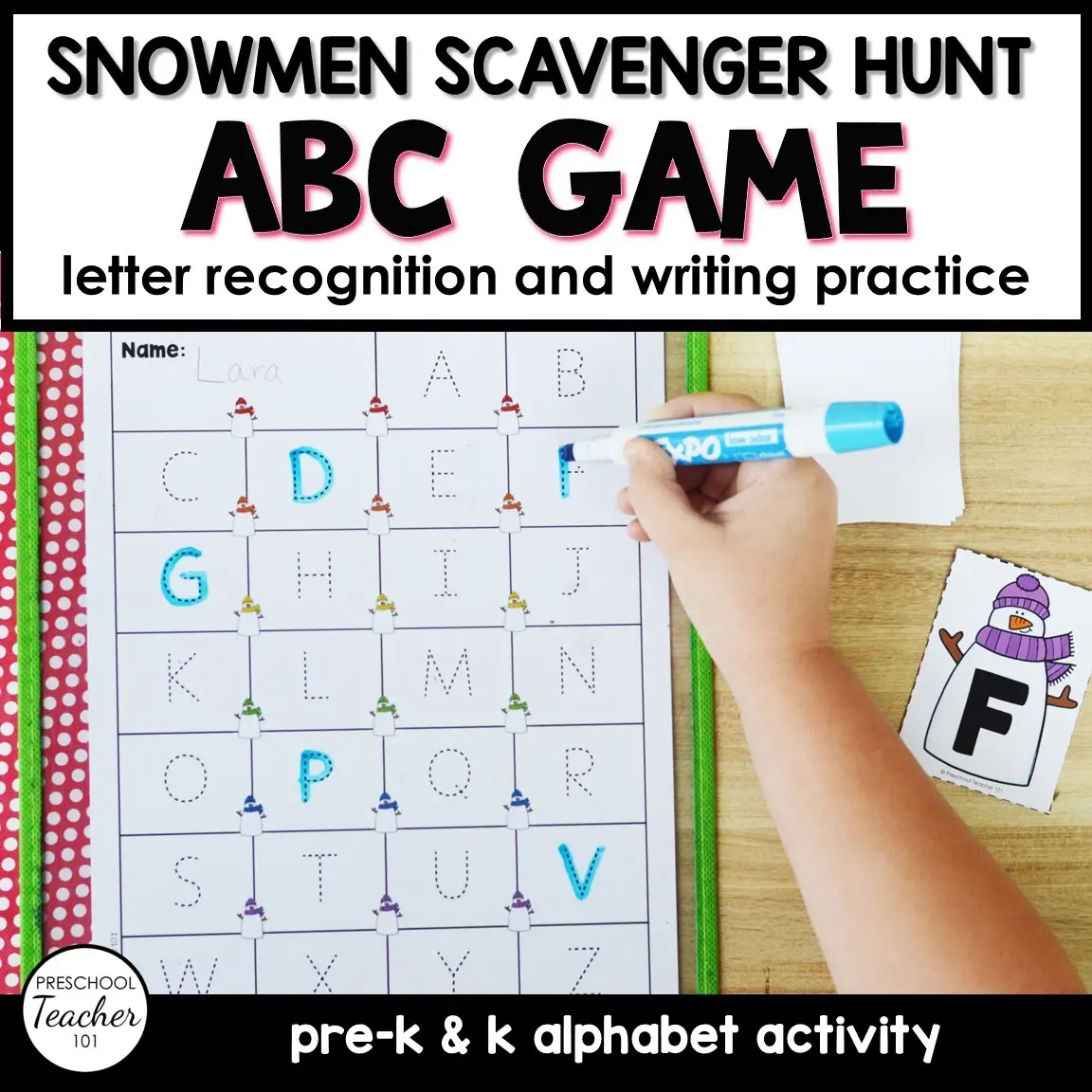
As educators and parents continuously seek innovative ways to combat the winter slump in classrooms and living rooms, a new pedagogical tool has emerged to capture children’s imaginations while advancing foundational literacy. The Snowman ABC Scavenger Hunt Winter Alphabet Activity, developed by early childhood learning specialists, bridges the critical gap between kinesthetic movement and early phonics acquisition. Designed specifically for preschool, pre-kindergarten (Pre-K), and kindergarten students, this interactive curriculum component transforms traditional, sedentary letter-recognition drills into an engaging, physically active quest.
By strategically hiding snowman-themed letter cards around a room—or even an outdoor space—educators can activate gross motor skills while students hunt for, identify, and record uppercase and lowercase letters. In an era where early childhood education experts advocate heavily for play-based learning and multi-sensory approaches, this activity serves as an authoritative model for how to keep young minds focused, active, and eager to learn during the coldest months of the year.
Detailed Chronology and Development of Play-Based Literacy
The Evolution of Kinesthetic Learning in Early Childhood
For decades, early childhood education has shifted away from rote memorization and flashcards toward dynamic, play-based frameworks. Research consistently demonstrates that young children learn best when learning is contextualized through movement, exploration, and play. Recognizing a distinct seasonal gap in interactive winter resources, curriculum designers conceptualized a yearlong series of scavenger hunts rooted in children’s natural affinity for exploratory games.
The development of the Snowman ABC Scavenger Hunt began with a simple pedagogical question: How can educators sustain student engagement in letter recognition when cold weather restricts outdoor recess and indoor fatigue sets in?
Ideation and Conceptualization: Developers analyzed standard preschool and kindergarten alphabet milestones. They identified that traditional worksheet-based instruction often fails to hold the attention spans of four- and five-year-olds, who require physical engagement to anchor cognitive concepts.
The Winter Motif Integration: To align with seasonal themes already popular in classrooms, the snowman motif was selected. Snowmen offer high visual contrast, simple shapes for easy cutting and placement, and an inherently festive, non-denominational appeal for winter lesson plans.
Drafting the Printable Framework: The initial prototypes included large, highly visible letter cards alongside structured recording sheets. Early trials in pilot classrooms revealed that children responded enthusiastically to the "hunt" element, transforming the anxiety of letter-testing into an exhilarating game.
Refinement and Expansion: Following positive initial feedback from educators and homeschool parents alike, the creators expanded the offering from a simple free sample into a comprehensive, multi-tiered pack. This full set includes differentiated options for uppercase and lowercase letter matching, trace-it and write-it recording sheets, and flexible implementation guidelines for diverse learning environments.
Supporting Context, Metrics, and Educational Frameworks
The Science Behind Movement and Memory
The effectiveness of the Snowman ABC Scavenger Hunt lies in its adherence to established cognitive science principles. Neurological research indicates that physical movement increases blood flow to the brain, releasing neurochemicals such as dopamine, norepinephrine, and serotonin, which enhance focus, mood, and memory retention.
When a child walks, searches, bends down, or reaches to find a hidden snowman card containing the letter "B," multiple sensory pathways are activated simultaneously:
Visual Processing: Recognizing the shape of the letter and the distinctive snowman illustration.
Kinesthetic Feedback: Navigating the physical space of the classroom or home.
Auditory-Phonetic Association: Vocalizing the letter name or its corresponding phonetic sound upon discovery.
Fine Motor Integration: Tracing or writing the letter on a designated recording sheet.
Differentiated Instruction Metrics
Classrooms are rarely homogeneous; educators constantly balance the needs of advanced learners alongside students requiring intensive intervention. The Snowman ABC Scavenger Hunt addresses this challenge through built-in differentiation metrics:
Targeted Intervention: Instructors are not required to distribute all 26 letters simultaneously. Educators can isolate specific letter sets—such as the letters in a child’s name, vowels, or historically troublesome consonants (e.g., b, d, p, q)—to support struggling learners.
Scaffolding Options: The availability of trace-it versus write-it recording sheets allows educators to scale the activity up or down depending on a child’s fine motor development and writing fluency.
Reusability and Sustainability: By encouraging educators to laminate cards and recording sheets or place them inside dry-erase pockets, the activity supports sustainable teaching practices while enabling repeated, low-stakes practice sessions.
Official Statements and Expert Insights
Early childhood literacy advocates and curriculum developers have praised the activity for its adaptability and alignment with modern early learning standards.
"When young children are anchored to their desks for prolonged periods, cognitive fatigue sets in rapidly, leading to behavioral disruptions and reduced retention," notes an early childhood curriculum specialist. "By leveraging the innate joy of a scavenger hunt, the Snowman ABC Scavenger Hunt reframes alphabet learning as an adventure. It meets the developmental imperative for movement while delivering rigorous phonics practice."
Classroom educators who have integrated the snowman-themed hunt into their winter lesson plans have reported measurable improvements in student enthusiasm.
"My kindergarten students used to groan when it was time for handwriting and alphabet drills," shares a veteran primary school teacher. "Since introducing the snowman hunt, they actually ask when we are going to do ‘letter hunting.’ They are moving around the room, collaborating with peers, and most importantly, their letter-sound correspondence has improved significantly because they are actively hunting for the targets rather than passively staring at a board."
Future Outlook: The Expanding Role of Interactive Seasonal Curriculums
As the educational landscape continues to embrace blended, flexible, and student-centered methodologies, resources like the Snowman ABC Scavenger Hunt represent the future of supplementary learning materials. The shift away from static worksheets toward dynamic, reusable, and physically engaging activities reflects a broader pedagogical evolution.
Key Trends Shaping the Future of Early Literacy:
Multi-Sensory Integration: Future iterations of early learning tools are expected to lean even further into tactile and kinesthetic experiences, merging digital tracking with physical manipulation.
Customizable Print-on-Demand Ecosystems: Educators increasingly demand resources that can be instantly adapted for individual education plans (IEPs), English language learners (ELL), and diverse socioeconomic settings. Free samples paired with comprehensive premium expansions—a model utilized by this activity—provide an accessible entry point for underfunded classrooms.
Yearlong Thematic Continuity: Building on the success of winter-specific scavenger hunts, developers are mapping out cohesive, yearlong cross-curricular programs that maintain consistent mechanics while rotating themes from autumn pumpkins to spring flora, ensuring predictable routines that foster psychological safety and accelerated learning in young children.
In conclusion, the Snowman ABC Scavenger Hunt Winter Alphabet Activity is much more than a seasonal distraction; it is a meticulously designed educational asset that honors the developmental needs of young learners. By fusing active play with essential literacy milestones, it ensures that children remain engaged, active, and enthusiastic about reading throughout the darkest and coldest months of the year.