
Executive Overview
In an era defined by rapid technological advancement and complex problem-solving, the ability to innovate is no longer reserved exclusively for corporate research and development laboratories. Whether addressing localized household challenges or designing global infrastructure systems, modern problem solvers rely on a structured, iterative framework known as the Engineering Design Process (EDP).
Unlike the linear progression of academic theory, the Engineering Design Process is inherently circular. It is a systematic methodology employed by multidisciplinary engineering teams to conceptualize, construct, test, and refine solutions to physical and structural challenges. By synthesizing core concepts from mathematics, physics, and material science, practitioners translate abstract ideas into workable realities.
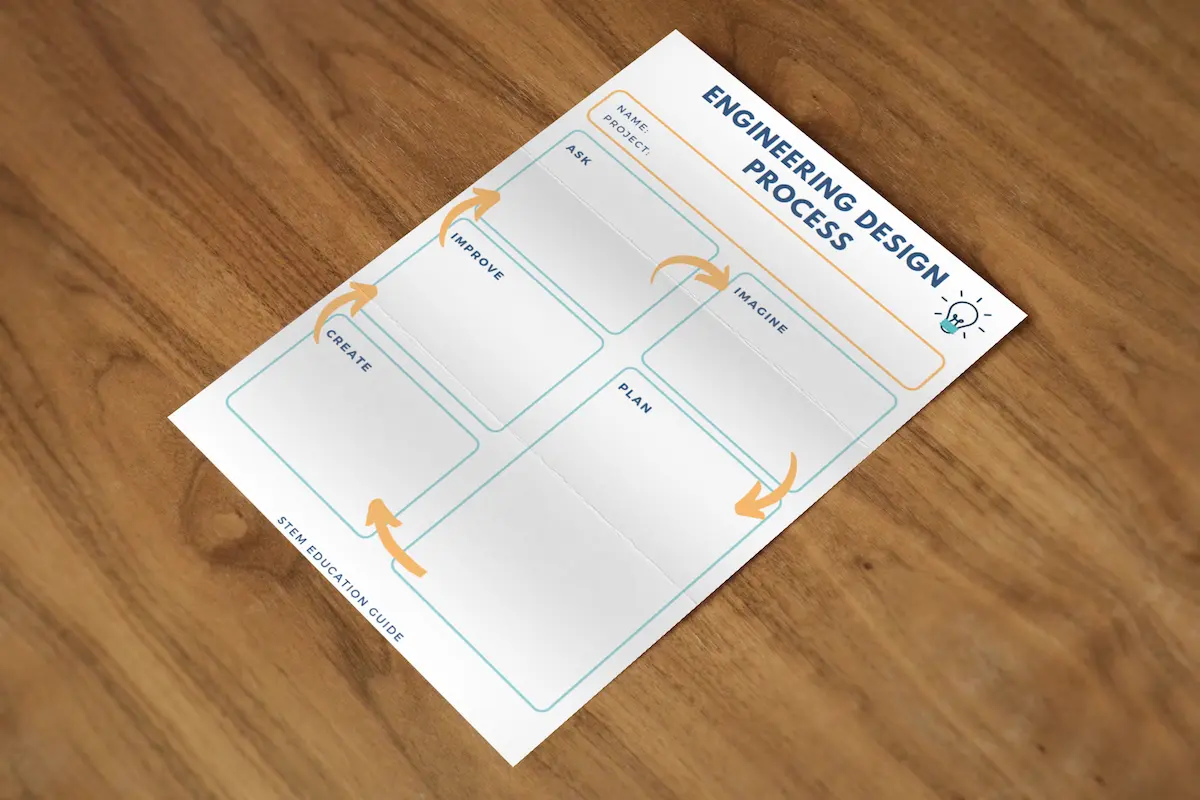
While advanced academic and industrial frameworks often break this cycle down into a dozen or more hyper-specific phases, foundational engineering education recognizes that all iterative problem-solving fits neatly into five core stages: Ask, Imagine, Plan, Create, and Improve.
To understand how this framework functions in everyday life, one need not look any further than the home kitchen. By examining a common domestic challenge—such as preparing a complex, multi-preference family dinner from scratch using pantry staples—we can observe the engineering mindset in action. Furthermore, contrasting this practical methodology with the traditional Scientific Method highlights the distinct boundary between discovering how the natural world works and designing the human-made world that surrounds us.
Detailed Chronology: The 5-Step Engineering Design Process in Action
To truly grasp how engineering principles govern everyday problem-solving, consider a familiar scenario: It is late afternoon, and a household of six is experiencing a convergence of hunger, fatigue, and an empty meal plan. No one has gone grocery shopping, and the pantry contains a mixture of fresh garden vegetables, proteins, and assorted dry goods. How do you feed a diverse group efficiently?
The application of the Engineering Design Process transforms a chaotic scramble into a streamlined, collaborative project management case study.
[ 1. ASK ] ---> [ 2. IMAGINE ] ---> [ 3. PLAN ] ---> [ 4. CREATE ] ---> [ 5. IMPROVE ]
  ^                                                                           |
  |---------------------------- ( ITERATION CYCLE ) --------------------------|
Step 1: Ask (Defining the Parameters and Constraints)
The first phase of any engineering challenge requires establishing clear design parameters, criteria, and constraints. In our household scenario, an impromptu family meeting identifies the core problem: everyone is hungry, time is limited, and preparation must rely exclusively on available ingredients.
- The Problem: A lack of planning combined with restricted resources.
- The Constraints: Time limitations, avoiding excessive heat generation from appliances on a warm day, and utilizing perishable garden vegetables before they spoil.
Step 2: Imagine (Brainstorming and Research)
With constraints clearly defined, the team enters the ideation phase. Brainstorming encourages divergent thinking without immediate judgment.

- Initial Ideas: Traditional roasted meats are quickly discarded; they require extended cooking times and unnecessarily heat the home.
- The Pivot: Grandma and Grandpa’s surplus garden vegetables provide a primary material baseline. The team settles on a vegetable stew, recognizing that a sustainable meal requires a balanced protein source.
- Research: Team members utilize internet resources to evaluate optimal protein pairings for dense garden root vegetables, laying the groundwork for a viable culinary architecture.
Step 3: Plan (Design Schematics and Resource Allocation)
Engineering requires meticulous planning before physical fabrication begins. The family jots down a formal bill of materials:
- Vegetable Inventory: Potatoes, carrots, tomatoes, zucchini, summer squash, turnips, green beans, beets, and peas.
- Protein Inventory: Dried kidney beans, tofu blocks, and eggs.
Because stakeholders hold conflicting preferences regarding protein sources, the design plan adapts. Instead of forcing a monolithic solution, the team alters the design blueprint to accommodate three parallel prototypes: three separate pans of stew, each utilizing a different protein vector.
Step 4: Create (Prototyping and Collaborative Execution)
With the blueprints finalized, physical execution begins. Labor is divided based on safety constraints and skill levels:
- Younger family members handle low-risk tasks such as shelling peas, snapping green beans, and cutting soft ingredients with table knives.
- Adults handle high-density vegetables requiring precision cutting tools.
- The family splits into three specialized operational units (teams), each taking full ownership of one soup prototype.
Water, herbs, and spices are integrated into each pot alongside the designated vegetable and protein allotments, with raw eggs held in reserve for late-stage integration.
Step 5: Improve (Testing, Troubleshooting, and Iteration)
No engineering prototype survives initial testing without encountering unforeseen flaws. As the stews simmer, diagnostic evaluations reveal critical issues:
- Structural Integrity Failure: The tofu cubes begin to disintegrate, turning mushy and breaking apart under thermal stress.
- Chemical Contamination of Aesthetics: The red beets leach their vibrant pigmentation into the broth, turning the potatoes, turnips, and surrounding liquid an unexpected shade of pink.
Implementing Engineering Adjustments:
Engineers do not scrap projects when errors arise; they iterate.
- Addressing the Beets: The beets are extracted from the pot before further structural discoloration can occur, set aside in a bowl for alternate use, and replaced with stable carrots.
- Addressing the Tofu: A team member uses a slotted spoon to salvage the compromised protein. A supervising adult then runs a secondary rapid-prototyping phase—pan-frying fresh cubes of tofu to a golden-brown crisp before introducing them late in the thermal cycle.
- Addressing the Eggs: Adhering to the revised timeline, team members crack six eggs into their designated pot, observing how thermal coagulation rapidly solidifies the whites while encapsulating the yolks.
Finally, quality assurance (taste-testing) is deployed. While the vegetable stew with kidney beans requires an extended thermal burn due to bean density, the other pots are sealed and removed from heat. The engineering process has successfully yielded a functional, scalable solution.
Supporting Context & Metrics: The Science vs. Engineering Paradigm
As the family sits down to evaluate their final product—enjoying hearty bowls of stew accompanied by artisanal bread—the discussion naturally shifts toward epistemological definitions. How does the structured environment of engineering differ from the pure inquiry of the scientific method?

Comparative Framework: Science vs. Engineering
| Metric / Attribute | The Scientific Method | The Engineering Design Process |
|---|---|---|
| Primary Driver | Curiosity and a desire to understand why nature behaves as it does. | Innovation, invention, and a desire to build solutions for human needs. |
| Starting Point | An unanswered question about the natural or physical world. | A practical problem, design challenge, or unfulfilled human need. |
| Methodology | Forming hypotheses, conducting controlled laboratory experiments, and analyzing variables. | Brainstorming, architectural planning, prototyping, testing, and continuous iteration. |
| Final Output | Empirical data, peer-reviewed journals, books, and fundamental theoretical discoveries. | Functional products, physical infrastructure, software applications, and patented technologies. |
Case Study in Application: The Dual Life of Beets
The culinary experiment with beets offers a prime intersection where engineering and science overlap:
- From an Engineering Perspective: Beets proved structurally disruptive in a mixed vegetable stew, altering the visual and chemical baseline of neighboring ingredients (potatoes and turnips). Engineers evaluated this as a design flaw and removed the variable to achieve the desired functional outcome (standard vegetable soup). However, engineers also recognize that when isolated, beets serve as the primary foundational ingredient for borscht, a globally celebrated traditional beet soup.
- From a Scientific Perspective: Researchers examining beets through the Scientific Method have isolated profound biochemical properties. Controlled laboratory experiments reveal that the human body converts dietary nitrates found in beet juice into nitric oxide molecules. These molecules dilate blood vessels, enhancing cerebral and muscular blood flow while assisting in the regulation of hypertension.
Thus, while an engineer utilizes beets as a physical variable in a meal design, a scientist investigates the molecular mechanisms that make those same beets a potent physiological asset.
Official Statements and Industry Insights
Educational experts and industry leaders consistently emphasize the importance of instilling the Engineering Design Process early in academic and professional development.
Dr. Elizabeth Vance, a prominent STEM education curriculum strategist, notes:
"The beauty of the Engineering Design Process is that it reframes failure. In traditional academic environments, a wrong answer is penalized. In the EDP, an unexpected result—such as mushy tofu or pink potatoes—is simply valuable diagnostic data. It tells the team precisely what needs to be adjusted in the next iteration cycle."
Furthermore, industrial engineering bodies emphasize that the transition from abstract scientific discovery to tangible consumer goods relies entirely on the cyclical nature of the "Imagine-Plan-Create-Improve" pipeline. Without engineers iterating on raw materials, scientific discoveries would remain confined to academic journals.
Future Outlook
As global supply chains shift, automation accelerates, and complex societal challenges emerge—ranging from sustainable food production to urban renewable energy grids—the demand for systematic problem-solving frameworks will intensify.
The integration of the Engineering Design Process into early childhood education and everyday domestic decision-making ensures that the next generation of innovators will view challenges not as roadblocks, but as design briefs waiting to be solved. By treating every domestic inconvenience, culinary experiment, or industrial bottleneck as a structured iteration loop, society moves closer to a future defined by continuous, resilient innovation.

