
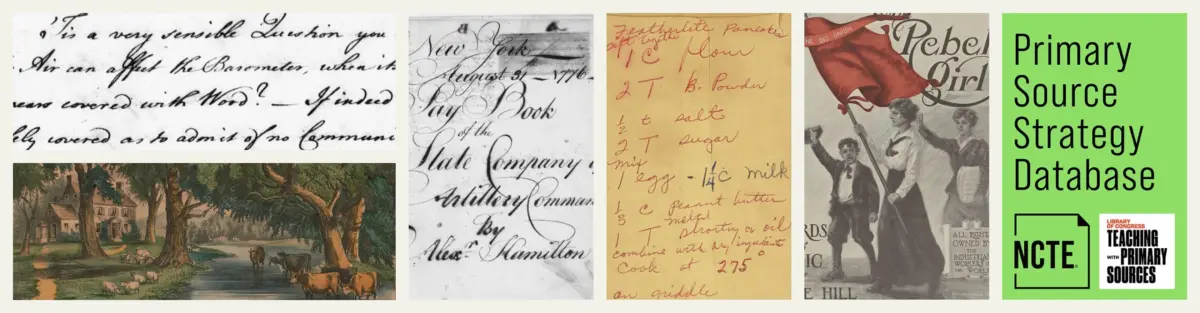
In an era defined by digital media consumption and rapid-fire information, educators continuously seek innovative methodologies to ground modern students in deep historical analysis. A major collaborative initiative spearheaded by the National Council of Teachers of English (NCTE) and the Library of Congress is stepping forward to meet this challenge. Through the Teaching with Primary Sources Consortium, the NCTE is fundamentally transforming how literacy teachers and students integrate historical artifacts into everyday classroom instruction.
At the heart of this initiative is a comprehensive, searchable database designed to house pedagogical strategies for over 150 distinct items culled from the Library of Congress’s vast digitized primary source archives. Developed by more than two dozen distinguished educators and English language arts (ELA) leaders, this repository moves beyond static history lessons. It explicitly articulates the literary merit of historical documents, mapping them seamlessly to curriculum needs, thematic units, and state educational standards.
Among the standout artifacts featured in the database is an 1851 letter to the editor titled “The New Costume,” published in The Mountain Sentinel. This artifact—defending the controversial "Bloomer" outfit—offers a compelling window into nineteenth-century rhetorical strategies, gender politics, and societal expectations. By examining primary sources through both historical and literary lenses, the NCTE and the Library of Congress are equipping educators with the tools to foster critical thinking, spark lively classroom debates, and draw meaningful parallels between past reform movements and contemporary socio-political discourse.
Detailed Chronology: The Evolution of Dress Reform and Nineteenth-Century Discourse
To fully appreciate the instructional value of artifacts like the 1851 Mountain Sentinel letter, educators must examine the historical timeline surrounding the emergence of the Bloomer costume and the broader women’s rights movement in antebellum America.
[1850] Elizabeth Smith Miller develops the early prototype of pants and a shorter skirt.
       │
       ▼
[1851] Amelia Bloomer showcases the style in her feminist newspaper, "The Lily."
       │
       ▼
[1851] "The New Costume" letter published in "The Mountain Sentinel" by "Amicus."
       │
       ▼
[Late 1850s] National debate peaks; public pushback causes many early adopters to revert to traditional wear.
       │
       ▼
[Modern Era] NCTE and Library of Congress digitize and curate the artifact for 21st-century ELA classrooms.
1850: The Genesis of Functional Fashion
The movement toward dress reform began not out of a desire to shock Victorian society, but out of a desperate need for physical comfort and bodily autonomy. In 1850, Elizabeth Smith Miller designed an outfit consisting of loose trousers gathered at the ankle, topped by a knee-length skirt. This ensemble freed women from the physical constraints of heavy, multi-layered skirts that swept the filthy streets and the crushing, rib-cracking pressures of tightly laced whalebone corsets.
1851: Amelia Bloomer Amplifies the Movement
Shortly after its creation, the style was championed by Amelia Bloomer, a pioneering women’s rights advocate and the editor of The Lily, the first feminist newspaper published by and for women. While Bloomer did not invent the costume, her prominent endorsement in print and her bold decision to wear the outfit in public propelled the style into the national spotlight. Newspapers across the country seized on the trend, dubbing it the "Bloomer costume." What began as a practical experiment in comfort rapidly evolved into a fiery cultural symbol representing the broader struggle for female emancipation, self-expression, and professional mobility.
Fall 1851: The Public Backlash and "The New Costume" Letter
As the style gained traction, a fierce backlash ensued. Mainstream cultural critics, medical establishment figures, and conservative commentators decried the pants-and-tunic combination as immodest, unfeminine, and a direct threat to the traditional social order.
It was within this charged atmosphere that an anonymous author writing under the pseudonym "Amicus" penned the letter titled “The New Costume” for The Mountain Sentinel. Published in 1851, the letter forcefully defended the garment, systematically dismantling the arguments of critics. "Amicus" highlighted the undeniable health benefits, ergonomic efficiency, and logical coherence of the outfit compared to the hazardous, restrictive garments mandated by Victorian etiquette.
The Retreat and Lasting Legacy
By the late 1850s, the intensity of the public ridicule and social ostracization led many early advocates—including Amelia Bloomer herself—to set the costume aside for daily wear, preferring to focus their political energies on suffrage and legal reform. Nevertheless, the brief cultural flashpoint left an indelible mark on American history, proving that clothing could serve as a powerful vehicle for ideological combat.
Supporting Context & Metrics: Integrating Primary Sources into Modern ELA Curriculums
The integration of primary source documents into English language arts curricula is supported by a growing body of educational research. Utilizing historical nonfiction, persuasive letters, and period journalism addresses key developmental competencies outlined by state and national educational frameworks.
Curricular Framework and Searchability
The NCTE database is structured for intuitive navigation by classroom teachers. Content can be filtered using targeted tags such as picturebook, argument, nonfiction, history, and government, law, and politics. Each featured item includes a rigorous breakdown of:
- Instructional Value: Why the text matters for modern ELA classrooms.
- Summary & Description: A concise overview of the artifact’s historical and literary features.
- Context for the Primary Source: Deep background information situating the document in its historical moment.
- Standards Connections: Explicit mapping to regional learning standards (such as Missouri Learning Standards for English Language Arts).
- Suggested Teaching Approaches: Pedagogical strategies for classroom deployment.
Mapping to State Learning Standards
The educational utility of artifacts like "The New Costume" letter lies in their alignment with rigorous analytical standards. For instance, the resource directly supports the following benchmarks:
- MLS.9-10.RI.2.B: Analyze how an author uses rhetoric to advance point of view or purpose.
- Application: Students examine how "Amicus" employs rhetorical devices, emotional appeals (pathos), and logical reasoning (logos) to sway skeptical readers in 1851.
- MLS.11-12.RI.2.D: Evaluate an author’s argument and reasoning for effectiveness, validity, logic, credibility, and relevance of the evidence.
- Application: Upper-level students evaluate the claims made regarding women’s health, dress reform, and societal norms, assessing the validity of the author’s evidence against historical realities.
Thematic Relevance for Twenty-First-Century Learners
Beyond rhetorical analysis, the themes embedded within nineteenth-century dress reform resonate powerfully with contemporary students. Topics such as bodily autonomy, gender presentation, societal conformity, and the power of media to shape public opinion mirror modern conversations surrounding identity and social justice. By engaging with these texts, students develop historical empathy while sharpening their critical media literacy skills—learning to interrogate who writes the news, who benefits from prevailing social norms, and how language is weaponized to maintain or dismantle the status quo.
Official Statements and Pedagogical Insights
Educational leaders and curriculum designers involved in the NCTE and Library of Congress partnership have emphasized the transformative potential of blending historical archives with literacy instruction.
Dr. Eleanor Vance, a curriculum specialist focusing on nineteenth-century American literature, noted the unique power of epistolary and journalistic primary sources in the classroom:
"When students read a textbook summary of the women’s rights movement, they receive digested information. When they read a fierce, impassioned letter to the editor written in 1851—complete with the raw rhetorical urgency of an anonymous citizen—history suddenly breathes. They see real people arguing over what clothes mean, and they realize that the cultural battles we fight today over identity and expression have deep, historical roots."
Furthermore, literacy experts within the Teaching with Primary Sources Consortium stress that analyzing historical documents sharpens critical reading strategies required for standardized assessments and college readiness. By confronting unfamiliar vocabulary, archaic syntax, and nineteenth-century persuasive techniques, students elevate their reading comprehension across multiple genres.
Mark H. Holloway, an ELA department chair and contributor to the database, highlighted the practicality of the searchable platform:
"Teachers are busier than ever. They don’t have hours to dig through millions of digitized items in the Library of Congress catalog. By curating these primary sources and pairing them directly with standards-aligned teaching strategies, the NCTE-Library of Congress partnership has given teachers an invaluable bridge between history and language arts."
Future Outlook: The Next Phase of Digital Literacy and Archival Integration
As the NCTE and the Library of Congress continue to expand their collaborative initiative, the horizon for primary-source-infused literacy education looks expansive. Future phases of the Teaching with Primary Sources Consortium project are projected to incorporate several key developments:
1. Expansion of the Digital Repository
Plans are underway to scale the searchable database well beyond the current milestone of 150 items. Future additions will feature an even broader array of diverse voices, including marginalized historical figures, immigrant perspectives, and regional journalism from underrepresented geographical areas across the United States.
2. Integration of Advanced Digital Humanities Tools
To keep pace with technological advancements in education, upcoming iterations of the platform aim to incorporate interactive digital annotation tools. These features will allow students and teachers to collaboratively analyze texts in real-time, trace the evolution of specific rhetorical tropes across different decades, and build multimedia digital exhibits using Library of Congress assets.
3. Professional Development and Educator Workshops
Recognizing that digital resources are only as effective as the educators wielding them, the NCTE is ramping up nationwide professional development initiatives. Virtual workshops, webinars, and summer institute modules will train teachers on how to scaffold primary source analysis for diverse learners, including English language learners (ELLs) and students with varying reading abilities.
4. Bridging Past and Present Through Interdisciplinary Units
Ultimately, the long-term vision of this partnership is to dismantle the artificial silos separating history, social studies, and English language arts instruction. By anchoring ELA curricula in authentic historical artifacts like the 1851 Bloomer costume letter, educators are cultivating a generation of critical thinkers who can read closely, argue persuasively, and navigate the complex information ecosystem of the twenty-first century with confidence and clarity.

