
Executive Overview
The landscape of higher education is facing a critical crossroads. As lecture halls fill with Generation Z students—individuals born between 1997 and 2012—universities and professional training programs are confronting a stark reality: traditional, passive lecture formats are rapidly losing their efficacy. Nowhere is this disconnect more acutely felt than in rigorous healthcare programs, where dense medical, dental, and clinical curricula demand sustained attention, deep comprehension, and intense cognitive processing.
A landmark study recently published in Medical Science Educator by Argus-Calvo et al. (2026) investigates this pedagogical challenge head-on. Focusing on a critical yet often overlooked component of medical training—student wellness education—the researchers evaluated whether integrating game-based learning platforms like Kahoot! could bridge the engagement gap without sacrificing academic rigor.
Evaluating two distinct cohorts of medical and dental students across consecutive academic years, the study compared a traditional slide-and-lecture format against a dynamic, gamified model. While both instructional methods yielded comparable, highly positive outcomes in terms of student self-efficacy and psychological quality of life, the qualitative data revealed a dramatic divergence in student experience. The game-based cohort reported significantly higher levels of engagement, active participation, and peer connectedness.
This comprehensive report explores the methodology, empirical findings, and broader implications of the Argus-Calvo et al. study. By examining how modern educational tools address the cognitive habits of Generation Z, this article investigates the future of interactive instruction in professional healthcare training and outlines actionable strategies for educators looking to modernize their classrooms.
Detailed Chronology: The Evolution of the Wellness Workshop Study
To understand the impact of the Argus-Calvo et al. (2026) study, one must examine the systematic approach the researchers took to evaluate instructional delivery. Rather than altering the core educational content, the research team isolated the variable of classroom delivery, putting a specialized wellness curriculum to the test across two distinct academic cycles.
The Curriculum: The "Well-Teach" Foundation
Both student cohorts participated in a specialized wellness workshop titled "Well-Teach." This program was deliberately designed to address high rates of burnout, depression, and anxiety—psychological challenges that are heavily documented among healthcare students and practicing professionals alike.
Despite the high stakes—where student burnout has been directly linked to diminished professional performance and compromised patient care down the line—wellness training historically receives less curricular emphasis than hard clinical sciences. The Well-Teach workshop aimed to counter this imbalance by teaching actionable stress management, emotional regulation, and self-care strategies. Crucially, the theoretical content, practical exercises, and experiential activities remained completely identical across both iterations of the study. The exact same two instructors taught both groups using the same underlying slide decks.
The 2023 Baseline Cohort: Traditional Delivery
In 2023, the baseline cohort of 216 medical and dental students experienced the Well-Teach curriculum through a conventional pedagogical framework. Structured across two intensive two-hour sessions, the delivery relied heavily on slide presentations and direct lecture instruction.
To maintain baseline student engagement—recognizing the inherent limitations of long, unbroken blocks of didactic teaching—the instructors incorporated practical exercises, structured case studies, small-group discussions, and periodic one-on-one feedback. While these methods provided interactive touchpoints, the overarching structural format remained anchored in the traditional lecture paradigm.
The 2024 Intervention Cohort: Gamified Interactivity
A year later, in 2024, a new cohort of 221 medical and dental students engaged with the identical slide deck and theoretical material, but the delivery architecture was fundamentally overhauled. The total instructional time was divided differently: rather than two lengthy sessions, the curriculum was distributed across four concise one-hour modules.
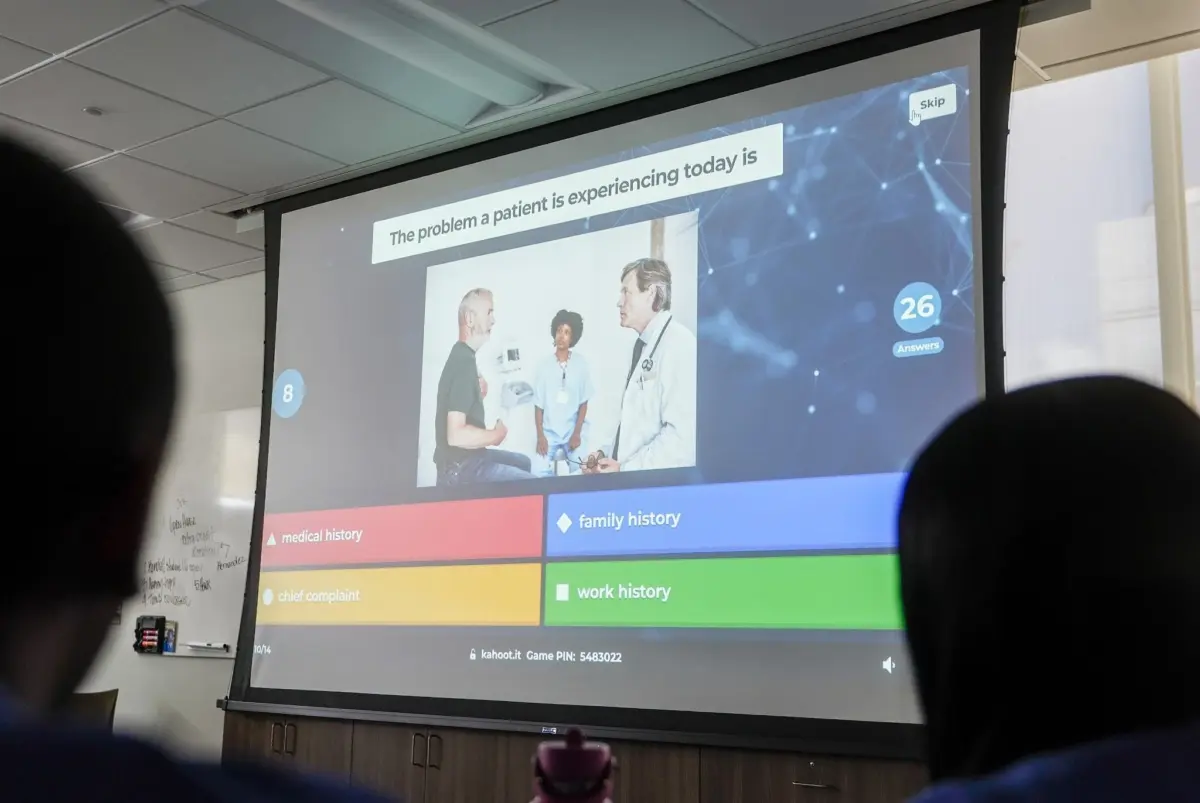
Embedded throughout these sessions were interactive Kahoot! game-based checkpoints. Students utilized their personal mobile devices to respond to timed, gamified questions that tested their comprehension of the wellness material. The platform instantly aggregated and projected the group’s responses back to the classroom in real time, creating an atmosphere of immediate feedback, friendly competition, and collective data visualization.
Evaluating the Methodology
In total, 437 students participated across the two-year observation window, split almost evenly between the baseline and intervention groups. Because the cohorts were evaluated in consecutive academic years rather than randomized side-by-side during the same semester, the authors note that the study functions best as a robust single data point and observational comparative analysis rather than a fully controlled, randomized clinical trial. Nevertheless, the scale and structural consistency of the intervention offer valuable empirical insights into modern educational delivery.
Supporting Context & Metrics: Quantitative Parity vs. Qualitative Divergence
When the data from both cohorts were compiled and analyzed, the findings offered a fascinating dual narrative: quantitative equivalence in learning outcomes paired with qualitative superiority in student engagement.
Academic and Psychological Outcomes
To measure the efficacy of the workshops, researchers tracked several validated psychological and self-assessment metrics before and after the interventions. These included measures of emotional health, stress management, anger management, and overall perceived wellness.
The statistical analysis revealed that both formats produced significant, positive shifts in student well-being:
- Self-Efficacy: Students in the traditional lecture group saw their self-efficacy scores rise from a pre-workshop mean of 20.36 to a post-workshop mean of 21.82. The game-based Kahoot! cohort experienced a nearly identical upward trajectory, moving from 20.32 to 21.98.
- Psychological Quality of Life: Quality-of-life scores demonstrated similar upward momentum. The lecture cohort improved from 13.74 to 14.34, while the game-based cohort rose from 14.20 to 15.04.
Furthermore, marginal mean changes across auxiliary emotional intelligence and wellness metrics favored the game-based learning group, with a higher percentage of participants reporting tangible improvements in stress and anger management. However, the researchers emphasized that these statistical disparities were not profoundly pronounced; both formats proved comparably efficacious in delivering the core educational message and initiating positive psychological shifts.
The Experiential Divide: Engagement and Community
If the academic outcomes were roughly equivalent, the student experience told a strikingly different story. When researchers categorized and analyzed qualitative open-ended feedback from both cohorts, a clear winner emerged regarding classroom climate and motivation.
"Engagement and interactivity" surfaced as the single most frequently mentioned theme across the entire qualitative dataset, registering 85 distinct mentions. Students specifically credited the Kahoot! sessions—alongside the integrated group discussions—as catalysts that transformed passive listening into active intellectual participation.
A secondary major theme, the cultivation of a "sense of community" derived from sharing interactive gameplay with classmates, was cited 25 times. The experiential shift was neatly summarized by unsolicited student feedback from the 2024 cohort:
"The Kahoot! games. I learned a lot and was motivated to play because I liked the prizes."
By transforming dense, potentially draining wellness material into an interactive, low-stakes competitive format, the game-based model successfully captured the attention of a demographic notoriously difficult to engage through traditional monologue lectures.
Official Perspectives: The Generation Z Factor and Cognitive Load
To contextualize why game-based learning resonated so powerfully with the 2024 cohort, the authors of the Medical Science Educator study delve into the cognitive profiles of contemporary higher education students.
The Cognitive Profile of Generation Z
The vast majority of students currently populating medical and dental schools belong to Generation Z. Growing up immersed in hyper-connected, digital environments, Gen Z learners are frequently characterized as habitual multitaskers. While this digital fluency offers distinct advantages in information processing, educational psychologists note that chronic multitasking significantly raises cognitive load.
When applied to dense, information-heavy academic disciplines like medicine, high cognitive load can impair memory retention, fracture attention spans, and diminish engagement. Traditional lectures—which demand prolonged, uninterrupted passive listening—often clash with the cognitive habits of this digital-native generation.
Argus-Calvo et al. argue that game-based learning acts as a direct structural antidote to this disengagement pattern. By introducing gamification elements—such as time pressure, visual scoreboards, immediate feedback loops, and peer interaction—educators can sharpen student focus, boost intrinsic motivation, and encourage active participation.
Broader Academic Alignment
The findings of Argus-Calvo et al. (2026) do not exist in an academic vacuum. They align seamlessly with a growing body of international educational research. For instance, a comprehensive meta-analysis conducted by Özdemir (2025) examining 43 independent studies found substantial, statistically significant gains in knowledge retention and academic achievement associated with the integration of Kahoot! across diverse educational settings.
Similarly, institutional tracking within medical education indicates that gamified digital tools are increasingly transitioning from novel classroom experiments to core pedagogical strategies. These tools provide real-time assessment data not only to students—allowing them to gauge their own conceptual mastery instantaneously—but also to instructors, who can identify knowledge gaps on the fly and adjust their teaching pace accordingly.
Future Outlook: Practical Takeaways for Higher Education
As universities and medical training programs look toward the future, the implications of the Argus-Calvo et al. study extend far beyond a single wellness workshop. The core challenge facing modern educators is clear: how to adapt rigorous academic standards to meet the expectations and cognitive needs of a new generation of learners without compromising curriculum depth.
Rethinking Lecture Delivery Without Starting from Scratch
A common fear among university faculty is that modernizing a course requires a complete, resource-intensive overhaul of the syllabus. The researchers behind this study offer a reassuring counter-perspective. Completely dismantling a curriculum or shortening every lecture to match micro-learning trends is often neither practical nor desirable.
Instead, educators can implement high-impact, low-effort adjustments within their existing course structures:
- Interactive Openings: Begin lectures with a thought-provoking, gamified polling question that forces students to take an immediate intellectual stance on the topic of the day.
- Strategic Micro-Breaks: Break up long stretches of didactic presentation with brief, targeted case studies or small-group peer discussions.
- Formative Checkpoints: Weave gamified quizzes or digital polls into the lecture at natural conceptual junctures. This provides students with an immediate, stress-free read on their own understanding while resetting classroom attention spans.
The Verdict on Modern Pedagogy
The study by Argus-Calvo et al. delivers an encouraging message to academic institutions weighing the costs and benefits of classroom innovation. Traditional lectures remain fully capable of delivering complex theoretical material and fostering positive student outcomes. However, when paired with game-based learning tools, education transcends mere information transfer.
By prioritizing interactivity, real-time feedback, and peer connectivity, educators can transform the classroom from a passive listening post into an engaging, collaborative community. For healthcare programs striving to combat student burnout and prepare resilient professionals for the demands of modern medicine, embracing these dynamic teaching methods is no longer just an experimental luxury—it is an educational imperative.
To explore the complete library of independent research, case studies, and empirical data underpinning the impact of game-based learning in professional education, visit kahoot.com/research.

