
Executive Overview
For generations, chemistry education has battled an invisible adversary: the perception that complex molecular science is abstract, tedious, and disconnected from reality. Mention terms like "acids," "bases," or "pH levels" in a typical middle-school classroom, and educators are frequently met with a chorus of groans. Yet, this apprehension is entirely misplaced. The chemistry of acids and bases is not confined to heavily guarded industrial laboratories or hazmat-suit-required environments; rather, it dictates the tang of a morning glass of orange juice, the fizz of a refreshing sherbet treat, the structural integrity of an eggshell, and the chemical balance within the human stomach.
Transforming the study of chemistry from a passive textbook exercise into an engaging, tactile discipline requires shifting the pedagogical focus toward experiential learning. By utilizing everyday household items—ranging from red cabbage and baking soda to vinegar and tarnished pennies—educators and parents can demystify the pH scale and molecular interactions. This comprehensive report explores the foundational science of acids and bases, outlines the standardized metrics used to measure them, details five immersive, hands-on classroom projects, and provides a forward-looking perspective on how early STEM intervention shapes future scientific literacy.
Detailed Chronology: The Evolution of Acid-Base Chemistry in Education
The journey of understanding acids and bases did not begin in modern science labs; it evolved over centuries through empirical observation, chemical revolution, and pedagogical reform. Understanding this historical arc helps educators contextualize why we teach the subject the way we do today.
The Empirical Era (Pre-18th Century)
Historically, substances were classified simply by their sensory properties. Alchemists and early natural philosophers noted that certain liquids—such as vinegar and citrus juices—shared a sharp, sour taste and could dissolve metals. These were broadly labeled "acids" (derived from the Latin acidus, meaning sour). Conversely, substances that felt slippery, neutralized those sour liquids, and left bitter residues were categorized as alkalis or bases. However, these definitions lacked a theoretical framework, relying entirely on physical touch and taste—methods that became increasingly dangerous as chemical manufacturing advanced.
The Theoretical Awakening (Late 19th to Mid 20th Century)
As chemistry matured into a rigorous quantitative science, scientists sought precise definitions for these behaviors.
- Svante Arrhenius (1884): The Swedish chemist proposed the first modern definition, stating that acids are substances that dissociate in water to produce hydrogen ions ($textH^+$), while bases produce hydroxide ions ($textOH^-$).
- Johannes Nicolaus Brønsted and Thomas Martin Lowry (1923): Expanding beyond water-based solutions, they redefined acids as proton ($textH^+$) donors and bases as proton acceptors.
- Gilbert N. Lewis (1923): Introducing an electronic perspective, Lewis defined acids as electron-pair acceptors and bases as electron-pair donors.
The Modern Pedagogical Shift (Late 20th Century to Present)
For decades, chemistry education remained tethered to the chalkboard, treating these sophisticated theories as rote memorization targets. Toward the late 20th century, education reformers realized that scientific literacy required constructivist learning environments.
Rather than telling students that "vinegar is an acid and baking soda is a base," progressive curricula began encouraging students to discover these truths empirically. The integration of inquiry-based STEM (Science, Technology, Engineering, and Mathematics) frameworks transformed kitchens and classrooms into laboratories, bridging the gap between theoretical chemistry and tangible real-world phenomena.
Supporting Context & Metrics: Decoding the pH Scale and Molecular Mechanics
To master the mechanics of acids and bases, students and educators must understand the invisible world of ions and the logarithmic measurement system that defines them.
The Molecular Architecture: Ions in Action
At the microscopic level, all aqueous solutions are governed by tiny molecules or atoms known as ions.
- Acids are characterized by a high concentration of hydrogen ions ($textH^+$). When dissolved in water, they readily release these protons. This abundance of hydrogen ions is responsible for the sharp, tangy, or sour flavor profile found in edible acids like citric acid in lemons and acetic acid in vinegar.
- Bases (often referred to as alkalis when soluble in water) are characterized by a high concentration of hydroxide ions ($textOH^-$). When touched (in safe, diluted forms like soap or baking soda solutions), they often feel slimy or slippery because they react with the natural oils on human skin. In consumable forms, they present a distinct bitter taste.
The pH Scale: A Logarithmic Yardstick
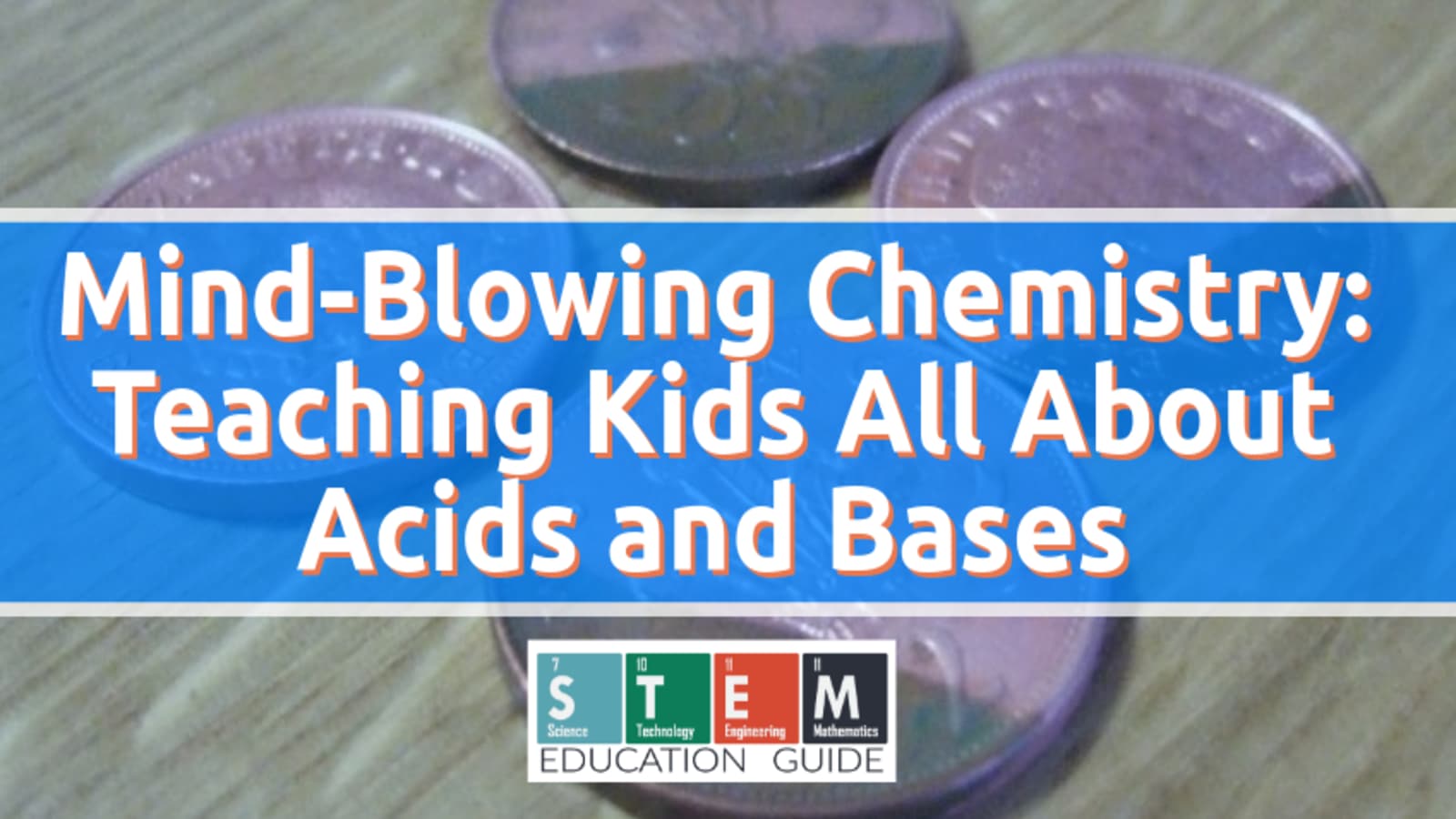
How do scientists quantify where a substance falls on the spectrum of acidity or alkalinity? Enter the pH scale (potential of hydrogen), which typically ranges from 0 to 14.
[0 ----------------------- 7 ----------------------- 14]
Strong Acid Neutral Strong Base- The Acidic Range (0 to 6.9): Values below 7 indicate acidity. The lower the number, the stronger the acid and the higher the concentration of hydrogen ions. For example, battery acid sits near 0, lemon juice hovers around 2, and black coffee rests at approximately 5.
- Neutral (7.0): Pure water is considered neutral—neither an acid nor a base. Here, hydrogen and hydroxide ions exist in a balanced equilibrium.
- The Basic Range (7.1 to 14): Values above 7 indicate alkalinity (bases). Baking soda typically measures around 9, household ammonia around 11, and liquid bleach scales up to 13.
It is critical to note that the pH scale is logarithmic, meaning each whole number change represents a tenfold change in ion concentration. A pH of 5 is ten times more acidic than a pH of 6, and one hundred times more acidic than a pH of 7. This mathematical nuance highlights why strong acids and bases must be handled with extreme care.
Indicators: Visualizing the Invisible
Because tasting unknown substances in a laboratory setting is strictly forbidden due to toxicity and corrosive risks, scientists rely on indicator solutions. Indicators are organic compounds that change color depending on the hydrogen ion concentration of their environment.
Classic indicators include litmus paper (derived from lichens), phenolphthalein, and anthocyanins found naturally in red cabbage. When exposed to an acidic environment, these indicators undergo a structural shift that alters how they absorb light, visually signaling the presence of an acid or base through dramatic color transformations.
Official Statements & Educational Frameworks
Educational authorities and STEM advocacy groups increasingly emphasize the necessity of hands-on experimentation in early science education.
Dr. Helena Vance, Chair of Curriculum Development at the National STEM Education Institute, notes:
"When children engage with chemistry through tactile, inquiry-driven projects, they stop viewing science as a series of abstract facts to be memorized for an exam. They begin to think like scientists. Observing a color change in a cabbage juice indicator or watching an eggshell dissolve creates cognitive anchors that traditional textbook reading simply cannot replicate. It fosters critical thinking, resilience, and genuine intellectual curiosity."
Furthermore, modern educational standards—such as the Next Generation Science Standards (NGSS)—explicitly mandate that students from an early age investigate matter and its interactions. By exploring how macroscopic properties (like taste, texture, and color) stem from microscopic structures (ions and pH levels), learners build a coherent mental model of physical science that prepares them for advanced coursework in high school and higher education.
Five Immersive STEM Projects to Teach Acids and Bases
To bridge the gap between theory and practice, educators can implement the following five hands-on, highly engaging projects in the classroom or at home.
1. Red Cabbage Juice as a Natural pH Indicator
Transforming a common kitchen vegetable into a sophisticated scientific tool demonstrates the power of natural chemistry.
- Objective: Create a custom pH indicator and test various household substances.
- Procedure:
- Chop and simmer red cabbage in a pot of water on the stove until the water turns a deep, rich purple.
- Allow the liquid to cool, then strain out the cabbage solids (which can be saved for dinner).
- Dip blank white index cards into the cooled purple juice, let them dry completely, and cut them into testing strips.
- Pour leftover cabbage juice into clear glasses and introduce various test liquids—such as lemon juice, milk, cola, and dissolved baking soda.
- Scientific Observation: The anthocyanin pigment in the cabbage acts as a versatile indicator. Acids will turn the solution pink or red, neutral solutions remain purple, and bases will shift the color toward blue, green, or even yellow.
2. The Edible Chemical Reaction: Fizzy Sherbet
Chemistry is rarely delicious, but this experiment proves that safe acid-base neutralization can be experienced directly on the palate.
- Objective: Experience an endothermic acid-base reaction safely using food-grade ingredients.
- Procedure:
In a clean bowl or a sealable plastic bag, combine the following dry ingredients:- 2 tablespoons of powdered sugar (base/filler)
- 1/2 teaspoon of citric acid (found in the baking aisle or health food stores)
- 1/4 teaspoon of baking soda (sodium bicarbonate, a mild base)
- 1 tablespoon of flavored gelatin powder (for flavor)
- Scientific Observation: Stir or shake the dry mixture thoroughly. Taste a small amount on your tongue. You will immediately notice a fizzy, tingling sensation. This effervescence is caused by the citric acid reacting with the baking soda in the presence of saliva, releasing carbon dioxide gas ($textCO_2$) right in your mouth!
3. The Great Penny Polish
Metals interact with chemical solutions in fascinating ways, providing a visual testament to the reactive nature of acids.
- Objective: Determine which household solutions are most effective at cleaning oxidized copper.
- Procedure:
- Collect several dull, tarnished, dirty-looking pennies.
- Set up four clear cups containing equal amounts of water mixed with different reactive agents: lemon juice (acid), cola (acid), baking soda (base), and liquid dish soap (neutral/mild base).
- Have students write down their hypotheses regarding which solution will clean the copper best.
- Drop the pennies into the cups and let them sit undisturbed for 15 to 30 minutes before inspecting the results.
- Scientific Observation: Acidic solutions containing citric acid or phosphoric acid (such as lemon juice and cola) will rapidly strip away copper oxide (tarnish), revealing a bright, shiny copper surface beneath, whereas basic or neutral soapy mixtures have little to no effect on the oxidation layer.
4. Making an Eggshell Disappear (The "Rubber Egg")
Witnessing structural dissolution firsthand brings the concept of corrosive acid action to life.
- Objective: Observe how an acidic solution reacts with calcium carbonate.
- Procedure:
- Carefully place a raw, hard or soft-shelled chicken egg into a clear glass or jar.
- Pour white vinegar (acetic acid) over the egg until it is completely submerged.
- Leave the setup undisturbed for 24 to 48 hours, periodically observing the surface of the egg.
- Scientific Observation: Tiny bubbles of carbon dioxide gas will immediately form on the eggshell. Over the course of a day, the acetic acid in the vinegar reacts with and dissolves the calcium carbonate $textCaCO_3$ that makes up the hard shell. Once the shell is completely gone, you are left with a translucent, bouncy "rubber egg" held together only by its semi-permeable inner membrane. (Note: Handle with care and wash hands thoroughly due to potential bacteria on raw eggs).
5. Neutralization: Combining Acids and Bases
What happens when an irresistible force meets an immovable object? In chemistry, they neutralize one another.
- Objective: Observe how mixing an acid and a base alters pH levels and produces dramatic physical reactions.
- Procedure:
- Pour a cup of white vinegar (acid) into a clear container.
- Test the initial pH using litmus paper or your homemade red cabbage strips.
- Slowly spoon baking soda (base) into the vinegar while observing the reaction.
- Test the resulting solution again with your indicator paper.
- Scientific Observation: Students will witness an energetic volcanic fizzing effect as carbon dioxide gas is rapidly released. Upon testing the final liquid with an indicator, they will find that the pH has shifted closer to neutral (pH 7), proving that acids and bases can cancel out each other’s chemical properties when combined in correct proportions.
Future Outlook: The Next Generation of Chemical Literacy
As global industries pivot toward advanced manufacturing, green chemistry, and sustainable technology, early foundational science education has never been more critical. The children currently mixing red cabbage juice in kitchen bowls or dissolving eggshells in vinegar are the future chemical engineers, pharmaceutical researchers, environmental scientists, and material innovators of tomorrow.
The shift toward inquiry-based, hands-on STEM education ensures that complex scientific concepts are no longer gated behind intimidating academic jargon. By democratizing chemistry through accessible household experiments, educators plant the seeds of analytical thinking and problem-solving. When students learn that science is not merely a subject studied in a textbook, but an active lens through which to examine the world around them, the barriers of apprehension dissolve—leaving behind a lifelong passion for discovery.

