

Executive Overview
In the modern educational landscape, school reform and professional development often begin with an underlying friction. When instructional coaches, school leaders, or professional development providers attempt to elevate teaching practices, they frequently encounter resistance. Traditionally, educational institutions have diagnosed this pushback as a personal deficit on the part of the educator—attributing it to stubbornness, an aversion to innovation, or an inherent unwillingness to evolve.
However, a paradigm-shifting approach is challenging this long-held assumption. In her ninth and latest book, How to Coach Resistance: Turning Pushback Into Possibility, renowned educational author, consultant, and coach Elena Aguilar posits that resistance is not an isolated teacher problem, but rather a dynamic, co-created interaction between two people. By examining the emotional undercurrents, diagnosing accurate growth gaps, and validating legitimate objections, Aguilar demonstrates that instructional coaches hold immense agency in reshaping these difficult interactions. This comprehensive report explores Aguilar’s frameworks—including the ACE process and the Gaps Framework—and offers a profound blueprint for turning pedagogical friction into a catalyst for institutional and personal growth.
Detailed Chronology & Background: The Evolution of Coaching Dynamics
For decades, the standard paradigm of instructional coaching mirrored a top-down corporate model: a designated expert identifies a flaw in a practitioner’s methodology, prescribes a solution, and monitors for compliance. When educators naturally balked at ungrounded mandates or rushed implementations, the traditional response was to increase pressure, double down on fidelity checklists, and label the hesitant teacher as "resistant."
The evolution of professional learning over the last ten years, however, has begun to recognize adult learners as complex individuals with deep-seated professional identities, emotional boundaries, and legitimate pedagogical philosophies. Aguilar’s work represents the crest of this evolution. Drawing from decades of frontline experience as a teacher and instructional coach, Aguilar began to deconstruct the anatomy of pushback.
Her observations culminated in the conceptualization of resistance not as a static brick wall, but as a mutual tug-of-war. When a coach demands a change and a teacher responds with skepticism or defense, both parties enter a defensive loop. The coach exerts professional pressure; the teacher matches it with emotional armor. Recognizing that this dynamic is entirely relational has rewritten the playbook for effective educational leadership. Rather than asking, "How do I fix this resistant teacher?" modern coaching now asks, "How are my own actions, anxiety, and urgency contributing to this standoff?"

Supporting Context & Core Frameworks: Unpacking Aguilar’s Methodology
To move beyond the cycle of pushback, Aguilar introduces actionable methodologies that decode the root causes of friction and pave the way for sustainable collaboration.
1. Dropping the Hand: Shifting from Pressure to Curiosity
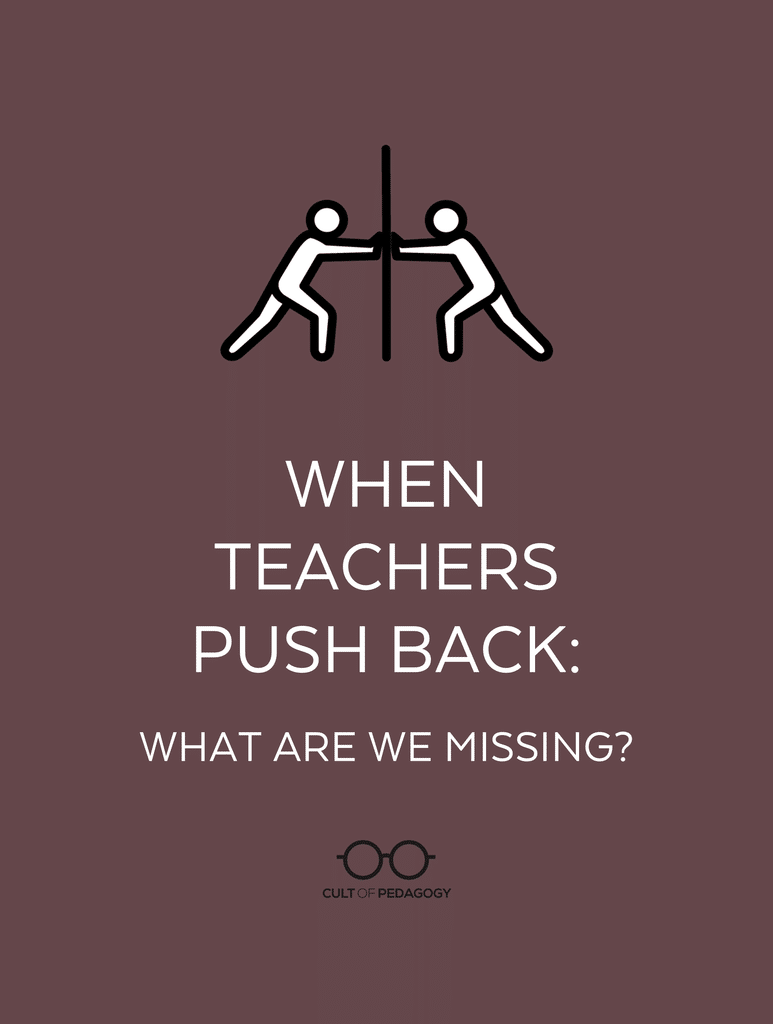
The foundational premise of Aguilar’s philosophy relies on a striking metaphor: two hands pushing against each other. The physical strain felt in the interaction is the product of mutual force. If a coach wishes to alleviate the tension, the most effective maneuver is to simply drop their hand.
Dropping the hand does not mean abandoning high standards or conceding to complacency; rather, it means replacing demands with genuine curiosity. When a coach stops arguing for a curriculum and instead asks about the teacher’s underlying concerns, the power dynamic shifts. It transforms an adversarial interrogation into a collaborative partnership. As Aguilar notes, while this realization can feel uncomfortable for coaches accustomed to wielding authority, it is fundamentally liberating because it proves that resistance is not a fixed trait—it can be dissolved by altering one’s approach.
2. The ACE Framework: Acknowledging Emotions, Cultivating Compassion, and Expanding the Story
When a coach successfully de-escalates a tense interaction, they frequently uncover a reservoir of complex emotions. To navigate this territory without stepping out of bounds, Aguilar developed the ACE framework:
- Acknowledge Emotions: Coaches do not need to act as clinical therapists or dig into a teacher’s personal past. Instead, they must simply recognize and validate the emotional state present in the room—such as fear, shame, or overwhelm—and communicate immediate professional acceptance. Utilizing tools like the Core Emotions framework helps educators find precise language for their distress, moving past generalized frustration to pinpoint root feelings.
- Cultivate Compassion: Educators are frequently hyper-critical of their own performance, carrying the immense weight of systemic educational failures. Aguilar suggests helping teachers extend self-compassion by asking a powerful reframing question: "What would you say to a best friend experiencing this exact same challenge?" Furthermore, Aguilar stresses that coaches must genuinely practice self-compassion themselves; an invitation to be kind to oneself rings hollow if the coach has not cultivated that internal grace.
- Expand the Story: Human beings naturally attach limiting beliefs and narratives to difficult situations (e.g., "My students are incapable of learning this" or "Administration does not trust my professional judgment"). The final step involves unpacking these cognitive scripts, enabling the educator to recognize the narrative they are holding and consciously choose an alternative, more expansive path forward.
3. The Gaps Framework: Diagnosing Real Areas for Growth
When coaching transitions from emotional processing to instructional strategy, identifying the correct barrier to success is paramount. The traditional label of "resistance" assumes a will gap—the false belief that an educator simply refuses to do the work.
Aguilar’s Gaps Framework broadens the diagnostic lens across six distinct categories:
- Skill: The physical mechanics or execution of a teaching practice.
- Knowledge: The theoretical or foundational understanding of a concept.
- Capacity: The logistical resources, energy, or time available to execute the task.
- Will: The internal drive, motivation, or belief in the value of the initiative.
- Emotional Intelligence: The ability to manage one’s own emotional triggers and interpersonal dynamics.
- Cultural Competence: The awareness of cultural contexts, equity issues, and systemic biases impacting the learning environment.
By systematically evaluating these areas—often starting by analyzing student-level hurdles—coaches can pinpoint exact support systems rather than relying on blunt, top-down directives.
4. Validating Righteous Resistance
Crucially, Aguilar’s framework honors a vital truth: not all pushback is unfounded. There are instances where institutional demands run counter to sound child development, ethics, or equity. A kindergarten educator instructed to enforce an hour of motionless, silent carpet instruction has a pedagogically sound, legitimate reason to object.
In such scenarios, coaches must validate this "righteous resistance." When policies cannot be directly overturned, effective leaders help teachers map out their agency—identifying where they possess autonomy, calculating potential consequences, and strategizing how to channel valid systemic critiques upward to decision-makers.
Official Perspectives & Expert Insights
Elena Aguilar’s continuous contributions to educational leadership through her organization, Bright Morning Consulting, emphasize a return to human-centric systems. Educational experts and instructional leaders across the country are increasingly embracing her philosophies as burnout rates climb and traditional compliance-based management yields diminishing returns.

"This is not to blame you," Aguilar writes regarding the co-creation of resistance. "It is the most hopeful thing I can tell you, because it means resistance is not fixed. It is determined at least in part by what you bring into the room, and what you bring is something you can change."
This perspective redefines instructional coaching not as a mechanism of surveillance and correction, but as an act of radical empathy and professional partnership. By broadcasting a clear message—“I’m not here to judge you. I’m not going to tell you what to do. I want to be a partner. I want to help you work through this”—coaches build the foundational trust required for genuine pedagogical transformation.
Future Outlook: The Next Frontier in Professional Development
As school districts navigate increasingly complex socio-emotional and academic hurdles, the demand for emotionally intelligent leadership has never been higher. The integration of frameworks like the ACE process and the Gaps Framework signals a departure from hyper-standardized, punitive teacher evaluations toward holistic professional growth models.
Moving forward, the success of school reform initiatives will likely depend on how well instructional coaches and administrators are trained in interpersonal dynamics and emotional regulation. By viewing teacher pushback not as an obstacle to crush, but as valuable data to decode, educational leaders can foster environments of psychological safety where innovation thrives. Ultimately, transforming resistance into possibility ensures that schools remain spaces of continuous learning—not just for students, but for the educators who guide them.

