
Executive Overview
Every generation is anchored by a rupture—a singular, history-altering flashpoint that fractures the timeline into a strict "before" and "after." For our grandparents, it was the attack on Pearl Harbor or the assassination of a charismatic president. For those who came of age at the turn of the millennium, it was the cloud of dust and smoke over Lower Manhattan on September 11, 2001. These defining historical tremors do not merely alter global geopolitics; they fundamentally reconfigure the psychological architecture of the societies that experience them, rippling down through decades to shape how everyday citizens view safety, institutional trust, and parental responsibility.
Yet, history is unyielding, and the nature of collective trauma evolves. While adults today carry the visceral, frozen-in-time memories of the early 2000s, Generation Z and Generation Alpha view those very same events through the flat, sanitized lens of a textbook page or a classroom worksheet scored with a green smiley face. For today’s children, September 11 is an artifact of history, akin to how their parents viewed the Apollo moon landings.
Instead, contemporary youth have inherited a different crucible: a multi-year global pandemic, relentless sociopolitical upheaval, and an era of pervasive digital anxiety. This article explores the profound generational shift in how collective trauma is experienced, processed, and passed down. By examining the transition from the acute, localized shock of 9/11 to the prolonged, systemic disruptions of the 2020s, we uncover how historical flashpoints construct the identities of successive generations and ultimately challenge parents to raise resilient children in a fractured world.
Detailed Chronology: From the Rural Classrooms of 2001 to the Digital Living Rooms of Today
To understand the intergenerational transmission of historical memory, one must trace the exact coordinates of how these events entered our collective consciousness.
September 11, 2001: The Shattering of a Rural Horizon
On a bright, unclouded Tuesday morning in rural southwestern Pennsylvania, high school classrooms operated under the comforting illusion of suburban and rural invulnerability. For a generation of teenagers raised on economic stability and a post-Cold War sense of relative peace, the world felt predictable. That illusion evaporated in minutes.
As news anchors stammered over initial reports of an aircraft striking the North Tower of the World Trade Center, high school hallways flooded with nervous, frantic energy. Teachers caught off-guard tried desperately to maintain lesson plans against the gravity of unfolding history, only for the chaos to breach the door. When the second plane hit, television sets were wheeled in or switched on, capturing the immediate, horrific reality that the nation was under attack.
By mid-morning, the horror struck closer to home. Flight 93, hijacked by terrorists with the intent to strike the U.S. Capitol, plummeted into an old strip-mine field in Shanksville, Pennsylvania—just miles from local camping spots and familiar rural backroads. For the students sitting in those classrooms, the day marked an abrupt, violent loss of innocence. It transformed a sheltered childhood worldview into an acute awareness of global vulnerability.
The Evolution of Historical Distance
In the years that followed, that acute trauma hardened into institutional memory. For those who lived through it, the memory is sensory: the smell of jet fuel in news reports, the haunting lists of names read aloud annually with the slow toll of a bell, and the sudden realization that air travel, civil liberties, and national borders would never be the same.
However, for the children born years or decades later, this seismic event is thoroughly historicized. It is encountered not as a live broadcast of terror, but as a standardized curriculum unit:
- The Bookshelf Metaphor: Biographies of Martin Luther King Jr., accounts of World War II, and illustrated retrospectives of the Twin Towers sit side-by-side on children’s bookshelves, stripped of their visceral panic and reduced to milestones of human history.
- The Classroom Worksheet: For modern students, 9/11 arrives in a folder home from school, bearing a grade of "10/10" scrawled in red ink next to a cheerful sticker.
- The Encapsulated Media: The horrors of the day are neatly edited into 90-second evening news packages designed to fit seamlessly between commercial breaks.
The New Crucible: The Pandemic Era
While parents spent decades processing the post-9/11 world—submitting to enhanced airport security, tracking color-coded terror alert levels, and explaining why certain toys could no longer be packed in vacation luggage—their children were developing under an entirely different pressure cooker.
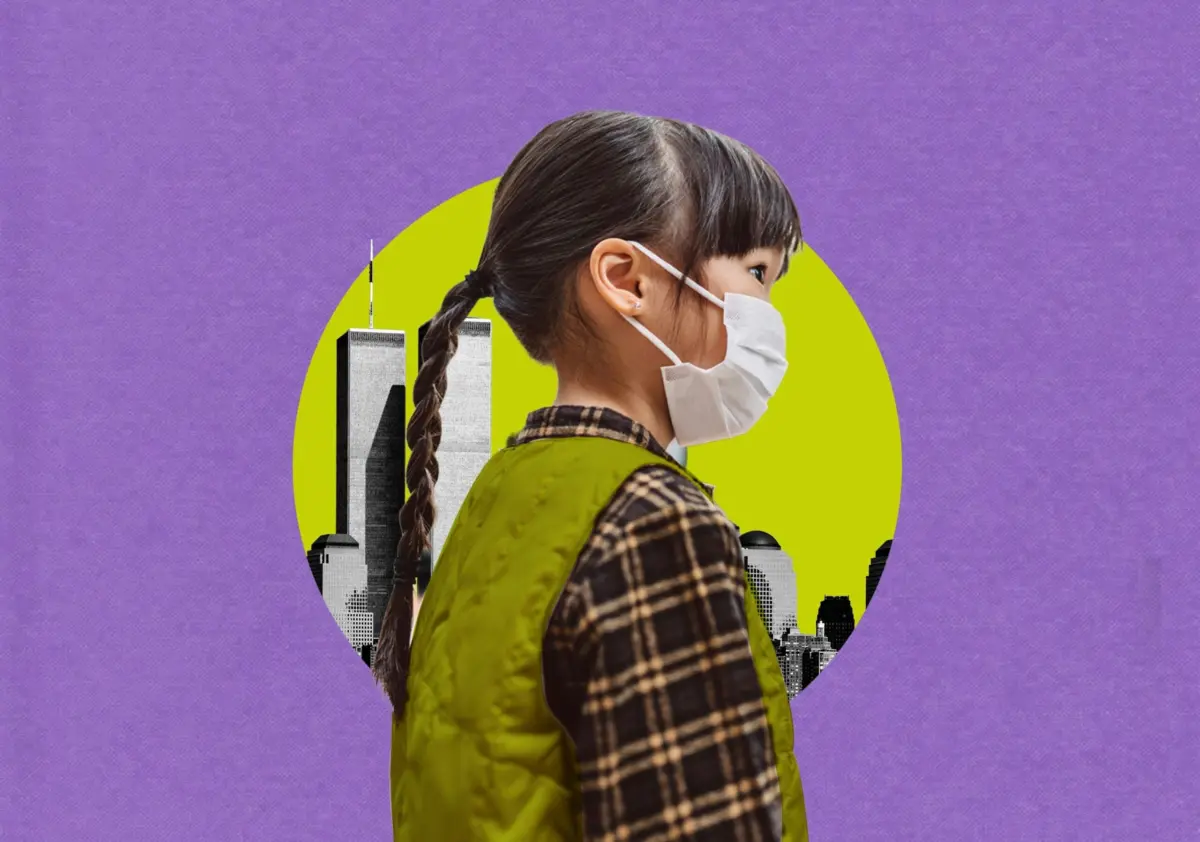
For contemporary youth, the defining epoch of childhood is not a single morning of localized violence, but a prolonged, multi-year systemic disruption: the COVID-19 pandemic. Unlike the stark, cinematic imagery of falling towers, the pandemic was an invisible, lingering dread. It was marked by masked faces, isolated living rooms, pixelated classrooms on laptop screens, and the quiet fear of family members falling ill. Where 9/11 was an external enemy attacking a skyline, the pandemic blurred the lines between the outside world and the safety of the home, transforming neighbors and classrooms into potential vectors of disease.
Supporting Context & Metrics: The Weight of Inherited History
Historical flashpoints do not exist in a vacuum; they leave measurable psychological, cultural, and behavioral footprints on society.
The Psychological Ripple Effect
Sociologists and developmental psychologists have long studied "historical trauma transference." When parents experience a defining cultural shock during their formative years, it subtly—and sometimes overtly—alters their parenting styles. Adults who lost their naive sense of safety on September 11 often raised their children with heightened vigilance, navigating a world characterized by increased surveillance, stricter school safety protocols, and a hyper-awareness of global instability.
Conversely, the children of the pandemic era are navigating their own unique developmental fallout. Studies from educational and mental health institutions indicate spikes in adolescent anxiety, social fragmentation, and academic disruption following years of remote learning and social isolation. The metrics of childhood have shifted: screen-time averages, psychological wellness check-ins, and pandemic-era socialization deficits now dominate educational discourse, much in the same way emergency preparedness drills dominated schools in the decade following 2001.
Memorialization and Material Culture
The physical spaces dedicated to these historical moments reveal how society processes grief and preserves memory for future generations:
- The Flight 93 National Memorial: Located in Shanksville, Pennsylvania, this site utilizes a minimalist architectural design. It honors the everyday citizens who fought back against their hijackers, anchoring the tragedy not just in despair, but in active, heroic resistance. When parents bring children to these sites—guiding them through Junior Ranger programs and handing down wooden commemorative badges—they are participating in a tactile transfer of memory.
- The Pentagon and 9/11 Memorial Museum: These sites serve as physical archives, ensuring that abstract historical dates are grounded in tangible artifacts, names, and spaces. Yet, for a child clutching a souvenir badge in the back of a minivan, these sites represent history lessons rather than lived wounds.
Official Statements and Expert Perspectives
As cultural historians, educators, and sociologists analyze the shifting landscape of generational memory, a clear consensus emerges regarding how society must adapt to these changing dynamics.
Dr. Aris Thorne, Professor of Cultural Sociology at the Institute for Historical Memory, notes:
"Every generation believes its defining trauma is the ultimate test of human resilience. However, the mechanism of transmission changes with technology. When 9/11 occurred, television was the primary medium of shared shock, creating a simultaneous, mass communal grief. Today, trauma is digitized, fragmented, and delivered through an endless stream of algorithmic updates. Parents are no longer just guarding their children from the physical world; they are mediating an overwhelming deluge of global crises in real-time."
Child Development Specialist and Author Elena Vance emphasizes the role of the modern parent:
"The goal isn’t to shield children from the brokenness of the world—that is an impossible and ultimately harmful endeavor. The challenge is teaching them how to carry the weight of history without being crushed by it. Whether it’s the aftermath of September 11, economic instability, or the isolation of a pandemic, children look to how adults frame these crises. We must transition our narratives from fear to agency."
Education officials have similarly adapted curricula to balance historical literacy with emotional intelligence, ensuring that students understand the gravity of past events without internalizing chronic dread.
Future Outlook: Raising the Next Generation Amid Unresolved Crises
As we look toward the horizon—with travel plans that include paying respects at the World Trade Center site, and as children grow into adults who will one day explain the pandemic to their own offspring—the fundamental question remains: What do we do with the mess we inherit?
The modern child is growing up in a complex ecosystem defined by overlapping crises: post-9/11 geopolitical shifts, international conflicts in Eastern Europe and the Middle East, ongoing domestic civil unrest, and the lingering psychological shadow of a global health emergency. These are the puzzle pieces of a modern childhood.
Yet, this inheritance is not purely bleak. Just as generations past took the rubble of economic depressions, world wars, and civil rights struggles and forged functional, innovative societies, today’s youth are developing a unique fluency in adaptability, digital literacy, and emotional resilience.
In many households, art and poetry serve as a compass through the noise. As echoed in contemporary reflections inspired by works like Maggie Smith’s poem Good Bones, the world can undeniably feel heavy, broken, and terrifying. But the fundamental task of parenthood—and of human existence—remains unchanged across generations: to acknowledge the structural flaws and historic tragedies of the world, and to consciously, deliberately teach children to take the fractured pieces they have inherited and build something beautiful out of them.
The flashpoints will change; the names, dates, and digital mediums will evolve. But the human capacity to remember, to grieve, and to stubbornly hope for a better tomorrow remains the ultimate defining trait of every generation that walks this earth.

