
Executive Overview
In the landscape of early childhood education and foundational literacy development, the transition from spoken language to written comprehension remains one of the most critical cognitive milestones a child achieves. Central to this journey is the mastery of phonemic awareness and systematic phonics—two distinct yet deeply intertwined pillars of reading acquisition. Recently, educational resource platforms have introduced targeted instructional aids designed to bridge the gap between auditory sound recognition and visual letter representation. Among these is the newly released series of FREE Ending Digraph Puzzles, curated by literacy specialists to support educators, reading specialists, and parents.
This comprehensive report examines the structural design, cognitive benefits, and pedagogical implications of these newly launched ending digraph puzzles. Moving beyond a simple overview of a classroom freebie, this investigation explores the science of reading, the specific mechanics of isolating terminal sounds, and the broader implications of providing accessible, high-yield instructional materials in contemporary learning environments. By examining how tools like these target complex phonological structures—such as terminal digraphs and trigraphs (ch, sh, th, ck, ph, and tch)—stakeholders can better appreciate the rigorous cognitive architecture required to transform young learners into proficient, confident readers.
Detailed Chronology & Development of Foundational Phonics Tools
The evolution of literacy instruction has shifted dramatically over the past two decades. As cognitive scientists and educational researchers have unraveled the precise neural pathways activated during reading, the "Science of Reading" movement has codified best practices. Rote memorization and whole-language approaches have largely yielded to systematic, explicit phonics instruction. Within this evolution, specialized tools targeting specific phonemes have gained unprecedented prominence.
The Genesis of the Ending Digraph Puzzles
The development of the newly released Ending Digraph Puzzles stems from a recognized instructional bottleneck in early primary classrooms: while beginning blends and initial consonant sounds receive substantial pedagogical attention, terminal sounds—specifically ending digraphs—frequently present persistent confusion for developing readers.

- Phase One: Identifying the Instructional Gap (Q1–Q2)
Literacy specialists observed that while students could readily decode initial sounds (onsets), they frequently stumbled when synthesizing and isolating final sounds (rimes and terminal phonemes), particularly when two or three letters combined to create a single, distinct sound (e.g., the /k/ sound in duck or the /ch/ sound in catch). - Phase Two: Prototyping Multisensory Interventions (Q3)
Developers engineered a puzzle-based framework designed to marry auditory discrimination with tactile manipulation. By breaking familiar vocabulary words into two distinct puzzle segments—a picture component and a letter-code component—educators could evaluate whether a student mentally bridged the gap between the spoken phoneme and the written grapheme. - Phase Three: Digital Release and Open-Access Deployment (Current Phase)
The finalized puzzle set was released to the public domain as a complimentary educational resource, accompanied by supporting digital libraries and assessment tools designed to streamline lesson preparation for educators operating under tight instructional schedules.
Supporting Context & Metrics: The Science of Reading and Phonemic Awareness
To understand why a seemingly simple puzzle pack holds significant educational value, one must examine the underlying mechanics of early reading development. Literacy acquisition is not a natural biological process like speaking; it requires explicit neurological mapping.
Phonemic Awareness vs. Phonics: A Critical Distinction
A common pitfall in early literacy instruction is the conflation of phonemic awareness and phonics. While they work in tandem, they operate in distinct cognitive domains:
- Phonemic Awareness is entirely auditory and oral. It is the ability to notice, think about, and manipulate individual sounds (phonemes) in spoken words. For instance, recognizing that the word sock ends with the isolated sound /k/ requires zero visual text.
- Phonics, conversely, involves the visual-to-auditory bridge. It is the understanding of the correspondence between letters (graphemes) and the sounds (phonemes) they represent.
The ending digraph puzzles deliberately target both domains simultaneously. When a child picks up a puzzle piece depicting a duck, names the object aloud, and isolates the terminal phoneme, they are exercising phonemic awareness. When they subsequently search for the matching puzzle tab featuring the letters "-ck" and physically lock the pieces together, they are executing phonics—explicitly linking the grapheme to the phoneme.
The Complexity of Digraphs and Trigraphs
The resource incorporates six specific terminal letter combinations: ch, sh, th, ck, ph, and tch. Each represents a unique phonetic challenge:

- Consonant Digraphs (ch, sh, th, ph): Two letters that come together to make a single, entirely new sound that does not resemble the individual sounds of the letters on their own.
- Specialized Terminations (ck, tch): These combinations often appear immediately following a short vowel sound, requiring students to apply advanced spelling generalizations rather than simple sound-symbol mappings. For example, the inclusion of the trigraph tch in words like catch or match introduces learners to complex rime patterns that govern long-term spelling accuracy.
Official Statements and Pedagogical Perspectives
Educational experts and curriculum designers have increasingly emphasized the necessity of multisensory tools in bridging achievement gaps, particularly in post-pandemic learning recovery cycles.
"When we ask young learners to master literacy, we are asking them to decode a complex code built on abstract symbols," notes a leading early childhood reading specialist. "Tools that transform abstract sounds into tangible, manipulable objects—such as puzzle pieces—radically reduce cognitive load. They allow the child’s brain to focus on the neurological connection between what they hear, what they say, and what they see."
Furthermore, educators utilizing open-access, ad-free teaching repositories have highlighted the operational efficiency of curated instructional materials. In an era where teachers frequently spend personal hours hunting for classroom-ready printables, centralized platforms offering verified, science-of-reading-aligned resources provide an essential lifeline.
Resource creators emphasize that the design philosophy behind these puzzles prioritizes student autonomy: "By placing the picture puzzle pieces out first, we invite the learner to anchor their thinking in oral language. They aren’t staring blankly at a worksheet of words they cannot yet decode; they are interacting with familiar imagery, isolating the sounds naturally, and then discovering the letter patterns that make those sounds possible."

Practical Implementation in the Modern Classroom
Integrating the Ending Digraph Puzzles into an existing literacy curriculum requires deliberate, scaffolded instruction. Educational strategists recommend a multi-step implementation framework to maximize student engagement and retention:
Step 1: Auditory Warm-Up and Picture Sorting
Before introducing the letters, educators should scatter the picture components of the puzzles across a table or small-group instructional area.
- Students take turns naming each object (e.g., brush, bath, sock, graph).
- The instructor prompts the group to isolate the final sound: "Listen to the end of the word bath. What sound do you hear at the very end? /th/"
- This ensures that every learner has auditory command over the phoneme before attempting visual matching.
Step 2: Grapheme Introduction and Puzzle Assembly
Once the auditory foundation is established, introduce the corresponding ending digraph pieces (ch, sh, th, ck, ph, tch).
- Students match the letter pieces to the correct picture pieces, physically locking the puzzle together.
- This tactile feedback reinforces the concept that the two letters function as a single inseparable unit making one distinct sound.
Step 3: Extension and Independent Practice
To transition from guided practice to mastery, educators can utilize these puzzles in literacy centers, independent work stations, or targeted intervention groups. Advanced learners can be challenged to use the completed puzzle words in written sentences, thereby extending phonics instruction into applied spelling and creative composition.
Future Outlook: The Digital and Print Hybrid in Foundational Literacy
As educational technology continues to evolve, the debate between physical manipulatives and digital learning tools remains robust. However, cognitive research consistently demonstrates that for young children in the primary grades (ages 4 through 7), tactile, hands-on manipulatives—such as physical puzzle cards—offer superior neural engagement compared to purely digital screen interactions.
Looking ahead, the integration of downloadable, print-at-home pedagogical assets represents a sustainable economic and instructional model for modern education. By bypassing traditional, costly textbook publishing pipelines, creators of open-access literacy tools can rapidly distribute updated, research-backed materials directly to classrooms and households worldwide.
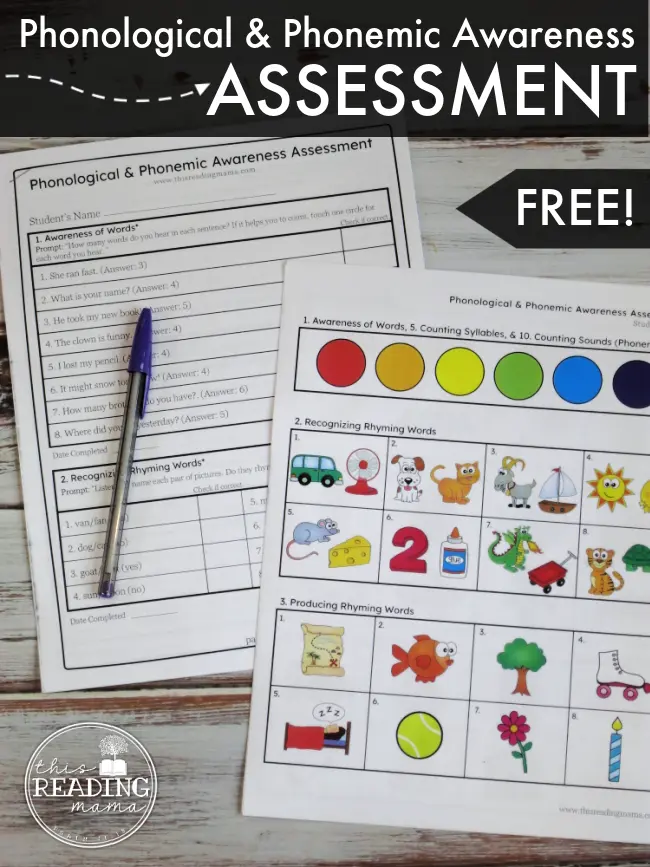
Future iterations of foundational literacy resources are anticipated to increasingly blend printable tactile puzzles with formative assessment tracking tools. As demonstrated by supplementary offerings—such as integrated phonological and phonemic awareness assessments—educators are no longer simply looking for engaging activities; they require a continuous feedback loop that diagnoses student deficits, delivers targeted multisensory interventions, and measures long-term reading progress.
Conclusion
The release of targeted pedagogical aids like the Ending Digraph Puzzles underscores a vital truth in education: mastering the mechanics of reading is a step-by-step, highly structural endeavor. By providing learners with multisensory, explicit tools to conquer complex terminal sounds, educators can demystify the English writing system, build unbreakable phonemic foundations, and set every child on the path toward lifelong literacy success.

