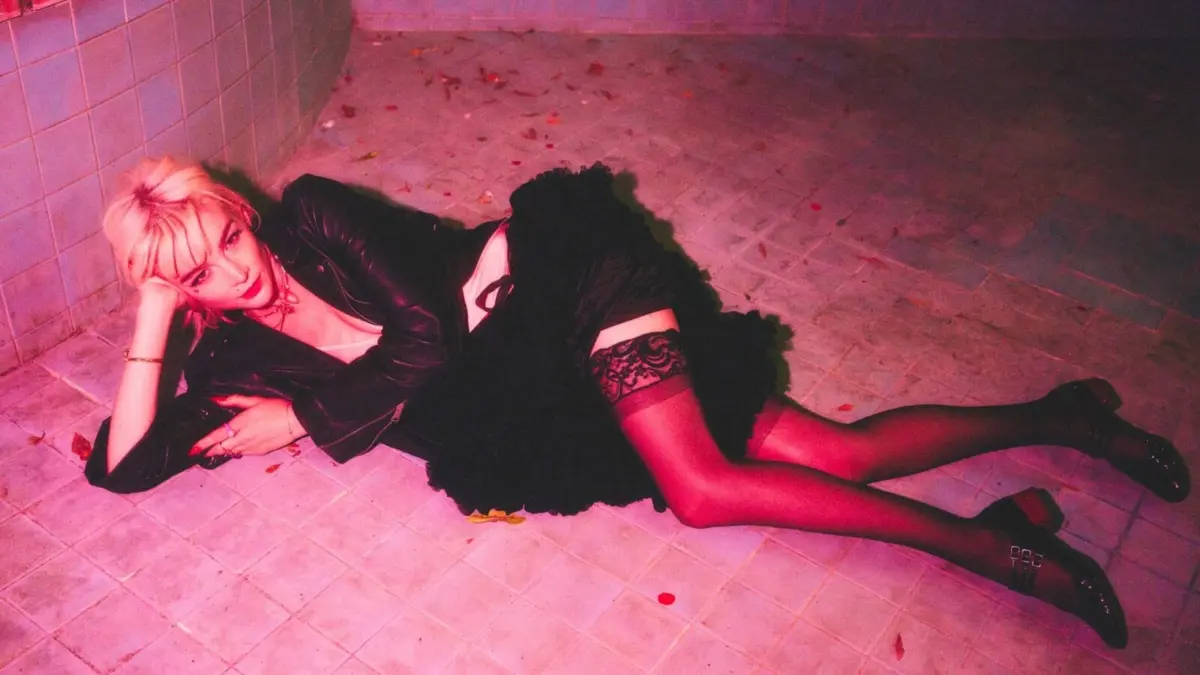
In an era where modern motherhood is frequently commodified, romanticized, or sanitized into an aesthetic of quiet self-abnegation, vinyl DJ, producer, and mother of four Allie Teilz offers a radically countercultural proposition: Becoming a mother made me bigger, not smaller.
For decades, cultural touchstones have subtly or overtly taught women that motherhood requires personal erasure—a narrative reinforced by classic children’s literature like The Giving Tree and The Rainbow Fish, which frame self-sacrifice as the ultimate hallmark of maternal virtue. Teilz spent years grazing against that very illusion, feeling the familiar, insidious pull of self-submergence until her health—and a stark confrontation with burnout—forced her to draw firm, unapologetic boundaries.
With the release of her critically acclaimed debut album, Come to Mommy, Teilz has transformed these lessons into an atmospheric, high-energy sonic landscape. Flipping the historically patriarchal phrase "come to daddy" on its head, the record is an intentional reclamation of female desire, joy, and creative autonomy. Through conversations detailing her life in a self-described "’90s-electronics household" filled with film scores, vintage projectors, and a strict rule of stashing smartphones in a ceramic cow at dinnertime, Teilz demonstrates that art and motherhood are not mutually exclusive pursuits. Instead, they are deeply symbiotic forces that can enrich, deepen, and liberate one another.
Detailed Chronology: From LA Nightlife to the Studio
The Crucible of LA Nightlife and the Evolution of Sound
Allie Teilz’s journey into the public eye did not begin in suburban domesticity; it ignited within the neon-soaked, high-octane matrix of Los Angeles nightlife. As a young vinyl DJ and producer, she shared DJ booths with legendary acts like Grace Jones and Daft Punk, cultivating a rare ear for texture, rhythm, and sonic history. In those formative years, Teilz lived and breathed the eclectic currents of vintage disco, obscure film scores (such as the classic works of Italian composer Ennio Morricone), and futuristic electronic beats.
Yet, even as her career in music flourished, Teilz’s life trajectory underwent a profound expansion with the arrival of her children. Today, she is a mother of four—balancing a near-8-year-old and a set of 3-year-old twins among her crew. Rather than viewing her transition into parenthood as the definitive end of her artistic life, Teilz elected to integrate the two. She famously describes herself as "a mother first and an artist second," a philosophy that inverted her priorities without extinguishing her creative spark.
Writing Through the Ashes: The Birth of Come to Mommy
The creation of Come to Mommy was far from a straightforward stroll into the studio; it was forged in the aftermath of deep personal trial. The album’s genesis coincided with a brutal stretch that included a traumatic birth—an experience that nearly cost both Teilz and one of her twin sons their lives.
Grappling with the physical and psychological toll of near-tragedy, Teilz channeled her survival and processing into music. The closing track of the album, fittingly titled "Back From the Dead," was written directly for the twin son she almost lost. For Teilz, the track functions as a sonic talisman—a testament to her children that humanity possesses an innate capacity to recover from catastrophic events and build something magnificent out of the ashes.
When Come to Mommy finally materialized, it arrived as a shimmering, danceable rejection of pigeonholing. Blending throwback warmth with forward-looking electronic pulses, the album serves as a physical manifestation of Teilz’s refusal to pick just one version of herself.
Supporting Context & Metrics: The Modern Maternal Landscape
The Psychology of Maternal Self-Erase
Sociological and psychological research consistently highlights the invisible friction women face when transitioning into parenthood. According to studies on the "motherhood penalty" and the mental load of domestic life, mothers frequently experience a steep decline in leisure time and personal creative output compared to their partners.
Cultural critics point out that narratives embedded in early childhood media—such as Shel Silverstein’s The Giving Tree—condition young girls to believe that love equates to physical and emotional self-reduction: Be a stump, and you will be loved. Teilz’s critique of these cultural mainstays hits home for an entire generation of women experiencing burnout.
The Cost of Unboundaried Caregiving
In recent years, health professionals have sounded alarms regarding the physiological toll of chronic stress and porous boundaries among mothers. Chronic hyper-vigilance and the pressure to be constantly accessible—exacerbated by digital connectivity—have been linked to rising rates of autoimmune disorders and clinical exhaustion among primary caregivers.
Teilz’s adoption of radical boundaries, including the implementation of a flip phone for hours when she refuses to be digitally tethered, aligns with modern medical advice emphasizing nervous system regulation. As Teilz succincty puts it, referencing a viral cultural maxim: "Have boundaries or get an autoimmune disorder. My kids don’t need a mom who disappears into anything—even motherhood."
Official Statements and Insights
On Reclaiming Desire and Joy
In her interview discussing the thematic core of Come to Mommy, Teilz challenged antiquated expectations of maternal martyrdom:
"The culture asks what Daddy wants. I’d rather ask what Mommy wants, and I answer without flinching: Mommy wants joy. She wants to have fun and dance. She wants pleasure and joy."
On Deepening Art Through Parenthood
Addressing how family life reshaped her creative output rather than stunting it, Teilz noted:
"Becoming their mom only made everything bigger, not smaller. The deepest creativity can come from having very little time and knowing exactly what matters… It liberated me in creation and gave me a deeper well to pull from. Motherhood is the highest form of art I’ve ever experienced."
On Shielding Children from Soulless Culture
Discussing the cultural landscape she curates for her children—steeped in physical media, record players, VHS tapes of Yellow Submarine, and hands-on gardening—Teilz expressed a fierce protective instinct against sterile, automated trends:
"I don’t want my kids to inherit ‘AI art and lobotomy chic.’ I want them to have what I had: the feeling of hearing Talking Heads for the first time, the freedom to flail around in an imaginary giant suit, and the permission to stay in that beautiful state of play."
Future Outlook: A New Paradigm for Creative Mothers
Allie Teilz’s journey with Come to Mommy signals a broader, much-needed cultural shift. As more women refuse to choose between professional artistic identity and fulfilling family life, figures like Teilz provide a blueprint for integration rather than compartmentalization.
Looking ahead, Teilz continues to advocate for a cultural re-evaluation of how we view women’s time, space, and creative output. By proving that a mother can command a dance floor, produce electronic soundscapes, and cultivate a magical, slow-paced home environment for four children simultaneously, she dismantles the tired trope of the exhausted, self-sacrificing matriarch.
For the mother sitting in her car in the driveway, listening to the final notes of a track before walking through her front door, Teilz’s message serves as an enduring anthem: you do not need to shrink. You can steal the fire of your own passion, hold onto the music of your youth, and step into your home feeling more like yourself than ever before.