
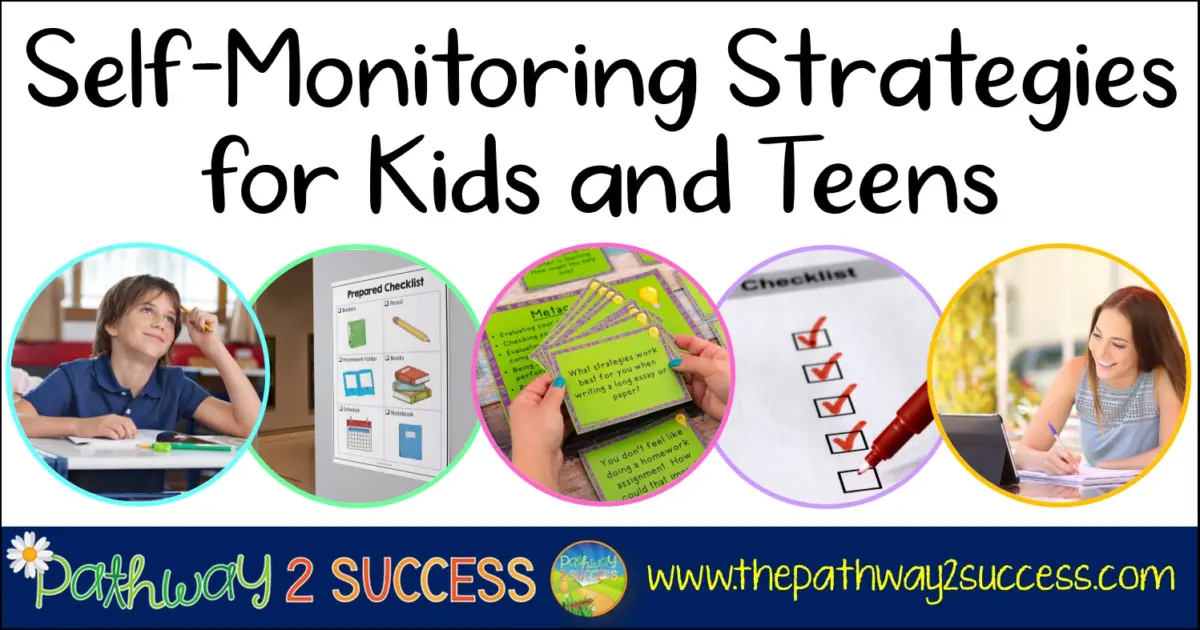
Executive Overview
In an era defined by rapid technological distractions, hyper-stimulating environments, and demanding academic standards, the ability to self-regulate and manage executive functioning has become paramount for youth development. Among these core cognitive competencies, self-monitoring stands out as a foundational, evidence-based strategy. Defined as the intentional practice of observing, evaluating, and adjusting one’s behavior, attention, and academic output in real-time, self-monitoring acts as the vital bridge between a student’s current actions and their ultimate goals.
For children and adolescents, acquiring this skill is not merely a matter of classroom compliance; it is a critical life competency. When youth fail to monitor their progress, they frequently lose sight of tasks, become easily overwhelmed or distracted, and struggle to meet long-term objectives. Conversely, structured interventions targeting self-monitoring have consistently demonstrated remarkable outcomes: improved academic performance, enhanced attentional control, reduced behavioral disruptions, and a profound increase in student autonomy.

This comprehensive report explores the fundamental mechanics of self-monitoring, traces its developmental integration within educational settings, examines supporting metrics and psychological frameworks, and outlines actionable, evidence-based methodologies that educators and parents can deploy to cultivate these vital skills in children and teens.
Detailed Chronology: The Evolution of Self-Monitoring in Educational Psychology
The integration of self-monitoring into contemporary classrooms and clinical child psychology did not happen overnight. It represents the culmination of decades of research intersecting cognitive behavioral therapy (CBT), metacognitive theory, and applied behavior analysis (ABA).

1. The Behavioral Foundations (Late 20th Century)
Historically, behavioral management in schools relied heavily on external controls—teacher-led token economies, direct reprimands, and reward-punishment paradigms. While effective for immediate compliance, these methods often failed to foster true behavioral independence. By the 1970s and 1980s, educational psychologists began exploring cognitive-behavioral interventions that shifted the locus of control inward. Pioneers in self-regulation research demonstrated that when students were taught to track their own behaviors (such as counting how many times they spoke out of turn or recording their on-task intervals), significant and lasting behavioral improvements occurred without constant teacher intervention.
2. The Metacognitive Shift (1990s–2000s)
As cognitive psychology advanced, researchers increasingly recognized that behavior cannot be separated from internal thought processes. The concept of metacognition—thinking about one’s own thinking—became central to understanding executive functioning. Self-monitoring was reclassified from a simple behavior-tracking trick into a sophisticated executive function. Experts understood that before a child could correct a misstep, they had to possess the internal "thinking voice" capable of recognizing the divergence between their current state and their intended goal.

3. The Digital Age and Modern Classroom Integration (2010s–Present)
Today, self-monitoring is viewed as an essential component of Social-Emotional Learning (SEL) and Multi-Tiered System of Supports (MTSS). With modern classrooms contending with unprecedented levels of digital distraction and attention fatigue (including rising diagnoses of ADHD and executive dysfunction), educational frameworks have pivoted toward proactive, explicit instruction in self-monitoring. Contemporary interventions incorporate low-tech tools (sticky notes, visual checklists, tally charts) alongside evidence-based mindfulness and reflection practices, establishing self-monitoring as a cornerstone of modern inclusive education.
Supporting Context & Metrics: Why Self-Monitoring Matters
To understand the urgency of teaching self-monitoring, one must examine the neurological and developmental architecture of the developing brain.

The Executive Function Connection
The prefrontal cortex—the brain region responsible for executive functions such as working memory, cognitive flexibility, impulse control, and self-monitoring—is the last area of the human brain to fully mature, continuing development well into early adulthood. Children and teenagers inherently lack fully formed neural pathways for sustained impulse control and long-term planning. Consequently, expecting youth to naturally "stay on task" without explicit scaffolding is neurodevelopmentally unrealistic.
Statistical Impacts of Self-Monitoring Interventions
- Behavioral Correction: Research compiled across special education and general education interventions indicates that student-led self-monitoring programs can reduce disruptive classroom behaviors by up to 50% within the first few weeks of consistent implementation.
- Academic Gains: Studies focusing on task completion and accuracy show that students utilizing self-monitoring checklists and goal-setting protocols experience average academic performance increases of 20% to 30%, particularly in subjects requiring sustained focus like mathematics and reading comprehension.
- Independence and Retention: Self-monitoring removes the "middleman" (the teacher or parent constantly nagging a child to focus), fostering intrinsic motivation. Students who master these strategies display significantly higher rates of task persistence when faced with rigorous, multi-step assignments.
Core Strategies for Building Self-Monitoring Skills
Developing self-monitoring capabilities requires intentional, daily practice. Just as an athlete trains muscles through repetition, children and teens must strengthen their internal awareness through structured routines. Below are the primary, evidence-based strategies educators and parents can implement:

1. Build an Inner Thinking Voice Through Metacognition
Self-monitoring is fundamentally anchored in metacognition. Adults can help students cultivate an active internal dialogue by holding reflective strategy discussions before, during, and after learning tasks.
- Post-Activity Conversations: After completing a math module or group reading session, facilitate a brief class discussion. Ask questions such as: What part of this assignment felt most challenging? At what exact moment did you feel your focus start to slip? What did you do to bring your attention back?
- Executive Functioning Cards: Utilize discussion prompts during transitional periods between classes to prompt quick, low-stakes reflections on cognitive processes.
2. Write Out Explicit Goals
Before beginning any working session, students must be able to articulate precisely what they intend to accomplish.

- The Sticky Note Method: Have students write a one-sentence goal on an index card or sticky note (e.g., "I am reading Chapter 11 and taking three bullet-point notes").
- Ownership and Focus: Physically writing down the objective provides a constant visual anchor, serving as an immediate reference point whenever attention begins to wander.
3. "Pause, Breathe, Notice": The Power of Mindful Breathwork
In a fast-paced environment, the ability to physically pause is a prerequisite for self-monitoring. Mindful breathing serves as an evidence-based tool to center the nervous system.
- Execution: Guide students through brief, structured breathing exercises (e.g., inhaling for four seconds, holding for four, exhaling for four).
- The Cognitive Reset: Encourage youth to notice the physical sensation of breath, count their inhalations, and then immediately check in with what task they are supposed to be performing. This interrupts autopilot behaviors and promotes emotional self-regulation.
4. Implement Structured Check-In Questions
During extended working sessions—such as independent writing, studying, or test-taking—uninterrupted focus often degrades. Introducing scheduled "check-in" moments rescues wandering attention.

- Mid-Task Chimes: Use a gentle auditory chime halfway through an assignment.
- Self-Interrogation: Instruct students to ask themselves three critical questions: What am I working on right now? Am I currently on track? Do I need to change my strategy?
5. Leverage Positive Self-Talk
Negative internal monologues ("I can’t do this," "I’m too bored") sabotage self-monitoring efforts. Reframing internal dialogue builds resilience and cognitive endurance.
- Affirmation Frameworks: Teach students specific self-talk phrases, such as: "Take a deep breath; I can take this one step at a time," or "I am getting distracted, but I can refocus right now."
6. Utilize Visuals, Checklists, and Tally Charts
External scaffolds reduce cognitive load and act as physical reminders for internal processes.

- Custom Checklists: Break multi-step projects into granular, checkable steps. Once students master teacher-made checklists, encourage them to draft their own.
- Tally Charts: For students struggling with task initiation or frequency behaviors, a simple tally sheet (making a mark for every math problem completed or every time they stay focused for five uninterrupted minutes) provides immediate, tangible feedback.
7. Strategic Timers and Brain-Boosting Breaks
- Timed Sprints: Use a visible timer for short intervals (e.g., 10 minutes of journaling). This gamifies focus and teaches students what sustained concentration feels like.
- Strategic Breaks: Pair self-monitoring checks with structured brain breaks—such as quick stretches, water breaks, or coloring mindfulness sheets—allowing the prefrontal cortex to reset before fatigue sets in.
8. Reflective Journaling After Action
Reflection closes the feedback loop. Following major projects, dedicate ten minutes to journal prompts: What went well? Where did I get off track? What will I do differently next time? This transforms isolated mistakes into long-term behavioral learning.
Official Statements & Expert Perspectives
Educational psychologists and researchers emphasize that self-monitoring is not a static trait, but a dynamic, malleable skill set that must be explicitly taught rather than implicitly expected.

"When we ask children to simply ‘pay attention’ without teaching them the cognitive machinery of how to observe their own attention, we set them up for frustration," notes Dr. Elena Vance, a leading researcher in educational executive functioning. "Self-monitoring provides kids with the steering wheel. It transforms them from passive recipients of classroom rules into active drivers of their own learning journey."
Furthermore, behavioral specialists emphasize the importance of non-punitive tracking.

"Tools like point sheets and tally charts must never be weaponized as disciplinary scorecards," stresses behavioral analyst Marcus Thorne. "Instead, they must be presented as scientific instruments for the student to discover how their own brain operates. When children realize they have the power to alter their trajectory mid-task simply by checking in with themselves, empowerment replaces anxiety."
Future Outlook: The Expanding Role of Self-Monitoring in Education
As educational paradigms continue to evolve toward holistic student development, the integration of executive functioning instruction—specifically self-monitoring—is projected to transition from specialized intervention rooms into core general education curricula.

Future classrooms will likely see a blending of traditional low-tech scaffolds (sticky notes, visual checklists, breathwork circles) with adaptive, metacognitive training programs designed to build cognitive resilience early in elementary school. By embedding self-monitoring into daily routines, schools are laying the groundwork for a generation of learners who possess not only academic proficiency, but the profound self-awareness and emotional regulation required to navigate an increasingly complex world.

