
Executive Overview
In September 2026, a brief yet violent overnight storm swept through Washington, D.C., tearing down power lines, forcing school closures, and felling dozens of trees across the District. To the rushing metropolis, it was a minor atmospheric footnote—an inconvenience quickly cleared away by municipal crews. Yet, on the northern edge of Dupont Circle, the storm claimed something far more significant than timber: a majestic, 55-year-old oak tree that had long served as a quiet, living anchor for the neighborhood.
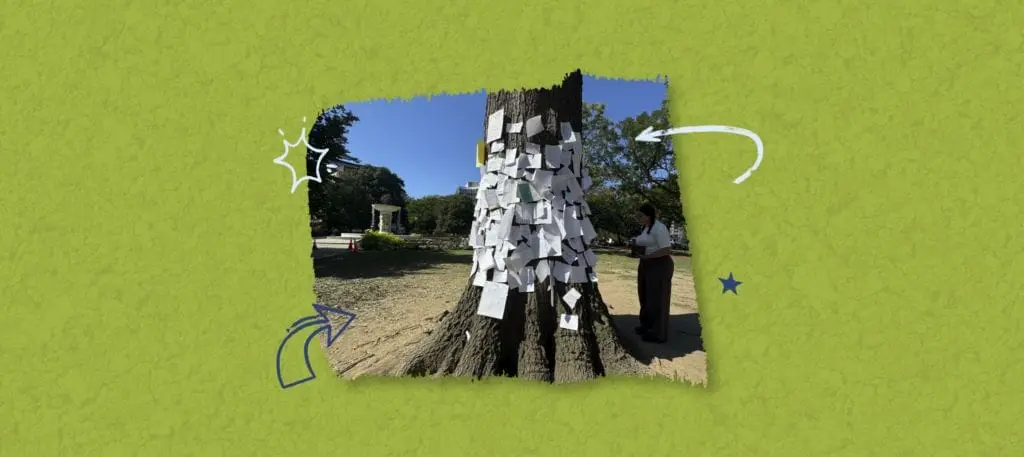
What remained in its wake was a jagged 15-foot stump and exposed, looping roots. Rather than passing by this urban scar indifferently, local residents transformed it into an impromptu community bulletin board. Handwritten notes of gratitude, grief, hope, and vulnerability began appearing on the splintered wood, sparking an organic, cross-generational dialogue.
This piece examines how the loss of an urban ecosystem catalyzed a profound human reflection on loneliness, community, and mental health in an era dominated by hyper-efficiency and digital distraction. By exploring the intersection of urban ecology, community resilience, and psychological well-being—drawing on insights from organizations like Active Minds—we investigate how slowing down in the physical spaces we share can bridge the isolation crisis plaguing modern cities.
Detailed Chronology: The Fall and the Rebirth
The Night of the Storm
The atmospheric disturbance arrived without theatrical warning. Striking mid-week in September 2026, the storm brought torrential downpours and fierce, erratic wind gusts that battered the mid-Atlantic coast. While residents slept, the storm uprooted root systems that had spent over half a century intertwining beneath the concrete and soil of Dupont Circle.

When morning broke, the city awoke to the usual post-storm choreography: sirens in the distance, utility trucks idling on corners, and administrative alerts regarding delayed school openings. But for those who walked the northern quadrant of Dupont Circle, the landscape was irreversibly altered. The magnificent oak—a tree that had shaded generations of morning joggers, afternoon readers, and evening commuters—was gone. In its place stood a raw, pale stump surrounded by bulging, soil-gripping roots.
The First Note
Within hours of the storm damage being cleared to make the area safe, the first physical manifestation of collective mourning appeared. Tucked into a crevice of the torn bark was a small piece of paper, bearing a handwritten verse:
“When you’re falling in Dupont and there’s nobody around, did you ever even crash or even make a sound?”
This poignant rhetorical question instantly resonated with the neighborhood’s mood. It served as a double entendre: a literal nod to the silent descent of a massive tree in the dead of night, and a metaphorical exploration of urban anonymity. In a city defined by transient populations, high-stakes careers, and relentless schedules, many residents often wonder if their struggles are noticed at all.

The Spontaneous Gallery
Over the next 72 hours, the Dupont Circle oak stump transformed. What started as a solitary note snowballed into a dense collage of colorful Post-its, index cards, sketches, and heartfelt letters.
- The Dialogue: Neighborhood children pinned up watercolor drawings of the tree; local professionals stopped during their morning commutes to tack notes of appreciation; elders walked their dogs to the site, lingering to read the latest additions.
- The Interruption: The stump forced an unnatural break in daily routines. Commuters who typically marched past with earbuds firmly in place began to pause, remove their headphones, and read the messages aloud to strangers.
- The Human Connection: Spontaneous conversations bloomed around the base of the stump. Neighbors who had lived next door to each other for years without exchanging more than a polite nod suddenly found themselves swapping stories of weathering the storm, favorite memories under the oak’s canopy, and reflections on the fragility of city life.
Supporting Context & Metrics: The Psychology of Urban Trees and Isolation
The phenomenon at Dupont Circle is far from an isolated emotional outburst; it taps into a deep, evolutionary connection between humanity and the natural environment.
The Human-Nature Bond
For millennia, trees—particularly long-lived oaks—have served as ecological and cultural cornerstones. According to historical and environmental research published in scientific literature (such as studies indexed by the National Institutes of Health), the shared history of humans and oak trees has consistently generated profound cultural, emotional, and spiritual relationships. Oaks have long symbolized strength, endurance, and community gathering points. When an ancient tree falls, it disrupts more than just the canopy; it severs a tangible thread of continuity in a neighborhood’s shared history.
The Modern Loneliness Epidemic
The rapid embrace of the Dupont Circle memorial highlights a deeper societal hunger: the desperate need for genuine, unmediated connection. In today’s digital era, society is hyper-connected yet deeply isolated. Constantly plugged into fast-moving colloquial cultures and social media algorithms, individuals cycle endlessly between pushing for productivity and playing catch-up, chasing fleeting dopamine hits while starving for authentic community.

Mental health advocates frequently point out that modern social structures often prioritize efficiency over emotional well-being. Phrases like "to be loved is to be known" or "you don’t know what you have until it’s gone" are cultural cliches precisely because they point to a universal human fear: invisibility. The sudden disappearance of a familiar landmark forced urbanites to confront their own fragile footprint within the city.
Official Perspectives and Community Insights
Organizations dedicated to youth advocacy, mental health, and community building, such as Active Minds, have long emphasized that environments shape psychological health. Communities are not merely physical backdrops for our lives; they are living ecosystems that require active cultivation, empathy, and mutual care.
The Power of Intentional Interruption
Mental health advocates note that modern burnout stems largely from the inability to pause. When daily routines are rigidly optimized, people lose the capacity for "quiet interruptions"—those unexpected moments that force us out of our internal monologues and into shared reality.
- Breaking the Stigma of Silence: Just as immigrant families and college students often struggle under the weight of unspoken expectations (e.g., enduring hardship in silence to maintain an image of strength), urban residents frequently mask their isolation behind a veneer of busy efficiency.
- The Healing Nature of Shared Grief: The notes left on the Dupont Circle stump proved that expressing vulnerability—even over the loss of a tree—creates a safe harbor for others to do the same. When one person admits to feeling the absence of a familiar landmark, it gives others permission to acknowledge their own broader losses, anxieties, and need for belonging.
Future Outlook: Cultivating Connection Beyond the Stump
As municipal authorities eventually manage urban forestry and clear away debris, the physical stump at Dupont Circle will inevitably be removed or ground down. Yet, the legacy of the Dupont oak offers a blueprint for how cities—and the people who inhabit them—can foster resilience moving forward.

- Re-evaluating Public Spaces: Urban planners and community advocates are increasingly recognizing that parks, plazas, and street trees are vital public health infrastructure. They are not just aesthetic additions; they are social catalysts that combat urban loneliness.
- Embracing Intentional Interruption: Individuals can apply the lesson of the Dupont oak to their daily lives by consciously choosing to slow down, disconnect from digital noise, and engage with their immediate physical surroundings. A simple conversation with a neighbor, a pause to notice a change in the environment, or an expression of gratitude can transform an isolating city into a thriving ecosystem of care.
- The Enduring Lesson: As the community notes underscored, we are only strangers as long as we refuse to see one another. The fall of a 55-year-old oak reminded Washington, D.C., that resilience is built not on relentless momentum, but on our willingness to root ourselves in empathy, pay attention to the mundane, and openly declare that we care for the spaces—and the people—we share them with.
Inspired by the ongoing dialogue of community resilience and mental health advocacy championed by organizations nationwide.

