
Executive Overview
In the landscape of early childhood education, the foundational mechanics of reading are undergoing a quiet yet profound revolution. As educational researchers and policymakers increasingly align with the "Science of Reading," the emphasis on phonological awareness—the ability to recognize, isolate, and manipulate the spoken parts of sentences and words—has taken center stage. Among the fundamental building blocks of this cognitive framework is the mastery of syllables.
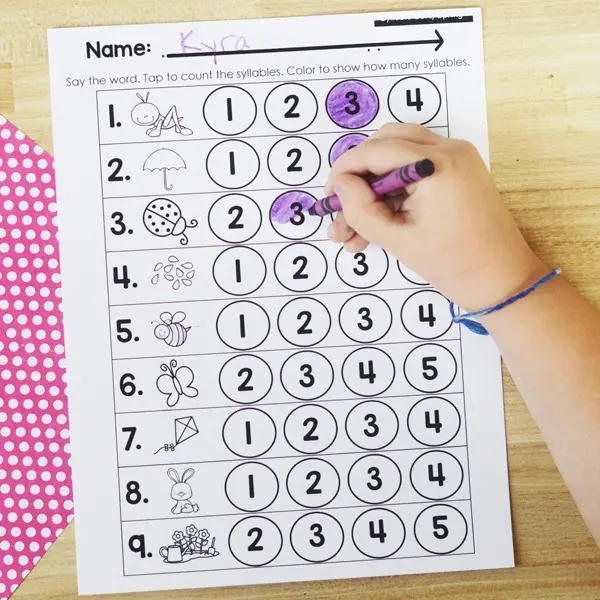
To bridge the gap between abstract phonological concepts and engaging classroom practice, educators are increasingly turning to interactive, thematic pedagogical tools. A prime example of this movement is the newly introduced Spring Syllable Sort and its broader counterpart, the Four Seasons Syllable Sort. Designed specifically for preschool, pre-K, and kindergarten students, these instructional resources transform standard phonetic drills into tactile, play-based learning experiences. By utilizing seasonal vocabulary and multi-sensory strategies—such as clapping, tapping, and picture sorting—these activities offer a robust framework for early literacy development. This report examines the educational mechanics, structural implementation, and broader implications of these innovative sorting tools within modern early childhood curricula.
Detailed Chronology: The Evolution of Phonological Learning Tools
The path toward modern phonological awareness curricula has evolved over decades of cognitive science research. Understanding how tools like the Spring Syllable Sort fit into contemporary classrooms requires examining the trajectory of early literacy instructional design.

Phase 1: The Shift Toward Phonological Pre-Reading (Late 20th Century)
Historically, early reading instruction heavily emphasized whole-word recognition or rote alphabet memorization. However, educational psychologists in the late 1980s and 1990s began identifying phonological awareness as the primary gatekeeper for future literacy success. Researchers discovered that children who struggle to hear the constituent sounds within spoken words consistently face hurdles when learning to decode text. This realization prompted the creation of early auditory exercises, though many lacked structured, multi-sensory engagement methods.
Phase 2: The Integration of Tactile and Kinesthetic Learning (2010s)
As early childhood educators sought ways to hold the attention of developing minds, pedagogical designs shifted toward kinesthetic learning. The introduction of physical sorting mats, clapping routines, and visual picture cards marked a significant evolution. Instead of merely listening to a teacher pronounce words, children began manipulating physical objects to represent abstract linguistic units. Syllables transitioned from an auditory-only concept into something tangible.
Phase 3: The Modern "Science of Reading" Era & Seasonal Integration (Present)
Today, early childhood classrooms operate under rigorous frameworks dictated by the Science of Reading movement. The demand for evidence-based literacy centers has soared. In response, curriculum developers have engineered specialized resources like the Spring and Four Seasons Syllable Sorts. These tools marry modern phonological science with thematic, engagement-driven design. By decoupling phonological awareness from complex written text—relying instead on vibrant picture clues and spoken word segmentation—these tools allow young learners to master syllable isolation before wrestling with complex grapheme-phoneme correspondences.

Supporting Context & Metrics: The Science Behind Syllable Segmentation
To appreciate the value of a syllable-sorting activity, one must understand the cognitive architecture of early language development. Syllable awareness sits comfortably in the middle tier of the phonological awareness continuum, sitting between larger units of sound (like words and onset-rime) and smaller phonemic units (individual phonemes).
Why Syllables Matter in Pre-K and Kindergarten
- Cognitive Load Management: Syllables are naturally occurring beats in spoken language that are easier for young brains to perceive than individual phonemes. Words like sun-flower or rab-bit offer clear auditory breaks.
- Reading and Spelling Readiness: Children who can accurately segment a word into its syllabic parts are significantly better equipped to tackle multi-syllabic words when they begin formal decoding and encoding.
- Vocabulary Expansion: Thematic sorting activities—such as those centered around spring or the four seasons—simultaneously expand a child’s expressive and receptive vocabulary. When children learn words like tadpole, umbrella, or blossom, they learn both the semantic meaning and the structural rhythm of the terms.
Structural Breakdown of the Spring Syllable Sort Toolkit
The Spring Syllable Sort and its comprehensive Four Seasons expansion pack are not merely passive worksheets; they are comprehensive instructional kits engineered for diverse classroom environments.
- Multi-Sensory Segmenting: Students utilize kinesthetic engagement—clapping or tapping their fingers—to physically experience the rhythm of words before placing them onto designated sorting mats.
- Picture-Based Clues: To prevent cognitive overload, the activities intentionally omit written text during the initial sorting phase. Students rely on high-quality picture cards representing seasonal objects, encouraging pure auditory-phonological analysis.
- Differentiated Assessment Options: Once the physical sorting is complete, educators can utilize accompanying black-and-white response worksheets to gauge individual student comprehension, rendering the tool viable for independent literacy centers, small-group remediation, or take-home practice.
- Comprehensive Answer Keys: Designed for seamless classroom management, the kits include clear answer keys, allowing for quick peer-checking or independent validation by students.
Official Statements & Pedagogical Perspectives
Early childhood specialists and literacy advocates have increasingly emphasized the necessity of play-based, structured literacy tools in early education settings.

Dr. Elena Vance, a prominent researcher in early childhood cognitive development, notes:
"The biggest mistake we can make in early literacy is rushing children into text before their brains have mapped the sound structure of spoken language. Activities that require students to physically clap, sort, and isolate word parts build the precise neural pathways required for effortless reading down the road. When you embed these practices into engaging, thematic contexts like the changing seasons, you capture the child’s natural curiosity."
Furthermore, reading specialists emphasize the importance of vocabulary front-loading—a key implementation instruction for the Spring Syllable Sort. Educators are advised to explicitly introduce and discuss the imagery on the picture cards before assigning independent work.

Sarah Jenkins, a veteran kindergarten educator and literacy coach, remarks:
"You cannot expect a five-year-old to accurately segment a word if they don’t recognize the object in the picture. By introducing terms like ‘chick,’ ‘tulip,’ and ‘puddle’ beforehand, we bridge the gap between oral language comprehension and phonological processing. The sorting activity then acts as a reinforcement rather than an exercise in frustration."
Future Outlook: The Direction of Early Literacy Centers
As educational institutions continue to refine their approach to early reading instruction, the demand for targeted, low-prep, high-impact literacy center materials is projected to grow. The transition away from rote worksheet drills toward active, manipulative-based learning is no longer a passing trend; it is the established benchmark of modern pedagogy.

Looking ahead, educators can expect to see several key developments in phonological awareness resources:
- Increased Thematic Integration: Tools that tie foundational literacy skills to overarching science, social studies, or seasonal themes (such as the Four Seasons Syllable Sort series) will continue to dominate curriculum planning. This cross-curricular approach maximizes instructional time by simultaneously addressing vocabulary, phonological awareness, and conceptual knowledge of the natural world.
- Hybrid Digital and Tactile Models: While physical sorting cards and tactile clapping remain vital for developing motor and social skills in pre-K and kindergarten, developers are increasingly pairing these printables with digital interactive components for hybrid learning environments.
- Equitable Access to Science of Reading Resources: Initiatives providing free, high-quality printables and structured lesson plans are democratizing access to elite literacy instruction. Educators in underfunded districts can leverage these open-source or low-cost materials to ensure their classrooms meet rigorous state and national reading standards without exhausting limited classroom budgets.
Conclusion
The implementation of targeted phonological awareness tools like the Spring Syllable Sort represents a critical milestone in early childhood education. By merging the rigorous demands of the Science of Reading with the joyful, exploratory nature of seasonal themes, educators can provide pre-K and kindergarten students with an unforgettable foundation in literacy. Through clapping, tapping, sorting, and discovering the hidden beats within words, young learners are not just preparing to read—they are learning to love the rhythm of language itself.

