
Executive Overview
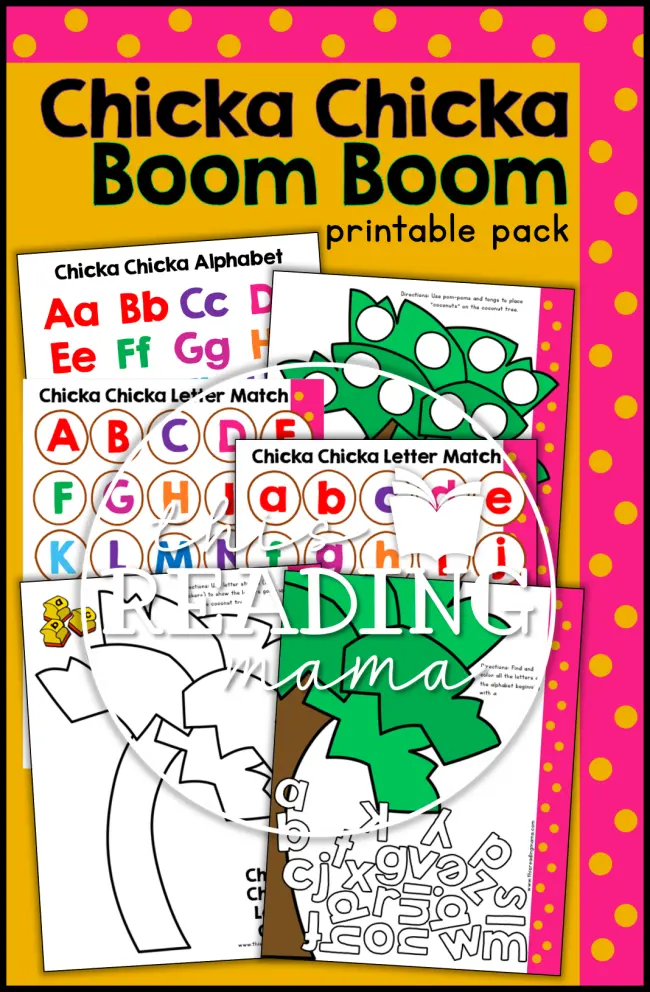
In an era increasingly dominated by screens, digital learning applications, and algorithmic educational tools, foundational early childhood education is experiencing a profound pedagogical return to tactile, literature-based instruction. At the center of this movement is a timeless staple of children’s literature: Bill Martin Jr. and John Archambault’s Chicka Chicka Boom Boom. Recently, renewed focus has been cast upon the integration of this classic text with comprehensive, hands-on educational resources, such as the newly released Chicka Chicka Boom Boom Printable Pack developed by educator and literacy specialist Becky of This Reading Mama.
This comprehensive report examines the intersection of classic literature-based read-alouds, tactile letter recognition exercises, and fine motor skill development in early childhood education. Drawing from preschool classrooms, homeschool co-ops, and early learning developmental research, this article explores how structured, creative printables support foundational literacy. Furthermore, we provide a detailed look at the methodology behind these resources, evaluate broader educational metrics surrounding early literacy interventions, and project the future outlook of multi-sensory teaching frameworks in a tech-driven educational ecosystem.
Detailed Chronology: The Evolution of Alphabet Integration in Preschool Curricula
To understand the current enthusiasm surrounding literature-based alphabet packs, one must examine the developmental trajectory of early literacy pedagogy over the past several decades.
The Mid-to-Late 20th Century: The Birth of Rhythm and Rhyme
When Chicka Chicka Boom Boom was first published in 1989, it revolutionized how children interacted with the alphabet. Prior instructional models often relied on rote memorization—static flashcards and rigid recitation of the ABC song without contextual anchoring. Martin and Archambault introduced a kinetic narrative where lowercase letters raced up a coconut tree, culminating in a chaotic, rhythmic tumble ("Chicka chicka boom boom!"). Educators quickly realized that the cadence, rhythm, and personification of the alphabet transformed passive listeners into active participants.

The Turn of the Century: The Digital Transition and Its Limits
As personal computers and educational software entered classrooms in the late 1990s and early 2000s, a significant push emerged to digitize alphabet learning. While digital games offered engaging graphics, educational researchers soon noted a critical gap: young children, particularly toddlers and preschoolers, require fine motor manipulation and tactile feedback to fully encode cognitive concepts into long-term memory. Swiping a glass screen does not build the intrinsic hand strength required for future handwriting, nor does it foster the social-emotional bonding inherent in a shared read-aloud circle.
The Present Era: The Hands-On Renaissance and Co-Op Integration
In recent years, the educational landscape has seen a resurgence in hybrid, play-based learning environments, supercharged by the growth of homeschool co-ops and pod-learning models. Educators returning to the physical classroom are actively seeking resources that bridge the gap between storytelling and kinesthetic learning.
In her recent work teaching a preschool literacy class at a local homeschool co-op, educator Becky integrated Chicka Chicka Boom Boom as a cornerstone text. Recognizing that reading the book alone was merely the first step, she engineered a companion framework—the Chicka Chicka Boom Boom Printable Pack—designed to transition children from auditory learners to active, tactile practitioners of the alphabet. This initiative reflects a broader contemporary shift toward structured, thematic units that combine literacy with foundational motor skill development.
Supporting Context & Metrics: The Science of Multi-Sensory Literacy
The efficacy of resources like the Chicka Chicka Boom Boom Printable Pack is deeply rooted in cognitive science and developmental psychology. To evaluate why combining a storybook with targeted printables yields superior educational outcomes, we must examine key developmental metrics, pedagogical frameworks, and literacy statistics.

1. The Multi-Sensory Approach to Letter Recognition
According to developmental reading research, children acquire alphabet knowledge most effectively when multiple senses are engaged simultaneously (visual, auditory, and kinesthetic).
- Visual Processing: Children must distinguish between structurally similar letters (e.g., b and d, or p and q). Printable charts and letter-recognition activities provide repeated visual exposure in controlled environments.
- Auditory Anchoring: Rhyming texts like Chicka Chicka Boom Boom build phonological awareness—the ability to recognize and manipulate the spoken parts of sentences and words.
- Kinesthetic Engagement: Fine motor activities, tracing, cutting, and manipulating physical objects cement the shape of the letter in the child’s spatial memory.
2. Fine Motor Development as a Precursor to Literacy
A common misconception in early education is that literacy and motor skills develop in isolation. In reality, fine motor control—the coordination of small muscles in movements involving the hands and fingers—is inextricably linked to writing readiness.
Data from early childhood occupational health studies indicate that children who engage in structured fine motor tasks (such as those included in comprehensive alphabet packs) demonstrate advanced pencil grips and greater endurance during early writing tasks. Activities that involve cutting, tracing, and pasting letter components transform abstract symbols into tangible objects that children can physically master.
3. The Role of Shared Read-Alouds in Vocabulary Acquisition
Literacy metrics consistently show that children exposed to daily interactive read-alouds exhibit larger vocabularies and stronger reading comprehension skills by the time they enter formal primary school. When a book is paired with follow-up activities, the cognitive retention rate spikes. Instead of hearing the story once and moving on, children who interact with themed printables revisit the characters, plot points, and letter identities multiple times, reinforcing neural pathways associated with reading readiness.

Official Statements and Educator Perspectives
The push back toward tactile, literature-driven instruction has garnered significant commentary from educators, curriculum developers, and literacy advocates.
"No matter what time of year it is, it’s ALWAYS a good time to review all the letters of the alphabet," notes Becky, creator of This Reading Mama and veteran preschool educator. Reflecting on her classroom experiences at her local homeschool co-op, she emphasizes the synergy between storytelling and hands-on practice: "We spent our time this past class reading and playing with Chicka Chicka Boom Boom. This is one of my favorite alphabet books! Of course, I had to create some printables to go along with our alphabet theme."
Educational specialists point out that the democratization of high-quality, accessible printables has leveled the playing field for parents and educators alike. No longer restricted to expensive, proprietary boxed curricula, teachers and homeschooling parents can access targeted, beautifully designed resources that align with established early learning standards.
Furthermore, reading specialists emphasize that printables structured around blackline masters and interactive charts provide essential scaffolding. By allowing children to color, trace, and manipulate letters at their own pace, these materials respect individual developmental timelines—a critical factor in early childhood education where developmental disparities among young children can be vast.

Future Outlook: The Horizon of Early Childhood Education
As we look toward the future of early childhood learning, several trends are poised to shape how literacy is taught in preschools, kindergartens, and home-learning environments.
1. The Harmonization of Digital and Tactile Tools
While the pendulum swung heavily toward digital tools in the past decade, the future points firmly toward a balanced, hybrid model. Digital media may serve as an inspirational springboard (such as animated read-alouds or audiobooks), but the core instructional activities will remain steadfastly physical. The demand for printable packs, tactile manipulatives, and physical books is projected to grow as educators recognize the irreplaceable value of hands-on learning for brain development.
2. Expansion of Co-Op and Community-Based Learning Models
With the continued rise of homeschool co-ops, micro-schools, and pods, there is an escalating demand for adaptable, multi-age resources. Materials like the Chicka Chicka Boom Boom Printable Pack—which can easily be scaled for children at different developmental stages (e.g., a younger toddler focusing on basic letter recognition versus an older preschooler working on fine motor cutting and tracing)—are uniquely positioned to serve these dynamic learning environments.
3. Continued Emphasis on Inclusive, Low-Cost Educational Equity
Access to quality educational materials remains a top priority for advocates worldwide. Free, high-value digital resource libraries (such as The Library hubs provided by educational creators) ensure that socioeconomic barriers do not prevent a child from receiving a rich, multi-sensory preschool education. By providing downloadable, print-at-home literacy packs, creators empower parents and under-resourced community programs to deliver top-tier foundational instruction regardless of budget constraints.
Conclusion
The enduring popularity of Chicka Chicka Boom Boom—bolstered by thoughtfully crafted educational printables—proves that the most effective teaching tools often rely on the timeless combination of great storytelling, rhythmic language, and hands-on play. As early childhood education continues to evolve, the integration of tactile literacy resources will remain an indispensable anchor, ensuring that the foundational journey of learning the alphabet is as joyful, engaging, and impactful as the classic tale of the letters racing up the coconut tree.

