
Executive Overview
In an era characterized by hyper-individualism and shifting cultural paradigms, the traditional boundaries of Christian orthodoxy are facing unprecedented stress tests. The Read, Do, & Tell Podcast, hosted by theological educators Becky and Amy, has dedicated a pivotal multi-part series to examining the historical and contemporary erosion of core Christian doctrines. Specifically, Episode 26—“Heresies Against God”—brings a rigorous, accessible lens to teachings that intentionally distort or contradict the nature, character, and trinitarian identity of God as revealed in Scripture.
While modern culture often champions theological pluralism—where subjective spiritual experiences supersede objective doctrinal standards—Christianity has historically maintained that the definition of God is not malleable. Heresy, within historic Christian tradition, is not merely a benign disagreement over secondary matters; it is a severe departure from the foundational truths of the faith that strikes at the heart of salvation and the character of God Himself.
This report provides an in-depth exploration of the themes discussed in Episode 26, analyzing the gravity of heretical teachings, tracing their historical roots through early church councils and creeds, examining modern-day distortions of the Trinity, and evaluating the resources available to believers seeking to anchor themselves in biblical literacy. Through structured investigation, expert historical context, and an assessment of current theological trends, this article underscores why understanding historical heresy remains vital for the survival and health of the contemporary global church.
Detailed Chronology: The Evolution of Heresy and Early Church Response
To fully grasp the gravity of the discussions taking place on the Read, Do, & Tell Podcast, one must understand that heresy is not a novel phenomenon of the twenty-first century. Since the inception of the New Testament church, orthodox Christianity has had to vigorously defend its foundational tenets against internal distortions.
The Apostolic Era and the First Century
Even during the lifetimes of the Apostles, early Christian communities grappled with proto-Gnosticism and legalistic deviations that undermined the finished work of Jesus Christ and the pure gospel. Letters written by Paul, John, and Jude frequently issue severe warnings against "false teachers" who infiltrate the flock. The primary concern of the early apostles was safeguarding the identity of God—ensuring that Jesus was understood not merely as a high-ranking prophet or an emanation, but as fully God and fully man, co-eternal with the Father.
The Rise of Systematic Distortions (2nd to 4th Centuries)
As Christianity expanded throughout the Greco-Roman world, philosophical systems collided with biblical revelation. This friction gave rise to major systemic heresies that directly targeted the nature of God and the Trinity:
- Arianism: Spearheaded by the presbyter Arius in Alexandria around 318 AD, this movement claimed that Jesus Christ was a created being—the first and greatest creation of God—rather than being of the same substance (homoousios) as the Father. This fundamentally altered the Christian view of redemption, as only a divine Savior could bridge the infinite gap between a holy God and sinful humanity.
- Modalism (Sabellianism): This teaching asserted that God is only one person who manifests Himself in three different "modes" or "masks" (successively acting as Father, Son, and Holy Spirit) rather than existing eternally as three distinct, co-equal persons in one divine essence.
- Nestorianism and Monophysitism: These christological heresies debated the union of Christ’s divine and human natures, often tipping the scales by either dividing Christ into two separate persons or collapsing His two natures into one confused hybrid.
The Ecumenical Councils and the Formulation of Creeds
To combat these threats, the early church fathers convened major ecumenical councils. These gatherings were not convened to invent new dogmas, but to systematically codify what Scripture had always taught in the face of persistent distortion:
- The Council of Nicaea (325 AD): Convened to address Arianism, resulting in the foundational Nicene Creed, which affirmed that the Son is "of one substance" with the Father.
- The Council of Constantinople (381 AD): Expanded the Nicene Creed to fully articulate the deity and personhood of the Holy Spirit, solidifying the orthodox doctrine of the Trinity.
- The Council of Ephesus (431 AD) and the Council of Chalcedon (451 AD): Settled disputes regarding the dual nature of Christ, establishing that Jesus is fully God and fully man, without confusion, change, division, or separation.
As Becky and Amy emphasize in Episode 26, these historical creeds and councils are not antiquated historical footnotes; they are the structural guardrails that protect the church from drifting into modern-day spiritual counterfeits.
Supporting Context & Metrics: The State of Modern Theological Literacy
The necessity of confronting heresies against God is underscored by alarming trends in contemporary theological literacy. Numerous recent surveys on American and global Christianity reveal a widening gap between what Christians claim to believe and what historic orthodox Christianity actually teaches.
The State of Theology Survey Data
Data compiled by organizations such as Ligonier Ministries in partnership with LifeWay Research consistently highlights widespread confusion regarding foundational doctrines:
- The Deity of Christ: A significant percentage of regular churchgoers routinely agree with statements suggesting that Jesus was a great teacher, but not God incarnate—a modern echo of ancient Arianism.
- The Nature of the Trinity: When pressed on the definition of the Trinity, many professing Christians inadvertently slip into modalism or partialism (the belief that the Father, Son, and Holy Spirit are three parts of God rather than three fully divine persons sharing one essence).
- Moralistic Therapeutic Deism: Sociologists Christian Smith and Melinda Denton coined this term to describe the de facto religion of many modern teenagers and young adults—the belief that God exists to make people happy, is not personally involved in daily life unless summoned to solve a problem, and that the ultimate goal of life is to be nice and feel good about oneself. This worldview strips God of His holiness, justice, and trinitarian majesty.
| Theological Category | Historic Orthodox Position | Common Modern Misconception |
|---|---|---|
| The Trinity | One God in three co-equal, co-eternal persons. | Three modes/manifestations of a single person (Modalism). |
| The Person of Jesus | Fully God and fully man in one person. | A created being or elevated moral teacher (Arianism). |
| The Character of God | Perfectly holy, just, and loving; unchangeable. | A therapeutic helper whose primary role is human validation. |
| Definition of Heresy | Intentionally distorting or contradicting God’s nature. | Merely having a difference of opinion on secondary preferences. |
The Role of Digital Media in Theological Diffusion
In the digital age, theological errors spread faster and wider than ever before. Social media platforms, independent podcasts, and algorithm-driven content feeds allow heterodox teachings to bypass traditional accountability structures. Believers are routinely exposed to hyper-individualized spiritual content that prioritizes emotional resonance over doctrinal accuracy.
It is within this volatile landscape that resources like the Read, Do, & Tell Podcast operate. By bridging the gap between rigorous church history and accessible, real-world application, hosts Becky and Amy provide listeners with the intellectual and spiritual discernment needed to navigate modern theological noise.
Official Statements and Educational Frameworks
The creators of Raising Rooted Disciples and the Read, Do, & Tell Podcast have structured their ministry around a clear pedagogical and theological mission. Grounded in the biblical example of Ezra—who set his heart to study the law of the Lord, to do it, and to teach his statutes—the ministry emphasizes that orthodoxy (right belief) must always inform orthopraxy (right practice).
Defining Heresy vs. Secondary Non-Essentials
A central contribution of Episode 24 and Episode 26 of the podcast is drawing a sharp line of demarcation between permissible theological diversity and damnable heresy:
- Secondary Matters: Christians can legitimately disagree on secondary issues—such as modes of baptism, styles of church governance, or eschatological timelines—without compromising the core of the gospel.
- Primary Essentials: Teachings that distort or contradict the nature and character of God, the person and work of Jesus Christ, or the doctrine of the Trinity cross the line from mere disagreement into heresy. As Becky notes, heresy is a serious matter to both the church and God because it misrepresents the very reality of who God is.
Equipping the Saints: The Trinity Diagram & Podcast+ Membership
To combat theological illiteracy, the ministry offers targeted educational tools designed to help families and individual believers visualize and articulate complex doctrines:
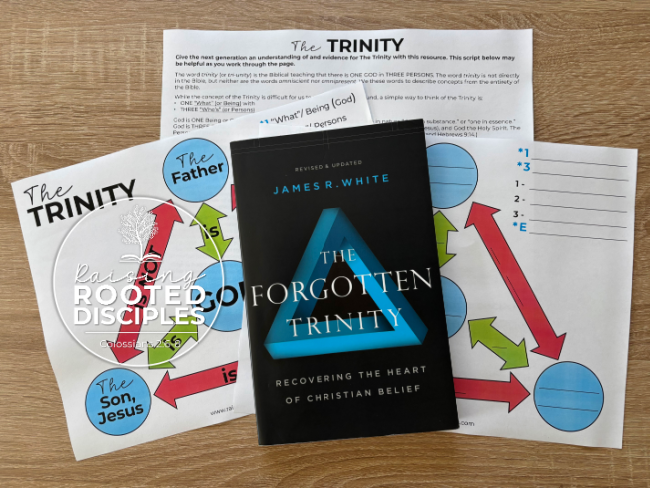
- The Trinity Diagram & Teaching Pack: Available freely to subscribers of Raising Rooted Disciples, this resource provides a clear visual breakdown of trinitarian theology, helping believers articulate what the Trinity is and is not (avoiding common heresies like modalism, patripassianism, and tritheism).
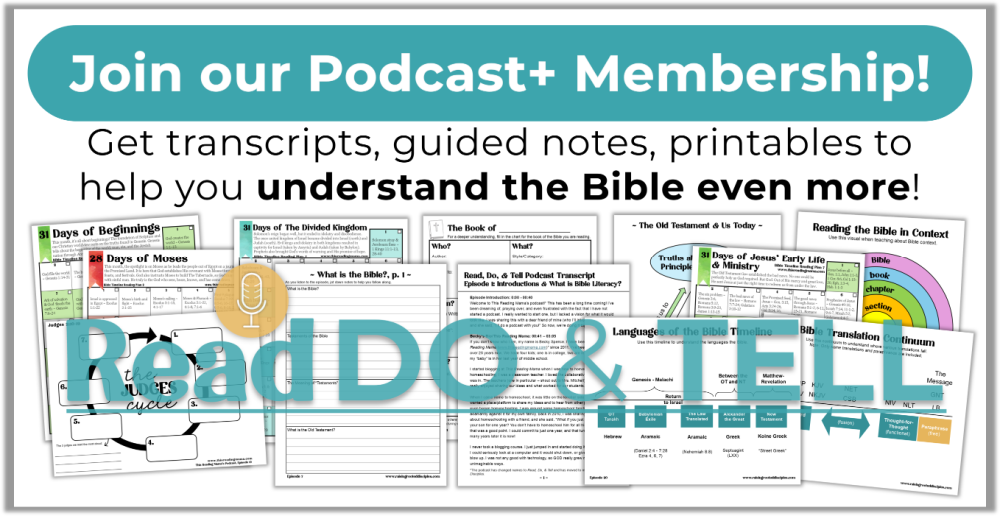
- Podcast+ Membership: For those seeking deeper engagement, the membership tier provides comprehensive study tools, including downloadable transcripts, guided notes, Bible reading plans, and exclusive printables. These resources are designed to move listeners past passive consumption into active, disciplined study of Scripture.
Future Outlook: Navigating the Future of Christian Orthodoxy
As the church looks toward the future, the challenge of maintaining theological integrity will only intensify. Cultural pressures will continue to tempt Christian communities to soften hard doctrines, particularly those concerning the holiness of God, the exclusivity of Christ, and the fixed nature of biblical ethics.
The Imperative of Historical Anchors
The future health of the global church depends heavily on a return to historical roots. When modern believers divorce themselves from the collective wisdom of two millennia of church history, they become perpetually vulnerable to reinventing ancient heresies under new marketing banners. The early church councils proved that unity is forged not by compromising truth, but by wrestling with Scripture until orthodox boundaries are clearly articulated.
Recommendations for the Modern Believer
To safeguard against modern iterations of ancient heresies regarding God and the Trinity, theological educators recommend a multi-pronged approach:
- Prioritize Doctrinal Literacy: Believers must move beyond superficial Sunday-school Christianity and engage deeply with systematic theology, church history, and creedal confessions.
- Evaluate Modern Media Through Scripture: Every piece of Christian content—whether a viral video, a worship song, or a bestselling book—must be critically weighed against the whole counsel of Scripture and the historical consensus of orthodoxy.
- Foster Intergenerational Discipleship: Initiatives like Raising Rooted Disciples highlight the necessity of passing sound doctrine down to the next generation, ensuring that children and young adults are equipped to spot counterfeits before they encounter them in higher education or public life.
Conclusion
The release of Episode 26 of the Read, Do, & Tell Podcast serves as a timely reminder that the battle for truth is perpetual. By confronting heresies against God head-on—examining their historical roots in early church councils and identifying their modern manifestations—Becky and Amy empower believers to stand firm. In a world desperate for authentic spiritual grounding, reclaiming a robust, uncompromised view of God, the Trinity, and the historic Christian faith is not merely an academic exercise; it is an essential act of worship and obedience to the Word of the Lord.

