
Executive Overview
The fundamental paradox of modern classroom teaching is the deceptive nature of immediate instructional success. When an educator poses a question and a sea of hands shoots up—or when students breeze through a series of worksheet prompts—it is easy to feel that a lesson has landed. Yet, cognitive science consistently reveals a sobering truth: short-term performance is a poor proxy for long-term memory consolidation. Much of what feels like mastered knowledge evaporates within days, or even hours, of the classroom bell ringing.
A compelling new study conducted by researchers Boulahnane, Ismaili, and Haddi (2026) directly addresses this educational challenge. Investigating the efficacy of game-based learning within a Moroccan middle school, the researchers set out to answer a pressing question: Can interactive digital tools fundamentally alter not just how students absorb information, but how well they retain it weeks later?
Over a rigorous three-week period, the researchers compared two ninth-grade classes comprising 14- to 15-year-old students. Both cohorts were taught identical curricula—encompassing English grammar, English vocabulary, and Life and Earth Science—by the same educators using the same amount of instructional time. The core variable was pedagogical delivery: one class learned through conventional methods involving direct teacher-led explanations, textbook exercises, and traditional pair-work drills, while the other integrated the game-based learning platform Kahoot! into their daily routine.
The findings, recently published in academic literature, offer striking evidence for the power of interactive education. Students in the Kahoot! cohort achieved roughly twice the learning gains of their peers in the control group from pretest to posttest. More importantly, when tested again two weeks later without intervening review, the Kahoot! students maintained a commanding advantage, scoring significantly higher across all three subjects. Alongside these academic gains, student-reported engagement scores soared, painting a comprehensive picture of a classroom transformed by gamified formative assessment.
Detailed Chronology of the 2026 Study
To understand the weight of Boulahnane, Ismaili, and Haddi’s findings, it is necessary to examine the precise architecture of their empirical research. Designed to eliminate confounding variables, the study took place over a strict three-week window in a real-world middle school setting, balancing ecological validity with methodological control.
Phase 1: Baseline Assessment and Curriculum Alignment
Before any instructional content was delivered, both ninth-grade classes underwent rigorous baseline testing. The research team developed custom, standardized 20-item assessments for each of the three focal subjects: English grammar, English vocabulary, and Life and Earth Science.
When the baseline data was compiled, it confirmed what the researchers needed to see: both groups of students started from virtually identical academic starting points. There were no statistically significant differences in prior knowledge between the class designated for the Kahoot! intervention and the class designated for conventional instruction.
With baseline metrics established, the instructional phase commenced. Both classes covered the exact same syllabus, mirroring state and institutional learning standards. The total amount of instructional time allocated to each topic was strictly controlled, ensuring that any divergences in student outcomes could be attributed directly to the teaching methodology rather than disparities in contact hours.
Phase 2: The Three-Week Instructional Intervention
While the curriculum remained constant, the classroom experience diverged sharply between the two groups.
The conventional instruction class followed a traditional pedagogical model. Teachers delivered direct explanations from the front of the room, assigned reading and writing exercises from standard textbooks, and organized students into pairs for conversational drills and worksheet completions. Assessment in this room took the form of sporadic verbal check-ins and traditional homework assignments.
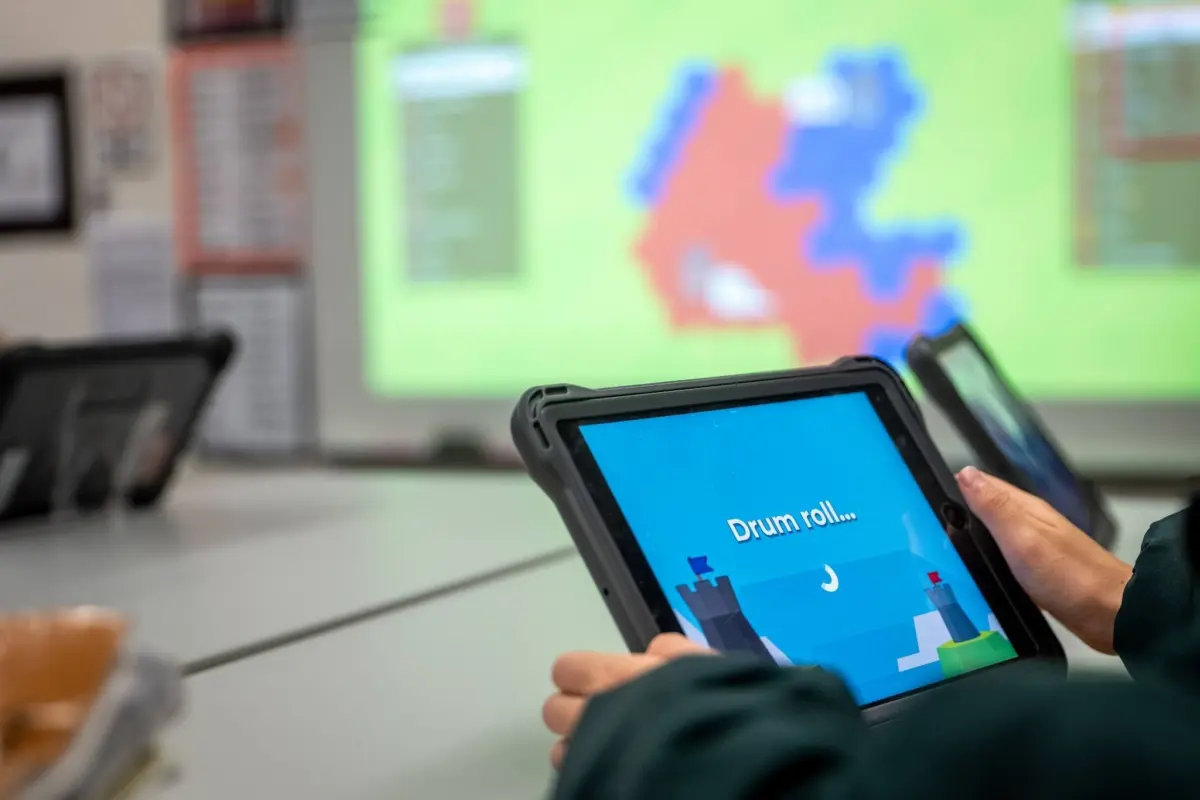
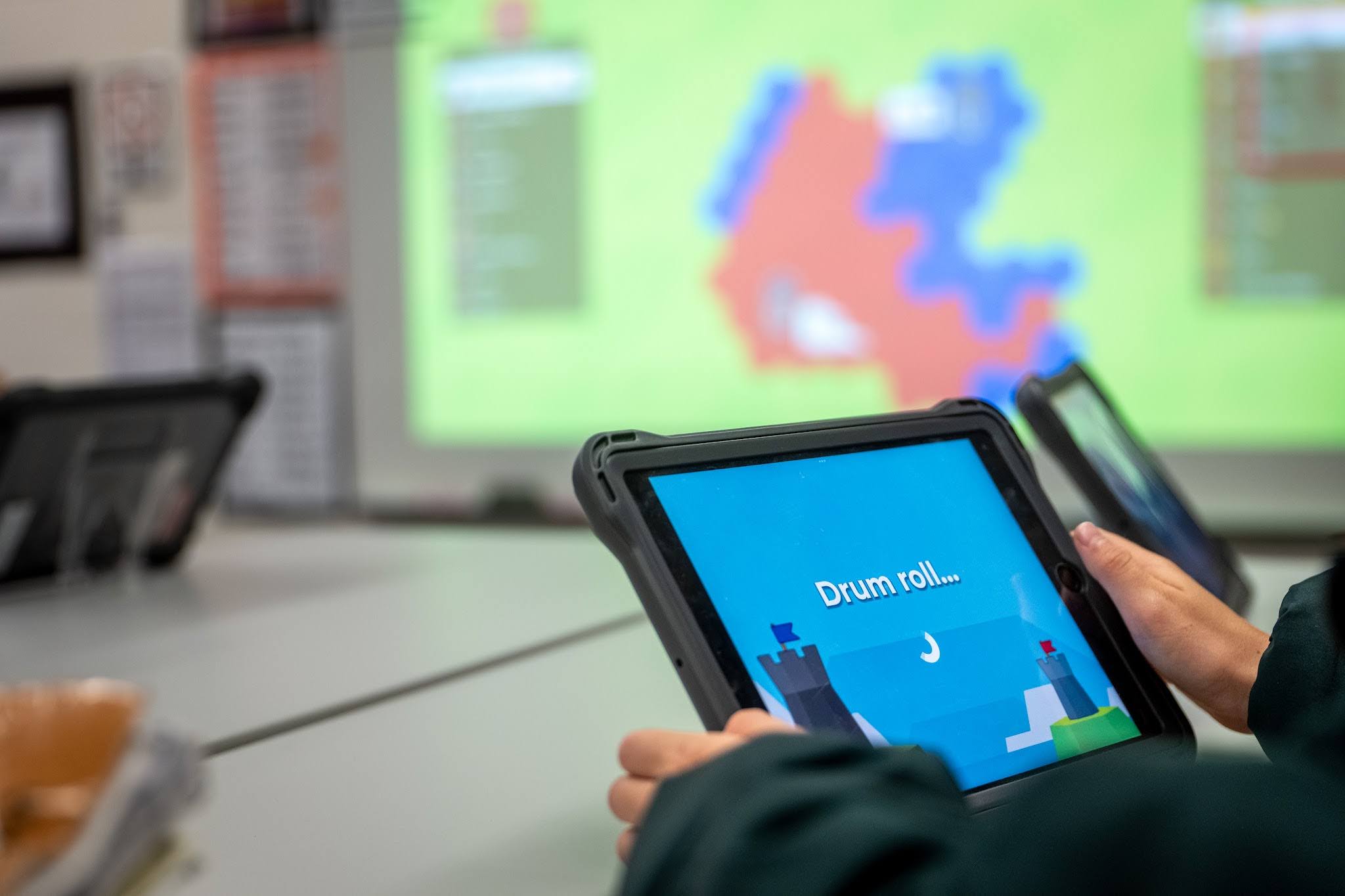
In contrast, the experimental class integrated Kahoot! as a central pillar of its instructional design. During these sessions, teachers projected quiz questions onto a shared classroom screen. Students interacted with the content in real time using personal digital devices—specifically smartphones and tablets.
Crucially, the Kahoot! sessions were not deployed merely as isolated games or end-of-unit rewards. Instead, they were woven into the fabric of the daily lessons as dynamic formative assessment tools. After each question was answered, the platform immediately displayed the correct response alongside a visual distribution of the entire class’s choices.
This transparency created a vital pedagogical pivot point. Rather than rushing ahead, teachers paused whenever a significant portion of the class missed a question. They used the live data visualization to identify specific misconceptions, explain the correct reasoning, and facilitate a brief, targeted class discussion before advancing to the next prompt. This loop of immediate recall, instant feedback, and responsive remediation formed the heartbeat of the intervention.
Phase 3: Immediate Post-Testing and Long-Term Retention
At the conclusion of the three-week instructional block, both classes immediately sat for the post-intervention assessments—the same 20-item tests administered prior to the study.
The immediate posttest data revealed a striking divergence. While both groups naturally improved from their baselines, the magnitude of the improvement was vastly different. Students in the Kahoot! class demonstrated substantially greater gains across all three subject areas, signaling that the interactive format had supercharged initial acquisition and comprehension.
However, the most critical phase of the study occurred two weeks later. Without any advance warning or review sessions bridging the gap, the students were administered the exact same 20-item tests for a third time. The objective was to measure true knowledge retention—the degree to which short-term learning had successfully encoded into long-term memory.
The results of this delayed follow-up underscore the enduring value of game-based learning interventions. While both groups experienced a slight natural decline in scores over the intervening fortnight—a normal psychological phenomenon known as the forgetting curve—the Kahoot! class retained a commanding advantage. They sustained higher scores across grammar, vocabulary, and science, maintaining a decisive statistical edge over the conventionally taught comparison group.
Supporting Context and Metrics
Numbers tell the definitive story of Boulahnane, Ismaili, and Haddi’s research. The data gathered across academic achievement metrics and psychological engagement surveys provide an unambiguous look at how gamified learning impacts middle school students.
Academic Performance Metrics
The study evaluated student performance on a 20-point scale across English grammar, English vocabulary, and Life and Earth Science. The trajectory of these scores from pretest, to immediate posttest, to the two-week follow-up highlights several key trends:
- Pretest Parity: Before instruction began, both the Kahoot! class and the conventional instruction class registered equivalent baseline scores across all subjects, confirming homogenous participant groups.
- Immediate Posttest Surge: From pretest to immediate posttest, the students utilizing Kahoot! made roughly twice the learning gains of the control group. Their mastery of new vocabulary terms, complex grammatical structures, and scientific concepts expanded at an accelerated rate.
- The Two-Week Follow-Up Advantage: At the final assessment point two weeks post-instruction, the Kahoot! class maintained a persistent advantage of 3.3 to 3.7 points over the comparison class across the board.
While the researchers noted that both groups exhibited some degree of score degradation over the two-week hiatus—highlighting the universal necessity of spaced repetition and continuous review—the students in the interactive group held onto significantly more of their initial knowledge gains.
Student Engagement Surveys
Beyond academic achievement, the researchers investigated the affective dimension of the classroom experience by administering a validated engagement survey to all participants.
The findings in this category were equally pronounced. Students in the Kahoot! class reported an average engagement score of 23.6 out of 25, reflecting an overwhelmingly positive, immersive, and motivating learning environment. In contrast, students in the conventional instruction class reported an average engagement score of 17.0 out of 25.
This 6.6-point differential underscores a reality well-known to modern educators: engagement is not merely a pleasant byproduct of schooling; it is a primary catalyst for cognitive investment. When students find an activity intrinsically rewarding and stimulating, their attention deepens, their anxiety diminishes, and their brains become more receptive to encoding new information.
Mechanisms of Action: Why Does It Work?
In analyzing their results, Boulahnane, Ismaili, and Haddi pointed toward two primary cognitive mechanisms that likely drove the success of the Kahoot! intervention:
- The Testing Effect (Active Retrieval): Rather than passively listening to a lecture or reading a textbook chapter, students using Kahoot! were constantly forced to actively retrieve information from memory under time constraints. Cognitive science has repeatedly demonstrated that the act of retrieving knowledge strengthens neural pathways far more effectively than simply reviewing it.
- Immediate Feedback Loops: The instant visibility of correct answers and class response distributions allowed students to immediately correct erroneous mental models. This prevented the consolidation of misconceptions and reinforced accurate associations while the learning material was still fresh in their working memory.
Despite these insights, the researchers noted a methodological nuance: the study did not isolate these individual elements to determine their precise independent contributions. Whether the gains were driven primarily by the gamified interface, the active retrieval practice, the immediate feedback, or the subsequent teacher-led discussions remains a fertile ground for future investigation.
Official Insights and Expert Perspectives
The publication of Boulahnane, Ismaili, and Haddi’s 2026 study arrives at a time of intense global dialogue regarding the integration of technology in education. As schools grapple with post-pandemic learning recovery, digital distraction, and the demand for evidence-based practices, research that bridges educational theory with practical classroom utility is more valuable than ever.
While individual quotes from the authors emphasize the need for cautious interpretation—noting that the study was limited to two classes within a single middle school and tracked retention for a relatively brief two-week window—educational technologists and curriculum developers have been quick to highlight the broader implications.
Bridging Formative Assessment and Instruction
A recurring theme in expert commentary surrounding the study is the operational workflow demonstrated by the teachers. Too often, formative assessment is treated as a terminal event—a quiz given at the end of a week to assign a grade, with little opportunity for instructional adjustment.
The Moroccan middle school teachers in this study utilized Kahoot! in a fundamentally different way. By reviewing live data visualizations in real time, they transformed a digital quiz into an interactive dialogue. When a high percentage of students misidentified a grammatical rule or a biological process, the teacher treated the collective error not as a failure, but as a diagnostic signal.
This pedagogical pivot—pausing to explain, clarify, and discuss misunderstandings right at the moment of discovery—exemplifies best practices in formative assessment. It shifts the technological tool from a passive entertainment device into an active bridge between teaching and learning.
Reassessing Game-Based Learning in Middle Schools
Middle school is a notoriously challenging developmental stage. Educators frequently confront declining intrinsic motivation, heightened self-consciousness, and shifting social dynamics among 14- and 15-year-olds. Traditional didactic methods can struggle to capture the wandering attention of adolescents navigating these formative years.
By demonstrating that game-based learning can double knowledge gains while elevating engagement scores to nearly 95% of the survey’s maximum scale, this study provides empirical backing for what many innovative teachers have long suspected. Gamification, when intentionally aligned with rigorous academic content, does not dilute the seriousness of education; rather, it provides a scaffolding that makes rigorous content accessible, engaging, and memorable.
Future Outlook and Classroom Implications
What can middle school teachers, school administrators, and curriculum designers take away from the 2026 study by Boulahnane, Ismaili, and Haddi? While the research parameters were specific, the practical applications for everyday teaching are broad, actionable, and immediately scalable.
Practical Strategies for Educators
For educators teaching language arts, foreign languages, STEM subjects, or humanities, the study outlines a simple, highly effective three-step pedagogical framework:
- Assess with Intent: Utilize interactive platforms like Kahoot! to check for understanding at natural transition points within a unit—such as following a mini-lecture on English grammar rules or after introducing a new set of scientific vocabulary terms.
- Diagnose, Don’t Just Grade: Pay close attention to question-level analytics. When a pattern of incorrect responses emerges, resist the urge to simply move forward. Treat the collective miss as a teachable moment.
- Facilitate Collaborative Discussion: Pause the game to address misunderstandings openly. Encourage students to articulate why a common distractor was incorrect, fostering metacognition and peer-to-peer learning in a low-stakes environment.
The Road Ahead for Educational Research
As the body of peer-reviewed literature surrounding game-based learning continues to expand, researchers are encouraged by studies like this one to push further. Future investigations will likely seek to isolate the specific variables identified by Boulahnane and their colleagues—disentangling the unique impacts of active recall, peer competition, immediate feedback, and teacher-led remediation.
Furthermore, longitudinal studies tracking knowledge retention over longer horizons—such as a full semester or academic year—will provide deeper insights into how gamified interventions interact with the broader forgetting curve.
Conclusion
The empirical evidence is becoming increasingly clear: technology in the classroom is most powerful when it amplifies proven cognitive principles. By combining the neurological benefits of active retrieval and immediate feedback with the motivational power of gamified engagement, educators can move beyond the illusion of short-term success.
For the modern middle school teacher looking to foster deeper understanding, higher retention, and a more vibrant classroom culture, the message from the 2026 research is unmistakable. Interactive tools, when wielded with pedagogical intentionality, can turn fleeting lessons into lasting knowledge.

