
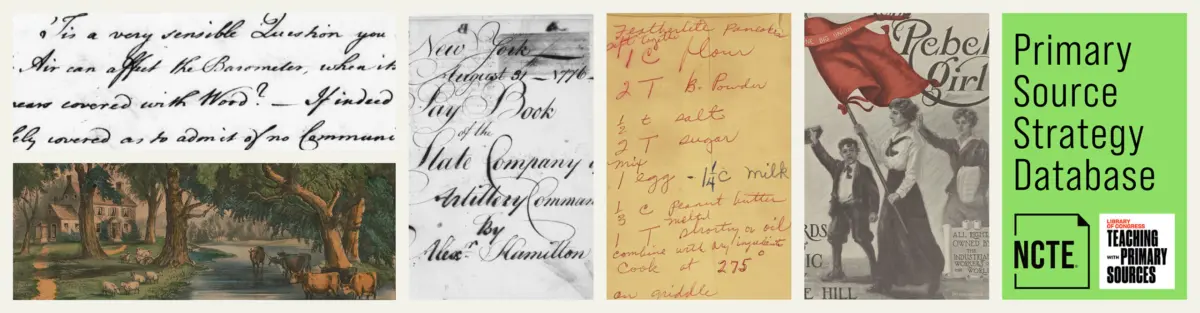
In an era defined by a relentless information cycle and the rapid evolution of digital media, educators face an unprecedented challenge: teaching students not only what to read, but how to critically analyze, contextualize, and interrogate the sources before them. Addressing this critical need, the National Council of Teachers of English (NCTE) has deepened its collaborative partnership with the Library of Congress. Operating as an active participant in the prestigious Teaching with Primary Sources (TPS) Consortium, NCTE is spearheading a nationwide initiative to fundamentally integrate primary source materials into the daily habits, curricula, and instructional methodologies of literacy teachers and their students.
At the heart of this collaborative educational endeavor lies a newly developed, highly searchable digital database. Conceived and populated by more than two dozen distinguished educators and leaders in English Language Arts (ELA) education, the repository houses pedagogical strategies for over 150 specific artifacts drawn directly from the Library of Congress’s vast digitized primary source collections. Designed to be intuitive and adaptable, the database allows educators to sort content using targeted tags such as picturebook and argument. Each entry explicitly details the literacy merit of the source for classroom integration, offering structured recommendations for overarching themes, multi-week units, and alignment with state academic standards.
This initiative is far more than a repository of historical curiosities; it is a calculated intervention in modern civics, media literacy, and inclusive education. By bringing primary sources—ranging from historical periodicals to documentation of overlooked innovators—into contemporary classrooms, the NCTE and the Library of Congress are equipping a new generation with the analytical tools necessary to recognize diverse historical narratives, challenge monolithic perspectives, and engage deeply with the roots of American journalism, technology, and social justice.
Detailed Chronology: The Evolution of the NCTE-Library of Congress Partnership
The integration of primary source literacy into American classrooms did not happen overnight. It represents the culmination of years of targeted institution-building, resource allocation, and pedagogical evolution.
The Foundation of the TPS Consortium
The broader framework for this work traces back to the establishment of the Library of Congress’s Teaching with Primary Sources program. Designed to build awareness of the Library’s educational web offerings, the TPS program formed a consortium of universities, school districts, and national educational organizations—such as the NCTE—to deliver professional development to teachers. The core philosophy of the consortium is deceptively simple: primary sources spark curiosity, foster critical thinking, and unlock content knowledge by grounding abstract historical concepts in tangible, human artifacts.
Recognizing the Gap in ELA Instruction
Historically, primary sources have been heavily cordoned off within the domains of history and social studies classrooms. English Language Arts and literacy teachers, conversely, have traditionally relied on anthologies, contemporary fiction, and standard literary canons. Recognizing that literacy encompasses all text forms—including historical documents, editorial columns, and archival imagery—educational leaders recognized a vital opportunity. ELA classrooms needed structured methodologies to evaluate historical texts for rhetorical force, authorial bias, and narrative structure.
Mobilizing Educator-Leaders
To bridge this disciplinary divide, the NCTE mobilized more than two dozen ELA teachers, curriculum directors, and literacy experts. These practitioners were tasked with examining over 150 specific items from the Library of Congress’s digital holdings and crafting rigorous, classroom-tested instructional strategies. Rather than treating artifacts as mere window-dressing, these leaders articulated the specific literacy merits of each item, tying them directly to argumentative writing frameworks, narrative analysis, and contemporary media literacy standards.
Launching the Searchable Database
The culmination of these collaborative efforts is the deployment of the searchable database housed within the NCTE’s digital infrastructure. By tagging materials with functional categories like picturebook and argument, the platform allows educators to seamlessly integrate primary sources into existing units of study. Whether an instructor is designing a middle-school module on narrative analysis or a high-school curriculum on rhetorical history, the database provides an immediate bridge between primary documentation and core literacy standards.
Supporting Context & Metrics: Redefining Representation and Rhetoric in the Classroom
To fully grasp the instructional value of the NCTE database, one must examine the specific pedagogical frameworks embedded within its catalogued resources. The initiative is built upon two core pillars: dismantling historical omissions through diverse representation and cultivating rigorous rhetorical analysis using historical periodicals.
Challenging Monolithic Historical Narratives
A foundational component of the database’s instructional strategy involves interrogating how history has traditionally been recorded and taught. Historically, narratives surrounding inventors, innovators, and industrial pioneers have suffered from systemic myopia, centering almost exclusively on white men. This persistent homogeneity in historical instruction carries profound psychological and educational consequences, inadvertently signaling to students of color and female students that innovation is the exclusive domain of a privileged demographic.
The NCTE-Library of Congress resources actively work to dismantle this paradigm. By foregrounding diverse historical figures—such as Black female innovators like Sarah E. Goode or Madam C. Walker (and parallel historical figures highlighted within the initiative)—educators are equipped to challenge traditionally limited perspectives. The instructional materials emphasize that addressing these omissions is not merely an exercise in historical correction, but a vital step in eradicating racial and gender injustice within educational spaces. When students encounter diverse innovators, they are offered tangible reflections of themselves, validating their potential contributions to STEM and society.
Furthermore, these curricular units reframe the very definition of "innovation." Traditional educational models often equate innovation solely with formal academic credentials, corporate funding, and the pursuit of commercial fortune. The primary sources highlighted in the database challenge this restricted view by demonstrating that many profound breakthroughs stem from an organic desire to solve real-world problems and improve daily life. For instance, studying historical figures who lacked formal education yet devised ingenious mechanical or social solutions teaches students that resourcefulness, empathy, and observation are the true catalysts of progress—pursuits driven by human need rather than the pursuit of fame.
The Role of Historical Press: The Statesman
Beyond individual innovators, the database incorporates rich institutional artifacts that shed light on the mechanics of early American media, civil rights advocacy, and community mobilization. A prime example featured within the resource ecosystem is The Statesman, a weekly newspaper founded in 1888 and published in Denver, Colorado.
Serving the burgeoning African American communities across Colorado, Wyoming, Montana, Utah, and New Mexico, The Statesman acted as an indispensable lifeline in the Mountain West. During an era defined by intense legal segregation, disenfranchisement, and racial violence, the publication provided a vital channel through which its readers could "voice their opinions, assert their rights, and demand their due recognition."
The inclusion of The Statesman in the NCTE database offers ELA and social studies teachers a masterclass in historical media analysis. The newspaper’s archives document:
- Local and Communal Life: Comprehensive reporting on local events, church functions, and society gatherings that affirmed the dignity and vibrance of Black communities in the West.
- National Advocacy: Coverage of national stories carrying profound resonance for African Americans navigating life outside the deep South.
- Hard-Hitting Editorial Content: Robust op-eds and analytical pieces confronting pressing socio-political battles of the day, including the enforcement of Jim Crow laws, the realities of institutional segregation, and the fierce legislative and social debates surrounding interracial marriage.
By examining these archival editions through the lens of literacy instruction, students learn to analyze how marginalized communities leverage the press as an instrument of advocacy and self-determination. They examine editorial tone, audience address, and the rhetorical strategies utilized by early Black journalists to effect social change.
Academic Standards Alignment
To ensure that the integration of these primary sources remains rigorous and accountable to state educational mandates, the database explicitly connects archival artifacts to established content standards. For example, instructional materials tied to the collection map directly onto the New Mexico Adopted Content Standards, offering a replicable model for educators nationwide:
- Reading Standards for Informational Text (RI.6.1): Requires students to cite textual evidence to support analysis of what a text says explicitly, as well as inferences drawn from the text—a skill directly exercised when analyzing historical newspaper columns or patent records.
- Reading Standards for Informational Text (RI.7.2): Focuses on determining two or more central ideas in a text, analyzing their development, and providing an objective summary.
- History/Social Sciences, Science, and Technical Subjects (RH.9-10.1): Tasks students with citing specific textual evidence to support analysis of primary and secondary sources, paying careful attention to features such as the date and origin of the information.
- History/Social Sciences, Science, and Technical Subjects (RH.11-12.2): Demands that advanced students determine the central ideas of a primary source and construct accurate summaries elucidating the relationships among key details and ideas.
Official Statements: Perspectives from the Educational Vanguard
The partnership between the NCTE and the Library of Congress represents a convergence of national educational leadership, archival preservation, and pedagogical innovation. While the initiative is executed on the ground by classroom teachers, its broader philosophical underpinnings are championed by organizational leaders dedicated to transforming literacy education.
Educational researchers and ELA leaders who contributed to the development of the database emphasize that primary sources serve as an indispensable bridge between historical inquiry and modern critical literacy. According to curriculum directors involved in the TPS Consortium, the inclusion of authentic artifacts fundamentally changes the dynamic of the classroom. When students interact with primary sources—whether examining the editorials of a 19th-century western newspaper or analyzing the patent records of an overlooked inventor—they transition from passive consumers of pre-packaged textbook narratives to active historians and linguistic detectives.
Furthermore, leadership within the NCTE has consistently underscored that literacy instruction cannot be divorced from the lived realities of students. By curating resources that explicitly challenge historical erasures and highlight the contributions of diverse innovators, the council reinforces its commitment to inclusive excellence. Educational advocates maintain that teaching students to critically evaluate historical arguments, detect authorial bias, and recognize diverse historical contributions is the single most effective inoculation against modern misinformation and civic apathy.
Future Outlook: The Horizon of Primary Source Literacy
As the NCTE-Library of Congress partnership continues to expand its footprint, the long-term implications for American education are both profound and far-reaching. The initial rollout of over 150 catalogued items and accompanying pedagogical strategies serves as a proof-of-concept for a scalable, digital-first approach to humanities education.
Scaling Teacher Professional Development
Looking ahead, the primary objective is to deepen teacher fluency in utilizing archival materials. While the searchable database provides an exceptional toolkit, ongoing professional development initiatives facilitated through the TPS Consortium will focus on training educators to independently source, vet, and integrate Library of Congress holdings into their localized curricula. Workshops, virtual seminars, and collaborative learning communities will empower teachers to move beyond standard textbook dependencies, fostering a culture of inquiry-driven instruction.
Adapting to Evolving Media Landscapes
In an age dominated by digital noise, synthetic media, and polarizing online discourse, the skills honed through primary source analysis—sourcing, contextualizing, corroborating, and close reading—are more critical than ever. The frameworks developed by NCTE educators provide a blueprint for media literacy in the 21st century. By mastering the art of interrogating a 19th-century editorial or an industrial patent, students develop the cognitive resilience required to evaluate contemporary journalism, social media feeds, and digital advertising.
Expanding the Repository
Plans are already underway to expand the database’s taxonomy and content scope. Future iterations will likely incorporate additional tags reflecting emerging interdisciplinary themes, digital storytelling formats, and multimodal texts. By continually updating the repository with diverse artifacts that reflect the multifaceted tapestry of human history, the NCTE and the Library of Congress ensure that literacy education remains vibrant, inclusive, and relentlessly anchored in truth.
Ultimately, this collaborative initiative envisions a future where every student in an English Language Arts or social sciences classroom sees themselves reflected in the historical record, possesses the critical literacy skills to interrogate the world around them, and understands that history is not merely something that happened to others—it is a continuous, living narrative that they, too, have the power to shape.

