
EXECUTIVE OVERVIEW
As educators and curriculum developers continually search for evidence-based strategies to bridge the gap between play and foundational literacy, a quiet revolution is taking place in early childhood classrooms. Central to this movement is the Science of Reading, which emphasizes that phonological awareness—the ability to recognize and manipulate the spoken parts of sentences and words, such as syllables, onsets, and rimes—is a non-negotiable precursor to successful decoding and reading comprehension.
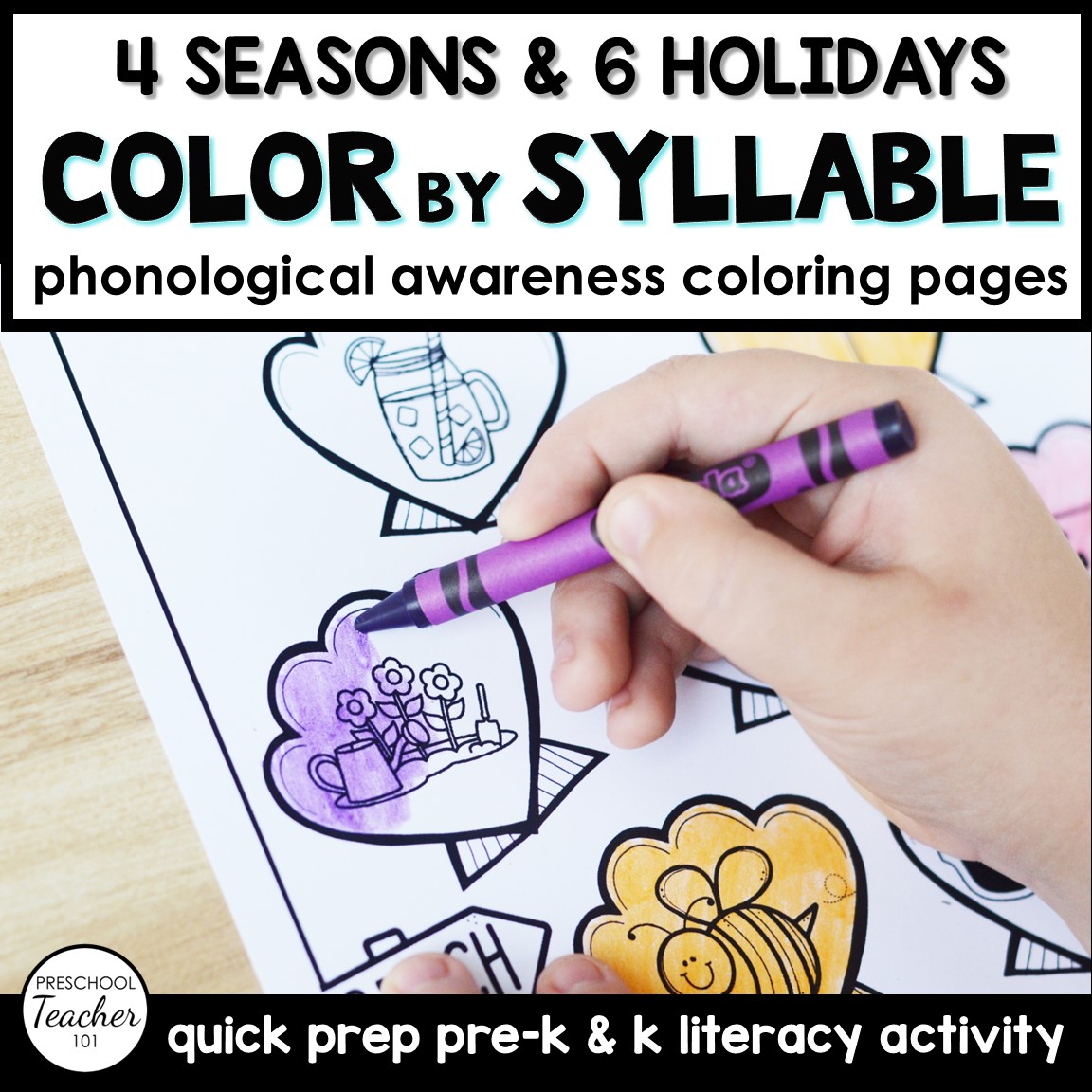
Amidst this pedagogical shift, the introduction of interactive, low-prep learning tools has proven invaluable. Among the most recent and promising developments in this space is the "Spring Color by Syllable" activity set, alongside an expansive 33-page, year-round color-by-code curriculum designed specifically for preschool and kindergarten learners. By merging the time-tested engagement of color-by-number mechanics with rigorous phonological segmentation exercises (focusing on one to five syllables), these resources offer a unique dual benefit: they foster fine motor skills and artistic expression while reinforcing critical cognitive pathways necessary for early reading success.
This comprehensive report examines the structural framework of these syllable-based educational assets, evaluates their alignment with modern literacy standards, details their practical classroom applications, and outlines their broader implications for early childhood education moving forward.
1. The Pedagogical Foundation: Phonological Awareness and the Science of Reading
To understand the value of tools like the Color by Syllable series, one must first examine the cognitive milestones of early childhood literacy. Decades of cognitive science and reading research have solidified the understanding that children do not learn to read naturally the way they learn to speak. Reading requires explicit, systematic instruction in cracking the alphabetic code. However, before a child can successfully map graphemes (letters) to phonemes (sounds), they must be able to perceive the discrete auditory components of spoken language.
Phonological awareness sits at the absolute foundation of this developmental pyramid. Syllable segmentation—the ability to break words down into rhythm-based sound chunks—is one of the most accessible entry points for young learners. When children clap, tap, or count syllables, they are actively training their brains to parse continuous speech into manageable units.
Traditionally, phonological awareness activities have relied heavily on oral drills, clapping games, or manipulative counters. While effective, maintaining high levels of engagement during these drills can be challenging for young, high-energy students in preschool and kindergarten settings. The integration of color-by-code mechanics transforms these auditory-cognitive tasks into visually reinforcing, tactile experiences. By connecting a specific syllable count to a corresponding color directive, students engage multiple sensory modalities simultaneously, cementing the phonological concept in their long-term memory.
2. Structural Breakdown of the Spring and Year-Round Syllable Curricula
Designed to require minimal preparation for educators while maximizing independent or guided student interaction, the Color by Syllable initiative is structured to meet the diverse developmental needs found within modern mixed-ability classrooms.
The Spring-Themed Module
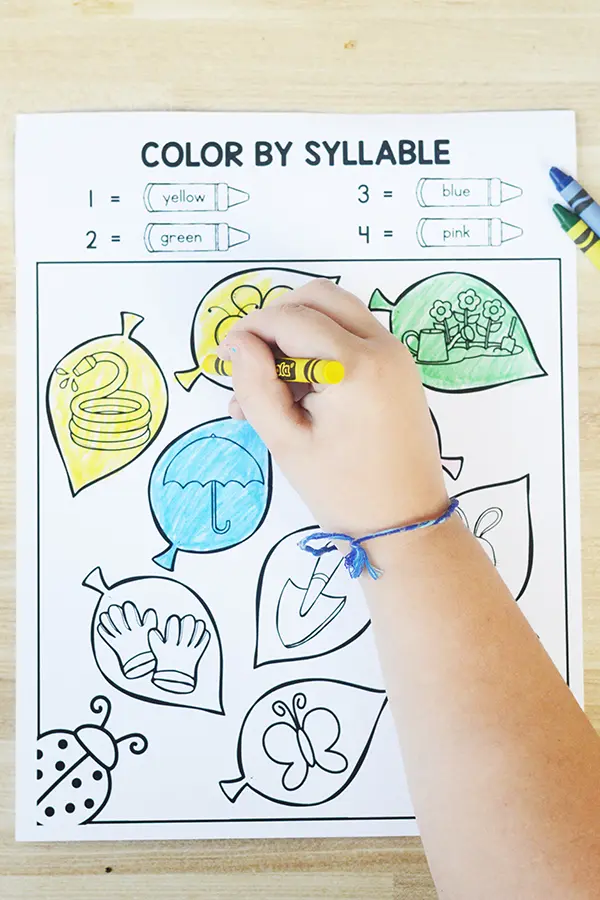
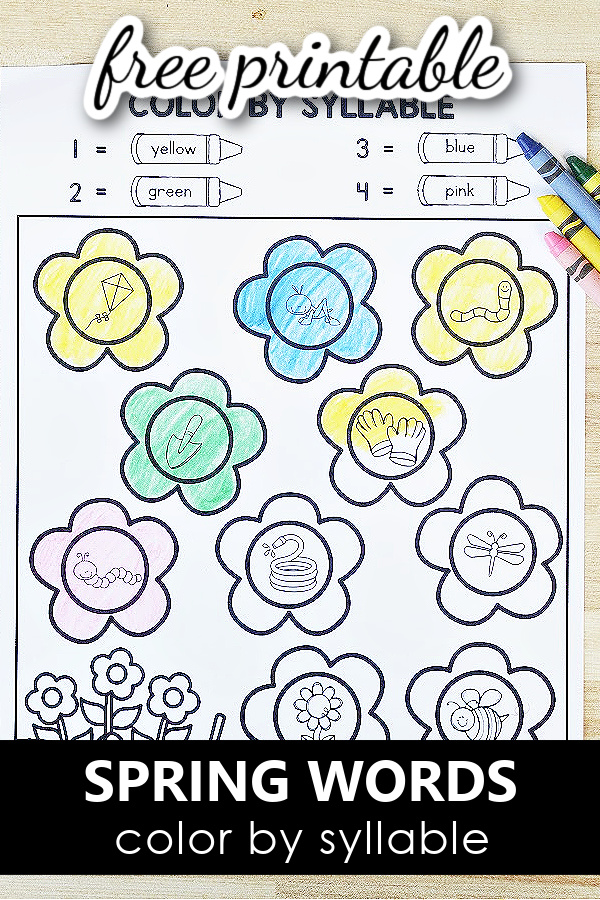
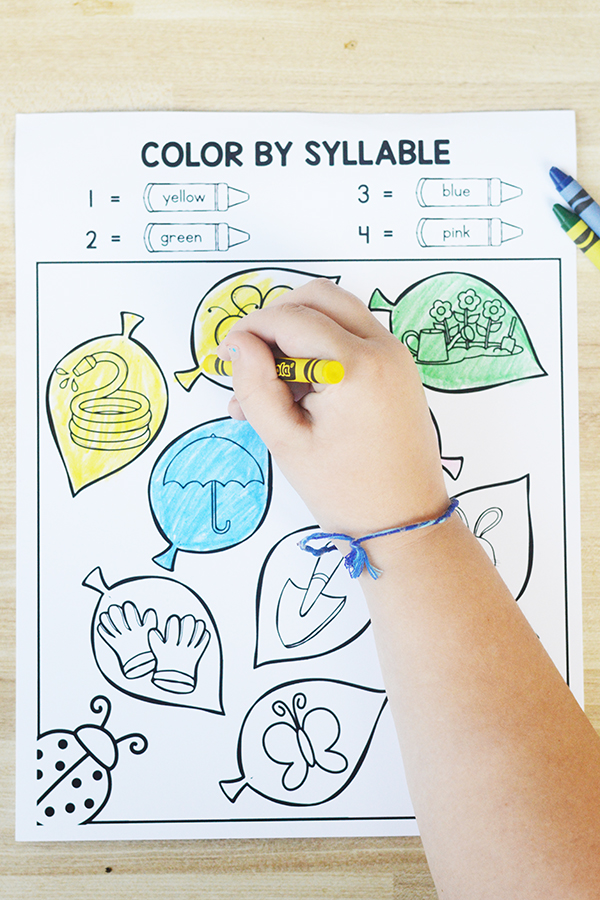
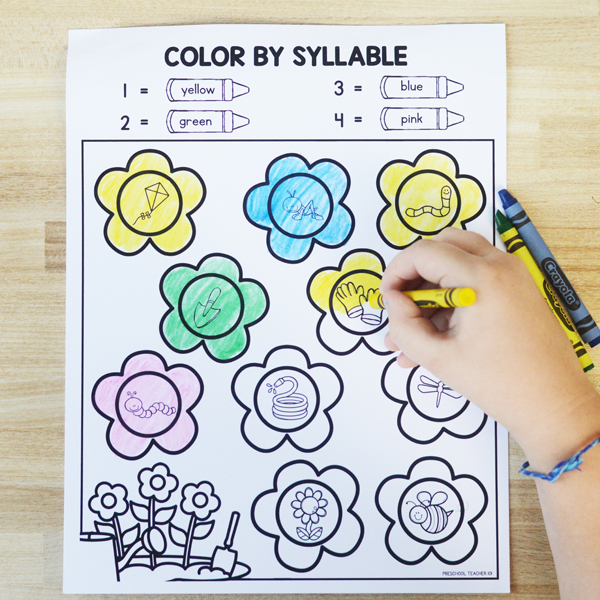
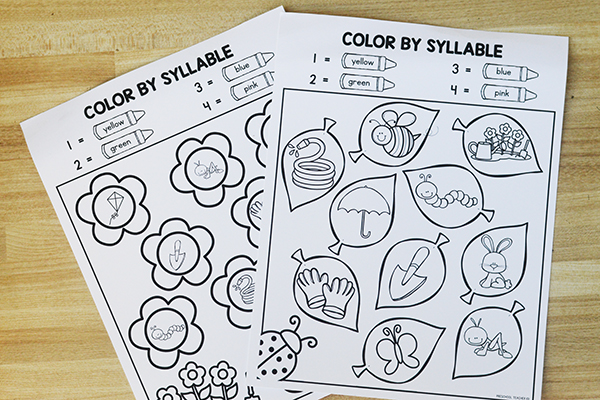
The newly released Spring Color by Syllable freebie serves as an entry point into seasonal literacy centers. Featuring spring-inspired vocabulary—spanning flora, fauna, and seasonal meteorological shifts—the activity prompts children to analyze words, isolate their syllable structures, and color the corresponding sections of a themed worksheet.
Key structural benefits of the Spring module include:
- Targeted Vocabulary Building: Before students can analyze a word’s syllable count, educators are encouraged to explicitly introduce the vocabulary terms. This bridges phonological practice with semantic understanding, ensuring children are not just decoding abstract sounds, but connecting them to real-world concepts.
- Differentiation Flexibility: Because classrooms house children at varying developmental tiers, the worksheets include tiered options. Educators can select pages that match a student’s current capacity—whether they are mastering basic two-syllable compound words or challenging themselves with complex multi-syllable seasonal terminology.
- Versatile Implementation: The materials are designed to seamlessly integrate into literacy centers, function as independent morning work, or serve as high-value extensions for "fast finishers" who require meaningful academic engagement upon completing primary tasks.
The Comprehensive 33-Page Year-Round Framework
Building upon the success of seasonal activities, the full-year Color by Syllable set expands this methodology into a comprehensive 33-page curriculum. Spanning holidays, seasonal shifts, and recurring annual events, this extensive pack ensures that phonological awareness remains a continuous, engaging thread throughout the entire academic calendar.
The framework systematically introduces children to words containing anywhere from one to five syllables. By maintaining a familiar, reliable format across different themes, the curriculum reduces cognitive load regarding how to complete the task, allowing students to direct 100% of their cognitive bandwidth toward the phonological task at hand: listening to, segmenting, and counting syllables.
3. Supporting Context, Metrics, and Classroom Integration
As early childhood education faces increasing pressure to demonstrate measurable outcomes, tools that offer objective developmental tracking without sacrificing play-based pedagogy are in high demand.
The No-Prep Advantage for Educators
Teacher burnout and administrative fatigue are well-documented challenges in contemporary education. The structural design of the Color by Syllable packets directly addresses this by offering "no-prep" utility. Educators can instantly print and distribute the materials, freeing up valuable planning hours that can instead be dedicated to one-on-one student intervention, social-emotional support, and observational assessment.
Enhancing Fine Motor Integration
Beyond literacy, these worksheets target critical fine motor milestones. Preschool and kindergarten children are actively developing the hand strength, pincer grasps, and bilateral coordination necessary for proficient handwriting. The act of coloring within designated, intricate thematic lines reinforces these physical dexterity goals, making the activity an effective cross-curricular exercise.
Formative Assessment Opportunities
For educators, these worksheets double as effortless formative assessment tools. As children work independently or in small groups at a literacy center, teachers can circulate the room, observe student behavior, and identify who is successfully segmenting words and who may be relying on random guessing. This allows for immediate, targeted intervention before minor learning gaps compound into significant reading difficulties later in elementary school.
4. Official Statements and Expert Perspectives on Phonological Tools
Educational specialists and early literacy advocates have increasingly championed resources that align with the Science of Reading while remaining accessible to general education teachers and homeschooling parents alike.
"Phonological awareness is the anchor of early reading development," notes a prominent early childhood literacy consultant. "When we provide children with engaging, multisensory tools like color-by-syllable activities, we demystify the mechanics of language. Children stop viewing words as intimidating blocks of text and start seeing them as dynamic puzzles they have the power to solve."
Furthermore, curriculum designers emphasize the intentionality behind keeping the seasonal themes fresh. "By aligning literacy practice with the world around them—such as the blooming flowers of spring or the festive imagery of winter holidays—we tap into children’s natural curiosity," states a lead developer behind the Preschool Teacher 101 and Fantastic Fun and Learning initiatives. "Learning stops feeling like a chore and starts feeling like an exploration."
The availability of these resources across multiple prominent educational marketplaces—including direct teacher platforms and Teachers Pay Teachers—ensures that equitable access is maintained for public school classrooms, private institutions, and home-learning environments alike.
5. Future Outlook: The Evolution of Play-Based Literacy Instruction
Looking ahead, the trajectory of early childhood education points toward an even greater integration of explicit, systematic phonics and phonological awareness embedded within creative, low-stress frameworks. As school districts nationwide continue to adopt the Science of Reading mandates, the demand for high-quality, supplemental resources that eliminate guesswork for teachers while maximizing student engagement will only accelerate.
Initiatives like the Color by Syllable series represent a blueprint for future curriculum design. By proving that rigorous cognitive milestones—such as multi-syllable segmentation—can be successfully taught to pre-K and kindergarten students through art, color theory, and seasonal thematic play, these frameworks challenge outdated dichotomies that separate "academic rigor" from "fun."
As educators prepare their classrooms for upcoming academic cycles, the inclusion of structured, flexible, and visually stimulating phonological resources will remain a cornerstone of effective early literacy instruction. Through continued innovation and a steadfast commitment to foundational skill-building, the educational community is well-positioned to guide the next generation of readers toward lifelong literacy success.

