
Executive Overview
For decades, magnetic building tiles have reigned supreme as a staple of early childhood STEM education. Loved for their durability, simplicity, and boundless potential for open-ended play, these geometric toys have captured the imaginations of children and parents alike. Among the pioneers of this industry, Magna-Tiles emerged as the gold standard, setting the baseline for quality, safety, and creative development.
However, as any parent who has attempted to expand a child’s collection can attest, the primary barrier to entry—and expansion—is the price tag. Premium branding, strict quality assurance protocols, and strict Minimum Advertised Pricing (MAP) policies keep official Magna-Tiles firmly in the luxury toy tier, rarely dropping for seasonal discounts or promotional sales.
This financial hurdle has spurred a massive surge in the alternative magnetic toy market. Today, budget-conscious parents and educators no longer need to restrict their children’s building ambitions to a single, high-cost starter box. A new wave of compatible, safe, and highly durable alternatives—including brands like PicassoTiles, Cossy, Shapemags, and Magblock—offer comparable structural integrity, vibrant aesthetics, and unique architectural accessories at a fraction of the cost.
This investigative report examines the economics of the magnetic toy industry, evaluates the top Magna-Tile alternatives through rigorous side-by-side comparisons, and provides parents with an authoritative guide to expanding their child’s creative toolkit without breaking the bank.
Detailed Chronology: The Rise of Magnetic Building Toys
To understand the current marketplace for magnetic construction toys, one must trace their journey from an innovative concept to a multi-million-dollar industry.
1997: The Inception of a Paradigm Shift
Magnetic tiles did not always exist as the household staple we know today. When the category was first introduced to the market in the late 1990s, it revolutionized spatial play. By embedding powerful, encased neodymium magnets safely within ABS plastic geometric shapes, designers created an intuitive system where pieces could snap together from virtually any angle. This eliminated the frustrating alignment processes common in traditional interlocking blocks, allowing toddlers and young children to construct complex 3D structures instantly.
The First-Mover Advantage and Brand Dominance
As the original patent holders and market creators, Magna-Tiles captured the first-mover advantage. They established deep distribution channels in schools, museums, and specialty toy boutiques. This early dominance allowed the brand to command premium pricing. Over the years, the brand cemented its reputation for rigorous safety standards, durable ultrasonic welding, and rigid plastic composition, making it the default benchmark against which all future magnetic toys would be measured.
The Maturation of the Off-Brand and Competitor Market
As patents evolved and global manufacturing standards matured, independent toy developers recognized a distinct gap in the market: families wanted expansive, large-scale building sets, but few could afford multiple 100-piece Magna-Tile boxes priced at a premium.
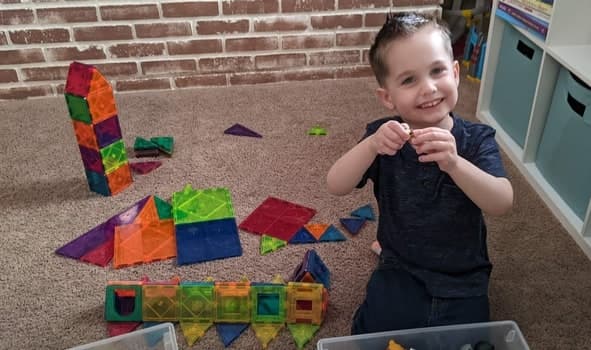
Brands like PicassoTiles and Cossy entered the market offering cross-brand compatibility. They demonstrated that high-impact ABS plastic and certified non-toxic materials were not exclusive to legacy brands. This democratization of magnetic play transformed a niche luxury category into a fiercely competitive global market, forcing manufacturers to innovate with unique colorways, structural add-ons, and educational integration.
Supporting Context & Metrics: Why Are Magna-Tiles So Expensive?
When consumers invest in a set of official Magna-Tiles, they are paying for a specific intersection of material science, brand legacy, and regulatory compliance. But how much of that cost is genuinely tied to superior production value, and how much is simply the cost of a household name?
Material Composition and Safety Standards
At their core, both premium brands and reputable alternatives utilize ABS (Acrylonitrile Butadiene Styrene) plastic. This thermoplastic polymer is celebrated for its high impact resistance, toughness, and safety profile. To meet rigorous international and domestic safety standards—such as those enforced by the Consumer Product Safety Commission (CPSC) and evaluated by organizations like the Good Housekeeping Institute—all competitive magnetic tile brands must ensure that:
- Magnets are securely locked within the plastic casing to prevent dangerous ingestion hazards.
- The plastic is free from toxic phthalates, lead, and other harmful chemical plasticizers.
- Edges are rounded and ultrasonically welded to withstand high-velocity drops and toddler stress-testing.
The Structural Integrity Debate
Independent destructive testing reveals nuanced differences between legacy tiles and their off-brand counterparts. In stress tests where tiles are pried or dropped repeatedly, official Magna-Tiles often present as marginally more rigid, boasting a dense internal cross-bracing structure that resists flex.
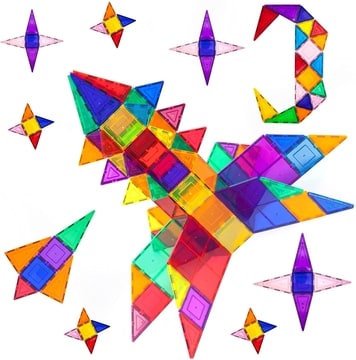
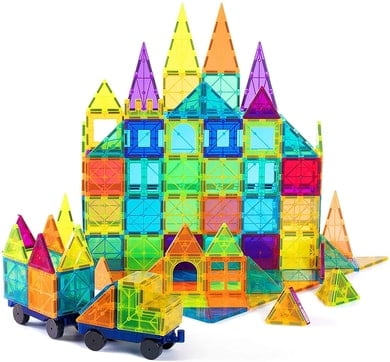
However, many generic and off-brand alternatives match this durability closely while introducing alternative benefits. For instance, brands like Cossy focus on high-transparency plastic that maximizes light refraction, creating glowing, stained-glass effects when hit by sunlight. Other brands, such as Magblock, integrate functional architectural elements like archways, fences, and working doors directly into standard starter sets—features that require purchasing specialized, expensive expansion packs in the official ecosystem.
Pricing Policies and the Myth of the Sale
A major friction point for consumers is the scarcity of discounts. Official Magna-Tiles are subject to tightly controlled pricing structures. Retailers carrying the authentic product must adhere strictly to manufacturer pricing guidelines, rendering deep promotional discounts virtually non-existent. For families looking to scale their collections to hundreds of pieces, paying retail price repeatedly becomes fiscally prohibitive, driving the demand for high-performing alternatives.
Comprehensive Evaluation of the Best Magna-Tile Alternatives
For parents committed to fostering STEM skills through open-ended play, several standout brands offer the ideal balance of safety, compatibility, and affordability.
1. PicassoTiles: The Ultimate Value Champion
PicassoTiles consistently ranks at the top of independent reviews for the best Magna-Tile alternative. Engineered to match the exact dimensions of legacy tiles, PicassoTiles offer seamless cross-brand compatibility.
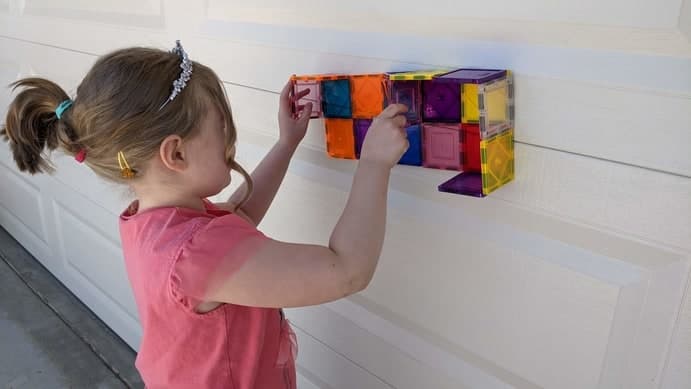
- The Experience: Side-by-side testing reveals that PicassoTiles hold up exceptionally well to daily wear and tear. Their sets integrate effortlessly with existing collections, allowing children to merge disparate brands into massive architectural neighborhoods.
- Why Parents Love It: Unbeatable affordability coupled with expansive starter sets and creative add-ons (such as race car tracks and marble runs) makes PicassoTiles the most logical choice for families looking to scale up quickly.
2. Cossy Kids Magnetic Tiles: Vibrancy and Light Transmittance
Cossy has carved out a distinct niche by prioritizing visual aesthetics alongside structural integrity.
- The Experience: Cossy tiles are celebrated for their exceptionally vibrant color palette and high transparency. When children build towering castles or geometric sculptures near a window, the light filtering through the tiles illuminates the creations with striking brilliance.
- Why Parents Love It: They offer clearly marked age-appropriateness guidelines, heavy-duty ultrasonic welding that survives years of heavy toy-box rotation, and a brilliant color spectrum that engages younger toddlers.
3. Shapemags Magnetic Tiles: Literacy Meets Spatial Engineering
Shapemags introduces an innovative educational twist to traditional construction by merging tactile spatial play with early literacy.
- The Experience: Beyond standard geometric shapes, Shapemags offers specialized lines like "Stile Mags"—removable magnetic slips featuring letters, numbers, and descriptive imagery that snap securely onto the face of the tiles.
- Why Parents Love It: This dual-purpose design transforms standard playtime into an active phonics and spelling lesson, providing exceptional value for early childhood educators and parents of preschoolers.
4. Magblock Magnetic Blocks: Architectural Versatility Out of the Box
One common frustration with basic magnetic tile sets is the lack of specialized building components like doors and windows. Magblock addresses this directly.
- The Experience: Magblock sets routinely incorporate functional architectural pieces—including archways, fences, windows, and doors—directly into their standard kits rather than locking them behind costly add-on packages.
- Why Parents Love It: Children can immediately construct realistic houses, castles, and enclosed structures without requiring supplementary purchases.
Official Statements and Industry Perspectives
Educational experts and product testing organizations emphasize that the true value of magnetic tiles lies not in the embossed brand logo, but in the cognitive benefits of the play experience itself.
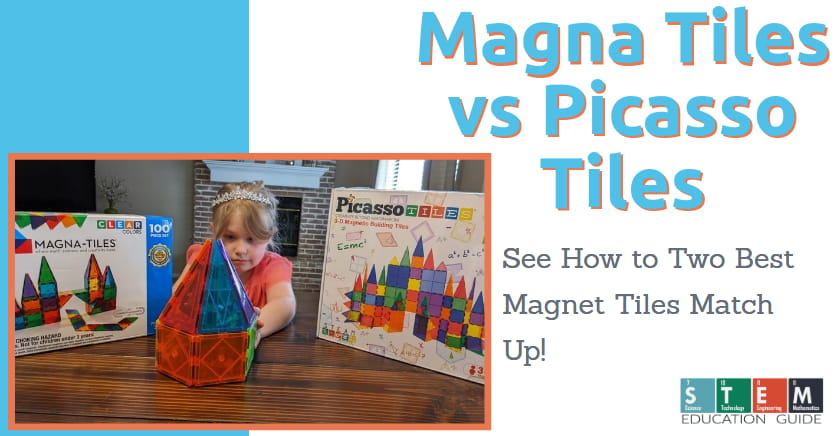
According to consumer product analysts and early childhood development specialists:
"While legacy brands like Magna-Tiles set the historical standard for durability and magnetic strength, the maturation of manufacturing standards means families no longer have to pay a steep brand premium to access safe, high-quality, open-ended STEM toys."
Independent testing labs regularly note that off-brand competitors have successfully bridged the safety gap. Certified non-toxic plastics, secure internal rivet structures, and drop-tested encasements are now standard across all reputable market players, shifting the consumer decision matrix strictly toward price, accessory variety, and aesthetic preference.
Furthermore, educational experts encourage interactive exploration between children and parents. Simple, open-ended prompts—such as asking a child to compare the weight of two different tile shapes or observing how light refracts through translucent colors—turn basic playtime into an active physics and geometry lesson.
Future Outlook: The Trajectory of Open-Ended STEM Play
As the educational toy market continues to evolve, the dominance of single-brand ecosystems is steadily declining in favor of interoperable, modular play systems.
Cross-Brand Compatibility as the New Standard
Future market trends indicate that consumers increasingly reject proprietary systems that lock them into a single ecosystem. Toy manufacturers that design their products to be universally compatible with existing market standards—such as standard 3-inch grid magnetic squares—will capture an increasingly large share of the market.
Technological Integration and Smart Toys
Looking ahead, the next frontier for magnetic construction toys involves smart integration. We are already seeing the early stages of magnetic tiles embedded with low-voltage LED lighting circuits, conductive pathways for basic circuitry experiments, and augmented reality (AR) app integrations that bring physical child-built structures to life on digital screens.
Final Takeaway for Parents
Investing in magnetic tiles is one of the single most impactful decisions a parent can make for a child’s spatial awareness, fine motor skills, and creative confidence. While official Magna-Tiles remain an undisputed titan of the industry, budget-conscious consumers are empowered with exceptional, safety-certified alternatives. By choosing compatible brands like PicassoTiles, Cossy, Shapemags, or Magblock, families can build sprawling, imaginative worlds while keeping their household budgets entirely intact.

