
Executive Overview
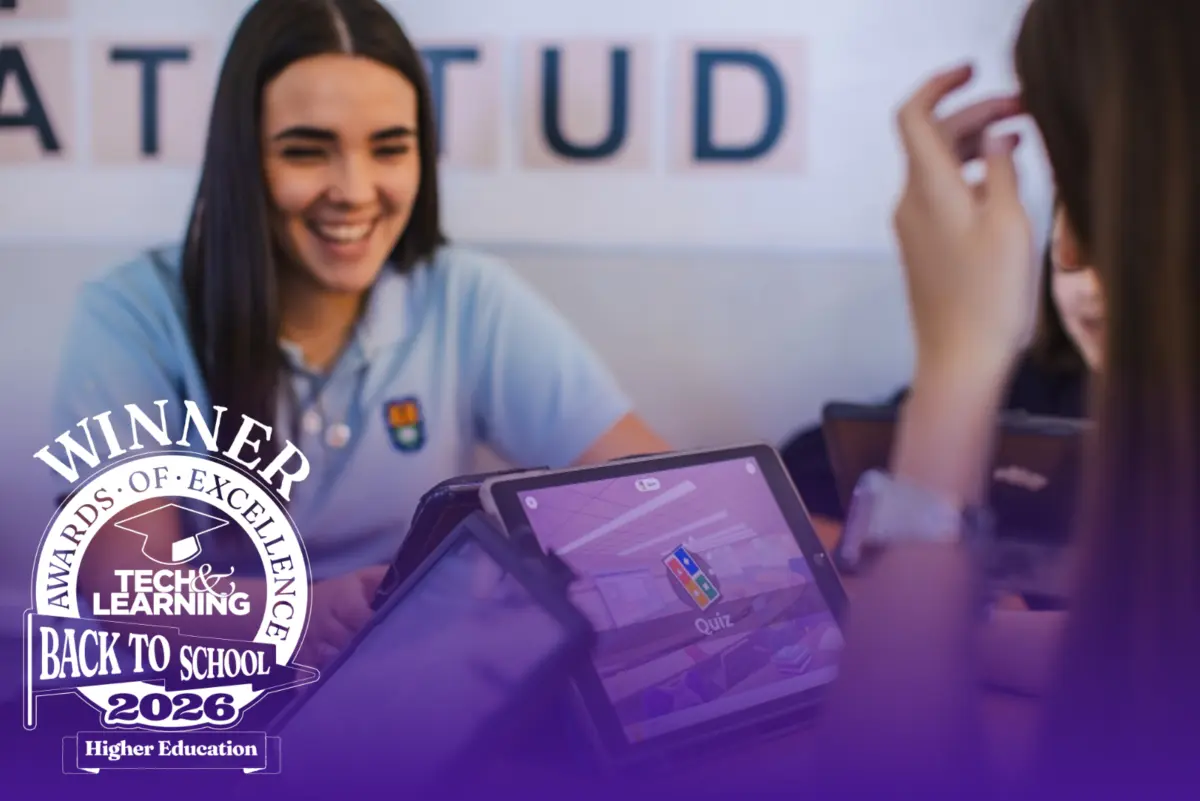
As campuses worldwide welcome a new academic year, the global educational technology landscape continues to undergo a profound transformation. At the forefront of this evolution is the imperative to bridge the gap between passive instruction and active, data-driven student engagement. It is within this dynamic environment that Tech & Learning has announced the winners of its prestigious Awards of Excellence: Best for Back to School 2026. Among the industry leaders recognized, Kahoot! emerged as a definitive victor in the Higher Education category, cementing its status as an indispensable tool for modern academic institutions.
This latest accolade honors products, platforms, and solutions that demonstrate exceptional versatility, measurable value, breakthrough innovation, and a proven capacity to address the complex, real-world challenges facing today’s educators and learners. With a user base surpassing 10 million educators and millions of students globally, Kahoot! has transcended its origins as a gamified quiz platform to become a comprehensive pedagogical ecosystem.
The recognition specifically highlights Kahoot! EDU, a robust institutional solution designed to scale evidence-backed teaching, formative assessment, and active review across entire colleges, universities, and school districts. By integrating cutting-edge artificial intelligence, streamlining instructor workflows, and mitigating test anxiety, Kahoot! EDU is not merely participating in the edtech revolution—it is actively shaping its trajectory. This deep-dive report explores the mechanics of this victory, the technological innovations driving Kahoot! EDU, the metrics validating its impact, and what this milestone signals for the future of higher education.
Detailed Chronology: The Road to the 2026 Back to School Awards
The journey toward the Tech & Learning Awards of Excellence: Back to School 2026 was marked by rigorous evaluation, intense competition, and a shifting paradigm in how academic institutions adopt technology. Understanding the significance of this win requires examining the timeline of edtech maturation leading into the 2026 academic year.
Phase 1: The Post-Pandemic Pivot to Hybrid and Active Learning (2022–2024)
Following the rapid, emergency digitization of classrooms in the early 2020s, higher education faced a persistent challenge: student disengagement in hybrid and large lecture environments. Universities realized that traditional lecture formats, even when delivered via sophisticated video conferencing or blended learning management systems (LMS), failed to capture the attention of digital-native students. During this period, Kahoot! expanded its institutional offerings, transitioning from individual teacher accounts to campus-wide site licenses under the Kahoot! EDU banner. Researchers and institutional leaders began publishing peer-reviewed studies indicating that regular formative assessment via game-based platforms significantly closed learning gaps.
Phase 2: The Integration of Generative AI into Pedagogy (2024–2025)
As generative artificial intelligence matured, the primary bottleneck in educational technology shifted from access to content creation. Educators reported severe administrative burnout, struggling to find the time to convert dense academic syllabi, lengthy PDFs, and specialized lecture slides into interactive formative assessments. In response, Kahoot! rolled out its suite of AI-enhanced tools, most notably the Kahoot! Assistant. This technological leap allowed educators to bypass manual quiz generation, transforming raw course materials into dynamic learning sessions in seconds. Crucially, Kahoot! extended these AI capabilities directly to students, empowering them to generate personalized flashcards, practice tests, and study guides from their own class materials.
Phase 3: The Evaluation and Judgment Process (Summer 2026)
In the months leading up to the 2026 academic year, the Tech & Learning editorial board assembled a distinguished panel of veteran education technology experts, administrators, and instructional designers. This panel was tasked with vetting hundreds of submissions across K-12 and higher education sectors.
The judging criteria were exceptionally stringent. Products were evaluated based on:
- Ease of Use: How intuitively educators and students could onboard and integrate the platform into daily workflows.
- Overall Value: The return on investment for cash-strapped educational institutions.
- Uniqueness in the Market: How distinct the platform’s features were compared to legacy LMS tools.
- Proven Ability to Streamline Workflows & Support Achievement: Empirical evidence demonstrating that the tool reduced administrative friction while measurably lifting student performance.
Phase 4: The Announcement and Industry Validation (September 2026)
Announced at the official launch of the fall semester, the 2026 awards cemented Kahoot! EDU’s dominance in the higher education sector. The recognition served as validation for years of research-backed development, proving that scalable, AI-driven, interactive learning tools are no longer optional luxuries for universities—they are foundational infrastructure for student success.
Supporting Context & Metrics: The Science of Student Success
To understand why the Tech & Learning judges selected Kahoot! EDU, one must examine the hard data and academic research underpinning the platform. Educational technology often suffers from a "hype cycle," where flashy interfaces mask a lack of pedagogical grounding. Kahoot!, however, has continuously invested in empirical research to validate its methodology.
The Scale of Adoption
The sheer ubiquity of the platform speaks volumes about its utility. Today, 97% of the world’s top 500 universities (as ranked by leading global educational indices) utilize Kahoot! to power learning and engagement. Across the globe, over 10 million educators rely on the platform to transform passive lecture halls into interactive learning environments. This widespread adoption is facilitated by Kahoot! EDU site licenses, which allow institutions to deploy the software at scale, ensuring seamless interoperability across diverse departments, from STEM faculties to the humanities.
Mitigating Test Anxiety and Elevating Performance
Higher education is currently experiencing a mental health crisis, with academic stress and test anxiety reaching unprecedented highs among undergraduates. Traditional high-stakes testing often exacerbates this anxiety, leading to cognitive freeze and depressed academic performance.
Independent meta-research and internal studies conducted by Kahoot! have revealed a striking correlation: regular, low-stakes formative assessment and review using the platform can lessen students’ test anxiety significantly. By reframing assessment as an interactive, game-based learning experience, the platform lowers the affective filter of students.
Furthermore, empirical data highlights a dramatic academic dividend: students who consistently review course material using Kahoot! can improve their performance on typical course examinations by a full letter grade. This is achieved through the psychological principles of active recall and spaced repetition—cognitive science methodologies that are baked directly into the platform’s design.
Administrative Efficiency in the AI Era
Time is one of an educator’s most precious and scarce commodities. Higher education faculty are perpetually balancing rigorous research agendas, publishing requirements, grant writing, and undergraduate teaching. Manual quiz and test creation represents a significant administrative drag.
By leveraging the AI-enabled Kahoot! Assistant, faculty members reclaim hours of instructional design time. A professor can upload a 50-page PDF research paper, a slide deck, or a set of handwritten lecture notes, and the AI instantly generates a pedagogically sound, multi-format interactive session. This seamless workflow reduction ensures that instructors can focus on what matters most: direct mentorship and high-value interactions with their students.
Official Statements and Expert Perspectives
The recognition from Tech & Learning has drawn enthusiastic commentary from educational technology experts, institutional leaders, and the judges themselves, highlighting the paradigm shift represented by modern engagement tools.
The Voice of the Judges
The panel of Tech & Learning experts offered glowing assessments of Kahoot! EDU’s updated architecture, particularly praising its pivot toward student-facing AI utility. One judge encapsulated the sentiment of the entire panel with a powerful endorsement:
"This new, reinvented Kahoot! EDU platform is a game-changer now that it has added the power of AI! Now, the same power that teachers have had for years with Kahoot! creativity is now also in the hands of students to help them prepare for national placement tests and even next week’s test with powerful AI tutoring tools!"
This perspective highlights a critical evolution in educational software: the democratization of creation tools. While software has traditionally served either the instructor or the student, Kahoot! EDU successfully bridges the divide, acting as both an instructional authoring suite and a personalized AI tutor.
Institutional Impact and Leadership Vision
Speaking on the award win, representatives from Kahoot! emphasized the company’s unwavering commitment to research-backed educational design. The integration of AI tools was not pursued as a superficial nod to modern technology trends, but as a deeply calculated move to enhance cognitive outcomes.
"As a new academic year gets underway, we are thrilled to be recognized by Tech & Learning," company spokespeople noted. "With more than 10 million educators and millions of students relying on our ecosystem, this award reflects our deep commitment to developing outstanding, research-backed solutions that elevate the learning experience and drive undeniable academic outcomes. Kahoot! EDU was built to solve real-world institutional challenges—from student disengagement in massive lecture halls to faculty burnout—and this award validates that mission."
Future Outlook: The Next Frontier of Higher Education Technology
As we look beyond the 2026 academic year, the recognition of Kahoot! EDU points toward several broader trends that will define the future of higher education technology.
1. The Hyper-Personalization of Student Study Habits
Historically, institutional edtech tools focused almost exclusively on the instructor-to-student pipeline (LMS platforms, lecture capture systems, and grading software). The future, however, belongs to student-centric generative tools. As demonstrated by Kahoot! EDU’s student-facing AI study tools, learners are increasingly expecting personalized, on-demand academic support. In the coming years, we can anticipate further convergence between formal classroom instruction and autonomous, AI-driven self-study regimens, where platforms dynamically adjust difficulty levels based on individual student mastery data.
2. Data-Driven Retention and Institutional Analytics
Retention remains one of the most critical metrics for modern universities and colleges. Institutions are under intense pressure to identify at-risk students before they fall irremediably behind in their coursework. Platforms like Kahoot! EDU, which generate vast pools of formative assessment data, are uniquely positioned to integrate with enterprise-grade learning analytics systems. By feeding real-time engagement and comprehension metrics into institutional dashboards, universities can move from reactive student retention strategies to proactive, predictive academic interventions.
3. Ethical and Accessible AI Integration
As artificial intelligence becomes ubiquitous in higher education, institutions are grappling with questions of academic integrity, data privacy, and equity. The success of platforms like Kahoot! EDU signals that the future of edtech will belong to companies that prioritize secure, transparent, and pedagogically sound AI integration. By keeping the focus on active learning, collaborative problem-solving, and reduced test anxiety, Kahoot! has established a benchmark for how AI can enhance—rather than replace—the human elements of teaching and learning.
Conclusion
The selection of Kahoot! EDU as a winner in the Tech & Learning Awards of Excellence: Back to School 2026 is more than just a trophy for a software company; it is an endorsement of a pedagogical philosophy. By prioritizing active engagement, administrative efficiency, and student-led AI tutoring, Kahoot! has proven that educational technology can be both deeply enjoyable and academically rigorous.
As higher education continues to navigate the complexities of the modern digital era, platforms that successfully harmonize educator workflows with student empowerment will continue to lead the charge. For the 97% of the world’s top 500 universities already utilizing the platform—and for the countless institutions looking to revitalize their classrooms this academic year—Kahoot! EDU stands as a beacon of innovation, efficacy, and enduring student success.

