In the landscape of modern early childhood education, the transition from passive learning to interactive, multi-sensory engagement has emerged as a paramount pedagogical priority. Educators and curriculum developers increasingly recognize that foundational reading skills—specifically phonological awareness—must be cultivated early, intentionally, and creatively. A child’s ability to hear, identify, and manipulate the spoken parts of sentences and words serves as the bedrock for all future reading comprehension and spelling proficiency.
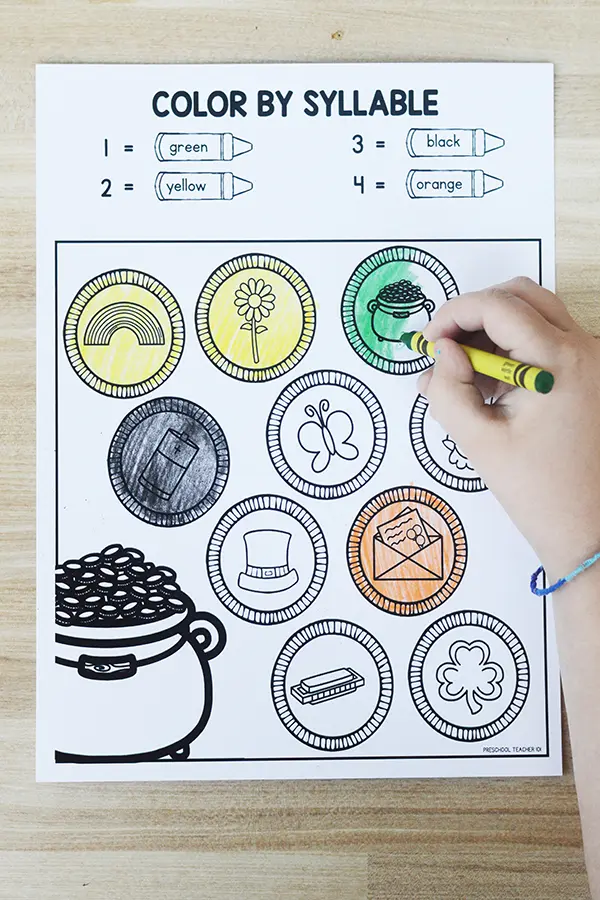
Enter the intersection of seasonal celebration and foundational literacy: thematic, no-prep learning tools designed to capture young imaginations while delivering rigorous cognitive benefits. Among the latest innovations gaining traction in preschool and kindergarten classrooms is the St. Patrick’s Day Color by Syllable activity pack, alongside its comprehensive yearlong counterpart. Developed by early childhood specialists, these resources offer educators an effective mechanism to weave phonological awareness into literacy centers, take-home practice modules, and holiday-themed curriculum blocks without adding to an already overburdened planning schedule.
This report provides an in-depth examination of the mechanics of phonological awareness, the pedagogical value of color-by-code literacy activities, the structure of these newly released instructional printables, and the broader implications of integrating play-based learning into early childhood development.
Detailed Chronology: The Evolution of Play-Based Phonological Tools
To understand the significance of modern early literacy worksheets like the Color by Syllable series, it is helpful to trace how instructional strategies for pre-readers have evolved over the past several decades.
The Shift from Rote Memorization to Phonological Foundations
Late 20th Century: Early childhood classrooms heavily emphasized rote letter-sound matching (phonics) while often overlooking the prerequisite oral-motor skills required to process individual speech sounds. Syllable segmentation was frequently treated as an afterthought rather than a core developmental milestone.
Early 2000s: Educational researchers began publishing conclusive data proving that phonological awareness—the ability to recognize and manipulate spoken units of language such as words, syllables, and onset-rimes—is one of the strongest single predictors of later reading success.
The 2010s Rise of "No-Prep" Centers: As classroom sizes fluctuated and teacher workloads intensified, the demand for high-yield, low-preparation instructional materials surged. Educators sought resources that could maintain student engagement during independent or small-group literacy centers.
Present Day (2024–2025): The integration of thematic, visual, and gamified learning tools has become mainstream. Educators now leverage cultural touchstones and holidays—ranging from winter milestones to St. Patrick’s Day—to contextualize foundational skill-building, keeping young learners motivated and focused.
The introduction of the St. Patrick’s Day Color by Syllable set represents a direct response to this ongoing evolution: providing teachers with immediate, classroom-ready materials that bridge the gap between cognitive phonics instruction and creative artistic expression.
Supporting Context & Metrics: The Science of Syllable Segmentation
Phonological awareness is not a single skill, but rather a continuum of increasing ability. Understanding where syllable counting fits on this continuum is essential for evaluating the effectiveness of literacy tools designed for Pre-K and Kindergarten students.
The Developmental Continuum of Pre-Reading Skills
Listening and Rhyming: Recognizing patterns in songs, rhymes, and spoken language.
Sentence and Word Awareness: Understanding that spoken sentences are made up of individual words.
Syllable Blending and Segmentation (The Core Focus): The ability to clap, tap, or count the beats within a spoken word (e.g., sham-rock equals two syllables).
Onset-Rime Manipulation: Distinguishing the initial sound (onset) from the rest of the word (rime), such as /sh/ and /amrock/.
Phoneme Manipulation: Isolating and blending individual sounds (phonemes).
Why Syllables Matter for Young Learners
Research demonstrates that syllables are the most natural, accessible phonological units for young children to perceive. Because syllables naturally possess a vocal peak (the vowel sound), children can easily feel the rhythm of language through physical movements like clapping, tapping, or marching.
When children engage with a Color by Syllable worksheet, they are required to execute a multi-step cognitive process:
Identify the Target Vocabulary: Look at a pictorial representation of a word (e.g., leprechaun, gold, rainbow).
Segment the Word: Orally break the word down into its component parts while counting the beats.
Map to Color Code: Cross-reference the syllable count with the designated color key.
Fine Motor Application: Carefully color the corresponding section of the worksheet.
This holistic approach engages auditory processing, visual discrimination, and fine motor control simultaneously—maximizing neural connectivity and long-term retention.
Official Statements and Pedagogical Insights
Early childhood educators and curriculum creators emphasize that the success of any worksheet lies not just in its visual appeal, but in how it is implemented within a balanced literacy framework.
Bridging Independent Work and Guided Instruction
According to instructional designers behind the curriculum, these resources are engineered to support differentiated learning environments. Because classrooms contain children at various developmental stages, a one-size-fits-all approach rarely succeeds.
"Color-by-syllable activities are excellent no-prep tools that help break down words into their individual syllables, allowing children to hear the sounds within a word and master segmentation organically. Whether deployed in literacy centers, assigned for take-home practice, or utilized as a meaningful task for fast finishers, these printables offer structured flexibility for busy educators."
Furthermore, experts stress the importance of front-loading vocabulary. Before expecting a four- or five-year-old to independently count the syllables in a specialized holiday word like pot of gold or horseshoe, educators must explicitly introduce and practice the vocabulary terms. Once students are familiar with the names of the objects, cognitive bandwidth is freed up entirely for the phonological task of syllable counting.
Product Breakdown: What the St. Patrick’s Day & Yearlong Sets Include
The instructional value of these printables is rooted in their comprehensive design and adaptability.
The St. Patrick’s Day Free Printable Pack
Focus Areas: Specifically tailored for Pre-K and Kindergarten learners, emphasizing foundational phonological awareness.
Activity Design: Combines seasonal imagery with syllable counting (ranging typically from 1 to 3 syllables for early learners).
Classroom Applications:
Literacy Centers: Ideal for small-group rotations where teachers can monitor student articulation and clapping techniques.
Fast Finishers: Keeps advanced or quick-working students engaged in meaningful academic tasks while peers finish assignments.
Take-Home Practice: Strengthens the home-school connection by giving parents an easy, gamified way to support reading readiness.
The Full-Year Color by Syllable Set (33-Page Comprehensive Pack)
For educators seeking consistent, year-round reinforcement, the expanded 33-page packet scales up the learning progression to accommodate growing skill sets—introducing numbers of syllables from 1 up to 5 across various seasonal and holiday themes.
Seasonal & Holiday Coverage: Includes dedicated worksheets for winter milestones, spring themes, St. Patrick’s Day, back-to-school, autumn, and major calendar holidays.
Cognitive Scaling: Allows children to transition from basic single-syllable recognition to complex multi-syllable word dissection as they progress through the academic year.
Accessibility: Available through dedicated teacher networks and educational marketplaces, ensuring seamless integration into existing digital or physical lesson planning binders.
Future Outlook: The Direction of Early Literacy and Gamified Learning
As educational technology and print resources continue to intersect, the future of early literacy points toward hyper-engaging, multi-disciplinary approaches. The demand for materials that respect a teacher’s limited time while offering maximum developmental impact has never been higher.
Key Trends Shaping Early Childhood Classrooms:
Integration of Fine Motor and Cognitive Skills: Activities that combine literacy tasks with coloring, tracing, or cutting will continue to dominate preschool and kindergarten curricula because they build crucial hand muscles alongside cognitive frameworks.
Thematic Relevance: Leveraging cultural and seasonal events (such as St. Patrick’s Day, autumn harvests, and winter celebrations) creates natural hooks that heighten student motivation and emotional engagement.
Data-Driven Differentiation: Educators increasingly rely on modular worksheets that can be easily scaled up or down, ensuring that struggling learners receive targeted remediation while advanced students encounter appropriate challenges.
By blending the playful spirit of holiday celebrations with rigorous, science-backed phonological awareness training, tools like the Color by Syllable series demonstrate that foundational reading instruction can be both deeply effective and genuinely fun. As schools nationwide continue to prioritize evidence-based literacy practices, these no-prep resources will undoubtedly remain a staple in the modern early childhood educator’s toolkit.