As the mercury drops and the festive season approaches, educators, parents, and child development specialists face a predictable yet challenging behavioral shift in children and adolescents. The winter months—characterized by dramatic shifts in daily routines, prolonged periods of indoor confinement, reduced exposure to natural sunlight, and the palpable excitement or anxiety surrounding holiday breaks—can severely disrupt a child’s capacity for self-regulation.
Self-regulation is the neurological and behavioral cornerstone that allows individuals to effectively manage their thoughts, modulate their emotional responses, and govern their actions. It is the critical executive function that enables a child to navigate everyday frustrations, sustain cognitive focus on complex tasks, and foster positive, empathetic social connections with peers. However, when external structures fracture due to winter disruptions, children and young adults often lose their internal equilibrium.
To combat seasonal emotional dysregulation, child psychologists and educational experts advocate for proactive, targeted interventions. Rather than viewing winter behavioral challenges as inevitable hurdles, adults can leverage the distinct themes of the season to teach and reinforce vital emotional control skills. This comprehensive report outlines the physiological science behind winter dysregulation and presents an authoritative framework of ten engaging, evidence-based activities designed to build lasting self-regulation capacities in children and teens.
Detailed Chronology: The Winter Behavioral Cycle
Understanding how winter impacts child behavior requires a close examination of the seasonal timeline. The psychological trajectory of children through the colder months typically follows a distinct chronological pattern, each phase presenting unique self-regulation vulnerabilities.
Phase 1: The Pre-Break Anticipation (Late November to Mid-December)
As holidays approach, classroom routines are frequently interrupted by special events, assemblies, and shifting schedules. This unpredictability creates a state of heightened arousal in children’s nervous systems. Anticipation fuels hyper-focus on impending festivities, making sustained academic attention nearly impossible. During this window, impulsive behaviors surge, and tolerance for frustration plummets.
Phase 2: The Extended Disruption (The Winter Break)
During the holiday hiatus, children transition from highly structured school environments to unstructured home settings. While rest is essential, the abrupt loss of predictable routines often leads to dysregulation. Sleep schedules shift, screen time frequently increases, and physical activity may decline. Upon returning to school or structured environments, children frequently experience a difficult readjustment period marked by lethargy, anxiety, and behavioral reactivity.
Phase 3: The Deep Winter Indoor Stretch (January and February)
Once the holidays conclude, children face the most physiologically demanding portion of the year: weeks of cold weather, limited outdoor play, and minimal natural sunlight. This period is heavily associated with seasonal lethargy and cabin fever. The lack of physical outlets for pent-up energy, combined with vitamin D deficiencies from reduced sun exposure, creates a physiological baseline prone to irritability, low mood, and profound attention deficits. Recognizing this cyclical timeline allows educators and caregivers to deploy targeted self-regulation strategies precisely when children are most vulnerable.
Supporting Context & Metrics: The Science of Self-Regulation
To appreciate why specific winter activities work, one must examine the neurobiological mechanisms underlying self-regulation and emotional control.
The Neurological Response to Stress and Routines
Self-regulation is governed primarily by the prefrontal cortex—the brain’s command center for impulse control, planning, and emotional modulation. However, when children face stress, unpredictability, or sensory deprivation, the amygdala (the brain’s emotional threat detector) hijacks cognitive processing, shifting the body into a "fight, flight, or freeze" response.
During winter, disrupted routines and cold-induced isolation chronically activate this stress response. Research in developmental psychology indicates that introducing structured, calming sensory and mindfulness practices helps suppress amygdala reactivity, allowing the prefrontal cortex to regain control.
Key Metrics and Research Findings
The Power of Nature: Studies published in environmental psychology journals consistently demonstrate that even brief exposures to natural environments—such as a 20-minute outdoor winter walk—reduce salivary cortisol (stress hormone) levels by up to 15% and measurably improve sustained attention spans in school-aged children.
Mindfulness and the Nervous System: Clinical trials evaluating mindful breathing and sensory grounding exercises reveal a direct activation of the parasympathetic nervous system. This activation decreases heart rate variability, lowers blood pressure, and promotes deep cellular rest, neutralizing the effects of seasonal anxiety.
The Cognitive Benefits of Tactile Play: Sensory integration research highlights that tactile activities—such as working with winter-themed sensory bins or engaging in fine-motor crafts—stimulate neural pathways that enhance emotional grounding and cognitive stamina.
Official Statements and Expert Perspectives
Child development experts emphasize that self-regulation cannot be taught purely through didactic instruction; it must be experienced, practiced, and integrated into daily routines through play and guided reflection.
Dr. Elena Vance, a pediatric behavioral psychologist specializing in seasonal affective adaptations, notes:
"We often expect children to transition through the winter holidays and the gloomy post-holiday months with the same emotional baseline as a sunny spring afternoon. Neurobiologically, that is impossible. Cold weather inherently restricts physical movement, which is a child’s primary mechanism for emotional discharge. When we fail to provide structured, tactile, and sensory alternatives indoors, we inadvertently set the stage for behavioral crises."
Furthermore, educational specialists emphasize that self-regulation strategies must be universally accessible and deeply engaging.
Marcus Holloway, a veteran middle school educator and curriculum developer, explains:
"Self-regulation tools shouldn’t feel like punishment or clinical therapy. When we integrate mindfulness into things children naturally love—like sipping warm hot cocoa, creating winter art, or playing freeze dance—we remove the resistance. Children learn that managing their internal state is a natural, empowering part of life, rather than an arbitrary rule imposed by adults."
Ten Engaging Winter Self-Regulation Activities for Kids and Teens
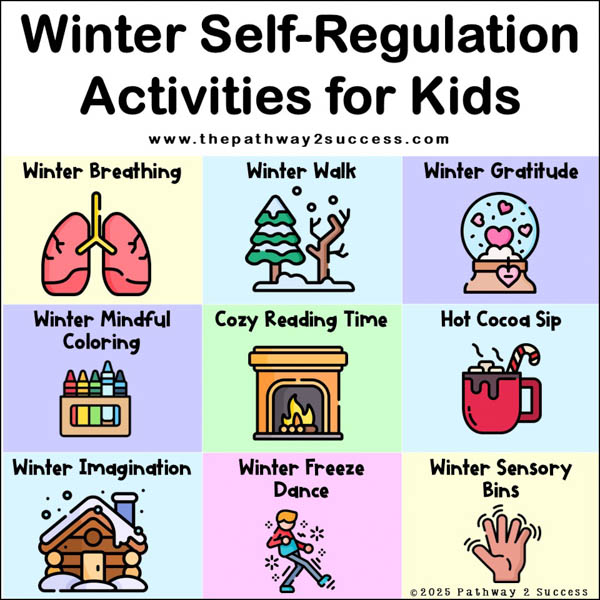
To bridge the gap between neurological theory and daily practice, caregivers and educators can implement the following ten evidence-based, winter-themed activities designed to foster emotional control, focus, and calm.
1. Winter Breathing Exercises
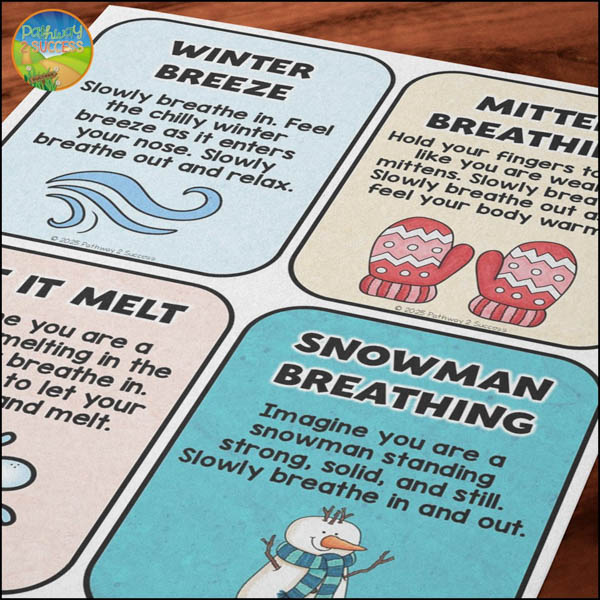
What it is: Deep, mindful breathing exercises anchored by imaginative winter themes (e.g., imagining blowing out a candle on a warm winter treat or melting a cold snowflake on one’s hand).
How to implement it: Explain mindful breathing as an internal "pause button." Instead of reacting impulsively to frustration, children take slow, deliberate inhales and exhales. Use visual prompt cards featuring winter motifs to guide pacing.
Why it works: Conscious breathwork directly stimulates the vagus nerve, engaging the parasympathetic nervous system to instantly lower heart rates and restore calm.
2. Outdoor Nature Walks
What it is: A sensory-focused exploration walk during colder months, designed to heighten awareness of the immediate environment.
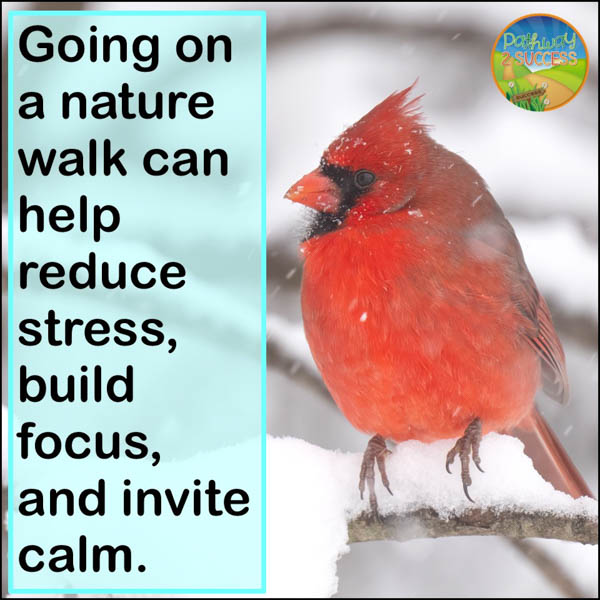
How to implement it: Establish clear behavioral expectations before bundling up. As children walk, prompt them to actively use their five senses—noticing the crisp chill on their skin, the sound of crunching frost underfoot, or the silhouette of bare tree branches against a winter sky. Follow up with reflective writing or group discussions.
Why it works: Nature immersion reduces cognitive fatigue, boosts mood via fresh air and sunlight, and anchors children in the present moment through mindfulness.
3. Winter Gratitude Practices
What it is: Structured reflection focusing on the unique positive aspects of the winter season.
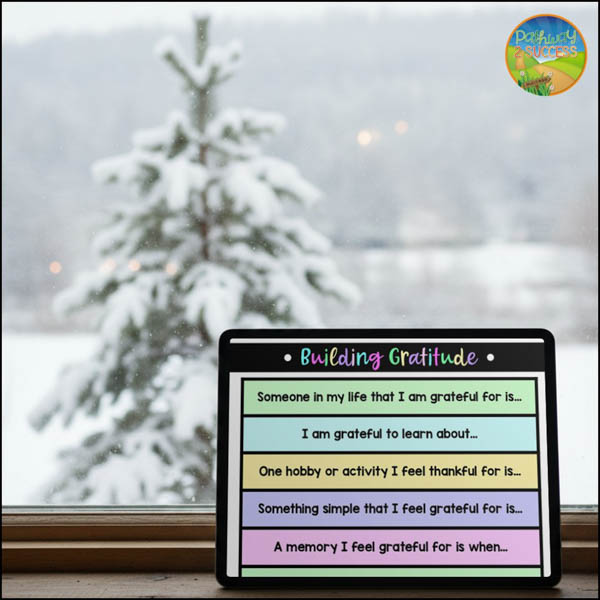
How to implement it: Create a collaborative list of winter comforts—such as warm sweaters, hot soup, sparkling snow, or extra family time. Encourage children to move beyond surface-level answers and write or draw specific moments of gratitude using structured sentence starters.
Why it works: Gratitude exercises actively rewire neural pathways, shifting cognitive bias away from stress and toward positive emotional resilience, better sleep, and lower anxiety.
4. Mindful Winter Coloring
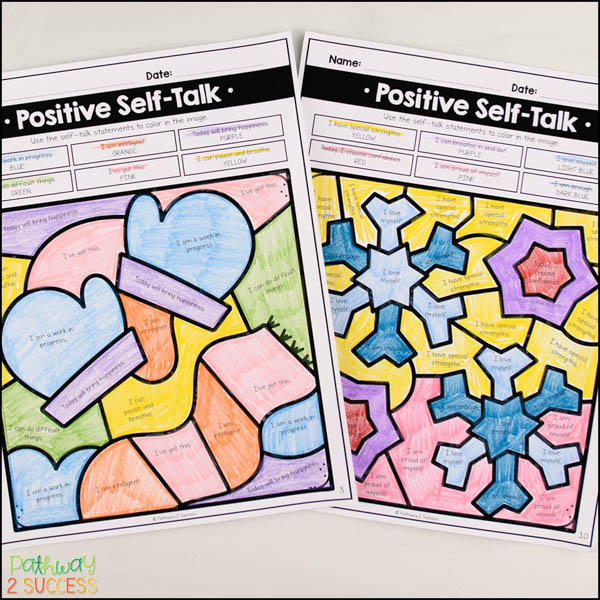
What it is: The practice of slow, deliberate coloring using winter-themed and positive self-talk pages.
How to implement it: Provide a variety of creative mediums (crayons, colored pencils, markers) alongside intricate winter designs. Instruct children that the goal is not artistic perfection, but rather rhythmic relaxation and stress relief.
Why it works: Coloring serves as an active meditation. It offers the rhythmic movement required by high-energy children while requiring enough cognitive focus to quiet racing thoughts.
5. Cozy Reading Time
What it is: Immersive reading sessions designed to foster stillness, empathy, and social connection.
How to implement it: Establish a comforting atmosphere by projecting a digital fireplace on a screen, dimming harsh overhead lights, and allowing children to choose independent books or participate in a shared read-aloud.
Why it works: Literary immersion lowers physiological stress markers, reduces muscle tension, and provides a restorative psychological escape from daily environmental pressures.
6. Winter Sensory Bins
What it is: Tactile exploration using large containers filled with safe, winter-inspired materials.
How to implement it: Fill bins with textured items such as artificial snow, cotton balls, polished blue glass beads, pinecones, and cinnamon sticks. Allow children unstructured time to scoop, sort, and explore.
Why it works: Tactile play satisfies sensory processing needs, grounding overstimulated nervous systems while fostering fine motor control and deep curiosity.
7. Mindful Hot Cocoa Sips
What it is: A multi-sensory mindful eating and drinking exercise.
How to implement it: Serve warm hot cocoa (or any comforting beverage). Guide children to first hold the warm mug to feel its heat, inhale the rich aroma, and then take exceptionally slow, deliberate sips, paying attention to taste and texture.
Why it works: Combining warmth with mindful consumption signals safety to the central nervous system, naturally relaxing muscles and grounding wandering minds.
8. Winter Scene Visualization
What it is: Guided imagery exercises where children mentally construct and explore a peaceful winter landscape.
How to implement it: Instruct children to close their eyes and walk them through a sensory script—asking them to visualize a quiet snowy forest, a frozen lake under the stars, or a cozy cabin by a hearth. Prompt them to notice sights, sounds, and temperatures within their imagination.
Why it works: Visualization harnesses the brain’s neuroplasticity, allowing children to intentionally induce a physiological state of calm regardless of their immediate external environment.
9. Hands-On Winter Crafts
What it is: Structured creative art projects involving cutting, gluing, and constructing winter objects.
How to implement it: Set out crafting supplies and guide children through multi-step projects (like making paper snowflakes or yarn mittens), balancing instructional guidance with creative freedom.
Why it works: Crafting demands sequential thinking, fine motor precision, and emotional tolerance when errors occur, turning artistic creation into an exercise in frustration tolerance.
10. Winter Music and Freeze Dance
What it is: Auditory relaxation combined with dynamic movement and impulse-control games.
How to implement it: Play gentle, instrumental winter melodies during independent work to create a serene atmosphere. Alternatively, play energetic music for a "Freeze Dance," where children must instantly halt their bodies whenever a designated winter vocabulary word is spoken.
Why it works: Music regulates mood and heart rate, while movement-based impulse games directly train the prefrontal cortex to override physical momentum upon command.
Future Outlook
As educational institutions and family dynamics continue to evolve in an increasingly fast-paced digital world, the intentional teaching of emotional self-regulation will only grow in importance. The challenges posed by seasonal shifts—such as winter isolation, routine disruptions, and indoor fatigue—are permanent fixtures of the human experience, but the tools used to manage them are becoming increasingly sophisticated.
Looking ahead, child development specialists predict a broader integration of trauma-informed and somatic self-regulation practices within standard school curricula and home parenting models. By shifting away from purely punitive responses to winter behavioral outbursts and moving toward proactive, sensory-rich interventions like those outlined in this report, adults can equip the next generation with invaluable lifelong competencies.
Ultimately, mastering self-regulation during the winter months does not mean eliminating the cold, the darkness, or the chaos of the holidays. Rather, it means teaching children how to find their own internal warmth, balance, and resilience amidst the changing seasons.