
EXECUTIVE OVERVIEW
In the landscape of early childhood education, foundational literacy remains the bedrock upon which all future academic achievement is built. As educational paradigms shift toward evidence-based frameworks such as the Science of Reading, early childhood educators and curriculum developers are placing a renewed, rigorous emphasis on phonological awareness. Among the most critical yet challenging milestones in this domain is syllable segmentation—the ability of young learners to hear, isolate, and count the individual parts of spoken words.
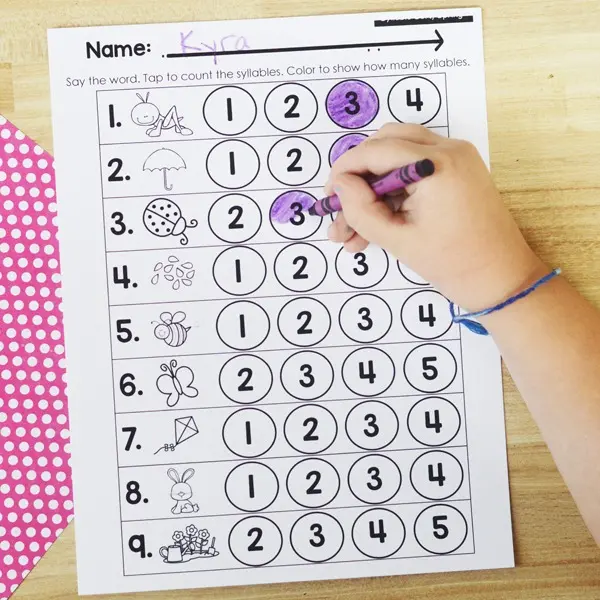
To bridge the gap between abstract phonological concepts and engaging classroom practice, early education specialists have rolled out a comprehensive new pedagogical resource: the Spring Theme Syllable Sort and its broader companion, the Four Seasons Syllable Sort. Designed specifically for preschool, pre-kindergarten, and kindergarten classrooms, these interactive, hands-on activities transform traditional literacy instruction into a dynamic, multisensory experience. By combining seasonal vocabulary, tactile engagement (such as clapping and tapping), and structured sorting mechanics, these resources offer educators an authoritative blueprint for fostering essential pre-reading skills. This report provides an in-depth examination of the mechanics, educational philosophy, structural components, and long-term implications of these innovative literacy tools.

1. Executive Overview: The Science of Reading and Phonological Foundations
Phonological awareness is widely recognized by cognitive scientists and literacy experts as a primary predictor of future reading and spelling success. Long before children decode written letters on a page, they must master the auditory landscape of spoken language. Syllable segmentation sits squarely at the center of this developmental progression.
The introduction of the Spring Syllable Sort arrives at a critical juncture for early childhood classrooms. Modern educational standards demand that instruction be not only rigorous and aligned with the Science of Reading, but also developmentally appropriate and engaging for young minds. Traditional worksheet-heavy approaches often fail to capture the attention of pre-K and kindergarten learners, leading to cognitive fatigue and disengagement.
By leveraging the vibrant, universally appealing themes of spring and the changing seasons, these new activities capitalize on children’s natural curiosity about the world around them. The core objective is simple yet profound: teach children to hear and isolate word parts without the premature distraction of written text, grounding their learning entirely in auditory and tactile processing.

2. Detailed Chronology: Development and Implementation of the Syllable Sort Framework
The evolution of the Spring and Four Seasons Syllable Sort tools represents a meticulous process of pedagogical design, classroom testing, and resource refinement.
Phase 1: Identifying the Instructional Gap
Early childhood educators have long struggled to find materials that bridge the gap between basic oral language games (like rhyming) and complex phonics. While many resources exist for letter-sound correspondence, fewer tools focus strictly on the foundational auditory processing required to segment multisyllabic words. Developers identified that young learners needed a bridge—an activity that treated words as physical objects that could be manipulated, clapped, tapped, and sorted.
Phase 2: Integrating Seasonal Themes and Vocabulary
To maximize student engagement, developers anchored the phonological exercises to thematic units. Spring—a season characterized by vibrant vocabulary such as "tulip," "butterfly," "umbrella," and "caterpillar"—provided a rich linguistic palette. The methodology established a strict sequence:

- Vocabulary Introduction: Teachers explicitly introduce and define the picture cards before independent practice to ensure students recognize the targeted items.
- Auditory Segmenting: Children use physical movements (clapping, tapping, or using manipulatives) to break the spoken word into its component syllables.
- Quantitative Sorting: Students categorize the picture cards onto designated mats based on the count of their syllables (one, two, three, or more).
- Independent Reinforcement: Learners complete an optional black-and-white response worksheet to solidify their understanding and provide educators with an assessment metric.
Phase 3: Expansion into the Four Seasons Framework
Building upon the success of the spring-specific module, curriculum designers expanded the concept into a comprehensive 42-page comprehensive pack titled the Four Seasons Syllable Sorts. This extension ensures that phonological awareness practice can be maintained seamlessly throughout the entire academic year, adapting vocabulary from autumn leaves and winter snow to summer sun and spring blooms.
3. Supporting Context & Metrics: Anatomy of the Syllable Sort Kits
To understand the efficacy of these tools, one must examine their structural components and the pedagogical metrics driving their design. The materials are meticulously organized to support diverse learning styles and classroom environments, including literacy centers, small-group guided instruction, and take-home practice kits.
Key Components of the Spring Syllable Sort:
- Syllable Counting Cards: Visual prompts designed to guide children through the physical act of counting word segments.
- Large Colorful Word Cards: High-contrast, engaging picture cards that represent spring vocabulary without relying on written orthography, keeping the focus strictly on phonological awareness.
- Response Worksheets: Printable black-and-white sheets that allow individual students to demonstrate mastery independently.
- Comprehensive Answer Keys: Designed for rapid teacher assessment or peer-review centers.
The 42-Pack Four Seasons Syllable Sort Architecture:
- Clip Cards: Tactile cards that require fine motor skills alongside cognitive processing, allowing children to place clothespins on the correct syllable number.
- Multi-Tiered Sorting Mats: Clear organizational templates for sorting one-syllable, two-syllable, and three-plus-syllable words.
- Cross-Curricular Vocabulary Integration: Seamlessly blends science themes (nature, weather, animal life cycles) with language arts instruction.
4. Official Statements and Educational Philosophy
Educational leaders and curriculum specialists emphasize that the shift toward multisensory phonological awareness tools is essential for modern classrooms.

"When we ask young children to decode written words before they have mastered hearing the individual parts of spoken language, we set them up for frustration," notes a leading early childhood literacy specialist. "Tools like the Spring Syllable Sort strip away the visual clutter of print and force children to tune their ears to the rhythm of language. Clapping, tapping, and sorting physical cards transform an abstract linguistic concept into a concrete, joyful experience."
Furthermore, alignment with the Science of Reading highlights the importance of explicit, systematic instruction in phonological processing. By providing educators with ready-to-print, highly structured frameworks, these resources reduce lesson-planning friction while maximizing instructional impact. Teachers are empowered to deliver high-yield literacy interventions that meet diverse learning needs within a single classroom.
5. Future Outlook: The Long-Term Impact on Early Literacy Centers
As schools nationwide continue to refine their reading curricula in alignment with cognitive science, the demand for targeted, play-based phonological awareness resources is projected to grow exponentially. The success of the Spring and Four Seasons Syllable Sort series points toward a broader trend in educational publishing: the creation of modular, adaptable, and multisensory printables that respect the developmental realities of early childhood.

Looking ahead, educators can expect further integration of seasonal literacy materials with digital tracking tools, home-school connection packs, and inclusive design elements tailored for English Language Learners (ELL) and students with speech and language exceptionalities. Because the core mechanics—segmenting, tapping, and sorting—rely on universal auditory processing pathways, their utility transcends traditional classroom walls, offering equitable access to foundational literacy skills.
In conclusion, the Spring Syllable Sort and its comprehensive seasonal counterparts represent more than mere seasonal novelties. They are sophisticated, research-backed instructional instruments that honor how young children learn best: through active engagement, multisensory exploration, and joyful connection to the world around them. By embedding essential literacy milestones into the vibrant context of nature and the changing seasons, educators are laying a robust, joyful foundation for a lifetime of reading success.

