
Executive Overview
In an era defined by an escalating youth mental health crisis, the imperative for student-led advocacy has never been more urgent. Across campuses nationwide, Gen Z activists are stepping into the breach, reshaping how academic institutions approach psychological well-being, community care, and structural health equity. At the vanguard of this national movement is the Active Minds Student Advisory Committee (SAC), a prestigious cohort of young adult leaders who serve as the definitive voice for student mental health on a national stage.
The Active Minds SAC is far more than an advisory body; it is a dynamic operational engine that powers the organization’s expansive network of campus chapters. Members of the SAC act as crucial liaisons, guiding national staff on a myriad of pivotal initiatives, including student engagement strategies, community-building frameworks, comprehensive program planning, chapter management, and the orchestration of the annual National Conference. By bridging the gap between grassroots student experiences and national advocacy campaigns, these young leaders ensure that systemic policies reflect the real, lived realities of today’s college students.
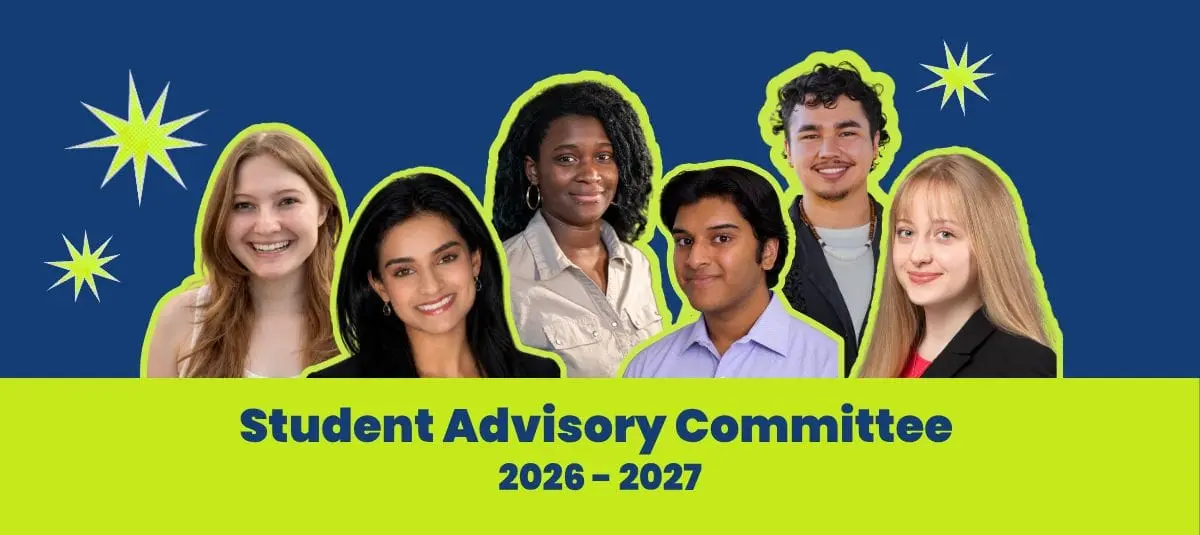
As the organization looks toward the future, Active Minds has officially unveiled its incoming 2026–2027 Student Advisory Committee cohort. Comprising six exceptional student leaders hailing from diverse academic backgrounds and geographic regions, this new roster brings an extraordinary depth of experience in public health research, clinical advocacy, healthcare policy, and grassroots mobilization. This report offers an in-depth look at the mission of the SAC, profiles the brilliant minds driving the 2026–2027 cohort, and examines the broader implications of their leadership on the future of national mental health advocacy.

Detailed Chronology: The Evolution and Mandate of the SAC
The establishment of the Student Advisory Committee marked a turning point in how national mental health organizations incorporate youth perspectives into their core operations. Historically, mental health interventions for young adults were formulated top-down, with institutional leaders prescribing solutions without adequately consulting the target demographic. Active Minds shattered this paradigm by institutionalizing youth governance, ensuring that students are not merely participants in mental health programs, but the architects behind them.
Phase One: Foundation and National Representation
In its foundational years, the SAC was established to amplify the student voice through traditional media channels and localized forums. As the mental health landscape evolved—particularly in the wake of societal shifts brought on by the digital age and compounding global stressors—the mandate of the committee expanded exponentially. Committee members transitioned from passive advisors to active co-designers of national strategy.
Phase Two: Strategic Expansion and Institutional Integration
Over subsequent academic cycles, the SAC formalized its advisory pillars, embedding student insight into five core operational areas:

- Student Engagement: Developing culturally competent outreach methods that resonate with diverse student populations.
- Community Building: Fostering peer-to-peer support networks that mitigate isolation and dismantle the pervasive stigma surrounding psychological distress.
- Program Planning & Chapter Management: Providing peer-led mentorship to hundreds of Active Minds campus chapters, helping them navigate administrative hurdles, secure funding, and execute impactful programming.
- National Conference Leadership: Curating workshops, keynote themes, and networking structures for the flagship annual gathering of student activists.
- Program Promotion & Media Advocacy: Serving as primary spokespeople across digital and print media platforms to champion legislative priorities and normalize conversations around mental health.
Phase Three: The 2026–2027 Cohort Induction
The unveiling of the 2026–2027 cohort represents the culmination of a rigorous selection process designed to identify students who exhibit not only academic excellence in fields related to health sciences, but also a proven track record of systemic advocacy. This incoming class enters their tenure at a critical juncture, tasked with addressing the complex intersectional challenges of modern student life, including digital fatigue, economic anxiety, fragmented healthcare systems, and systemic inequities in care access.
Supporting Context & Metrics: The State of Gen Z Mental Health and Grassroots Leadership
To fully appreciate the gravity of the work undertaken by the 2026–2027 SAC cohort, one must examine the broader socio-medical landscape confronting Gen Z scholars today.
The Contemporary Campus Climate
Data compiled across behavioral health sectors consistently indicates that college campuses are experiencing unprecedented demand for psychological services. According to national health assessments, a staggering majority of college students report experiencing moderate to severe psychological distress during their academic journeys. Factors contributing to this crisis include academic pressure, financial instability, geopolitical anxieties, and social isolation.

However, the barrier is rarely just the presence of distress; it is the friction encountered when attempting to access care. Systemic issues such as long wait times at campus counseling centers, culturally unresponsive clinical practices, and the lingering social stigma associated with seeking help continue to prevent vulnerable students from receiving timely interventions.
The Power of Peer-Led Intervention
Research underscores that peer-led initiatives are among the most effective vehicles for early identification and intervention in mental health crises. Because young adults often confide in peers long before engaging with institutional authorities or professional clinicians, empowering students with Mental Health First Aid and advocacy training creates a vital safety net.
The members of the 2026–2027 SAC embody this grassroots philosophy. Each delegate brings specialized expertise—ranging from artificial intelligence applications in mood disorder research to legislative advocacy for healthcare access—positioning them to translate localized campus victories into scalable national strategies.

Meet the 2026–2027 Student Advisory Committee Cohort
The incoming cohort is a multidisciplinary powerhouse, uniting exceptional student leaders who are already making profound impacts across their respective institutions and communities.
Kailani Goggans (she/her) – Salem College
- Academic Focus: Psychological Science & Public Health
- Leadership Roles: President, Active Minds Salem College; President, Students for Reproductive Freedom; President, Siblings Demand Justice.
- Vision & Interests: Kailani is deeply committed to community care, wellness, and intersectional advocacy. By serving as a catalyst for peer empowerment, she encourages students to discover and utilize their civic voices. Academically, she aims to bridge the gap between clinical medical practice and public health policy by pursuing an MD and a Master’s in Public Health. Outside of her rigorous academic and advocacy schedules, Kailani finds balance in indoor cycling, caring for her animals, and engaging in video games.
Dionisio (Dio) Taitano-Samora (he/they) – Colorado State University Pueblo
- Academic Focus: Public Health with minors in Spanish and Leadership Studies
- Leadership Roles: Member, Young Invincibles Youth Advisory Board (Colorado); Contributor, The Hub for Youth Centered Engagement.
- Vision & Interests: As a first-generation Chicano-CHamoru student, Dio leverages his unique lived experience to advocate for a more just and equitable educational ecosystem. His policy work focuses on expanding young adult access to mental health services, healthcare infrastructure, and workforce opportunities. Professionally, Dio plans to conduct specialized research exploring the correlation between STEM education access and public health outcomes to drive systemic health equity. In his personal time, he enjoys hiking, experimenting with new culinary recipes, and immersive language learning.
Rhea Makkuni (she/her) – Johns Hopkins University
- Academic Focus: Molecular and Cellular Biology and Computer Science
- Leadership Roles: President, Johns Hopkins Active Minds Chapter; Researcher, PALS Lab at Johns Hopkins School of Medicine.
- Vision & Interests: Rhea stands at the cutting edge of digital health innovation, utilizing artificial intelligence methodologies within the PALS Lab to study mood disorders. Through her leadership of the Johns Hopkins Active Minds chapter, she addresses global mental health challenges head-on, confronting systemic barriers such as fragmented care continuity, resource navigation hurdles, and institutional stigma. In her downtime, Rhea is an avid bicyclist, singer, dancer, and a self-described conversationalist who loves connecting with peers.
Amy Senkerik (she/her) – Barrett, the Honors College at Arizona State University
- Academic Focus: Biological Science and Global Health with a certificate in Evolutionary Medicine
- Leadership Roles: Outreach Team Member, ASU Counseling Services; Student Advocate, American Foundation for Suicide Prevention; Speaker, Active Minds Congressional Briefing.
- Vision & Interests: Amy’s advocacy portfolio is exceptionally robust, spanning individual peer support, community intervention, and national policy. Having spoken at a Congressional Briefing and completed prestigious research fellowships at Harvard Medical School and as a Fulbright Scholar at the University of Toronto, Amy’s work integrates cancer-neuroscience research at the Mayo Clinic and Cedars-Sinai with grassroots suicide prevention. Furthermore, she serves as an Emergency Medical Technician (EMT) and leads the Refugee Education and Clinic Team. An endurance athlete who completed the 2024 TCS New York City Marathon and studied global health in Australia, Amy aspires to practice medicine at the critical intersection of clinical care, scientific research, and health policy.
Arjun Nair (he/him) – Virginia Commonwealth University
- Academic Focus: Biology (Guaranteed Medical Admissions Program)
- Leadership Roles: President, Active Minds at VCU; Student Advisory Board Member, American Academy of HIV Medicine; Member, Active Minds National Student Board.
- Vision & Interests: Arjun is dedicated to de-stigmatizing mental health, promoting proactive self-care habits, and expanding campus engagement. Professionally, his focus lies in compassionate substance use disorder support and the integration of HIV prevention within behavioral health treatment settings. Through his research on substance use and healthcare access, combined with his national leadership on the SAC, Arjun aims to fortify inter-chapter connectivity and empower a new generation of community-level mental health champions.
Ivanna Sintes-Klein (she/her) – The University of Texas at Austin
- Academic Focus: Health Promotion and Behavioral Science with a minor in Health Communication
- Leadership Roles: Chapter Founder and President, Teddy Bear Hospital USA at UT; Longhorn SHARE Support Specialist; Student Government Representative on the Student Health Advisory Committee (UT Austin); Founder and Former President, Bobcat C.A.R.E. at Texas State University.
- Vision & Interests: Ivanna is a seasoned organizational builder with a profound commitment to accessible mental health resources. At Texas State University, she founded Bobcat C.A.R.E., earning "Organization of the Year" honors during her presidency. Upon transferring to UT Austin, she continued her civic leadership by founding the local chapter of Teddy Bear Hospital USA—using play-based health education to reduce medical anxiety in children—while serving as a peer support specialist trained in mental health first aid. Appointed to the Student Health Advisory Committee, Ivanna ensures student perspectives shape institutional health policy. Outside of her extensive advocacy, she enjoys playing pool and writing poetry.
Official Statements and Institutional Impact
The collective expertise represented within the 2026–2027 Student Advisory Committee signals a robust evolution in how student advocacy interfaces with institutional decision-making. National staff at Active Minds have repeatedly emphasized that the insights provided by the SAC are instrumental in shaping organizational strategy, ensuring that national campaigns remain grounded in the authentic needs of college populations.
By operating as conduits between local campus chapters and national platforms, SAC members provide essential feedback loops. When chapters encounter emerging mental health trends—such as heightened eco-anxiety, digital burnout, or systemic barriers to culturally competent care—the SAC synthesizes these observations and translates them into actionable national frameworks, toolkits, and legislative advocacy points.

Future Outlook: The Road Ahead for the 2026–2027 SAC
As the 2026–2027 Student Advisory Committee officially commences its tenure, the roadmap ahead is ambitious. The cohort is poised to tackle several critical objectives in the coming academic cycles:
- Expanding Chapter Resilience: Strengthening the operational frameworks of hundreds of Active Minds chapters nationwide to ensure long-term sustainability and leadership succession.
- Advancing Policy and Legislative Awareness: Building upon the successes of previous congressional briefings to advocate for systemic investments in campus mental health infrastructure, barrier-free care access, and integrated public health policies.
- Fostering Intersectional Inclusivity: Ensuring that mental health advocacy and resource distribution reach historically marginalized student populations, including first-generation scholars, students of color, and LGBTQ+ youth.
- Leveraging Innovation: Utilizing modern methodologies—from artificial intelligence applications in behavioral research to peer-led digital communication strategies—to modernize how young adults connect with mental health resources.
Active Minds invites all community members, institutional leaders, and student advocates who wish to collaborate with their regional representatives or engage in local mental health initiatives to reach out directly via email at [email protected].
With leaders of the caliber of Kailani Goggans, Dio Taitano-Samora, Rhea Makkuni, Amy Senkerik, Arjun Nair, and Ivanna Sintes-Klein at the helm, the future of youth-led mental health advocacy is not only in capable hands—it is boldly charting a course toward a healthier, more compassionate society.

