
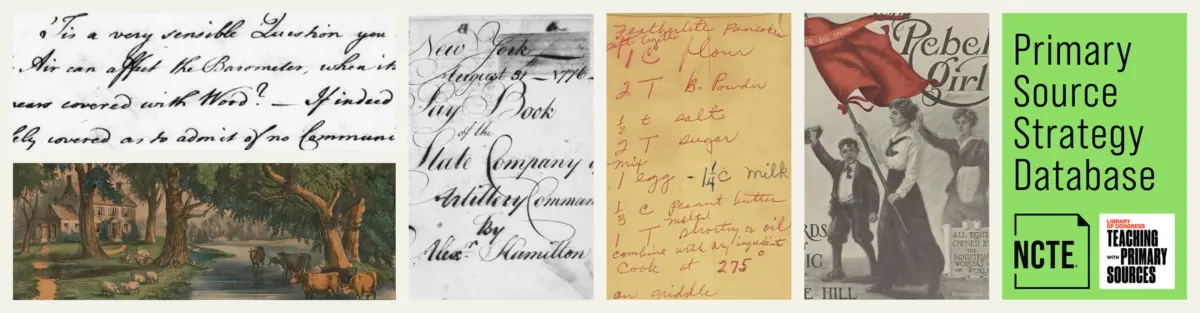
Executive Overview
In an era defined by an overflow of digital information and evolving educational standards, the National Council of Teachers of English (NCTE) is spearheading a critical pedagogical transformation. Through an ongoing, high-impact collaboration with the Library of Congress as part of the prestigious Teaching with Primary Sources (TPS) Consortium, NCTE is fundamentally reshaping how literacy educators and students interact with historical archives.
At the center of this initiative is a robust, searchable digital database housing instructional strategies for more than 150 specific historical artifacts drawn directly from the Library of Congress’s vast digitized collections. Developed collaboratively by over two dozen veteran educators and leaders in English Language Arts (ELA) education, this repository bridges the gap between raw historical archives and contemporary classroom curricula. By embedding primary sources into daily literacy lessons, the initiative provides students with the tools to critically evaluate historical texts, identify systemic biases, analyze media messaging, and develop profound empathy through historical inquiry.
Crucially, the database is designed to tackle complex, real-world social themes—ranging from arts and culture to systemic racism and journalism. One such standout resource integrated into the platform examines a historical advertisement for PORO hair products from The Statesman, featuring African American entrepreneur Annie Malone Pope-Turnbo. This artifact serves as a gateway for high school students to explore the historical and psychological dimensions of hair discrimination, beauty standards, and systemic racism. Despite facing potential community pushback or ideological debates, educators utilizing these materials are equipped with alignment to state content standards—such as New Mexico’s adopted ELA and history frameworks—ensuring rigorous, standards-based academic instruction.
Detailed Chronology: The Evolution of the NCTE and Library of Congress Partnership
The integration of primary source documents into mainstream English Language Arts classrooms did not happen overnight. It represents a deliberate, decades-long evolution in educational philosophy, shifting away from passive textbook absorption toward active, inquiry-based historical analysis.
The Foundation of the TPS Consortium
The broader movement traces back to the Library of Congress’s establishment of the Teaching with Primary Sources program. Designed to connect educators nationwide with the institution’s millions of digitized manuscripts, photographs, maps, audio recordings, and printed texts, the TPS program sought to make history tangible. However, bridging the gap between raw archival holdings and daily lesson planning required specialized pedagogical frameworks tailored specifically to literacy teachers.
Engaging ELA Leaders and Educators
Recognizing this need, the NCTE partnered with the Library of Congress to mobilize a select cohort of more than two dozen English Language Arts teachers, curriculum specialists, and educational leaders. This working group was tasked with reviewing, contextualizing, and designing instructional strategies for over 150 distinct primary sources within the Library of Congress repository.
Rather than merely categorizing documents by date or region, these educators evaluated each item’s specific literary merit. They mapped out how historical advertisements, political cartoons, letters, and literature excerpts could be leveraged to teach reading comprehension, rhetorical analysis, argument formulation, and grammar.
Launch of the Searchable Database
The culmination of this collaborative effort is a dynamic, publicly accessible database hosted via the NCTE platform. Designed for intuitive navigation, the database allows educators to filter content using targeted tags such as picturebook, argument, comprehension, grammar, and spelling. Each entry provides a comprehensive teaching guide detailing the instructional value of the source, summary descriptions, focus questions, potential classroom challenges, and direct alignments with state-level academic standards.
Supporting Context & Metrics: Analyzing Historical Artifacts in Modern Classrooms
To understand the practical application of the NCTE-Library of Congress initiative, one must examine how individual artifacts are deployed within the curriculum. A prime example featured in the database centers on an advertisement for PORO Hair Grower, published in The Statesman and associated with pioneering African American entrepreneur and philanthropist Annie Malone Pope-Turnbo.
The Artifact: PORO Hair Grower Advertisement
- Content Description: The archival advertisement features photographs of founder Annie Malone Pope-Turnbo alongside a woman identified as L. L. Roberts, both displaying long, straight hair. Accompanying captions—such as Pope-Turnbo’s statement, "4 years ago my hair was only a finger-length, and my temples were bald halfway up my head"—are paired with consumer warnings cautioning readers against fraudulent hair growth products flooding the market, urging them to verify official PORO items.
- Literacy & Historical Value: While appearing at first glance to be a simple turn-of-the-century commercial advertisement, the text offers profound entry points for discussions on consumerism, Black entrepreneurship during the Jim Crow era, and the historical roots of beauty standards.
Addressing Systemic Racism and Identity
The instructional framework accompanying the PORO advertisement highlights how seemingly trivial aspects of appearance—such as hair texture and styling—are deeply intertwined with power structures and systemic racism.
- Challenging Dominant Norms: Discussions surrounding Black hair expose how systemic racism and institutional biases aim to erase cultural identity and enforce conformity to dominant, Eurocentric beauty standards.
- Building Empathy and Critical Thinking: By examining the historical and ongoing impacts of hair discrimination, students confront the psychological and emotional tolls borne by individuals and marginalized communities. This inquiry fosters empathy, sharpens critical thinking, and teaches students to question how societal norms are constructed to perpetuate inequality.
- Empowering Marginalized Students: For students who navigate modern-day discrimination, understanding the historical context of hair policing provides validation. It aids in dismantling harmful stereotypes, encouraging cultural heritage appreciation, and empowering students to embrace their authentic selves.
Standards Alignment in Action
To ensure administrative and academic viability, the instructional strategies tied to these primary sources are meticulously mapped to state content standards. For instance, lessons drawing from the PORO advertisement align directly with New Mexico Adopted Content Standards for Speaking & Listening and Literacy in History/Social Studies:
- SL.11-12.3: Evaluate a speaker’s point of view, reasoning, and use of evidence and rhetoric, assessing the stance, premises, links among ideas, word choice, points of emphasis, and tone used.
- RH.11-12.1: Cite specific textual evidence to support analysis of primary and secondary sources, connecting insights gained from specific details to an understanding of the text as a whole.
- RH.11-12.2: Determine the central ideas or information of a primary or secondary source; provide an accurate summary that makes clear the relationships among the key details and ideas.
Official Perspectives and Navigating Classroom Challenges
While the integration of primary sources enriches ELA instruction, educators navigating topics involving systemic racism, identity, and historical discrimination often encounter administrative and community hurdles. The NCTE database proactively addresses these challenges, offering transparency and professional guidance for teachers.
Anticipating Community Pushback
The database explicitly identifies areas of potential controversy. For example, discussions surrounding the policing of Black hair can invite resistance from parents, community members, or school administrators. The resource outlines several common sources of friction:
- The "Colorblind" Ideology: Some stakeholders argue that race should not be a factor in education, expressing concern that addressing topics like hair discrimination or systemic racism creates unnecessary divisions among students.
- Political Sensitivity: Conservative critics may mischaracterize discussions of systemic racism or historical bias as inappropriate implementations of Critical Race Theory (CRT) within K-12 classrooms.
- Curricular Prioritization: Certain community members express anxiety that social-justice-oriented historical inquiries may detract from "core" academic subjects like foundational reading, writing, and arithmetic.
- Misunderstanding Historical Significance: A lack of awareness regarding the deeply rooted historical and contemporary impacts of hair discrimination on Black communities can lead to skepticism regarding the topic’s educational legitimacy.
Professional Support for Educators
Rather than shying away from these complex dynamics, the NCTE initiative provides frameworks and contextual justifications to help teachers articulate the pedagogical necessity of these lessons. By grounding discussions in primary source evidence—such as turn-of-the-century advertisements and historical journalistic texts—teachers can demonstrate that their curricula remain anchored in rigorous historical inquiry and literacy skill-building rather than ideological indoctrination.
Furthermore, the database emphasizes cross-curricular connections. Teachers can seamlessly blend historical analysis with traditional ELA competencies—such as grammar, spelling, and reading comprehension—proving that exploring cultural history enhances, rather than distracts from, core academic mastery.
Future Outlook: The Next Phase of Primary Source Literacy
As the partnership between the National Council of Teachers of English and the Library of Congress continues to expand, the educational landscape stands to benefit from a renewed commitment to inquiry-based, artifact-driven learning.
Scaling the Database and Educator Networks
Future phases of the TPS Consortium project aim to scale the searchable database, incorporating additional primary sources that represent diverse American voices, historical periods, and cultural experiences. By continuously engaging cohorts of ELA leaders, NCTE ensures that the repository remains responsive to the evolving needs of modern classrooms and reflective of America’s multicultural history.
Transforming Teacher Preparation Programs
Beyond immediate K-12 classroom applications, the methodologies championed by the NCTE and the Library of Congress are increasingly influencing teacher preparation programs. Pre-service educators are being trained to utilize digital archives during their foundational coursework, ensuring that the next generation of teachers enters the workforce equipped to design inquiry-driven lessons using authentic historical documents.
Cultivating Critical Literacy in the Digital Age
Ultimately, the collaboration between NCTE and the Library of Congress addresses a fundamental imperative of 21st-century education: teaching students how to think, not what to think. By interrogating historical advertisements, government documents, literary manuscripts, and cultural artifacts, students learn to decode media messaging, recognize institutional bias, and value diverse human experiences.
In doing so, this initiative transcends traditional textbook boundaries, transforming the classroom into an active laboratory of historical discovery, civic engagement, and profound intellectual growth.

