
Executive Overview
As the autumn leaves turn and the cultural landscape shifts toward the mysterious, the macabre, and the festive, educational institutions and households alike face a perennial challenge: maintaining student engagement amidst the distractions of the holiday season. October brings a distinct shift in atmospheric energy, often accompanied by waning attention spans in the classroom and restlessness at home. Rather than fighting this seasonal tide, modern educational technology has increasingly leaned into it, transforming pop-culture phenomena and holiday motifs into robust pedagogical vehicles.
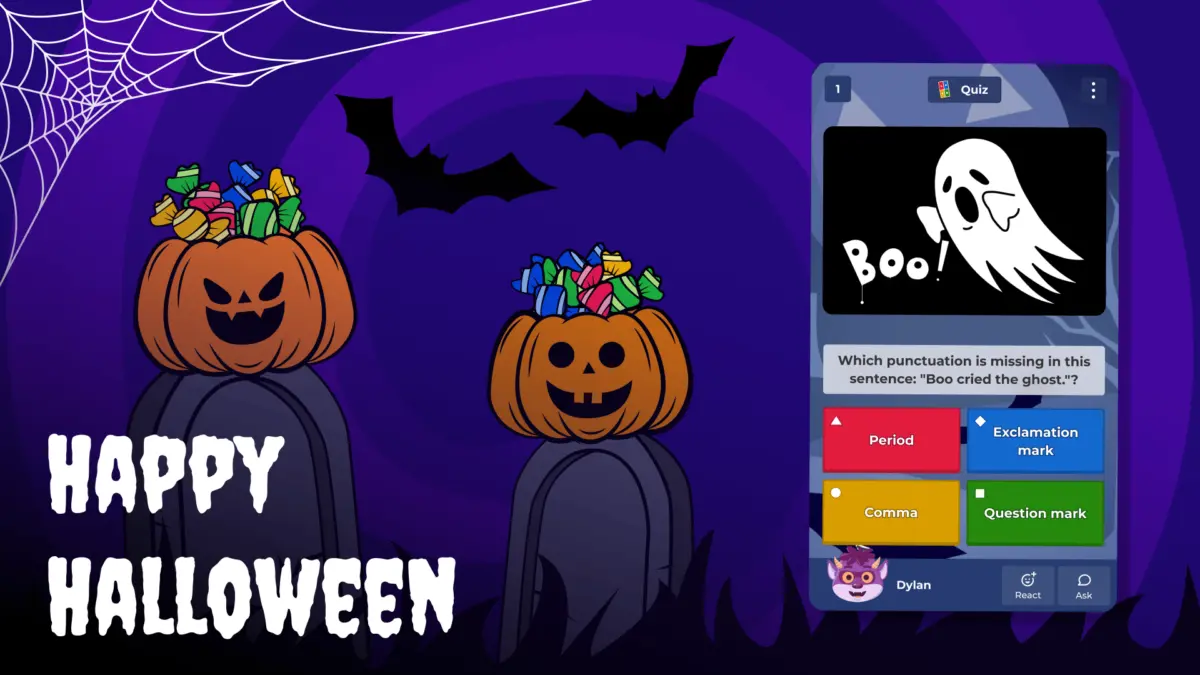
At the forefront of this gamified learning revolution is Kahoot!, the global game-based learning platform. This season, the platform has rolled out an expansive, meticulously curated suite of Halloween-themed educational content. Designed to bridge the gap between entertainment and rigorous academic standards, these ready-made interactive modules span mathematics, STEM, historical analysis, language arts, and emotional literacy.
Far from being mere digital novelties, these curated learning collections leverage partnerships with some of the world’s most recognizable educational and entertainment brands—including TED-Ed, NASA-affiliated institutions, Nickelodeon, Disney, Marvel, and the World Wildlife Fund (WWF). By embedding core curriculum concepts into narratives featuring beloved characters like SpongeBob SquarePants, Groot, Hello Kitty, and Charlie Brown, Kahoot! is systematically dismantling the artificial barrier between play and cognitive development. This comprehensive report explores how these seasonal tools are deployed across classrooms, living rooms, and study halls, evaluating their impact on learner motivation, conceptual retention, and the broader future of gamified pedagogy.
Detailed Chronology: The Evolution of Seasonal Gamification in Digital Education
To understand the strategic significance of Kahoot!’s current Halloween initiative, one must examine the broader historical arc of digital gamification in education over the past decade.
- 2013–2016: The Genesis of Classroom Response Systems. Kahoot! entered the educational technology ecosystem primarily as a synchronous polling and quiz tool. Early adoption was characterized by static, teacher-generated trivia intended to review lecture material at the end of a class period. Seasonal content during this era was rudimentary, relied heavily on individual educators creating their own custom quizzes, and lacked centralized institutional backing.
- 2017–2020: The Rise of Curated Partnerships. As the platform scaled globally, Kahoot! recognized the necessity of professional content curation. Partnerships with verified publishers, cultural institutions, and media conglomerates allowed the platform to move beyond user-generated trivia. Educational frameworks began incorporating recognizable pop-culture IPs to lower affective filters—psychological barriers that impede learning—particularly in younger demographics.
- 2021–2024: Pandemic Acceleration and Hybrid Integration. The global shift toward remote and hybrid learning models cemented digital gamification as a core instructional delivery mechanism. Educators required high-engagement, asynchronous assets that could capture attention across physical and virtual divides. Seasonal campaigns transformed from sporadic novelties into predictable, heavily engineered content drops designed to anchor curriculum pacing during high-distraction periods like October and December.
- 2025–Present: The Immersive, Multi-Disciplinary Era. The contemporary landscape represents a maturation of these strategies. The current Halloween collection does not merely apply a superficial monster graphic to a math problem; it integrates complex cross-curricular narratives. From deep dives into the historical realities of the Salem Witch Trials via TED-Ed to high-level English vocabulary acquisition through Wiktionary, modern gamified modules are engineered to align with national and international educational standards while maintaining the dopamine loops inherent in modern gaming.
Supporting Context & Metrics: The Anatomy of Engagement
The rationale behind integrating seasonal themes into rigorous academic frameworks is supported by cognitive psychology and educational data. When students encounter material framed within a narrative context they find compelling—whether it is the historical lore of vampires, the ecological importance of "spooky" wildlife, or mathematical puzzles solved alongside Marvel’s Guardians of the Galaxy—several cognitive shifts occur.
1. Reducing Cognitive Load Through Familiarity
Educational psychology posits that working memory is strictly limited. When learners attempt to parse complex multi-step word problems or dense historical texts, the intrinsic cognitive load can be overwhelming. By utilizing familiar cultural touchstones (e.g., Peanuts, Hello Kitty, or Star Wars), the brain relies on pre-existing schemas. This scaffolding effect reduces extraneous cognitive load, allowing students to dedicate more mental bandwidth to processing the actual academic content.
2. The Dopaminergic Loop and Retention
Game-based learning platforms utilize immediate feedback mechanisms, point scoring, and timed responses to stimulate dopamine pathways. Data consistently indicates that competitive, low-stakes quiz environments elevate heart rates slightly, heightening alertness and encoding information more effectively into long-term memory. According to internal platform metrics across various institutional deployments, gamified review sessions yield significantly higher completion and participation rates compared to traditional paper-and-pencil assessments.
3. Cross-Demographic Versatility
The strategic genius of a comprehensive holiday rollout lies in its adaptability across the entire developmental spectrum:
- Early Childhood (K-2): Focuses on foundational numeracy, basic shape recognition, and emotional literacy (exemplified by the Peanuts and Hello Kitty collaborations).
- Middle Years (3-8): Expands into earth sciences, lunar cycles (via partnerships with science centers), and literary vocabulary.
- Secondary & Higher Education: Tackles advanced historical contexts, sociological examinations of folklore, and rigorous STEM subjects disguised as seasonal trivia.
Official Statements & Institutional Perspectives
The deployment of these educational initiatives reflects a growing consensus among educators, psychologists, and media producers regarding the importance of joy in learning.
Dr. Elena Vance, a developmental psychologist specializing in digital learning environments, notes:

"The archaic notion that education must be austere to be effective has been thoroughly debunked. When children and young adults interact with subjects like lunar orbital mechanics or advanced syntax through the lens of a seasonal story or a beloved character, they are not escaping education—they are entering a state of flow. The anxiety associated with testing evaporates, replaced by intrinsic curiosity."
Representatives from several content-providing institutions have similarly emphasized the synergy between pop culture and scientific literacy. A spokesperson for environmental educational initiatives highlighted the inclusion of "not-so-spooky wildlife" modules:
"Halloween is traditionally a time when animals like bats, spiders, and owls are vilified or misunderstood through folklore. By partnering with platforms like Kahoot!, we can intercept those cultural narratives at the exact moment they are most active in children’s minds, replacing fear with ecological appreciation and scientific fact."
Furthermore, instructional designers emphasize that these resources are crafted with teachers’ extreme time constraints in mind. Educators are rarely compensated for the countless hours spent designing supplementary materials outside of contract hours. By providing turnkey, standards-aligned, highly polished modules, platforms like Kahoot! relieve administrative and preparatory burdens, ensuring that instructional time is maximized.
Future Outlook: The Next Frontier of Gamified Learning
As educational technology continues to evolve at a breakneck pace, the intersection of seasonal engagement and digital pedagogy is poised for profound transformation. Several emerging trends indicate where gamified learning is heading over the next decade:
Adaptive AI Integration
Future iterations of seasonal content will likely move beyond static, linear quizzes. Leveraging artificial intelligence, platforms will dynamically adjust the difficulty of math puzzles or historical inquiries in real-time based on an individual student’s performance metrics. If a student struggles with subtraction during a Marvel-themed Halloween module, the system will seamlessly generate targeted, character-driven reinforcement exercises without disrupting the narrative flow.
Immersive and Spatial Learning
While current deployments primarily rely on HTML5 browser interfaces across desktops, tablets, and smartphones, the maturation of augmented reality (AR) and mixed reality (MR) hardware points toward spatial educational experiences. Imagine students utilizing AR visors to scan their physical classrooms, where digital ghosts pose geometry problems, or examining 3D holographic models of lunar phases floating above their desks during a science module.
Lifelong Learning and Corporate Upskilling
The boundaries separating K-12 education, higher education, and corporate professional development are increasingly porous. As demonstrated by the inclusion of lifelong learning trivia and complex historical archives from Wikipedia, gamified micro-learning is becoming a preferred method for adult education. Corporations are discovering that seasonal engagement tools—such as cybersecurity quizzes framed as Halloween "escape rooms" or team-building trivia based on pop culture—yield drastically higher participation rates among remote and hybrid workforces than traditional compliance training modules.
Conclusion
The transformation of seasonal milestones into educational opportunities exemplifies the very best of modern educational technology. By bridging the gap between rigorous academic standards and unbridled play, initiatives like Kahoot!’s Halloween collection demonstrate that learning does not have to pause for celebrations—it can be the celebration itself.
Whether it is a kindergarten student mastering addition with Hello Kitty, a middle schooler decoding the historical realities of the Salem Witch Trials via TED-Ed, or an adult group testing their intergalactic knowledge with Star Wars trivia, these interactive experiences prove that curiosity knows no age limit. As the educational landscape looks toward a future defined by personalization, engagement, and technological integration, the humble digital quiz has proven itself to be an enduring, indispensable cornerstone of modern pedagogy.

