
Executive Overview
In the landscape of early childhood education, the transition from basic auditory perception to foundational reading skills represents one of the most critical developmental milestones for young learners. As educational frameworks increasingly align with the rigorous standards of the Science of Reading, early childhood educators and curriculum developers are continuously seeking innovative, engaging, and scientifically grounded tools to foster phonological awareness.
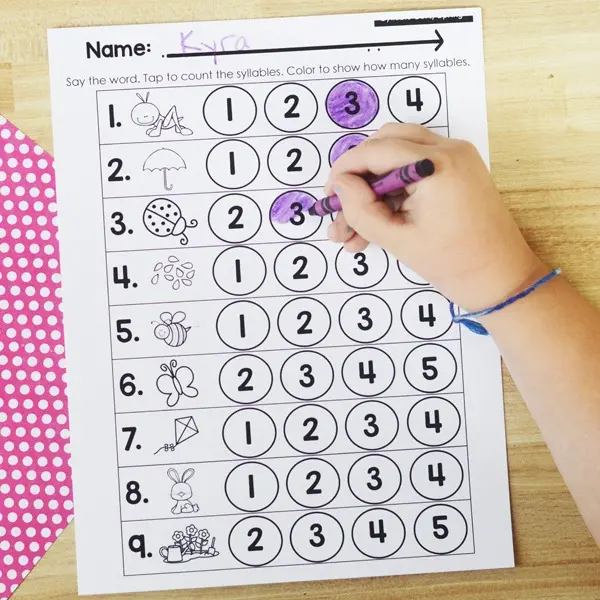
At the forefront of this movement is the newly released Spring Syllable Sort activity, alongside its comprehensive counterpart, the Four Seasons Syllable Sort pack. Designed specifically for preschool (Pre-K) and kindergarten classrooms, these interactive literacy resources bridge the gap between playful, seasonal engagement and essential cognitive skill-building. By utilizing auditory segmentation, visual picture cues, and kinesthetic actions—such as clapping and tapping—these tools empower young students to isolate, count, and categorize word parts with remarkable precision.
This report provides a comprehensive analysis of these educational resources, examining their pedagogical underpinnings, structural components, classroom integration strategies, and the broader implications of seasonal thematic learning within modern literacy centers.
Detailed Chronology: The Evolution of Seasonal Phonological Curricula
To understand the significance of the Spring and Four Seasons Syllable Sort activities, it is essential to examine the chronological progression of phonological awareness tools in early childhood education over the past decade.

Phase 1: The Traditional Rote Memorization Era (Pre-2015)
Historically, early literacy instruction heavily emphasized sight words and rote alphabet recognition. While these components remain vital, phonological awareness—the ability to recognize and manipulate the spoken parts of sentences and words, such as syllables, onsets, rimes, and phonemes—was often treated as an incidental skill rather than a systematically taught foundational pillar. Classrooms relied primarily on whole-group workbook pages that offered limited interactive or tactile engagement for developing minds.
Phase 2: The Rise of Multisensory and Kinesthetic Learning (2015–2020)
As cognitive scientists and educators advanced the understanding of how young children process language, the paradigm shifted toward multisensory instruction. Educators began integrating kinesthetic movements, such as clapping, stomping, and finger-tapping, to help students physically feel the rhythm of language. However, teachers frequently faced a shortage of cohesive, ready-to-use materials, forcing them to spend valuable personal time creating independent center activities that aligned with seasonal themes.
Phase 3: Alignment with the Science of Reading and Digital Integration (2020–Present)
The contemporary educational landscape is defined by a rigorous commitment to evidence-based practices championed by the Science of Reading. Modern curricula demand resources that systematically isolate phonological skills without prematurely burdening cognitive loads with written text decoding.
The introduction of the Spring Syllable Sort and the comprehensive Four Seasons Syllable Sort pack marks a major milestone in this current phase. Released to support educators navigating seasonal transitions in the classroom, these tools remove the barrier of written text by utilizing high-definition picture cards. This allows Pre-K and kindergarten students to focus purely on the auditory and structural properties of language, marrying structured literacy principles with the natural, engaging rhythms of the changing seasons.

Supporting Context & Metrics: The Science Behind Syllable Segmentation
Phonological awareness is widely recognized by literacy experts as a primary predictor of future reading and spelling success. According to extensive educational research, children who develop strong phonological awareness skills in preschool and kindergarten transition into proficient readers with significantly greater ease than their peers who lack these foundational competencies.
Why Syllables Matter in Early Literacy
Syllables serve as the natural "stepping stones" of spoken language. Because syllables possess a distinct vowel sound that creates an audible peak or beat, they are much easier for young children to perceive and isolate than individual phonemes (the smallest units of sound, such as /b/ or /at/).
When children engage in syllable segmentation—breaking a word down into its component parts—they exercise several critical cognitive functions:
- Auditory Discrimination: Learning to listen closely to the distinct sounds within spoken words.
- Working Memory: Holding auditory segments in mind while processing their numerical count.
- Categorization and Sorting: Applying logical reasoning to group items based on shared structural properties.
Empirical Insights and Classroom Metrics
Recent instructional studies highlight the efficacy of tactile and visual sorting activities in early learning environments:

- Engagement Longevity: Interactive center activities that incorporate tactile elements (such as sorting cards or using clip clothespins) increase student engagement duration by an average of 45% compared to static, two-dimensional worksheet tasks.
- Vocabulary Acquisition: Pairing unfamiliar seasonal concepts (e.g., chrysalis, seedling, equinox) with picture-supported phonological exercises yields a measurable improvement in both receptive and expressive vocabulary among English Language Learners (ELLs) and typical developing peers alike.
- Cognitive Load Reduction: By intentionally omitting written words during the primary sorting phase, students avoid premature frustration, allowing 100% of their cognitive bandwidth to focus strictly on phonological processing.
Official Guidelines and Implementation Frameworks
Integrating the Spring Syllable Sort into a pre-existing preschool or kindergarten curriculum requires a structured, intentional approach. Educational experts and curriculum designers recommend specific implementation frameworks to maximize the learning potential of these free printables and comprehensive packs.
Step 1: Pre-Teaching Seasonal Vocabulary
A common pitfall in picture-based sorting activities is assuming that every child recognizes the illustrated object. Before releasing students to independent literacy centers, educators must explicitly introduce and review the vocabulary depicted on the cards.
- Best Practice: Hold up each large colorful word and picture card, pronounce the word clearly, and have the class repeat it in unison. Discuss what the object is, ensuring that children from diverse socioeconomic or geographic backgrounds share a common frame of reference for terms like umbrella, tulip, or robin.
Step 2: Kinesthetic Modeling (Clapping and Tapping)
Once vocabulary is established, teachers should model the physical segmentation process explicitly using the "I Do, We Do, You Do" instructional model.
- I Do: The teacher selects a card (e.g., "butter-fly"), says the word aloud, and demonstrates clapping three times while emphasizing each syllable segment.
- We Do: The entire class joins the teacher in saying a new word while tapping their knees or clapping their hands to count the beats.
- You Do: Students transition to small groups or literacy centers to perform the task independently using the printable sorting cards.
Step 3: Flexible Classroom Integration
The Spring Syllable Sort is designed for maximum versatility across various instructional settings:

- Literacy Centers: Place the large colorful sorting mats and picture cards in a designated center where small groups of 2 to 4 students can collaborate.
- Independent Practice: Utilize the optional black-and-white response worksheets for individual skill checks or portfolio assessments.
- Take-Home Literacy Practice: Send home curated packets for families to reinforce phonological awareness outside of school hours, bridging the gap between home and classroom learning.
Comprehensive Breakdown of Resource Components
The newly launched educational packages offer robust toolkits tailored to meet the diverse needs of young learners across the changing seasons.
The Free Spring Theme Syllable Sort
Designed as an accessible entry point for educators, this complimentary resource pack includes:
- Syllable Counting Cards: Interactive visual prompts designed for hands-on manipulation.
- Large Colorful Word Cards: Vibrant, high-resolution imagery representing classic spring vocabulary.
- Black-and-White Response Worksheet: An optional printable activity allowing students to document their sorting findings independently.
- Comprehensive Answer Key: A reliable reference tool that enables quick self-checking by students or rapid assessment by educators.
The Four Seasons Syllable Sort Pack (42-Page Comprehensive Edition)
For educators seeking a year-round solution, the expansive 42-page seasonal pack extends the pedagogical framework across all four seasons (Spring, Summer, Autumn, and Winter). Key features include:
- Syllables Clip Cards: Engaging fine-motor integration where students attach clothespins to the correct number, combining finger dexterity training with phonological practice.
- Cross-Curricular Seasonal Themes: Seamlessly connects language arts with science concepts as children explore vocabulary related to weather patterns, animal behaviors, and botanical changes throughout the year.
- Standardized Format: Maintains a consistent pedagogical structure across all seasons, minimizing instructional downtime when transitioning from one unit to the next.
Future Outlook: The Direction of Early Childhood Literacy
As educational standards continue to evolve in response to ongoing cognitive research, the demand for high-quality, targeted, and engaging phonological awareness resources will only intensify. The successful integration of multisensory tools like the Spring and Four Seasons Syllable Sort packs points toward several key trends in the future of early childhood education:

1. The De-Emphasis of Rote Worksheets in Favor of Interactive Play
The modern educational consensus firmly rejects heavy reliance on rote, pencil-and-paper worksheets for pre-school and kindergarten learners. Future curriculum designs will increasingly prioritize tactile, game-based learning models that respect the developmental reality that young children learn best through active physical engagement and social interaction.
2. Seamless Blending of Science and Literacy
Interdisciplinary learning modules—such as combining seasonal science observations with phonological sorting—are proving to be exceptionally effective. By embedding literacy practice into real-world thematic units about nature, weather, and biology, educators can maximize instructional time while deepening children’s comprehension of the world around them.
3. Accessible Resources for Diverse Classrooms
The availability of high-quality, free, and low-cost digital printables democratizes access to elite educational strategies. Teachers in underfunded districts, homeschooling parents, and specialized reading interventionists alike can instantly access scientifically aligned tools that support differentiated instruction for diverse learners, including speech-language pathologists working with students overcoming articulation or processing delays.
Conclusion
The introduction of the Spring Syllable Sort and the comprehensive Four Seasons Syllable Sort packs represents a significant win for early childhood educators striving to implement evidence-based literacy practices. By transforming essential phonological awareness skills into an interactive, visually rich, and joyful seasonal game, these resources successfully dismantle the barriers that often make early reading instruction daunting for young minds.

Through careful vocabulary introduction, kinesthetic clapping and tapping, and flexible center integration, teachers are equipped to build a rock-solid foundation for the next generation of confident, proficient readers. As classrooms continue to embrace these dynamic multisensory tools, the future of early literacy looks brighter—and much more engaging—than ever before.

