
Executive Overview
As the mercury drops and the winter season sets in, parents, educators, and mental health professionals often notice a marked shift in the behavioral landscape of children and young adults. The arrival of winter—bringing with it disrupted schedules, prolonged periods of indoor confinement, and the sensory-rich whirlwind of holiday celebrations—places extraordinary demands on young nervous systems. At the center of this seasonal transition is self-regulation: the foundational neurological and psychological capacity to manage thoughts, govern intense emotional responses, and direct physical behavior toward constructive goals.
While self-regulation is a crucial developmental milestone year-round, its maintenance becomes precarious during the winter months. Disruptions in daily routines and decreased exposure to natural sunlight can severely tax a child’s ability to focus, connect positively with peers, and navigate everyday frustrations. Fortunately, developmental research increasingly highlights that these vital emotional muscles can be intentionally strengthened through engaging, joyful, and purposeful activities.
This comprehensive report examines the physiological and psychological impacts of winter on youth behavior, outlines a curated array of twelve evidence-based self-regulation strategies for classrooms and homes, and provides an authoritative roadmap for supporting emotional well-being during the chilliest months of the year.
Detailed Chronology: Understanding the Winter Behavioral Shift
To effectively address behavioral challenges during the winter season, educators and caregivers must first understand the timeline and triggers of winter dysregulation. The phenomenon does not happen overnight; rather, it follows a distinct chronological arc from late autumn through the return to school in the new year.
Phase 1: The Pre-Holiday Build-Up (Late November to Mid-December)
As autumn transitions into winter, the days rapidly shorten, limiting outdoor play and vitamin D synthesis. Concurrently, schools and homes undergo significant schedule adjustments to prepare for holiday breaks. This convergence of sensory changes, heightened anticipation, and shifting expectations frequently manifests as impulsivity, hyperactivity, or withdrawal in children. During this phase, early intervention is critical. Establishing predictable micro-routines and introducing proactive self-regulation activities helps mitigate the impending stress of seasonal disruption.
Phase 2: The Break and Routine Disruption (Mid-December to Early January)
The holiday break itself, while intended as a period of rest, often removes the structural anchors that children with developing self-regulation skills heavily rely on. Sleep schedules drift, screen time frequently increases, and dietary habits fluctuate. When children return to the structured environment of the classroom or normal home routines in January, the cognitive and emotional whiplash can trigger widespread dysregulation, academic friction, and behavioral outbursts.
Phase 3: The Post-Break Integration (January through February)
The deep winter months represent the longest stretch of indoor confinement for many students. With recess frequently cancelled due to inclement weather and daylight hours constrained, children experience "cabin fever" in a very literal, neurological sense. Experts emphasize that this post-break window requires intentional structural support. Rather than relying solely on punitive measures for behavioral slip-ups, educators and parents are increasingly turning to structured sensory, mindfulness, and movement activities to reset the central nervous system during the bleakest weeks of winter.
Supporting Context & Metrics: The Science of Self-Regulation
Self-regulation is governed primarily by the prefrontal cortex—the area of the brain responsible for executive functions such as working memory, cognitive flexibility, and inhibitory control. However, the prefrontal cortex is the last region of the human brain to fully mature, leaving children and adolescents heavily reliant on external co-regulation from adults.
The Neurological Impact of Seasonal Stress
During winter, reduced ambient light and increased confinement can elevate cortisol levels while suppressing serotonin production, leading to heightened anxiety and diminished impulse control. When children experience stress, their sympathetic nervous system ("fight or flight") takes over, rendering logical reasoning and emotional control temporarily inaccessible.
Evidence-based interventions—such as mindful breathing, sensory engagement, and rhythmic movement—act as physiological circuit breakers. These practices stimulate the vagus nerve and activate the parasympathetic nervous system, signaling to the brain and body that it is safe to return to a state of rest and digest.
Key Metrics and Research Insights
- Attention Restoration Theory (ART): Studies consistently show that brief exposures to natural environments, or even viewing nature-themed stimuli, significantly restore depleted attention capacities in children.
- The Power of Gratitude: Psychological research demonstrates that regular gratitude practices structurally alter neural pathways, leading to a measurable reduction in baseline stress, improved sleep quality, and heightened resilience against emotional burnout.
- Tactile Play and Focus: Occupational therapy data indicates that structured sensory input (such as tactile bins and heavy work activities) can decrease off-task behavior in learning environments by up to 40%, providing the necessary proprioceptive feedback for children to settle their bodies.
Twelve Engaging Winter Self-Regulation Activities for Kids and Teens
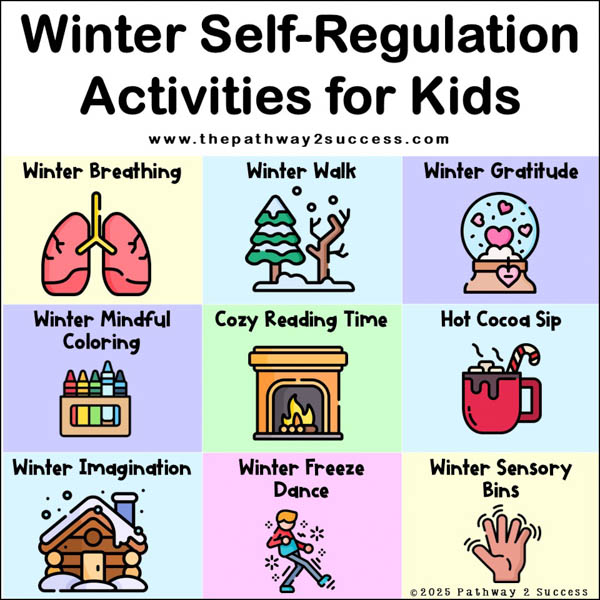
Practicing self-regulation does not require sterile clinical interventions; it can be seamlessly integrated into daily routines through play, creativity, and mindful reflection. Below are twelve evidence-based activities tailored specifically for the winter season.
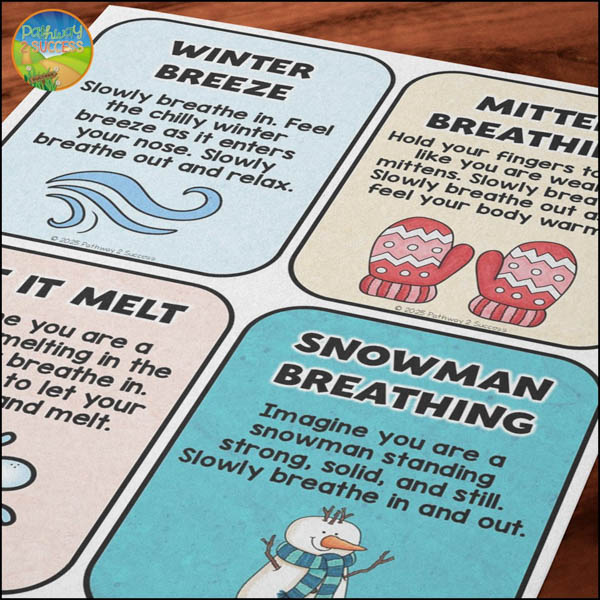
1. Winter Mindful Breathing Exercises
- What it is: Deep, intentional breathing exercises paired with comforting winter imagery (such as smelling a cup of hot cocoa or blowing out a row of candles on a frosty morning).
- How to implement it: Introduce mindful breathing as an internal "pause button." Teach children to inhale slowly through the nose for a count of four, hold for two, and exhale gently through the mouth for four.
- Why it works: Controlled breathing directly stimulates the vagus nerve, immediately lowering heart rate and activating the parasympathetic nervous system to restore a state of calm.
2. Outdoor Nature Walks
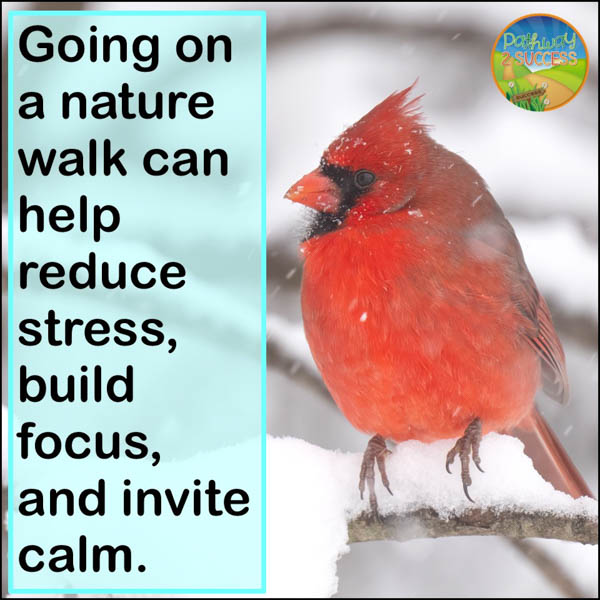
- What it is: Structured exploratory walks focusing on sensory engagement—observing what can be seen, heard, felt, and smelled in the winter landscape.
- How to implement it: Set clear boundaries, bundle up in appropriate layers, and guide children to notice subtle winter details, such as the crunch of frozen grass, the texture of pine needles, or the chill of the breeze.
- Why it works: Combines physical exercise, fresh air, and natural light with mindfulness, proven to reduce stress and sharpen cognitive focus.
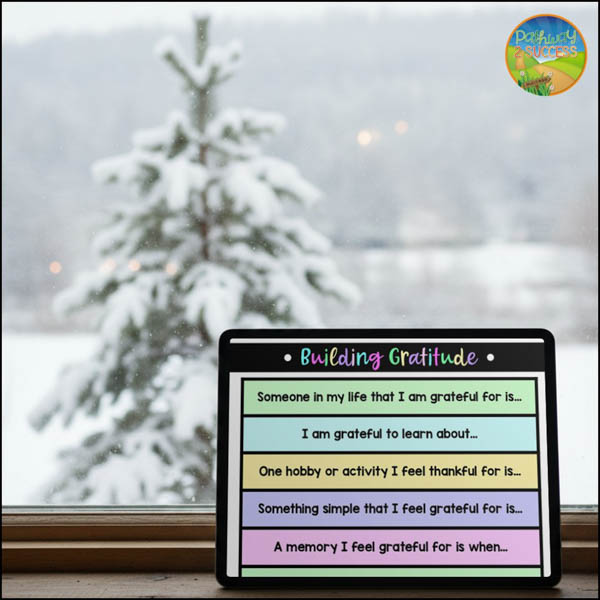
3. Winter Gratitude Reflection
- What it is: Guided journaling or group sharing focused on identifying specific positive aspects of the winter season.
- How to implement it: Move beyond generic statements by using targeted sentence starters (e.g., "I feel cozy when…" or "I am grateful for the sound of…"). Allow children to express their gratitude through words or drawings.
- Why it works: Rewires the brain’s negativity bias, fostering long-term emotional resilience and improved mood.
4. Mindful Winter Coloring
- What it is: Coloring intricate winter-themed pages infused with positive affirmations and self-talk phrases.
- How to implement it: Provide access to a variety of coloring tools while encouraging children to focus entirely on the physical motion of coloring rather than artistic perfection.
- Why it works: Serves as a dynamic meditation. For children who struggle with complete physical stillness, coloring bridges the gap between movement and focused relaxation.
5. Cozy Reading Time
- What it is: Immersive reading sessions paired with a comforting atmosphere, such as projecting a virtual fireplace on a screen.
- How to implement it: Dedicate 15 to 20 minutes to silent independent reading or interactive read-alouds, which foster co-regulation and interpersonal connection.
- Why it works: Deep reading lowers heart rates, eases muscle tension, and offers a healthy cognitive escape from daily stressors.
6. Winter Sensory Bins
- What it is: Hands-on tactile exploration using deep containers filled with winter-themed materials.
- How to implement it: Fill bins with items like artificial snow, pinecones, jingle bells, cotton balls, and smooth ice-blue glass gems. Allow children to scoop, pour, and sort freely.
- Why it works: Tactile play provides vital proprioceptive feedback, grounding anxious or hyperactive children and promoting self-soothing.
7. The Mindful Hot Cocoa Sip
- What it is: A sensory mindfulness exercise centered around consuming a warm beverage.
- How to implement it: Invite children to hold the mug to feel its warmth, inhale the sweet aroma, take slow, deliberate sips, and notice the flavor before swallowing. (Note: This can be adapted with any warm or cool drink).
- Why it works: Engages all five senses simultaneously, anchoring the child firmly in the present moment and relaxing the central nervous system.
8. Winter Scene Visualization
- What it is: Guided imagery exercises where children mentally transport themselves to a peaceful winter environment.
- How to implement it: Instruct children to close their eyes while you verbally guide them through a serene snow-covered forest, a quiet frozen lake, or a warm cabin windowpane. Use sensory prompts regarding sight, sound, and touch.
- Why it works: Leverages the brain’s imagination centers to induce a physiological state of calm and mental clarity.
9. Hands-On Winter Crafts
- What it is: Creative DIY art projects ranging from paper snowflakes to yarn-wrapped winter trees.
- How to implement it: Give children the freedom to design their own winter-themed art using accessible crafting materials, focusing on the step-by-step creative process.
- Why it works: Strengthens fine motor control, enhances executive functioning, and teaches frustration tolerance when projects encounter minor hurdles.
10. Mindful Winter Music Listening
- What it is: Playing gentle, instrumental winter-themed music during transitions or independent work periods.
- How to implement it: Utilize calming piano or acoustic guitar tracks as background soundscapes, occasionally pausing to let children describe how the music makes their bodies feel.
- Why it works: Music acts as an external rhythm organizer, helping to synchronize neural activity and ease transitions between high-energy and low-energy tasks.
11. Winter Freeze Dance
- What it is: A dynamic movement game that requires rapid transitions between high-energy physical movement and complete physical control.
- How to implement it: Play upbeat music and instruct children to dance freely until they hear a specific winter cue word (e.g., "blizzard" or "icicle"), at which point they must freeze instantly.
- Why it works: Directly targets impulse control and motor inhibition in an engaging, playful format.
12. Alternative Movement Breaks
- What it is: Short, structured physical bursts designed to reset energy levels in indoor spaces.
- How to implement it: Incorporate animal walks, chair stretches, or gentle yoga poses whenever focus begins to wane in the classroom or home environment.
- Why it works: Flushes excess adrenaline from the system, preparing the brain for sustained concentration.
Official Statements and Expert Perspectives
Child development specialists and educators emphasize that self-regulation cannot be successfully taught through lectures alone; it must be modeled, experienced, and practiced consistently.
"When children experience winter dysregulation, they are not acting out—they are signaling that their cognitive and sensory capacities have reached their limit," notes Dr. Elena Vance, a leading child psychologist specializing in educational environments. "By embedding mindfulness, sensory play, and intentional movement into the winter months, we give children the literal tools they need to navigate their internal weather, no matter how harsh the external climate becomes."
Education administrators across multiple school districts have also echoed the importance of proactive mental health strategies during winter scheduling transitions. Integrating brief, five-minute self-regulation exercises before major academic blocks has been shown to drastically reduce disciplinary incidents and improve overall classroom climate during the post-holiday stretch.

Future Outlook
As educational institutions and parenting paradigms continue to evolve, the integration of Social-Emotional Learning (SEL) and self-regulation frameworks into core curricula is moving from optional enrichment to absolute necessity. Looking ahead, experts predict a broader adoption of trauma-informed and neurodiversity-affirming practices that recognize the unique sensory profiles of every child.
Future strategies for winter wellness will likely incorporate advanced sensory-friendly architecture in schools, greater utilization of flexible indoor-outdoor learning models, and increased training for caregivers in co-regulation techniques. By acknowledging the unique physiological and psychological challenges posed by the winter season—and meeting those challenges with creativity, empathy, and evidence-based activities—communities can ensure that children not only survive the winter months, but thrive within them.

