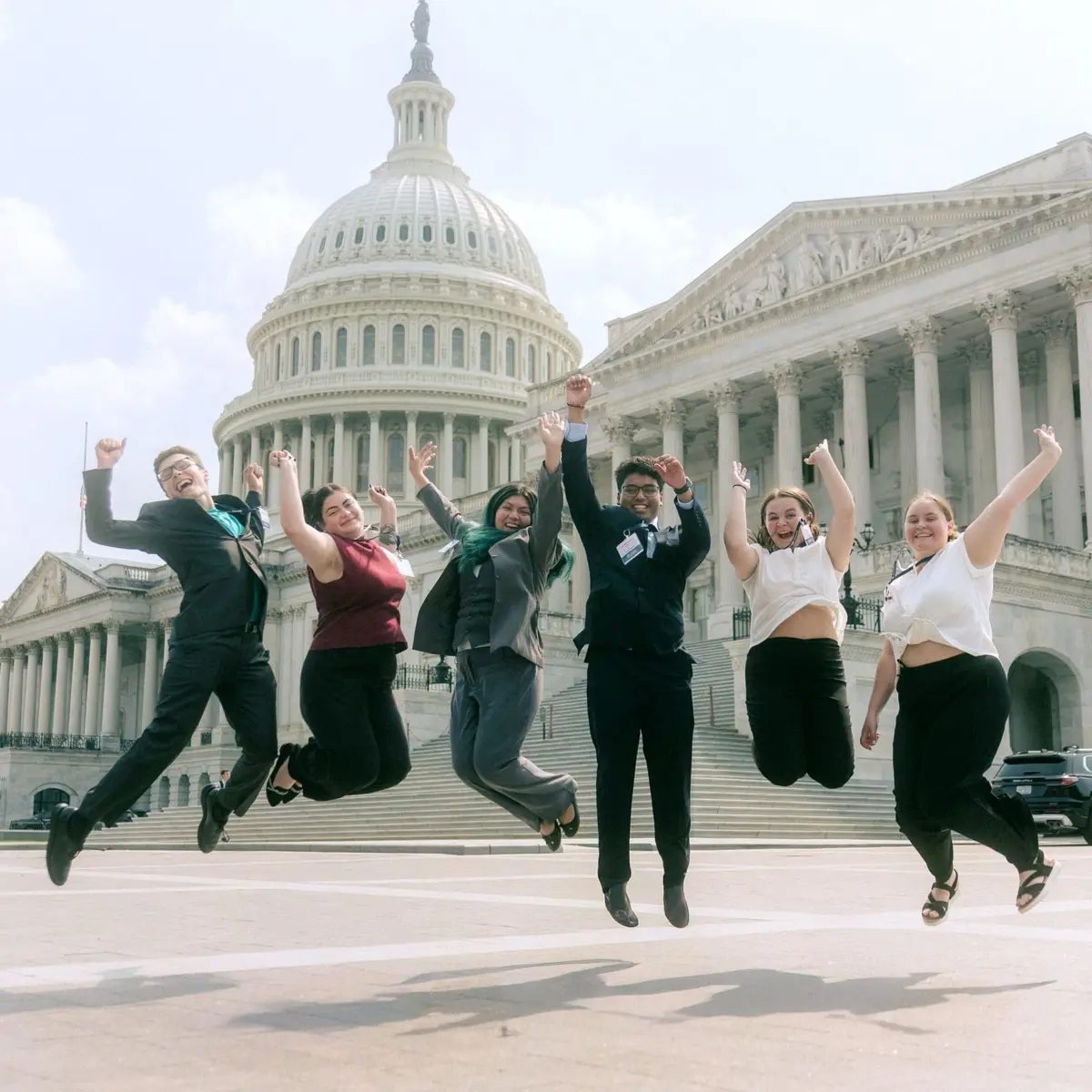
WASHINGTON, D.C. — In the corridors of American political power, the voices of the nation’s youth are rarely heard with the directness, urgency, and organization that marked a transformative gathering this summer. On Thursday, July 16, 2026, hundreds of young mental health advocates, students, and emerging leaders from across the United States converged on Capitol Hill for the inaugural Active Minds Hill Day + Mental Health Conference.
Organized by Active Minds—the nation’s premier nonprofit mobilizing youth and young adults to normalize and prioritize mental health—the event represented a watershed moment. For more than two decades, the organization has dedicated itself to shifting cultural paradigms around psychological well-being. By marching directly into the offices of federal lawmakers, these young change-makers sought to shift something even more concrete: the legislative priorities of the United States Congress.
Armed with personal testimonies, empirical research, and community-driven solutions, the advocates completed an extraordinary 132 meetings with congressional offices in a single day. Their core mission was unequivocal: to urge lawmakers to fortify federal mental health infrastructure, expand crisis response capabilities, and institutionalize early intervention initiatives for youth and young adults.
Executive Overview
The inaugural Active Minds Hill Day arrived at a critical juncture in American public health. Youth mental health in the United States has faced unprecedented pressures over the past decade, compounded by economic uncertainty, social media saturation, and systemic gaps in care. Recognizing that those closest to these challenges are uniquely positioned to design solutions, Active Minds bridged the gap between grassroots advocacy and federal policymaking.
The primary policy objectives driving the July mobilization focused on two major legislative interventions:
Expanding the reach of the 988 Suicide & Crisis Lifeline by embedding its contact information directly onto student identification cards nationwide.
Strengthening the Garrett Lee Smith Campus Suicide Prevention Grant Program, thereby scaling up student-led mental health outreach, peer support networks, and early intervention programs on college and university campuses.
By transforming personal pain into public policy, these young leaders demonstrated that mental health reform is not a partisan issue, but an urgent human imperative.
Detailed Chronology: A Day of Action on Capitol Hill
The journey to Capitol Hill was years in the making, building on decades of campus-based organizing by Active Minds. However, the events of July 16, 2026, marked a structural escalation from local awareness-raising to direct federal lobbying.
Morning: Legislative Briefings and Strategy
The day began in the shadow of the U.S. Capitol dome, where participants gathered for last-minute briefings on legislative mechanics, lobbying etiquette, and safety protocols. Advocates were organized into regional delegations, ensuring that every corner of the country—from rural school districts to large metropolitan universities—was represented.
Significantly, the timing of the Hill Day coincided with the anniversary of the launch of the 988 Suicide & Crisis Lifeline, adding profound symbolic weight to the proceedings. Participants reflected on how far the national conversation around crisis intervention has evolved, while soberly acknowledging the immense gaps that still leave millions of young people without specialized, timely support.
Afternoon: 132 Meetings that Shaped the Halls of Congress
Divided into targeted teams, the youth advocates fanned out across the House and Senate office buildings. Over the course of several hours, they conducted a staggering 132 meetings with members of Congress and key legislative staffers.
Unlike traditional lobbyists representing corporate interests or trade associations, these advocates brought an unvarnished authenticity to the negotiating tables. They spoke candidly about navigating depression, anxiety, grief, and suicidal ideation within educational environments that are often ill-equipped to handle psychological distress. They presented lawmakers with data proving that early intervention saves lives, and that student-led initiatives yield higher engagement than top-down bureaucratic interventions.
Evening: The National Mental Health Conference and Celebration
Following the intense legislative grind on Capitol Hill, the momentum shifted to the Active Minds Mental Health Conference. Designed to equip youth and young adults with the tools, community backing, and leadership training necessary to sustain their activism, the conference featured prominent figures in the modern mental health movement.
Noted speakers included Sadie Sutton, host of the acclaimed She Persisted podcast, and Hailey Hardcastle, a renowned youth mental health advocate and TED speaker. Both leaders emphasized the vital importance of youth narrative autonomy—insisting that young people must be the primary authors of policies affecting their lives.
The day concluded with a high-energy, celebratory performance by acclaimed artist Be Steadwell. The musical performance served a crucial psychological function: validating the emotional toll of advocacy, providing communal release, and energizing a generation of activists preparing for the long-term fight ahead.
Supporting Context & Metrics: The Urgent Need for Reform
To understand the gravity of the Active Minds Hill Day, one must examine the broader socio-political landscape of youth mental health in America. Adolescence and early adulthood represent a period of profound transition—marked by shifting social dynamics, academic pressure, career entry, and the psychological weight of hyper-connectivity via digital platforms.
Data consistently underscore the severity of the crisis:
Disproportionate Risk: Certain demographics face heightened vulnerabilities. For instance, LGBTQ+ youth are statistically four times more than likely to attempt suicide compared to their heterosexual and cisgender peers, according to comprehensive public health studies.
The Power of Early Intervention: Research highlights that investing in mental health resources during high school and college yields lifelong benefits, fostering academic resilience, economic stability, and community engagement.
Systemic Vulnerabilities: Despite the success of general crisis services, recent policy shifts—such as the controversial closure of specialized sub-networks within crisis hotlines, including the 988 LGBTQ+ Youth Specialized Services program—have ignited intense debate and raised alarm bells among public health advocates. The loss of specialized services that previously aided millions of vulnerable youth underscores why grassroots federal advocacy, such as that championed by Active Minds, is more vital than ever.
Official Statements
The historic nature of the inaugural Hill Day elicited powerful reflections from the leadership and key architects of the movement:
"Watching hundreds of young people walk the halls of Congress today reaffirmed what we’ve known for more than two decades: when youth lead, change follows,"said Alison Malmon, Founder and Executive Director of Active Minds."They brought the stories of their communities into the rooms where decisions are made, reminding policymakers that mental health isn’t a political issue—it’s a human one. This inaugural Hill Day is more than a milestone for Active Minds; it’s a testament to the growing movement of young people who are ensuring mental health is valued, prioritized, and supported for every generation to come."
The sentiment was echoed by the organization’s policy leadership, who emphasized the clinical and human necessity of youth-led narratives:
"It was an honor to host our Mental Health Hill Day on the anniversary of the launch of 988, a milestone that reminds us how far we’ve come, and how much work remains to ensure every young person can access the mental health support they deserve,"noted Anika Rahman, Director of Policy at Active Minds."Today’s conversations reinforced my belief that young people should be the narrators of their own stories. Their lived experiences, backed by real data and youth-driven solutions, are the most powerful force for shaping the future of mental health policy. By bringing their voices directly to Capitol Hill, our youth and young adults had a total of 132 meetings. That is the power of mobilizing."
Future Outlook: Sustaining the Momentum
The conclusion of the inaugural Active Minds Hill Day does not mark an endpoint, but rather the opening salvo of an expanded legislative strategy. Active Minds has signaled its intent to maintain a sustained presence in Washington, D.C., working in tandem with congressional allies to translate the day’s 132 meetings into tangible legislative text.
Key areas of focus for the immediate future include:
Legislative Follow-Up: Monitoring upcoming congressional appropriations bills to secure increased funding for the Garrett Lee Smith Campus Suicide Prevention Grant Program.
Institutional Accountability: Pushing for bipartisan consensus on mandates requiring secondary and post-secondary institutions to display crisis hotline information on student identification cards.
Amplifying Marginalized Voices: Ensuring that advocacy efforts actively center vulnerable subgroups—including LGBTQ+ youth, students of color, and rural populations—who face systemic barriers to culturally competent mental health care.
As these young leaders return to their respective hometowns, campuses, and workplaces, they carry with them the undeniable proof of their collective power. By stepping into the halls of power and demanding systemic change, the advocates of Active Minds have permanently altered the baseline of what it means to fight for mental health in America—proving that when the generation most affected by a crisis takes the reins, transformative legislative action is no longer an idealistic dream, but an achievable reality.