In an era defined by rapid information flow, cultural shifting, and theological pluralism, the global Christian church faces a subtle yet pervasive internal challenge. While historical heresies often manifested as direct denials of the divine nature of Christ or the validity of the Trinity, contemporary distortions of the faith frequently masquerade under the guise of compassion, self-actualization, and social justice.
In Episode 27 of the Read, Do, & Tell Podcast, hosts Amy and Becky continue their rigorous, multi-part series on ecclesiastical deviance. Following their foundational explorations of heresies against God in previous installments, this episode pivots to a critical examination of heresies against the gospel of Jesus Christ.
Defining heresy not merely as a minor theological disagreement, but as a deliberate distortion or contradiction of the pure gospel revealed in Scripture, the podcast confronts modern distortions head-on. By evaluating influential movements—such as the prosperity gospel—and examining the dangerous convergence of Christian teaching with secular ideologies like Marxism, the hosts issue an urgent call for theological discernment. This article provides an in-depth exploration of these modern threats, contextualizing the discussion within the broader framework of historical orthodoxy, current church trends, and the necessity of biblical vigilance.
Detailed Chronology: Tracing the Evolution of the Series and Modern Heresiology
To fully understand the weight of Episode 27, it is essential to trace the developmental arc of the Read, Do, & Tell Podcast’s current investigative series on false teaching.
Phase 1: Establishing the Standard of Orthodoxy (Episodes 1–22)
Before naming specific modern deviations, the podcast laid a strong pedagogical foundation rooted in biblical literacy. Modeled after the biblical mandate of Ezra—to read, do, and tell the Word of the Lord—the early episodes focused on spiritual disciplines, discipleship methodologies, and the sufficiency of Scripture. This established a baseline benchmark: any teaching that deviates from the plain, contextual meaning of biblical text must be scrutinized.
Phase 2: Identifying Heresies Against God (Episodes 23–26)
Moving from general discipleship to specific doctrinal warnings, the hosts dedicated several episodes to defining what constitutes a "heretic" and why heresy is treated as a grave spiritual peril in both historical theology and divine law.
Episode 23 & 24: Established definitions, categorized historical heresies (such as Arianism, Gnosticism, and Docetism), and explored how ancient errors resurface in modern religious movements.
Episode 26: Shifted focus specifically to heresies against God, dismantling distorted views of the divine nature, attributes, and sovereignty. Listeners were urged to evaluate how modern sub-Christian concepts reframe God as an indulgent cosmic therapist rather than a holy, righteous judge.
Phase 3: Confronting the False Gospel (Episode 27 and Beyond)
In the current installment (Episode 27), the scope narrows further to target direct corruptions of the gospel message itself. The discussion moves beyond the character of God to the mechanics of salvation: How are human beings reconciled to the Creator?
The Prosperity Gospel: The hosts dissect the "health and wealth" movement, which exchanges the cross of Christ for material gain and frames faith as a transactional utility.
Ideological Infiltration: The episode evaluates how secular frameworks, particularly cultural Marxism and identity politics, have infiltrated pulpits, altering the biblical definitions of sin, redemption, justice, and community.
Exposing Enablers: Rather than just addressing abstract concepts, the series calls out specific teachers, ministries, and movements that either actively promote these false gospels or passively align with them through dangerous partnerships.
Supporting Context & Metrics: The Landscape of Modern Theological Drift
The urgency behind the Read, Do, & Tell Podcast’s current series is not born out of hyper-vigilance, but rather from a documented decline in core theological literacy among professing Christians.
The Theological Literacy Gap
Data from organizations like the Barna Group and Ligonier Ministries’ State of Theology survey consistently reveal a troubling disconnect between what churchgoers claim to believe and historic Christian orthodoxy:
A significant percentage of regular church attendees express views that align with ancient heresies (such as the belief that Jesus was a created being, echoing Arianism).
Moral therapeutic deism—the belief that God exists only to make people feel good and help them solve problems—has largely replaced robust, cross-centered soteriology in Western evangelicalism.
The blending of political ideologies with biblical mandates has created hyper-polarized congregations where partisan talking points are baptized as sacred truth.
The Anatomy of a False Gospel
The Apostle Paul warned the Galatian church against turning to "a different gospel—which is really no gospel at all" (Galatians 1:6–7). In their analysis, Amy and Becky categorize modern false gospels into two primary categories:
The Gospel of Self (The Prosperity / Word-Faith Movement): This framework shifts the center of gravity from God’s glory to human comfort. Suffering is viewed exclusively as a lack of faith, and financial generosity is treated as an investment scheme to force God’s hand. It strips away repentance, substitutionary atonement, and self-denial.
The Gospel of Social Reconstruction (Ideological Syncretism): This modern drift attempts to merge the biblical message of redemption with secular social justice theories derived from Marxist critique. By categorizing people strictly into oppressors and oppressed based on sociological metrics rather than spiritual standing before God, this movement redefines sin as systemic societal structures rather than individual moral rebellion against a holy God, thereby rendering the cross unnecessary.
Official Statements & Theological Perspectives
The theological stance maintained by ministries like Raising Rooted Disciples reflects an uncompromising adherence to historic, confessional Christianity. While contemporary culture often prizes inclusivity, emotional resonance, and doctrinal malleability, orthodox teachers argue that watering down the gospel strips it of its power to save.
"Heretical teaching is teaching that intentionally distorts or contradicts God or the pure gospel as revealed in Scripture. Those who teach heresies are ‘heretics.’ This is a SERIOUS matter to the church AND to God."
— Becky, Read, Do, & Tell Podcast
Theological historians point out that the church has always found its strength not in adapting to the shifting winds of culture, but in standing firmly upon apostolic tradition. When prominent voices compromise the purity of the gospel—whether by promising health and wealth in exchange for financial contributions or by substituting biblical reconciliation with secular identity politics—they abandon the narrow path of truth.
Furthermore, the podcast emphasizes that complicity goes beyond primary teachers. By calling out those who "go along or partner with" aberrant ideologies, the hosts highlight a crucial aspect of modern church politics: platform-sharing gives implicit credibility to false teachings. Discernment, therefore, requires believers to examine not just what a speaker says from the stage, but with whom they align their ministries.
Future Outlook: Equipping the Next Generation for Discernment
As the ecclesiastical landscape grows increasingly complex, the challenge for discipleship ministries is clear: how to equip believers—particularly children and young adults—to spot counterfeit teachings before they take root.
The Role of Rigorous Education
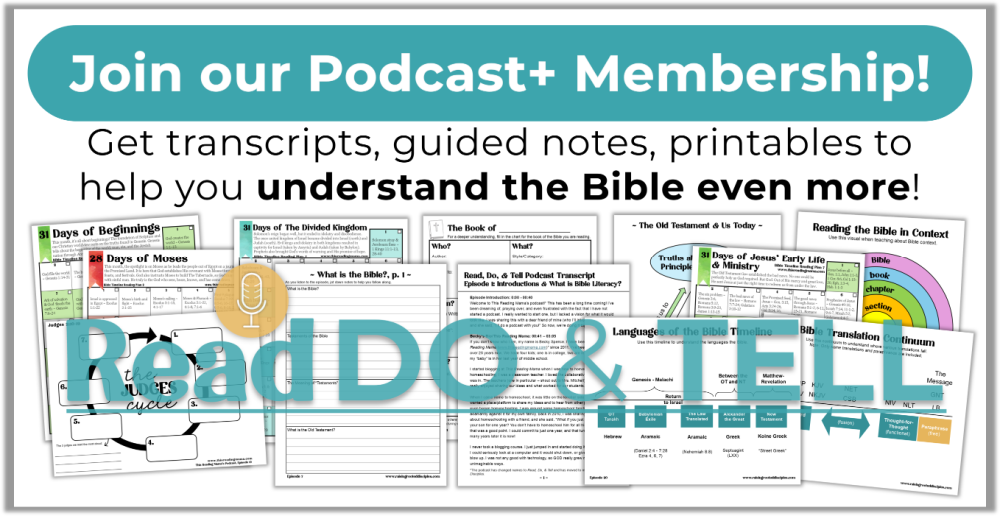
Programs like the Podcast+ Membership offered through the platform provide more than just casual listening; they supply transcripts, guided notes, Bible reading plans, and study tools designed to anchor believers in Scripture. In an age where digital media bombards minds with soundbite theology, deep, contextual Bible study is the ultimate antidote.
A Call Back to Ezra’s Mandate
The ultimate takeaway from Episode 27 and the broader series is an urgent call to action encapsulated in Ezra’s lifelong mission: to read, do, and tell the Word of the Lord.
Read: Commit to studying the Bible in its proper literary and historical context rather than lifting verses to fit modern cultural narratives.
Do: Apply the uncompromised truths of Scripture to daily life, rejecting the lure of comfort-driven prosperity gospels or culturally driven ideologies.
Tell: Boldly proclaim the pure, unadulterated gospel of Jesus Christ—emphasizing human sinfulness, Christ’s substitutionary death, bodily resurrection, and the call to repentance—without fear of cultural reprisal.
As long as false teachers continue to distort the message of grace, resources like the Read, Do, & Tell Podcast will remain vital sentinels on the wall, calling the church back to historical truth, spiritual integrity, and uncompromising faithfulness to the gospel.