
WASHINGTON, D.C. — In an era defined by a relentless quest for historical authenticity and a pedagogical shift toward inquiry-based learning, educators are constantly seeking ways to bridge the gap between static textbook narratives and the vibrant, messy realities of the past. For decades, the study of early American history—particularly the dark, claustrophobic chapter of the late-seventeenth-century witch trials—has relied heavily on third-party interpretations, dramatic reenactments, and sanitized historical summaries.
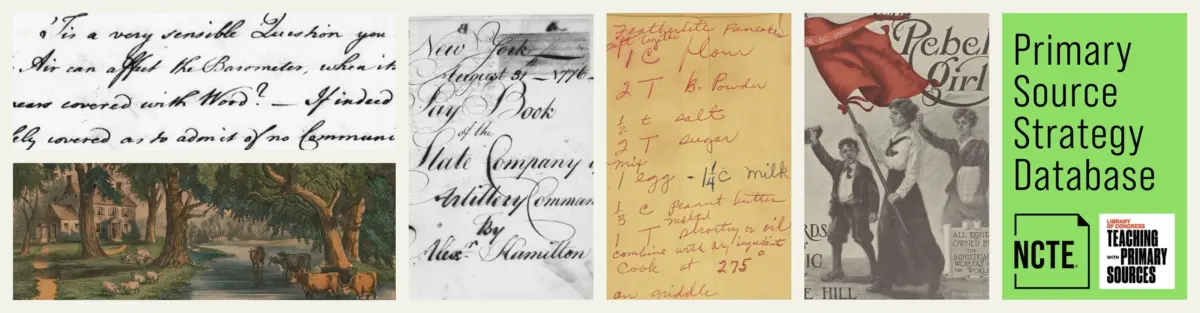
Now, a transformative national initiative is rewriting how students encounter this critical era. Through an ongoing partnership with the Library of Congress as part of the prestigious Teaching with Primary Sources (TPS) Consortium, the National Council of Teachers of English (NCTE) is spearheading a nationwide effort to integrate digitized historical artifacts directly into English language arts (ELA) and history classrooms.
At the center of this initiative is a robust, searchable database housing instructional strategies for more than 150 specific items from the Library of Congress’s vast digitized collections. Among the most compelling artifacts featured in the repository is a harrowing, little-known petition written by ten women imprisoned in Ipswich jail during the height of the Salem Witch Trials. This document, crafted by the accused themselves, offers educators an unprecedented pedagogical tool: a direct window into the marginalized voices of early American women pleading for their humanity against a backdrop of institutional hysteria.
Executive Overview: Bridging Literacy and History Through Primary Sources
The collaboration between the NCTE and the Library of Congress represents a fundamental evolution in how literacy and social studies intersect. Designed specifically for ELA teachers and humanities instructors, the TPS partnership aims to embed primary source analysis into everyday reading and writing instruction.
Rather than treating history solely as a sequence of dates to be memorized or literature strictly as a collection of fictional works, the initiative encourages students to engage with historical documents as complex texts. By analyzing the rhetoric, tone, and underlying motivations of documents created centuries ago, students develop critical media literacy, historical empathy, and advanced argumentative skills.
The newly expanded database is curated by more than two dozen distinguished teachers and leaders in English language arts education. These educators have meticulously mapped out the instructional value of specific archival items, aligning them with state standards, suggested themes, cross-curricular units, and specific literacy tags such as picture book and argument.
At the heart of this collection lies the Ipswich prison petition—a primary source that challenges mainstream historical accounts, shifts the analytical lens away from the magistrates and accusers, and centers the desperate survival efforts of the accused. By bringing this artifact into the modern classroom, educators are equipped to lead profound discussions on power, systemic injustice, persuasive writing, and the architecture of historical memory.
Detailed Chronology: The Winter of 1692 and the Ipswich Prison Petition
To fully understand the pedagogical power of the Ipswich petition, one must place the document within its chilling historical context. While the events of 1692 are most commonly associated with the village of Salem, the mass hysteria of the witch trials bled across the borders of Essex County, sweeping up men, women, and children in a widening net of paranoia and spectral evidence.
Anatomy of an Appeal
During the bitter winter months of the 1692–1693 judicial crisis, ten women found themselves languishing in the damp, freezing confines of the Ipswich jail. Having been accused of witchcraft months prior, their cases had stalled amidst the chaotic dismantling of the Court of Oyer and Terminer. They were women caught in a bureaucratic and theological nightmare, awaiting formal trial while enduring conditions designed to break their bodies and spirits.
The petition they drafted and submitted to the authorities was an act of both immense courage and sheer desperation. In the document, the ten women did not merely defend their innocence against the absurd charges of witchcraft; rather, they made a pragmatic, urgent plea for basic survival.
Detailing the harrowing physical toll of the winter weather, the petitioners noted that several among them were sick, some were pregnant, and all faced the imminent threat of perishing from exposure and disease inside the unheated prison walls. They formally requested to be released on bail so that they could return for trial in the spring—a reasonable legal request under English common law, yet one that had been systematically denied to those branded as witches.
The Voices Behind the Bars
Mainstream historical accounts of the Salem Witch Trials have historically prioritized the transcripts of examinations, the sensationalized diaries of judges like Cotton Mather, or the retrospective guilt of participating jurors. These documents are overwhelmingly authored by men in positions of absolute authority.
In contrast, the Ipswich petition is an authentic collective voice of the accused. It represents a rare instance where women marginalized by Puritan society seized control of the written word, deploying rhetorical strategies of supplication, reason, and urgency to appeal directly to the conscience of their oppressors. For modern students examining how language functions within imbalances of power, this text provides a masterclass in rhetorical awareness.
Supporting Context & Metrics: Transforming ELA Standards and Curricula
The integration of the Ipswich petition into modern classrooms is not merely an exercise in historical trivia; it is tightly coupled with rigorous educational standards designed to elevate student literacy. The NCTE-Library of Congress initiative ensures that every primary source in the database is pedagogically scaffolded to meet both NCTE guidelines and Common Core State Standards (CCSS).
Alignment with Educational Standards
The instructional frameworks developed for the Ipswich document directly address core competencies in reading comprehension, textual analysis, and language application:
- NCTE Standard 1: Students read a wide range of print and nonprint texts to build an understanding of texts, of themselves, and of the cultures of the United States and the world. The Ipswich petition exposes students to the lived realities of seventeenth-century colonial society, expanding their cultural and historical literacy far beyond standard textbook narratives.
- NCTE Standard 2: Students read a wide range of literature from many periods in many genres to build an understanding of the many dimensions (philosophical, ethical, and aesthetic) of human experience. Analyzing the ethical dilemmas faced by the imprisoned women allows students to grapple with timeless questions of justice, societal panic, and human rights.
- Common Core Standard L.9-10.3: Students apply knowledge of language to understand how language functions in different contexts, to make effective choices for meaning or style, and to comprehend more fully when reading or listening. The petition serves as a prime analytical text for evaluating how archaic language, tone, and syntactical structure are deployed to persuade hostile audiences.
Database Metrics and Accessibility
The broader initiative reflects a massive scaling of digital humanities resources for teachers:
- 150+ Specific Artifacts: The database meticulously catalogs over a hundred and fifty digitized items from the Library of Congress, ranging from colonial broadsides and abolitionist pamphlets to Civil War photographs and twentieth-century civil rights ephemera.
- Two Dozen Educational Leaders: The pedagogical frameworks are designed by frontline educators, ensuring that the strategies are practical, adaptable, and immediately deployable in diverse classroom environments.
- Granular Tagging Systems: Teachers can filter content using intuitive tags such as argument, narrative, identity, and picture book, allowing for seamless integration into existing thematic units across middle and high school grade levels.
Official Statements and Pedagogical Vision
Educational leaders behind the TPS Consortium emphasize that the incorporation of primary sources like the Ipswich petition is essential for fostering critical thinking in a digital age. In an educational landscape increasingly saturated with misinformation, students must learn to interrogate sources, evaluate authorial bias, and seek out marginalized perspectives.
"When students read history exclusively through the filter of textbooks, they receive a polished, homogenized version of the past," noted an educational coordinator involved with the NCTE-Library of Congress partnership. "When you place a document like the Ipswich prison petition in front of students—a text written by women who were terrified, freezing, and fighting for their very lives—history stops being a dry timeline. It becomes human. It becomes an urgent negotiation of power, voice, and survival."
Curriculum designers point out that the petition offers a vital counter-narrative to popular depictions of the Salem Witch Trials. While pop culture often reduces the era to hysterical outbursts and spectral visions, the Ipswich document highlights the mundane, devastating cruelty of institutional neglect and the quiet resilience of those who refused to let their stories be completely erased.
Furthermore, the collaborative nature of the database ensures that teachers are not left to navigate complex historical traumas alone. Each entry within the NCTE repository includes guidance on how to approach sensitive topics, potential classroom challenges, and recommendations for alternative or complementary primary sources that can deepen the unit of study.
Future Outlook: The Next Phase of Primary Source Literacy
As the NCTE and the Library of Congress continue to expand the Teaching with Primary Sources Consortium, the implications for American education are profound. The success of the searchable database signals a permanent shift toward archival integration in language arts classrooms, breaking down the traditional silos that have long separated history from literature.
Expanding the Digital Archive
Future phases of the project aim to incorporate even more diverse collections from the Library of Congress, focusing on underrepresented communities, Indigenous perspectives, immigrant experiences, and labor movements throughout American history. By continuously updating the database with new instructional strategies, the NCTE ensures that teachers have access to cutting-edge resources that reflect evolving pedagogical research.
Empowering the Next Generation of Critical Thinkers
Ultimately, the goal of this initiative extends far beyond mastering the historical nuances of Puritan America or meeting standardized testing benchmarks. By engaging with texts like the Ipswich witchcraft petition, students learn a transferable skill: the ability to listen for the silenced voices in their own contemporary societies.
When young learners analyze how ten imprisoned women used the written word to demand justice in the winter of 1692, they are not just looking backward into the shadows of early American history. They are learning how to read the world around them, how to interrogate power structures, and how to use language as a vital instrument of agency and truth. Through the visionary partnership of the NCTE and the Library of Congress, the past is no longer a distant country—it is an active, vital dialogue in the modern classroom.

