
Executive Overview
In an era characterized by theological pluralism, shifting cultural norms, and rapid digital dissemination of religious ideas, the boundaries of orthodoxy are increasingly blurred. Addressing this critical challenge head-on, the latest installment of the Read, Do, & Tell Podcast—hosted by co-hosts Becky and Amy—turns its analytical lens toward a deeply serious and historically consequential subject: Heresies Against God.
Marking Episode 26 of their ongoing series on church heresies, this release moves past peripheral disagreements to confront theological doctrines that fundamentally distort or outright contradict the nature, character, and personhood of God, as well as the pure gospel revealed in Scripture. Far from being an abstract academic exercise for seminary libraries, the discussion highlights that what a congregation believes about the Trinity and the divine nature has eternal, practical, and communal implications.
By bridging the gap between ancient theological controversies—specifically examining the decisions of early church councils and creeds—and contemporary theological errors infiltrating modern pulpits and digital spaces, the hosts deliver an authoritative roadmap for believers seeking to anchor their faith in historic, scriptural truth.
This comprehensive report explores the core themes of Episode 26, examining how the church has historically defined heresy, why the nature of God remains a non-negotiable cornerstone of Christian identity, and how modern believers can access critical educational tools—such as the Trinity Diagram & Teaching Pack and the Podcast+ Membership resources—to fortify their understanding of biblical doctrine.
Detailed Chronology: Tracing the Arc of Theological Deviation
To fully comprehend the gravity of modern theological drift, Episode 26 emphasizes the necessity of looking backward. Heresy is not a product of twenty-first-century skepticism; rather, it is as old as the church itself. The chronology of Christian orthodoxy is written in the blood, ink, and rigorous debates of the early church fathers who gathered in ecumenical councils to defend the apostolic faith against persistent distortions.
1. The Apostolic Foundation and Early Divergences
In preceding episodes (specifically Episodes 23 and 24), Becky and Amy established a crucial baseline: while Christians can—and frequently do—hold diverse secondary views on matters of church governance, eschatology, or liturgical style without compromising their standing in the faith, core doctrines regarding the nature and character of God operate differently.
When a teaching intentionally distorts or contradicts the divine nature as revealed in Scripture, it ceases to be a harmless alternative interpretation and crosses the line into heresy. Those who propagate such teachings are, by historical and theological definition, "heretics."
2. The Witness of Early Church Councils and Creeds
During Episode 26, the hosts guide listeners through a brief yet vital survey of four early church councils and the resulting creeds. Far from being dry historical footnotes, these assemblies represent high-stakes battles for the soul of Christianity.
- The Defiance of Ancient Errors: In the early centuries of the common era, thinkers and movements repeatedly attempted to rationalize the profound mystery of God, often reducing the infinite Creator to a finite category. Whether through subordinationism (making Jesus Christ a created being rather than co-eternal with the Father) or modalism (viewing the Father, Son, and Holy Spirit merely as different "masks" or modes worn by a single divine person rather than three distinct, co-equal persons in one Godhead), early heretics challenged the very bedrock of Christian worship.
- The Formulation of Creeds: In response, the church fathers—convening in historic councils—forged rigorous creeds (such as the Nicene and Chalcedonian formulations) to draw a clear theological boundary line. These documents were not designed to stifle thought, but to preserve the integrity of the gospel. As Becky and Amy argue, ignoring church history leaves contemporary believers defenseless against recycled heresies that simply wear modern clothing.
3. Transition to the Modern Era
Having established the historical framework, Episode 26 bridges the gap to the present day. The hosts warn that ancient errors have not vanished; they have merely evolved. Modern-day heretical teachings regarding the nature of God and the Trinity continue to circulate in popular culture, best-selling books, and even within some progressive Christian circles.
Whether it is soft universalism that redefines God exclusively as an indulgent grandfather figure devoid of holiness and wrath, or neo-Arian tendencies that subtly diminish the divinity of Christ to make Him more "relatable" to modern sensibilities, the contemporary church faces an urgent mandate to recognize and reject these distortions.
Supporting Context & Metrics: Equipping the Modern Believer
Navigating complex theological landscapes requires more than intuition; it demands intentional study, structural resources, and disciplined spiritual habits. Recognizing this, the creators of Raising Rooted Disciples and the Read, Do, & Tell Podcast have developed a comprehensive ecosystem of study tools designed to move believers from passive listeners to active, discerning students of the Word.
The Theological Framework: Why Truth Matters
In Christian theology, God is the ultimate standard of truth, goodness, and beauty. To misrepresent God is to worship an idol—a product of human imagination rather than the self-revealing Creator of Scripture.
- The Severity of Heresy: The podcast underscores that heresy is a serious matter to both the church and God. When core doctrines are compromised, the gospel loses its power. If Christ is not fully God and fully man, His substitutionary atonement on the cross loses its infinite value. If the Holy Spirit is merely an impersonal force rather than the third person of the Trinity, the doctrine of divine indwelling and sanctification collapses.
- The Call of Ezra: Throughout their ministry, Becky and her co-hosts anchor their pedagogical philosophy in the biblical example of Ezra—who set his heart to study the law of the Lord, to practice it, and to teach its statutes and ordinances in Israel. This "Read, Do, & Tell" methodology transforms theology from an intellectual abstraction into an active, lived-out faith.
Educational Resources and Support Ecosystem
To help listeners engage deeply with the material covered in Episode 26, several distinct learning avenues have been made available:
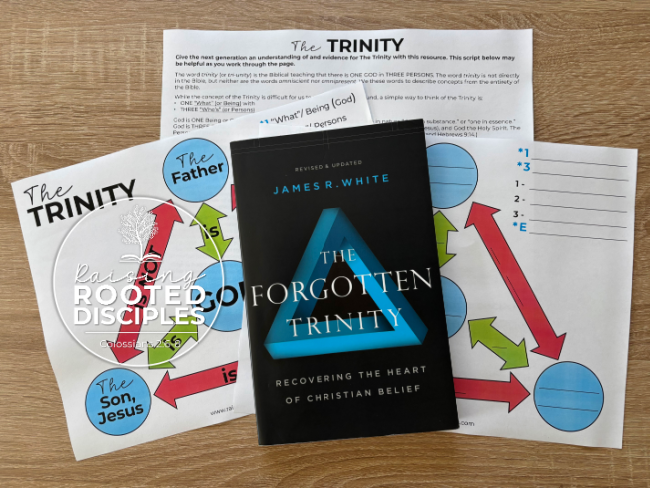
- The Trinity Diagram & Teaching Pack: A specialized, visual resource designed to help individuals, families, and small groups understand the complex orthodox doctrine of the Trinity while avoiding common historical heresies (such as partialism, modalism, and tritheism). This pack is provided completely free to subscribers of the Raising Rooted Disciples community.
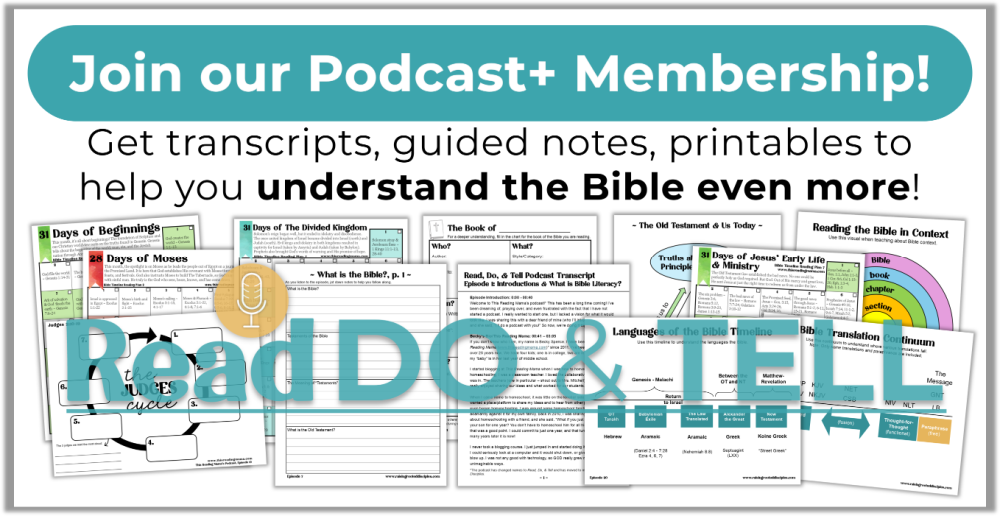
- Podcast+ Membership Program: For those seeking an immersive educational experience, the Podcast+ membership offers:
- Comprehensive transcripts of every episode.
- Guided notes and study tools.
- Exclusive Bible reading plans.
- Specialized Bible printables designed for personal devotion and discipleship.
- Financial support for the ongoing production and distribution of sound, scriptural content.
Official Statements and Educational Insights
The release of Episode 26 highlights the intentional pedagogical vision driving the Raising Rooted Disciples ministry. In reflections accompanying the podcast release, the hosts emphasize the danger of theological apathy in the modern church.
"We need to remember that heresy is a SERIOUS matter to the church AND to God! Heretical teaching is teaching that intentionally distorts or contradicts God or the pure gospel as revealed in Scripture," the hosts stress in their core curriculum notes.
Addressing the temptation for modern audiences to bypass historical theology in favor of purely contemporary, experiential spirituality, the creators offer a stark warning:
"Don’t check out when it comes to church history! This stuff is IMPORTANT! Amy and I briefly go through four of the early councils and creeds of the church fathers to show you these heretical teachings are nothing new… We’ll also talk about some modern-day heretical teachings around the nature of God and the Trinity, so buckle up!"
This commitment to historical rootedness reflects a broader pastoral urgency: that a church ignorant of its past is doomed to repeat its doctrinal failures. By pairing rigorous theological critique with accessible teaching tools, the ministry positions itself as an authoritative guide for families and believers navigating an increasingly complex spiritual environment.
Future Outlook: The Ongoing Battle for Orthodoxy
As the Read, Do, & Tell Podcast continues its deep dive into ecclesiastical heresies, the broader implications for the global church come into sharper focus. The digital age has democratized media production, allowing theological ideas—both orthodox and heterodox—to spread across international borders with unprecedented velocity. In this environment, passive orthodoxy is no longer sufficient.
Emerging Challenges in the Digital Age
Looking ahead, the primary threat to Christian orthodoxy is not necessarily organized, hostile opposition, but rather theological illiteracy and syncretism. As cultural values increasingly clash with historic Christian anthropology and theology, the temptation to reshape the character of God into a reflection of modern preferences will intensify.
Podcasts, digital learning platforms, and community study groups will play an indispensable role in counteracting these trends. By equipping laypeople with the tools to identify logical fallacies, historical errors, and scriptural misinterpretations, ministries like Raising Rooted Disciples are building a resilient generation of believers.
Conclusion and Call to Action
Episode 26 of the Read, Do, & Tell Podcast serves as both a historical wake-up call and a contemporary manual for discernment. By confronting "Heresies Against God," the hosts challenge listeners to elevate their view of Scripture, respect the wisdom of historic church councils, and anchor their faith in the unchanging character of the triune God.
For believers, families, and educators looking to deepen their grasp of these vital truths, the path forward is clear: immerse oneself in the Word, utilize robust study tools like the Trinity Diagram & Teaching Pack, and join supportive communities dedicated to the timeless mandate to read, do, and tell the Word of the Lord.

