
Executive Overview
As the autumn leaves fall and the nights grow longer, classrooms, living rooms, and study groups around the world are embracing the unique aesthetic of the spooky season. Halloween—once relegated strictly to evening trick-or-treating, cinematic marathons, and costume parties—has increasingly woven its way into the educational calendar. Rather than viewing the holiday as a seasonal distraction, leading educators and digital learning platforms are harnessing the innate curiosity, mystery, and cultural excitement surrounding Halloween to drive engagement, reinforce core academic competencies, and foster collaborative learning.
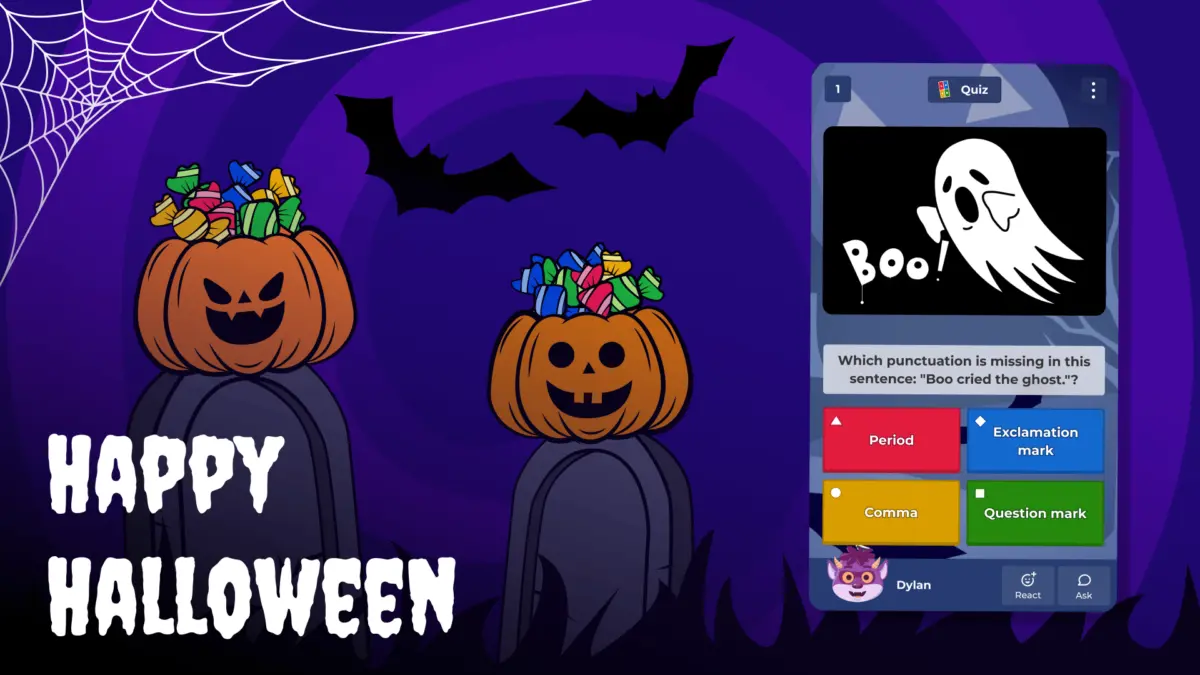
At the forefront of this pedagogical shift is Kahoot!, the globally renowned game-based learning platform. By curating expansive, ready-to-use collections of Halloween-themed educational content, Kahoot! has transformed standard quizzes into immersive, interactive experiences. These initiatives span multiple demographics, thoughtfully designed to cater to K-12 classrooms, parents facilitating home learning, students preparing for rigorous autumn exams, and lifelong learners hosting social gatherings.
This comprehensive report examines how Kahoot! leverages strategic partnerships with world-class institutions—such as TED-Ed, Nickelodeon, Disney, Marvel, the Museum of Science, WWF Wild Classroom, Wiktionary, and Wikipedia—to bridge the gap between entertainment and academic rigor. By analyzing the structural design, psychological impacts, and institutional backing of these seasonal learning modules, we uncover how gamification continues to redefine modern education during its most festive periods.
Detailed Chronology: The Evolution of Seasonal Gamification in Education
The intersection of holiday traditions and digital instruction did not happen overnight. To understand the scale and sophistication of Kahoot!’s current Halloween lineup, it is essential to trace the developmental milestones that brought gamified learning from novelty status to mainstream classroom integration.
Phase One: The Analog Era and Early Digital Worksheets (Pre-2015)
For decades, seasonal learning was restricted to physical handouts, black-and-white word searches featuring cartoon witches, and rudimentary math worksheets decorated with jack-o’-lanterns. While these materials offered a break from routine, they suffered from low engagement metrics. Students frequently perceived them as busywork, and teachers faced the logistical burden of printing, distributing, and grading piles of paper. Early educational software introduced basic digital flashcards and matching games, but these early iterations lacked collaborative dynamics, real-time feedback loops, and multi-platform accessibility.
Phase Two: The Rise of Real-Time Audience Response Systems (2015–2019)
As interactive whiteboards and bring-your-own-device (BYOD) policies permeated schools globally, platforms like Kahoot! emerged to redefine classroom dynamics. By introducing gamification elements—points, leaderboards, timers, and high-energy soundtracks—learning platforms transformed quiet, passive classrooms into vibrant competitive arenas. During this era, educators began crafting their own custom Halloween quizzes. However, these user-generated tests varied wildly in quality, factual accuracy, and alignment with standardized curricula.
Phase Three: Institutional Partnerships and Curated Collections (2020–2024)
Recognizing the massive appetite for reliable, high-quality digital content, Kahoot! shifted its strategy from a purely user-generated model to an ecosystem backed by major media and educational institutions. Partnerships with organizations like Disney, Marvel, and TED-Ed allowed the platform to embed globally recognized intellectual properties into standardized learning frameworks. Halloween content evolved from simple trivia to sophisticated multi-subject courses addressing everything from historical witch trials to lunar astronomy and emotional literacy.
Phase Four: The Modern Interdisciplinary Ecosystem (2025–Present)
Today, Kahoot! offers a seamless, multi-tiered approach to seasonal learning. The platform’s 2026 Halloween rollout represents the pinnacle of this evolution, offering tailored paths for teachers, parents, students, and adult trivia enthusiasts. By combining foundational skill-building (such as early childhood math) with advanced academic exploration (such as Wiktionary’s advanced lexical challenges and Wikipedia’s historical deep-dives), the platform ensures that the spooky season serves as a powerful engine for holistic cognitive development.
Supporting Context & Metrics: Why Gamification Works During Seasonal Transitions
The psychological impact of seasonal themes on learning retention is deeply rooted in cognitive science. Educational psychologists have long noted that novelty and emotional engagement are critical drivers of long-term memory consolidation.
Combating the "Autumn Slump"
As the initial excitement of the back-to-school season wanes in October, students frequently experience a dip in focus. The arrival of mid-term examinations combined with shifting daylight hours can lead to fatigue. According to educational researchers, introducing thematic hooks—such as exploring the biology of "creepy crawly" insects or analyzing the historical context of the Salem Witch Trials—reactivates dopamine pathways associated with curiosity and reward.
Metrics of Engagement
While traditional assessments often trigger test anxiety, game-based learning environments measurably reduce stress hormones while increasing participation rates. Internal platform data across gamified learning environments consistently demonstrates:

- Up to a 50% increase in voluntary peer collaboration when concepts are framed within a narrative game format.
- Significantly higher completion rates for complex multi-step problem sets (such as algebraic equations or scientific hypotheses) when wrapped in pop-culture or seasonal contexts (e.g., Marvel-themed math challenges).
- Enhanced emotional literacy and empathy, particularly among younger demographics engaging with narrative-driven modules like the Peanuts gang’s explorations of anticipation and disappointment.
Official Statements and Institutional Collaborations
The breadth and depth of Kahoot!’s Halloween educational offerings are made possible through extensive collaborations with leading content creators, cultural institutions, and entertainment giants.
Empowering Educators with TED-Ed, Nickelodeon, and Disney
For classroom teachers navigating demanding curricula, integrating seasonal lessons must never come at the expense of educational standards. Kahoot!’s curated teacher channels bridge this gap effectively:
- TED-Ed Collaboration: Educators can access specialized kahoots that guide students through the complex history behind legendary stories, ranging from the historical roots of Vlad the Impaler (Dracula) to the socio-political dynamics of the Salem Witch Trials. These modules blend historical inquiry with critical thinking exercises.
- Nickelodeon & Disney Channels: By leveraging globally beloved characters from SpongeBob SquarePants, Teenage Mutant Ninja Turtles, and classic Disney franchises, teachers can introduce foundational concepts in science and language arts. These familiar faces lower the affective filter of learners, making complex topics approachable and deeply entertaining.
Supporting Parents at Home: Hello Kitty, Marvel, and Peanuts
For parents seeking to maintain academic momentum outside of school hours without inducing friction or resistance from children, home-friendly kahoots offer an ideal solution:
- Sanrio’s Hello Kitty and Friends: Young learners explore fundamental math and cognitive development by tackling festive challenges, such as decorating virtual haunted houses and solving math puzzles designed for early childhood development.
- Marvel’s Midnight Monster Math: Featuring Groot and other fan-favorite characters, these modules inject excitement into counting, addition, and subtraction practice.
- The Peanuts Gang: In alignment with classic viewing experiences like It’s the Great Pumpkin, Charlie Brown, the Peanuts collection focuses on emotional literacy. It helps children navigate complex feelings regarding anticipation, social inclusion, and overcoming minor disappointments.
Strengthening Study Sessions and Lifelong Learning
As students prepare for rigorous exam periods, maintaining motivation is paramount:
- Museum of Science & SciShow Kids: High school and middle school students can tackle advanced STEM topics, examining everything from the physics of the moon’s orbital phases to the ecological importance of misunderstood animals through wildlife partnerships with the WWF Wild Classroom.
- Wiktionary Lexical Challenges: For language arts students looking to expand their vocabulary, Wiktionary-backed kahoots introduce advanced, unusual, and eerie English words designed to test even the most advanced linguists.
- Wikipedia & Star Wars Cultural Trivia: For lifelong learners, workplace teams, and family gatherings, Wikipedia-curated history kahoots explore the true origins of Halloween traditions. Simultaneously, intergalactic trivia via Star Wars: Happy Ghoul-actic Halloween brings lighthearted, tongue-in-cheek humor to adult game nights.
Future Outlook: The Trajectory of Immersive EdTech
As educational technology continues to evolve, the integration of seasonal themes through gamification points toward a broader, highly personalized future. Several emerging trends indicate where platforms like Kahoot! are heading over the next decade:
1. Adaptive Difficulty and AI-Driven Personalization
Future iterations of seasonal kahoots will likely integrate artificial intelligence to dynamically adjust question difficulty based on a student’s real-time performance. If a student struggles with a math puzzle embedded in a Marvel-themed Halloween quiz, the system will seamlessly adjust the scaffolding to provide targeted micro-lessons before returning to the game.
2. Expanded Augmented Reality (AR) Integration
As AR-enabled devices and mobile platforms mature, educational games are moving beyond flat screens. Imagine a classroom where students use tablets to scan their desks and interact with 3D models of moon phases or virtual haunted environments while solving scientific hypotheses in real time.
3. Deepening Cross-Disciplinary Frameworks
The artificial boundaries separating STEM and humanities are rapidly dissolving. The success of Kahoot!’s Halloween collections demonstrates that learners thrive when historical narratives (such as Wikipedia’s folklore archives), ecological sciences (WWF wildlife conservation), and pop culture intersect. Future curricula will increasingly adopt this multidisciplinary, narrative-first approach to combat student burnout.
Conclusion
Halloween on Kahoot! proves that education and entertainment are not mutually exclusive forces. By transforming the spooky season into an interactive, multi-subject adventure, the platform has successfully engaged millions of users across every educational stage—from kindergarteners counting pumpkins with Hello Kitty to adults debating historical folklore via Wikipedia.
As institutions increasingly recognize the neurological benefits of gamified learning, initiatives like these pave the way for a more resilient, enthusiastic, and curious generation of learners. Whether deployed to conquer exam anxiety, ignite scientific inquiry, or simply bring families and coworkers together for a frightfully fun trivia night, Kahoot!’s seasonal offerings ensure that the pursuit of knowledge remains an "eerie-sistible" journey all year round.

