
Executive Overview
For generations, the rite of passage for youth culture has involved the deliberate cultivation of cultural capital that baffles adults. Whether through incomprehensible slang, bizarre fashion choices, or absurdist media consumption, teenagers and tweens continually construct digital and physical fortresses of inside jokes designed to keep parents on the outside looking in. Today, that time-honored tradition has found its ultimate expression in a global, AI-generated phenomenon known colloquially as "Italian brainrot."
If you are a parent, educator, or anyone over the age of twenty-five, there is a statistically high probability you have walked into a room only to hear a child rhythmically chanting, "Tung Tung Tung Tung Tung!" or babbling about an elephant cactus wearing Birkenstocks. When pressed for an explanation, the response is almost universally dismissive: "It’s a meme!"—uttered with the absolute, unshakeable confidence of youth, completely devoid of any further elaboration.
Let us state our primary conclusion right at the outset, saving you the exhausting exercise of searching for hidden layers of meaning: You absolutely should not overthink any of this. There is no deep cultural commentary, no coded political satire, and no hidden artistic masterpiece waiting to be unlocked. It is, by design, digital nonsense.
Yet, this nonsense has colonized the algorithmic feeds of millions of children worldwide, sparking intense debate among child psychologists, pediatricians, and bewildered parents. To understand Italian brainrot is to understand the current intersection of generative artificial intelligence, late-stage internet culture, and the timeless human urge for youth to build a world adults cannot possibly comprehend.
Detailed Chronology: The Rise of AI-Generated Surreality
To comprehend the current landscape of youth media consumption, one must first understand the foundational concept of "brainrot," a cultural phenomenon so pervasive that it was officially crowned the Oxford Word of the Year for 2024.
Lexicographers formally define brainrot as "the supposed deterioration of a person’s mental or intellectual state, especially viewed as the result of overconsumption of material (now particularly online content) considered to be trivial or unchallenging." In the vernacular of the internet, however, it simply means watching—and laughing at—dumb internet content.
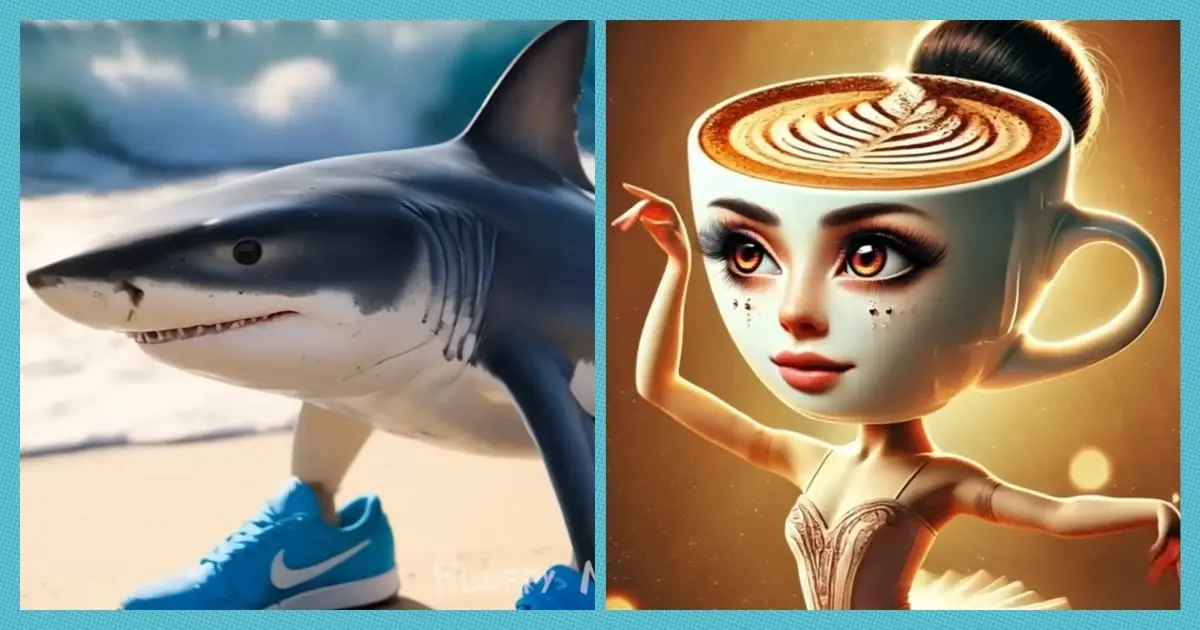
While general brainrot has been building momentum for years through repetitive TikTok trends and algorithmic slop, Italian brainrot specifically burst onto the global digital stage in January 2025. It kicked off with a viral AI-generated short video featuring a character named Trallallero Trallallà—a digital creation depicting a blue shark proudly wearing Nike sneakers, accompanied by nonsensical, sing-song Italian narration.
What followed was an unprecedented explosion of user-generated, AI-assisted surrealism. While the aesthetic originated from Italian creators, the production model democratized the absurdity. Anyone with access to basic generative AI tools could spin up a bizarre character, pair it with catchy, repetitive audio tracks, and launch it into the algorithmic ether in hopes of hitting viral gold. Within weeks, the phenomenon transcended its linguistic origins, pulling in characters, creators, and viewers from Indonesia, the United States, and across the globe. Children became both passive consumers of this endless stream of digital absurdity and active creators, generating their own iterations in hopes of algorithmic validation.
Supporting Context & Metrics: Inside the Hall of Absurdity
Perhaps you are sitting at your desk, staring at your screen, and asking the fundamental question: Why? A shark wearing Nikes? What does it actually mean?
We repeat our core mantra: You should not overthink any of this. It does not mean anything.
The mechanism of action here is purely neurological novelty. The bizarre combination of visual elements—typically fusing animals with inanimate objects—paired with sing-songy, melodic, yet completely nonsensical Italian names triggers a base comedic response in children. Other than that, it is entirely hollow. You have to internalize the cold, hard truth that you are not missing anything. There is nothing to get.
To test your resolve, let us examine a cross-section of the most popular Italian brainrot characters currently dominating schoolyards and algorithmic feeds worldwide:
Bombardino Crocodilo
A seamless, AI-generated fusion of a crocodile and a military bomber plane. Naturally, this visual masterpiece is paired with a relentlessly catchy yet aggressively repetitive electronic dance music (EDM) track. (DO NOT OVERTHINK IT.)
Tung Tung Tung Tung Tung Tung Tung Tung Tung Sahur
This entry features a sentient wooden club wielding a baseball bat. At the time of writing, a single video featuring this character has amassed over 72 million views on social media platforms. Let this metric sit heavy in your prefrontal cortex as an undeniable fact of modern media consumption. (DO NOT OVERTHINK IT.)
Lirilè Larilà
An elegant yet deeply confusing hybrid of an elephant and a desert cactus, casually sporting a pair of Birkenstock sandals. Because high fashion knows no biological bounds.
Chimpanzini Bananini
A primate-fruit amalgamation whose primary power lies solely in the phonetic joy of shouting its name out loud. This appears to be the absolute extent of its cultural contribution. You are likely trying to find a deeper etymological root for this right now. STOP. DO NOT OVERTHINK IT!
Brr Brr Patapim
An unsettling, towering tree-giant that chronicles its surreal evolutionary trajectory from a vulnerable forest seedling into a fully realized cybernetic organism.
Ballerina Cappucina
An anthropomorphic fusion of a classic ballet dancer and a morning cup of cappuccino. She is frequently tracked alongside her canonical digital spouse, Capuccino Assassino. This particular narrative universe boasts over 15 million views across platforms.
The ecosystem expands daily. New characters materialize faster than analysts can categorize them, rendering the very concept of a "character" almost meaningless. But by now, you understand the genre as thoroughly as humanly possible.
As a temporary palate cleanser, consider the millennial brainrot of your own youth—be it early internet Flash animations, Charlie the Unicorn, or absurd YouTube clips from 2007. Ah, yes. That was high art. You do understand brainrot; you simply don’t understand your child’s brainrot. And that, fundamentally, is how the generational cycle continues.
Official Statements and Expert Perspectives
While parents roll their eyes and children giggle, institutional authorities are taking a harder look at the phenomenon. Italian brainrot has scaled to such monumental digital proportions that major health organizations have been forced to weigh in on its potential impacts on youth development.
Earlier this year, the American Academy of Pediatrics (AAP) released guidance addressing the cultural wave of brainrot content. Their official stance highlights a stark reality: because the phenomenon evolves at the speed of generative AI, comprehensive long-term scientific research specifically targeting "brainrot" is still in its infancy.
However, adjacent psychological studies offer a cautionary tale. A recent study published in academic literature interviewed college-aged cohorts who self-identified as heavy consumers of brainrot media, drawing direct correlations between excessive viewing habits and "reduced productivity, poorer concentration, impaired decision-making, worse academic performance, and social isolation."
Furthermore, the AAP pointed to broader meta-analyses reviewing the impacts of excessive, low-value media consumption on the developing brain. Those reviews concluded that high-frequency exposure to hyper-fragmented digital content can significantly contribute to cognitive declines, such as diminished attention spans. It also triggers "cognitive overload"—a state wherein the human brain is flooded with so much fragmented, low-value information that it becomes structurally incapable of processing it efficiently.
Child health experts and pediatricians universally urge parents to recalibrate how screen time is utilized. While viewing a crocodile-bomber-plane may seem harmless in isolation, it sits downstream from a broader architectural crisis in modern media consumption:
- Quality Content Curations: When children engage with screens for entertainment, experts recommend actively steering them toward well-crafted, narrative-driven media that stimulates critical thinking rather than numbing it.
- Alternative Regulation: If children are turning to mindless scrolling as a psychological mechanism to de-stress or regulate their emotions after a long school day, parents are advised to introduce alternative physical and cognitive avenues—such as aerobic exercise, mindfulness, offline hobbies, and unstructured play.
Future Outlook: The Enduring Cycle of Subversive Youth Culture
As generative artificial intelligence continues to lower the barrier for content creation, the velocity of internet subcultures will only accelerate. Today it is Trallallero Trallallà and the Nike-wearing shark; tomorrow, it will be an entirely new lexicon of digital absurdism engineered by algorithms and amplified by tweens seeking autonomy.
For parents and educators, the takeaway is twofold. First, maintain your sanity: do not waste cognitive energy trying to decode the internal logic of a cartoon cactus wearing Birkenstocks. There is no logic to find. Second, maintain perspective. The existence of Italian brainrot is less a sign of impending civilizational collapse and more a continuation of an ancient tradition. Every generation invents its own nonsense language to gently close the door in the faces of the adults who raised them.
The kids are, structurally speaking, going to be alright. Just make sure they turn off the screens and go outside for a walk every once in a while.

