In contemporary educational discourse, "literacy" is a term almost exclusively hijacked by debates over phonics, decoding drills, reading fluency, and comprehension metrics. While school boards, policymakers, and educators constantly spar over the mechanics of how children read, a glaring blind spot remains conspicuously unaddressed: how children write.
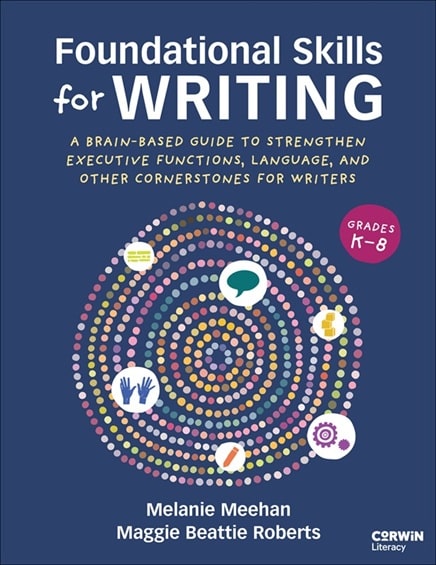
Despite being inextricably linked to reading comprehension, writing instruction has long been relegated to the back burner of educational reform. This systemic omission is the core catalyst behind a new pedagogical movement spearheaded by veteran educators Melanie Meehan and Maggie Roberts. Their recently published text, Foundational Skills for Writing: A Brain-Based Guide to Strengthen Executive Functions, Language, and Other Cornerstones for Writers, seeks to rectify this imbalance. By diving deep into cognitive neuroscience, Meehan and Roberts demonstrate precisely what happens inside a child’s brain during the complex act of writing—and why traditional approaches frequently fail.
For educators seeking actionable, high-impact strategies that do not require overhauling an already bloated curriculum, Meehan and Roberts introduce the concept of "Minute Moves." These ultra-short, highly flexible classroom interventions take mere moments—fitting seamlessly into transition times, hallway walks, or brief lesson warm-ups—yet yield profound impacts on transcription, sentence construction, and executive functioning. This report investigates the neuroscience of writing, explores the practical applications of Minute Moves, and examines the broader implications of shifting how we teach children to express themselves on paper.
Detailed Chronology & Background: The Evolution of Writing Neglect
To understand the current crisis in writing instruction, one must examine how literacy frameworks evolved over the past several decades. As the pendulum swung between whole-language approaches and structured literacy models, reading commanded the lion’s share of research grants, professional development hours, and instructional minutes. Writing was frequently treated merely as an assessment tool for reading—a way to prove a book was finished—rather than a distinct, highly sophisticated cognitive process requiring explicit, systematic instruction.
Recognizing this gap, Meehan and Roberts combined decades of front-line educational experience to tackle the problem. Melanie Meehan, a former curriculum coordinator who currently operates an in-person writing center, and Maggie Roberts, a literacy consultant and former middle-school teacher with nearly twenty years of classroom support experience, began noticing a recurring pattern. Students across grade levels were frequently frozen before blank pages, not necessarily because they lacked imagination, but because the cognitive load required to translate thoughts into text was entirely overwhelming.
Earlier this month, their collaborative efforts culminated in the release of Foundational Skills for Writing. The book breaks down the writing process into distinct neurodevelopmental pillars:
Transcription Skills: The mechanical processes of handwriting, keyboarding, spelling, and fine/gross motor development.
Oral Language: Speaking and listening precursors, including vocabulary depth and sentence construction.
Executive Functioning: The cognitive control systems—working memory, cognitive flexibility, and inhibitory control—that orchestrate the entire operation.
When these foundational skills are underdeveloped, they consume a disproportionate amount of a student’s working memory. Consequently, little cognitive energy remains for higher-order tasks like argument development, structural organization, and creative expression.
Supporting Context & Metrics: The Mechanics of "Minute Moves"
To combat cognitive overload without sacrificing valuable instructional time, Meehan and Roberts formulated collections of "Minute Moves." Designed to build neurological pathways incrementally, these micro-activities target spelling, sentence architecture, and executive control.
Spelling and Morphological Awareness
Traditional spelling instruction often relies on rote memorization—weekly lists tested on Fridays and promptly forgotten by Monday. Meehan and Roberts advocate for a morphological approach rooted in cognitive science, championed by spelling researcher Rebecca Treiman.
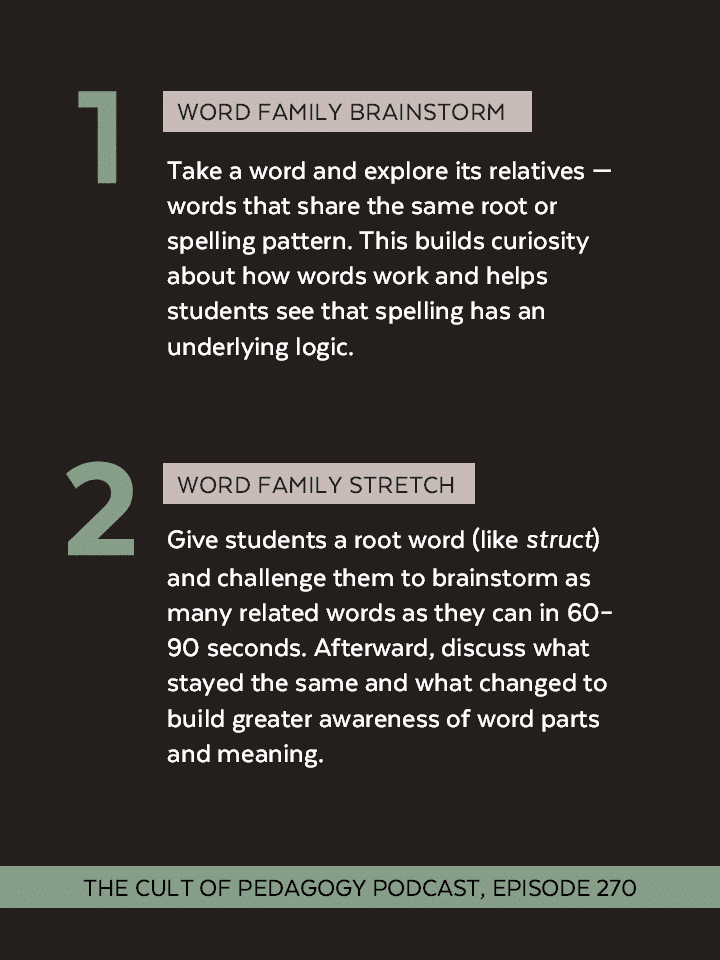
Word Family Brainstorm: Moving away from isolated memorization, students explore word genealogies. For instance, rather than drilling homophones like two, to, and too as disconnected anomalies, educators connect two to morphological relatives such as twin, twine, and twenty. Similarly, unlocking complex terms like decision through roots tied to decide, incision, and scissors reveals a shared Latin lineage meaning "to cut."
Word Family Stretch: Utilizing 60- to 90-second timers, students take root words—such as the bound root struct (to build) or the free root form—and rapidly generate related families. Subsequent debriefs analyze prefixes, suffixes, and meaning shifts, teaching students that word parts carry reliable, transferable data.
Prefix Swap: By systematically altering prefixes on base words (e.g., reform, transform, inform, deform), students witness firsthand how semantic shifts occur. This practice is exceptionally beneficial for multilingual learners, who frequently leverage shared etymological roots (like bene or mal) from their native languages to decode English academic vocabulary.
Sentence Construction Mastery
Once basic transcription and word-level mechanics are automated, students must learn to marshal syntax effectively. Meehan and Roberts emphasize that choppy, fragmented writing is rarely a sign of apathy; it is typically a symptom of underdeveloped syntactic agility.
Sentence Scramble: Dissecting a sentence into individual word- or phrase-cards enables tactile manipulation. Students physically move elements around, debating punctuation placement, identifying structural clues, and discovering which words are bound together grammatically.
Sentence Expander: Beginning with a bare-bones kernel sentence (e.g., The cat purrs), students progressively build depth by answering targeted prompts: Which cat? What color? Where? When? Why? Meehan encourages framing grammar through accessible terminology—distinguishing between the "doer" and the "doing" rather than abstractly debating subjects and predicates—before exploring how altering word order changes a sentence’s rhetorical impact.
Sentence Combining: Recognized as a high-impact instructional strategy, combining short, simple sentences into complex, fluid expressions teaches children how to harvest key phrases and utilize conjunctions effectively.
Executive Functioning and Cognitive Flexibility
Writing is ultimately an executive function challenge. Writers must hold multiple constraints in mind simultaneously: grammar, audience, organization, and narrative arc.
"What’s Another Way?": This exercise directly trains cognitive flexibility. Students take a completed sentence and rewrite it under varied constraints—shifting clauses, replacing nouns with pronouns, or intentionally shortening bloated phrasing. Crucially, educators explicitly name this skill as "cognitive flexibility," empowering students with the metacognitive vocabulary to recognize their own growing intellectual agility.
New Angle: Zooming out to the macro level, students retell familiar scenes from alternative character perspectives. Whether reimagining a ninth-grade cafeteria food fight from an exasperated teacher’s viewpoint or deconstructing a Pixar animated short like Snack Attack, students practice holding conflicting viewpoints simultaneously, making deliberate stylistic choices regarding voice and tone.
Official Statements and Expert Insights
Reflecting on the psychological empowerment these strategies provide, Melanie Meehan emphasizes the importance of transparency in the classroom.
"When you start naming that as cognitive flexibility for kids, that’s exciting to them," Meehan notes. "There’s something genuinely empowering about being told you’re practicing a sophisticated cognitive skill—especially for students who have struggled to see themselves as capable writers."
Furthermore, the implications of these micro-interventions extend far beyond academic achievement. By teaching children to inhabit different perspectives through narrative exercises like the "New Angle" strategy, educators are cultivating civic and interpersonal competencies.
"It’s not just about writing and it’s not just about watching this show," Meehan explains, referencing multi-perspective film analysis. "It’s also about democracy and thinking about how other people think and what their perspectives are."
Maggie Roberts underscores the efficiency and high-yield nature of these practices, noting that explicit syntactic instruction bridges the gap between basic literacy and advanced communication.
"Sentence combining is a really high-impact, quick way for kids to graduate from writing a series of simple sentences to ones that are more syntactically complex, interesting, and precise," Roberts states.
Future Outlook: Integrating Writing into the Modern Literacy Debate
As the educational landscape continues to grapple with post-pandemic learning recovery and shifting literacy standards, the publication of Foundational Skills for Writing arrives at a critical juncture. The ongoing nationwide push toward structured literacy frameworks must expand its horizon to fully incorporate the science of writing instruction.
Schools and districts looking to modernize their language arts curricula can no longer afford to treat writing as an afterthought or an instinctive byproduct of reading instruction. By embedding low-barrier, high-frequency routines like Minute Moves into daily schedules, educators can systematically dismantle the cognitive bottlenecks that impede student expression.
Ultimately, unlocking the writing brain requires shifting our pedagogical mindset from assessing finished products to nurturing foundational cognitive architectures. When students possess automated transcription skills, a deep intuitive grasp of word morphology, flexible syntactic tools, and well-exercised executive functions, the blank page ceases to be a source of anxiety. Instead, it becomes an invitation to think critically, communicate with precision, and engage meaningfully with the world around them.