
Executive Overview
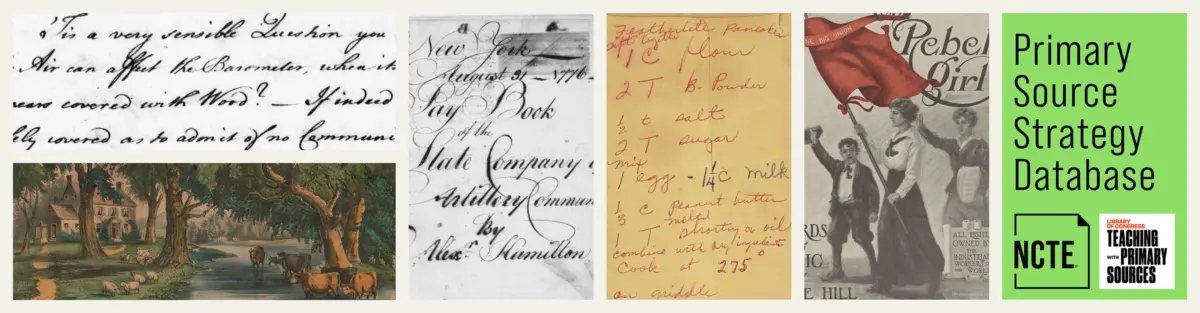
In an era defined by an overwhelming abundance of digital information, the ability to critically analyze primary sources has never been more vital for students. To address this educational imperative, the National Council of Teachers of English (NCTE) has forged a dynamic partnership with the Library of Congress as an active participant in the Teaching with Primary Sources (TPS) Consortium. This nationwide initiative is systematically expanding the integration of authentic historical artifacts into the daily teaching and learning habits of literacy educators and their students.
At the heart of this collaboration is an innovative, searchable digital database housing pedagogical strategies for more than 150 specific items drawn directly from the Library of Congress’s vast digitized primary source collections. Designed by over two dozen distinguished educators and leaders in English language arts (ELA) education, these strategies bridge the gap between abstract historical inquiry and concrete literacy skill-building.
The database serves as a comprehensive toolkit for modern classrooms. Each entry articulates specific literacy merits for curriculum implementation, complete with suggested themes, cross-curricular units, and alignments with state standards. Educators can easily navigate the repository using intuitive tags such as picture book and argument. By transforming archival materials into accessible, classroom-ready lessons, the NCTE and the Library of Congress are redefining how history, economics, and civic responsibility are taught in contemporary schools.
Detailed Chronology: Bringing Archives to the Classroom
The integration of Library of Congress archives into standard ELA and history curricula represents a multi-year evolution in American education. While museums and archives have long digitized their holdings, the missing link has consistently been translation: how do classroom teachers transform a 19th-century manuscript or a fragile photograph into a rigorous, standard-aligned lesson plan without adding hours to their already overburdened preparation schedules?
The Genesis of the TPS Consortium
The foundation of the current initiative lies in the Library of Congress’s long-standing Teaching with Primary Sources program. Designed to help educators connect students to the Library’s unrivaled collections of millions of digitized manuscripts, maps, audio recordings, and photographs, the program sought institutional partners with deep pedagogical expertise. Enter the National Council of Teachers of English. Recognizing that literacy instruction is most powerful when anchored in authentic, complex texts—including historical documents—NCTE mobilized its network of ELA leaders.
Assembling the Educator Task Force
More than two dozen ELA teachers, curriculum coordinators, and educational researchers were selected to pilot and author the instructional strategies now housed in the NCTE database. These educators were tasked with a unique challenge: examine specific historical artifacts not merely as historical relics, but as rich, multimodal texts that demand close reading, argumentative writing, and critical evaluation.
Launching the Searchable Repository
The resulting database marks a major milestone in educational resource development. By indexing items with targeted metadata—such as argument, primary source, and specific thematic tags—teachers can instantly locate materials that match their specific curricular goals. Whether an instructor is looking for manuscripts to anchor a debate unit or photographs to inspire narrative writing, the platform delivers curated, ready-to-use pedagogical frameworks.
Supporting Context & Metrics: Case Study—The Financial Papers of Frederick Douglass
To understand the profound depth of the materials included in the NCTE-Library of Congress database, one must examine the specific primary sources featured within the collection. A prime example is the Frederick Douglass Papers: Financial Papers, 1847–1928; Bank Books.
Unveiling the Economic Reality of a Civil Rights Giant
While Frederick Douglass is globally celebrated as a master orator, abolitionist writer, and statesman, standard textbook narratives rarely explore the mechanical and economic realities of his life. The bank books and financial transactions spanning over eight decades provide a tangible, startlingly human connection to Douglass’s daily existence.
These documents offer a detailed ledger of Douglass’s financial activities—meticulously recording deposits, withdrawals, and operational outlays. During a historical epoch characterized by severe institutional prejudice, systemic disenfranchisement, and legal barriers to wealth accumulation for African Americans, Douglass’s financial autonomy was nothing short of revolutionary. The bank records reveal how he strategically built and preserved personal wealth, which in turn directly funded his activism, his publishing enterprises, and his expansive public speaking engagements.
Interdisciplinary Learning: Bridging History, Economics, and Civic Duty
The instructional value of these financial papers extends far beyond a traditional history lesson. In the NCTE database framework, the Douglass papers are deployed as an interdisciplinary teaching tool that successfully merges three distinct academic domains:
- History: Students investigate the post-Antebellum and Jim Crow eras through the lens of personal survival and resistance, moving beyond macro-level political history to examine micro-level socio-economic realities.
- Economics: Learners explore the mechanics of financial literacy, capital accumulation, and the structural impediments that historically barred African Americans from equitable economic participation.
- Civic Duty: Classrooms engage in critical discussions regarding how personal financial independence can intersect with, support, or amplify broader social and political justice movements.
Standards Alignment in Action
To ensure seamless integration into existing state frameworks, these primary sources are mapped directly to rigorous academic standards. For instance, under the Louisiana State Standards, the study of Douglass’s financial papers directly supports several key benchmarks:
- W.11-12.1(a): Students are prompted to introduce precise, knowledgeable claims regarding economic independence and civil rights, establish the significance of those claims, distinguish them from alternate or opposing historical arguments, and structure their findings with logically sequenced evidence drawn from the primary source ledgers.
- WH.1: Learners analyze ideas and events in world and American history, examining how economic agency among marginalized groups progressed, transformed, or faced persistent barriers over time.
- WH.4: Students actively utilize primary and secondary sources to construct historical arguments, evaluate authorial intent, and assess the credibility and contextual value of archival documents.
Official Statements and Pedagogical Philosophy
The collaboration between the NCTE and the Library of Congress is underpinned by a shared philosophy: that primary sources are not passive illustrations of the past, but active catalysts for critical literacy.
The Power of Tangible History
Educational leaders involved in the TPS Consortium emphasize that interacting with raw, unedited historical documents fundamentally shifts the student experience. Rather than passively consuming a synthesized summary in a textbook, students become historical detectives. They must parse handwriting, decipher period-specific financial jargon, contextualize institutional barriers, and evaluate the writer’s intent.
"When students handle documents like Frederick Douglass’s personal bank books, history stops being a distant myth and becomes a human struggle for autonomy and justice," notes curriculum experts within the ELA leadership circle. "It demands higher-order cognitive skills: close reading, contextual analysis, and evidence-based argumentation."
Fostering Critical Literacy in the 21st Century
In statements regarding the partnership, the NCTE has continually highlighted the necessity of equipping modern students with robust media and document literacy. In a media ecosystem saturated with unverified claims, the methodology taught through the Library of Congress database—interrogating source origin, corroborating details against historical context, and building claims backed by primary evidence—serves as an indispensable inoculation against misinformation.
Furthermore, the database’s flexible design ensures that teachers across diverse socioeconomic backgrounds can bring museum-quality archival materials directly into their classrooms at no cost, democratizing access to elite historical resources.
Future Outlook: Expanding the Frontiers of Literacy Education
As the partnership between the National Council of Teachers of English and the Library of Congress continues to evolve, the impact of the Teaching with Primary Sources Consortium is poised for significant expansion.
Scaling the Database and Pedagogical Network
Plans are underway to steadily increase the repository of indexed items, pushing well beyond the initial benchmark of 150 specific Library of Congress artifacts. By continually onboarding new cohorts of ELA educators and curriculum designers, the NCTE aims to diversify the collection, incorporating primary sources that represent an even broader spectrum of American and global histories, diverse cultural perspectives, and multimedia formats.
Professional Development and Teacher Training
Beyond populating the digital database, the partnership places a heavy emphasis on professional development. Regional workshops, virtual webinars, and collaborative learning communities are being deployed to train teachers not only on how to use the existing lesson strategies, but on how to independently develop their own primary-source-driven curricula. This train-the-trainer model ensures that the competencies of archival inquiry and interdisciplinary literacy instruction will sustainably ripple across school districts nationwide.
Conclusion
The joint initiative between the NCTE and the Library of Congress represents a triumphant synthesis of archival preservation and progressive pedagogy. By turning historical manuscripts, photographs, and bank books into accessible springboards for critical reading, argumentative writing, and economic inquiry, the program empowers a new generation of students. As these resources continue to find their way into classrooms, they ensure that learners do not merely read about history—they engage with it, question it, and learn the critical literacy skills necessary to shape the future.

